Herzogenburg Priory: An Augustinian Canon Monastery in Austria

Site at a Glance
- Rating
- 4.7
- Popularity
- Low
- Country
- Austria
- Primary era
- Early Modern
- External website
- Open
- Eras represented
- Medieval, Early Modern
- Civilizations
- Habsburg, Holy Roman Empire
- Site type
- Religious
- Remains
- Monastery
On this page11 sections
History
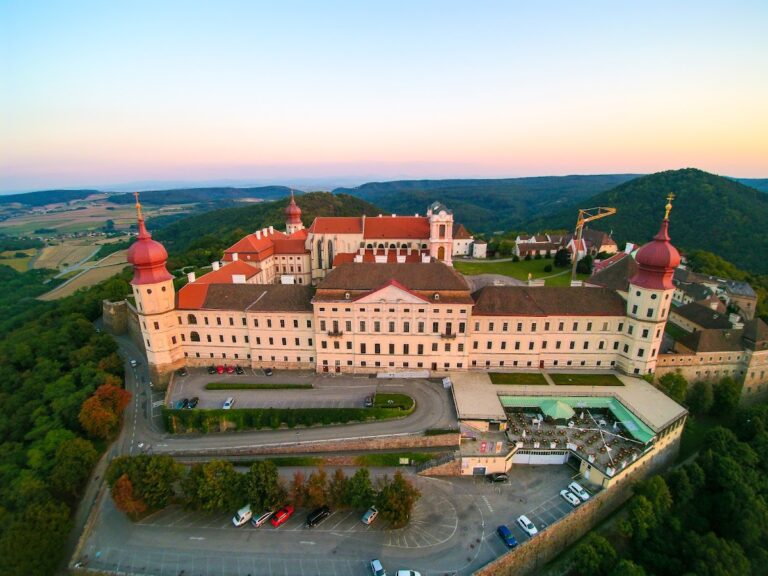
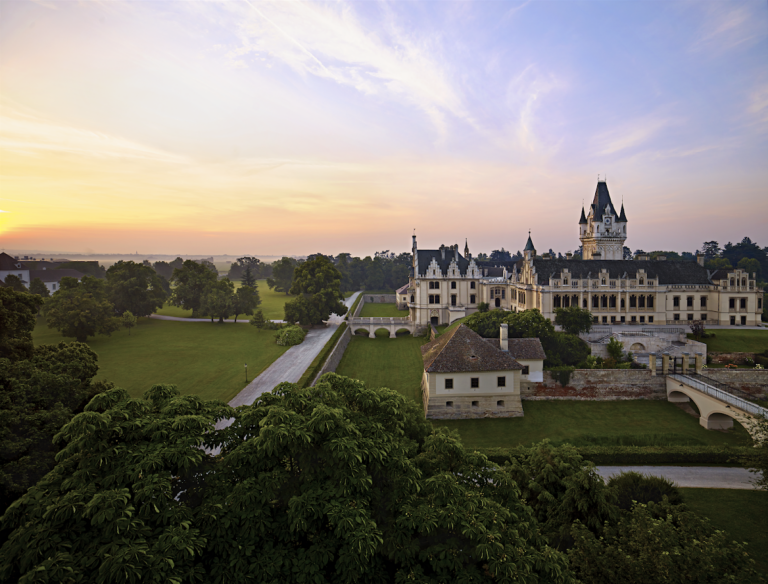
Herzogenburg Priory is an Augustinian Canon monastery in Herzogenburg, Austria, whose predominantly Baroque complex took shape during a major rebuilding that began in 1714. Augustinian Canons are Catholic priests who live according to the Rule of St. Augustine while serving pastoral and institutional communities. The priory developed from a medieval foundation and remains connected with the religious and administrative history of Lower Austria.
Foundation at St. Georgen
The predecessor monastery of St. George was founded in 1112 by Ulrich I, Bishop of Passau, at St. Georgen an der Traisen, where the Traisen meets the Danube. The foundation received the parishes of Herzogenburg and Traisenburg for its support. Its position proved vulnerable to frequent flooding, and in 1244 the monastery was transferred approximately 10 kilometres upstream along the Traisen to Herzogenburg.
At Herzogenburg, the canons administered the settlement’s Upper Market as a manorial holding. The Lower Market, which had originated as a Bavarian foundation, remained under Formbach Abbey until the canons purchased it in 1806. This division gave the priory an enduring role in the local administration of the town.
Late Medieval and Early Modern Struggles
In the late Middle Ages, fighting between the Hussites and the forces of Matthias Corvinus, the fifteenth-century king of Hungary, destroyed the monastery. A fire in the sixteenth century then devastated both the Upper and Lower Markets of Herzogenburg. The monastery’s superior, Georg Eisner, and his successors undertook the restoration of the monastic complex after these disasters.
The Reformation sharply reduced the number of canons. In 1683, when Ottoman incursions threatened the region, the inhabitants of Herzogenburg defended the monastery under the leadership of Canon Gregor Nast. The episode reflects the priory’s place within the town as both a religious institution and a defended local centre.
The Baroque Rebuilding
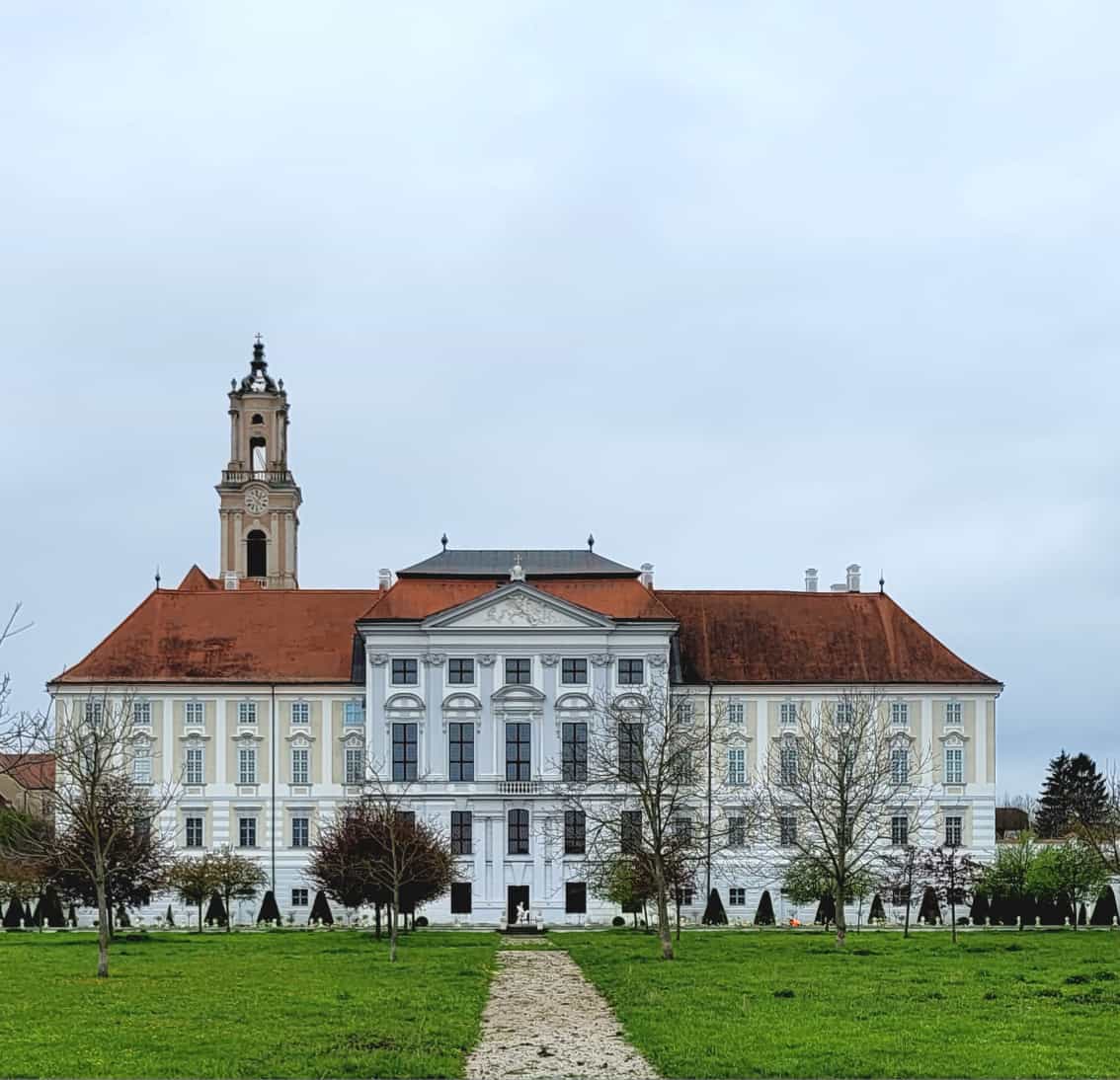
A comprehensive Baroque rebuilding began in 1714, when the foundation stone was laid on 25 March under the direction of Jakob Prandtauer. The south wing, formerly used for guests, was built first and received stucco work by Johann Michael Bolla. Construction then continued along the east wing to the Great Hall. Johann Bernhard Fischer von Erlach designed the Imperial Hall, for which Johann Gallus Hügel received the stonework contract in April 1716.
After Prandtauer died in 1726, Joseph Munggenast managed the construction. His son Franz Munggenast later completed the collegiate church. The rebuilding was not fully finished, largely because the wars of Maria Theresa, the eighteenth-century Habsburg ruler, placed heavy financial pressure on the priory. The west wing remained incomplete, but the church was solemnly consecrated on 2 October 1785.
Ecclesiastical Changes and Survival
Herzogenburg Priory survived the Josephine dissolution of monasteries. The Josephine reforms were the church and monastery policies introduced by Emperor Joseph II in the late eighteenth century, including the closure of communities judged non-essential to pastoral or social functions. The dissolved Augustinian Canon monasteries of Dürnstein and St. Andrä an der Traisen, together with their numerous parishes, were incorporated into Herzogenburg and materially strengthened it.
The monastery belonged to the Diocese of Passau until 1783, when it became part of the newly established Diocese of St. Pölten. The two world wars and the devaluation of the interwar period deepened the priory’s financial difficulties. After the Second World War, many refugees were housed in the monastery, and the buildings fell into a severely deteriorated condition. The Soviet occupation also imposed a major burden on the priory and its surroundings.
Modern Conservation
The largest renovation since the Baroque rebuilding began in 2000 and was completed for the priory’s 900th anniversary in 2012. It restored the external facades, parts of the courtyards, the historic gardens, several interiors, the library and its holdings, the Festsaal, the Frigdiani Chapel, and the Choir Chapel. The church and its Baroque tower were excluded from this renovation. The anniversary was marked by a commemorative program and a redesigned art collection.
Maximilian Fürnsinn led the priory from 1979, and Petrus Stockinger was elected as his successor in 2019. Mauritius Lenz has served as dean since 2011. The community includes ten additional canons and provides care for two family canons. In memory of the original foundation at St. Georgen, the Traismauer Danube bridge opened in 2010 was named St. George’s Bridge.
Remains
Herzogenburg Priory is organized as a predominantly Baroque monastic complex whose rebuilding proceeded through the south and east wings, while the west wing remained unfinished. Its surviving spaces include courtyards, historic gardens, ceremonial and devotional interiors, the collegiate church, and collections housed within the monastery. Restoration completed in 2012 renewed many of these elements while leaving the church and Baroque church tower outside that particular project.
Baroque Priory Complex
The former guest wing forms the south wing and contains stucco work by Johann Michael Bolla. The east wing extends to the Great Hall, while the Imperial Hall contains stonework associated with Johann Gallus Hügel and a design by Johann Bernhard Fischer von Erlach. The complex also includes the large Festsaal, the Frigdiani Chapel, and the Choir Chapel. The historic gardens comprise the Prelate’s Garden, an orchard, and a rose garden, all of which were restored and revitalized during the work completed in 2012.
Collegiate and Parish Church
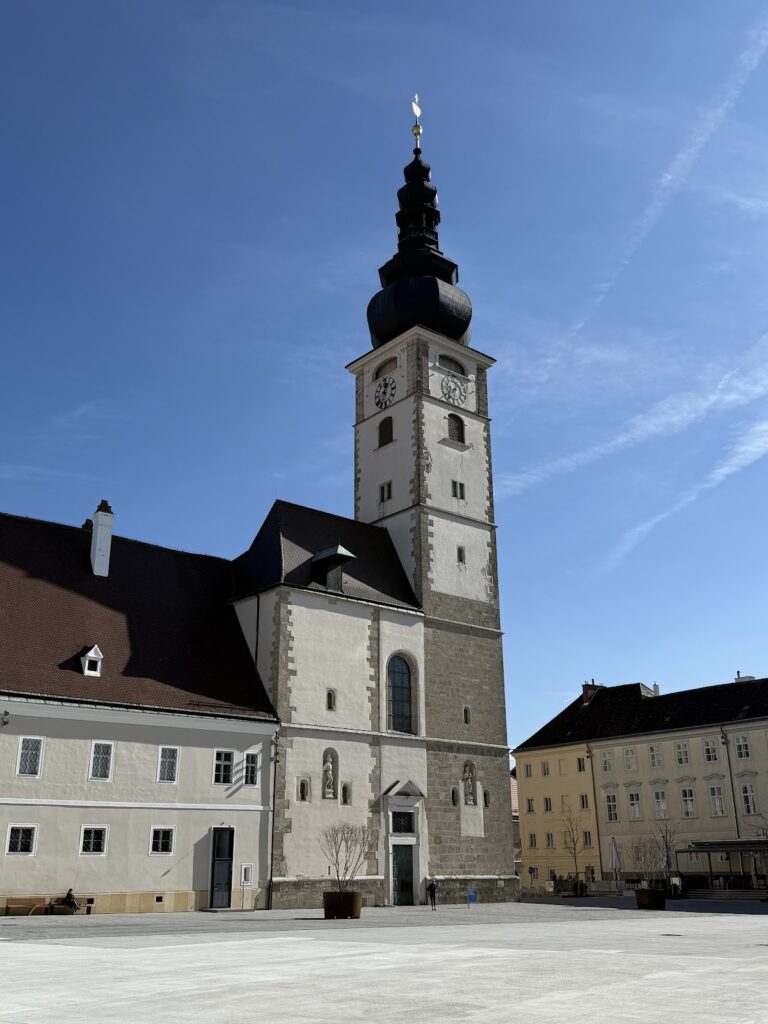
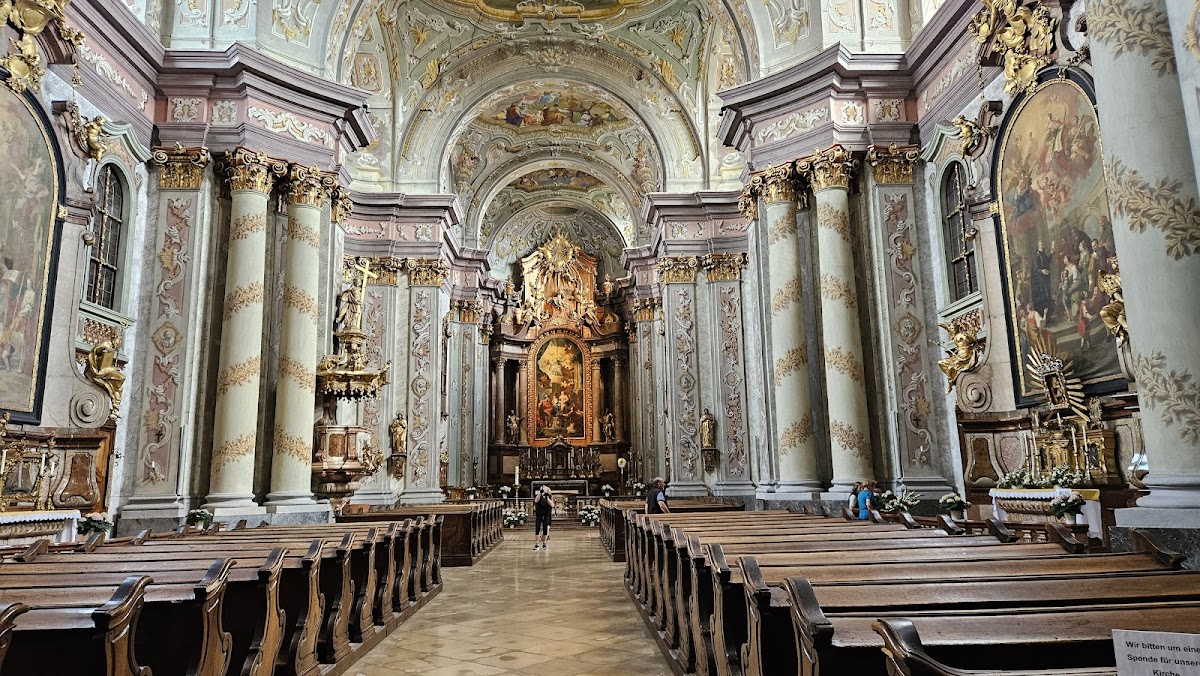
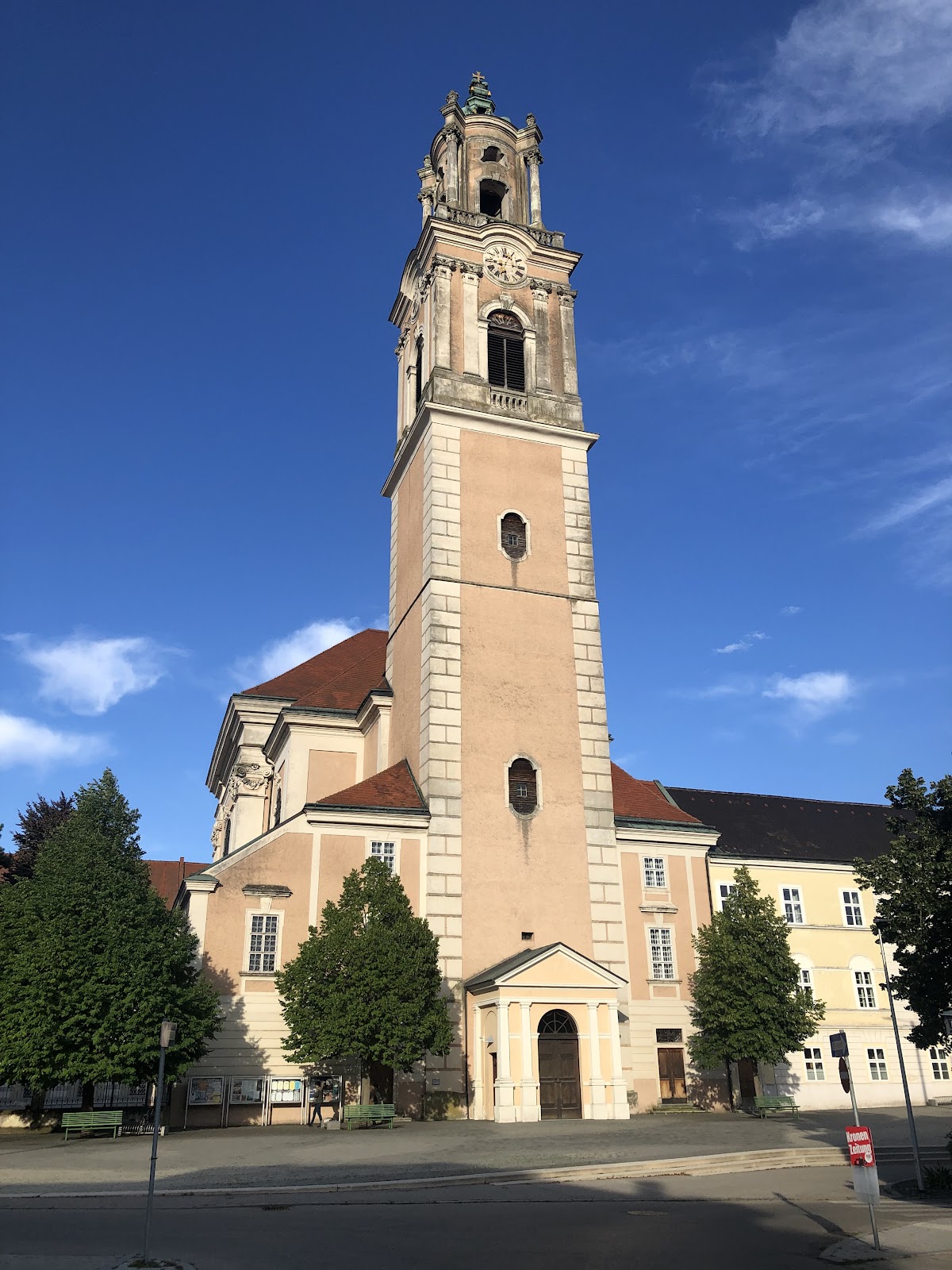
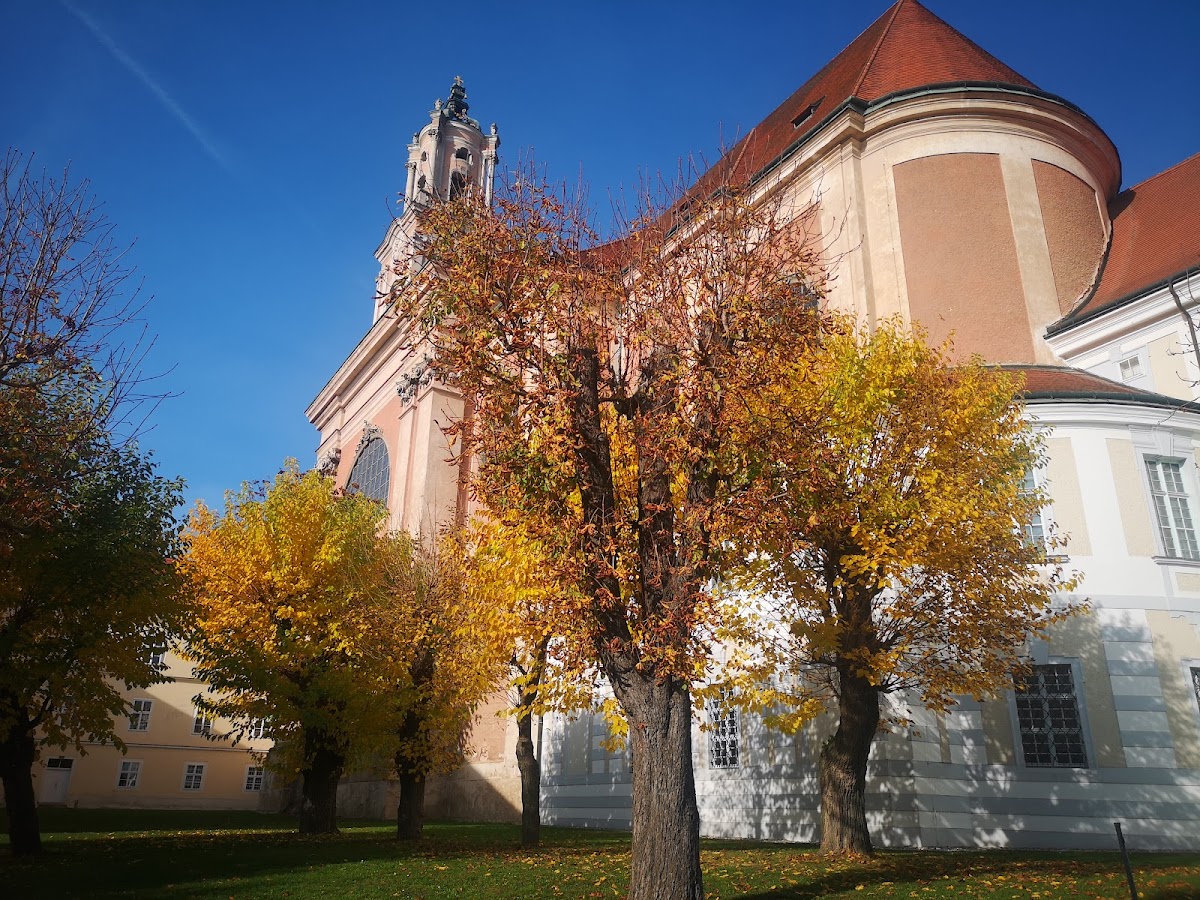
The collegiate and parish church was founded by Emperor Henry II around 1014. As a parish church it is dedicated to St. Stephen the Protomartyr, following the patron of Passau Cathedral, and it also bears the patronage of St. George. Only limited elements of the earlier Gothic church survive, including the entrance portal and the second story of the tower.
The present church began in 1743 as the first project of the young architect Franz Munggenast, Joseph Munggenast’s son. Johann Joseph Resler contributed substantially to its interior decoration, while Daniel Gran and Bartolomeo Altomonte painted the ceiling frescoes. More than four decades passed before the church was completed, making it the last major Baroque church building in Austria.
Organ and Bells
Johann Hencke built the church organ in 1752. It has 40 stops arranged across three manual divisions and a pedal. Its second manual, the Great Positive, has a layout similar to the principal manual, known as the Hauptwerk.
The principal peal consists of five bells sounding a, c-sharp, e, f-sharp, and a. Franz Ulrich Scheichel cast the large bell in Vienna in 1719, while the other four were cast there in 1948 by the Pfundner bell foundry. A separate death bell, sounding f-sharp, was cast in Krems in 1707 by Mathias Prininger. The large bell, known as the Pummerin or Bummerin, measures 188 centimetres in diameter and weighs 3,864 kilograms. Since September 2019, it has again hung from a wooden yoke.
Collections and Antiquities
The priory’s collection places particular emphasis on Late Gothic art, including panel paintings, painted altarpieces, sculptures, and stained glass, as well as works by masters of the later Danube school. The complex also contains a treasury, a Baroque picture gallery with religious and non-religious subjects, a library holding manuscripts and incunabula, and a coin and medal collection. An incunable is a European book printed before the beginning of the sixteenth century, during the earliest period of movable-type printing.
Among the antiquities is a well-preserved Roman facial helmet dating to about AD 150. It was found in a gravel pit in the surrounding region and forms part of the priory’s historical collection.
Nearby sites