Castles in Spain: Explore Hilltop Fortresses, Royal Palaces and Town Walls
Castles in Spain range from compact strongholds built on rock to royal residences organised around courtyards, gardens and ceremonial halls. This collection also includes forts, citadels, towers, town walls and fortified religious buildings, together with palaces and manor houses. The surviving structures show different ways of protecting a settlement, housing a court or controlling an approach.
The map and grid link these places to articles on their defences, rooms and later alterations. The examples below include a mountain castle, a circular royal residence, Nasrid and Bourbon palaces, an extensive town enclosure and an artillery citadel.
Primary Function: All
Type: All
Civilization: All
Popularity: All
Rating: All
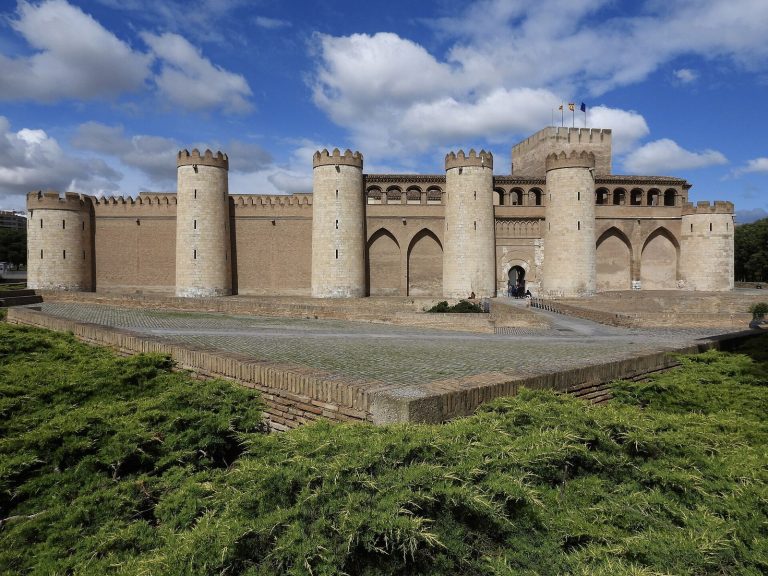
Aljafería is a Taifa-period fortified palace begun between 1065 and 1081 for the Banu Hud rulers of Zaragoza. Its Islamic, Mudéjar, Renaissance,…
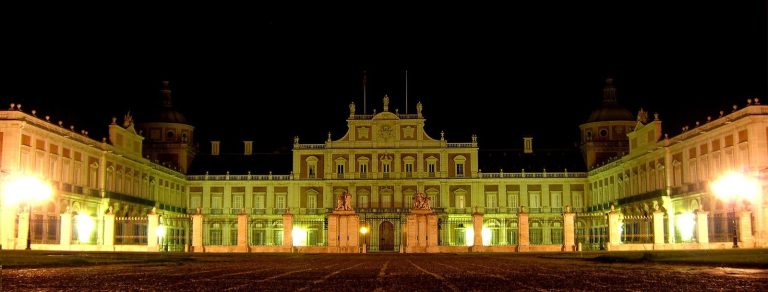
The Royal Palace of Aranjuez developed from a medieval hunting reserve into a major seasonal residence of the Spanish monarchy, shaped by Habsburg…
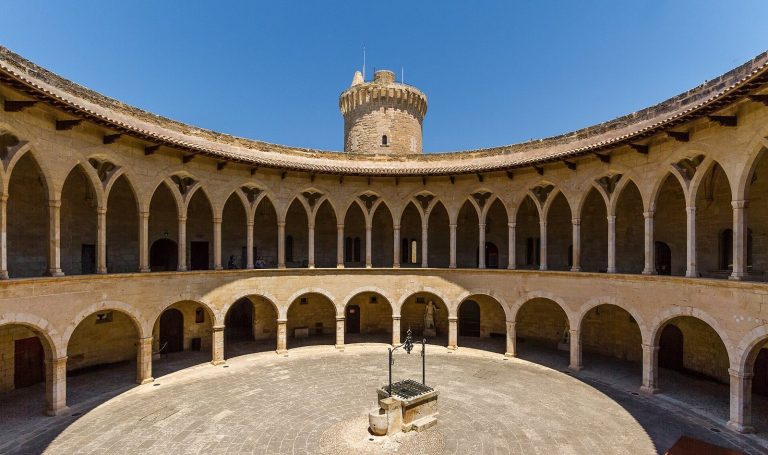
Bellver Castle in Palma, Spain, is a fourteenth-century Catalan Gothic fortress built for the kings of Mallorca. Its circular plan, layered defenses,…
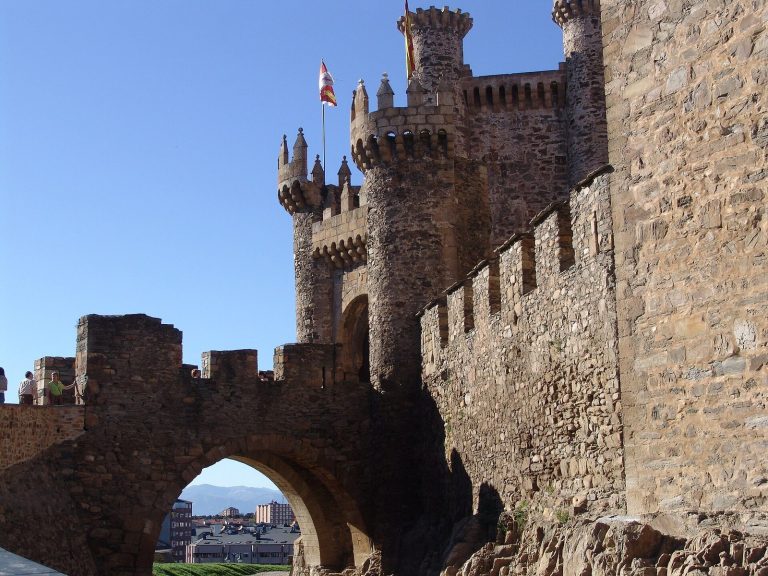
Templar Castle of Ponferrada in León, Spain, developed from a twelfth-century Templar commandery into a major medieval fortress, later damaged by…
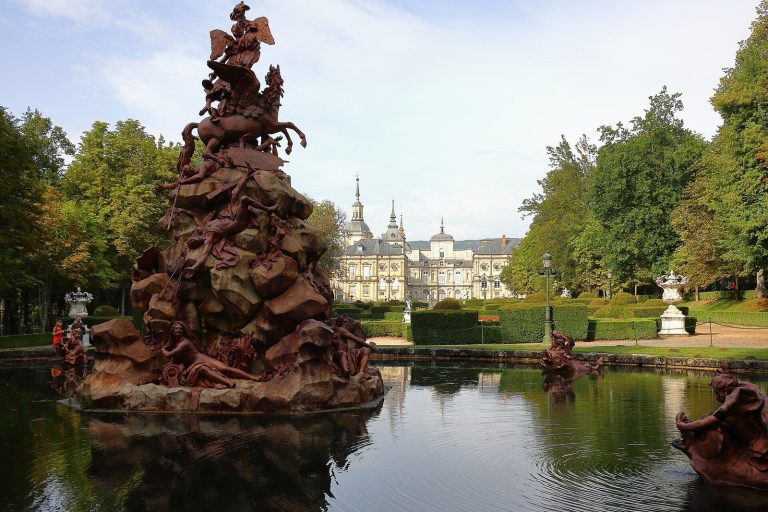
The Royal Palace of La Granja de San Ildefonso developed from a medieval hunting lodge and Hieronymite farm into a major Bourbon summer residence,…
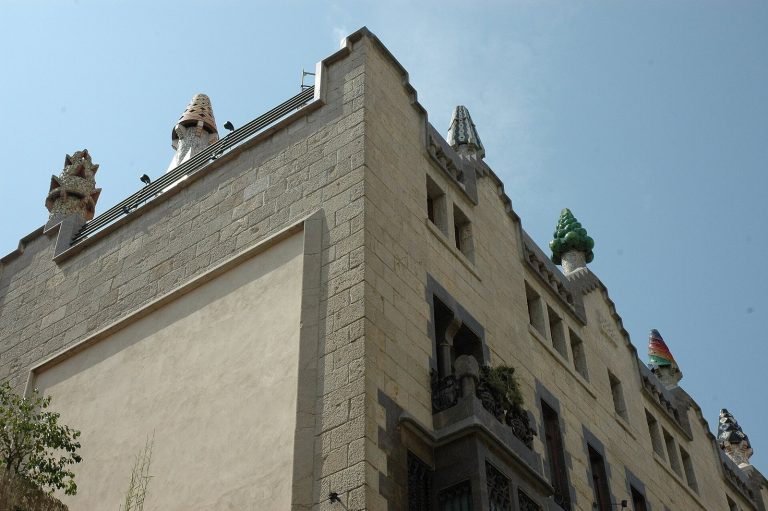
Palau Güell is a Barcelona residence designed by Antoni Gaudí for the industrialist Eusebi Güell between 1886 and 1890. Its innovative structure,…
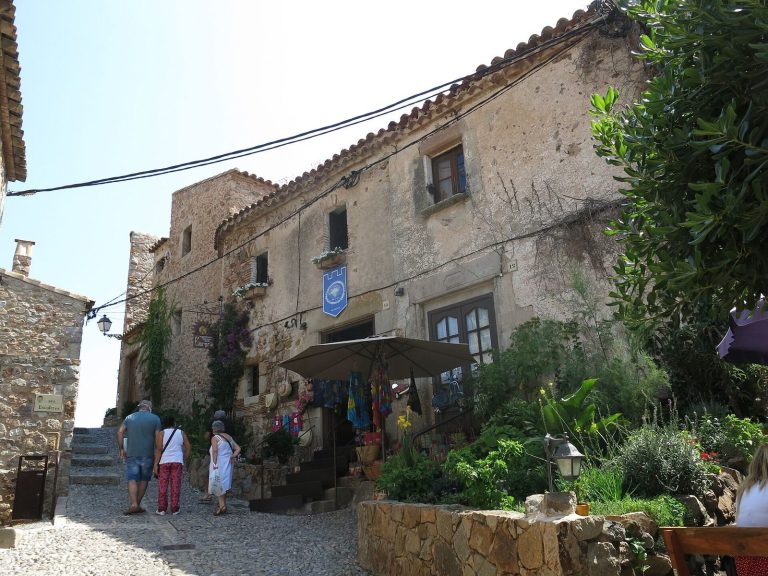
Vila Vella is the fortified old town of Tossa de Mar, shaped by medieval Benedictine lordship, coastal defence, later abandonment, and…
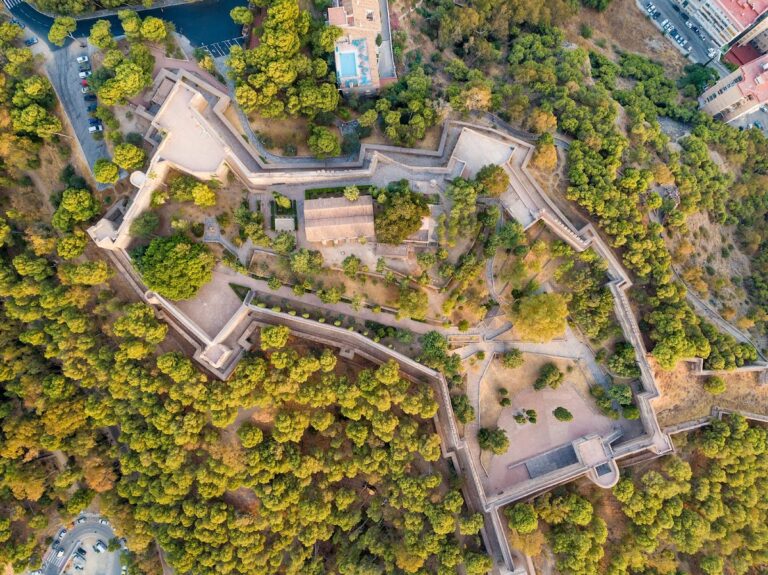
Castle of Gibralfaro in Málaga developed from a Phoenician lighthouse site into a medieval fortress, Nasrid alcázar, and military complex protecting…
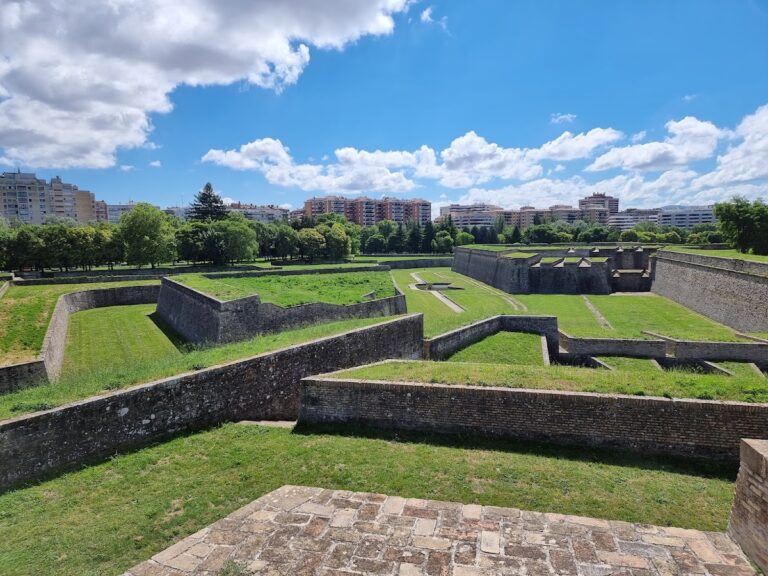
The Citadel of Pamplona is a Renaissance fortress built between 1571 and 1645, later shaped by military conflicts, urban expansion, conservation, and…
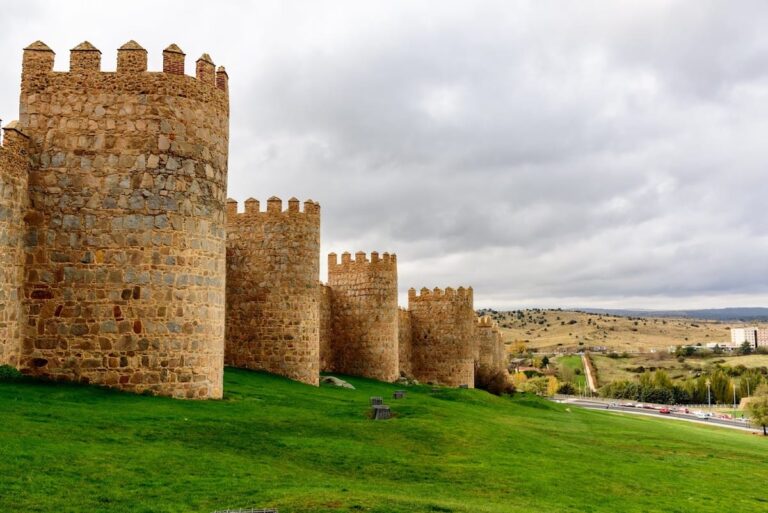
The Walls of Ávila form a medieval defensive enclosure around the historic center of Ávila, reflecting centuries of construction, adaptation, and…

The Alcazaba of Almeria in Spain is a hilltop fortified complex founded in 955 under Abd ar-Rahman III. Enlarged by later Muslim rulers and…
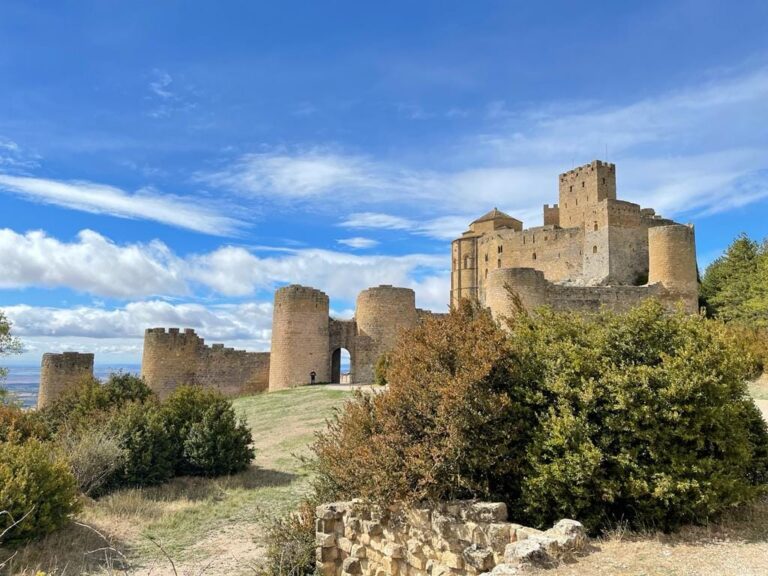
Castle of Loarre is an exceptionally preserved Romanesque fortress in Aragon, built as a frontier outpost and later enlarged into a combined military…
For details on how to use the maps, which sites are included, how popularity and ratings are determined, and how sites are classified, see the help page.
On this page5 sections
Rocky strongholds and circular royal castles
Loarre Castle uses its limestone promontory as part of the defensive structure. The rock beneath the walls made undermining difficult, while a separate outer enclosure added towers and protected the approaches. Within the castle, a barrel-vaulted entrance stair leads past the crypt towards the Romanesque Church of Saint Peter. Its carved capitals, apse and dome belong to a complex that housed a religious community as well as military and noble occupants.
Bellver Castle above Palma is organised around a circular courtyard. Rounded arches line the lower gallery, with pointed arches above; residential chambers and a chapel occupy the surrounding building. A separate round keep is connected to the roof terrace by a bridge. Bellver’s regular geometry provides a clear contrast with Loarre’s arrangement around the rock, while its arcaded court and vaulted upper rooms make the royal accommodation especially legible.
Palace fortresses and royal residences
The Alhambra combines a defensive enclosure with several Nasrid palace complexes. The western Alcazaba contained guard accommodation, stores, a kitchen and water facilities. Farther along the promontory, the Comares Palace is arranged around the Court of the Myrtles, whose long pool leads the eye towards the tower containing the Hall of Ambassadors. Administrative rooms, reception halls and domestic quarters occupied distinct parts of the palace precinct.
The Royal Palace of Madrid belongs to a later model of royal residence. Built after the old Alcázar burned in 1734, it has a monumental square plan around a large courtyard. Its granite and limestone façades use columns, pilasters and balconies to articulate the principal floors. Inside, the Throne Room combines a painted ceiling, mirrors, sculpture and embroidered velvet. The comparison with the Alhambra concerns the organisation and presentation of royal life, rather than two equivalent military castles.
Ávila: medieval town walls
The Walls of Ávila extend around the historic centre, with closely spaced towers and fortified gates. The eastern side faces more approachable ground and received particularly strong defences. At the Alcázar Gate, two tall towers are linked by an elevated bridge above the entrance.
The circuit also incorporates reused Roman material, while repairs have altered some upper features. Its scale and relationship with streets distinguish a town enclosure from the walls of an individual castle: gates regulated movement into an inhabited urban area, and the defensive line had to accommodate the terrain around its entire perimeter.
Pamplona Citadel: bastions and artillery defences
The Citadel of Pamplona was laid out as a five-pointed star, with projecting bastions positioned to cover the approaches with defensive fire. Later outworks strengthened the spaces beyond the principal enclosure. Two bastions facing the city were partly demolished, so the surviving plan is incomplete, but substantial walls, moats and military buildings remain.
Inside are a powder magazine, a storehouse for combustible supplies and an arms hall. These buildings supported a garrison within a purpose-built artillery complex. The broad surrounding ground was also part of its defence, kept open so that buildings could not shelter an approaching force.
Explore the collection
Explore sites on the map or in the grid. Map icons reflect each site’s primary function, helping you identify different kinds of places at a glance. Narrow this collection by primary function, by a site type within the castle and residence group, or by civilization and era. Additional filters cover popularity and rating. Select a map marker to view the site’s details and open its article, or open the article from its grid entry.