Castles in Ireland: Explore River Strongholds, Tower Houses and Historic Residences
Castles in Ireland include large enclosures beside rivers, fortified tower houses and residences expanded with later domestic wings. Some preserve extensive defensive masonry, while others combine restored rooms with gardens and estate buildings developed over several centuries. The collection brings these castles together with forts, palaces and other residences in the wider castle group.
The examples below focus on substantial standing structures and the way their accommodation was arranged. They include both broad courtyard castles and more compact tower houses, with later additions that changed how their owners lived within the defences.
Primary Function: All
Type: All
Civilization: All
Popularity: All
Rating: All
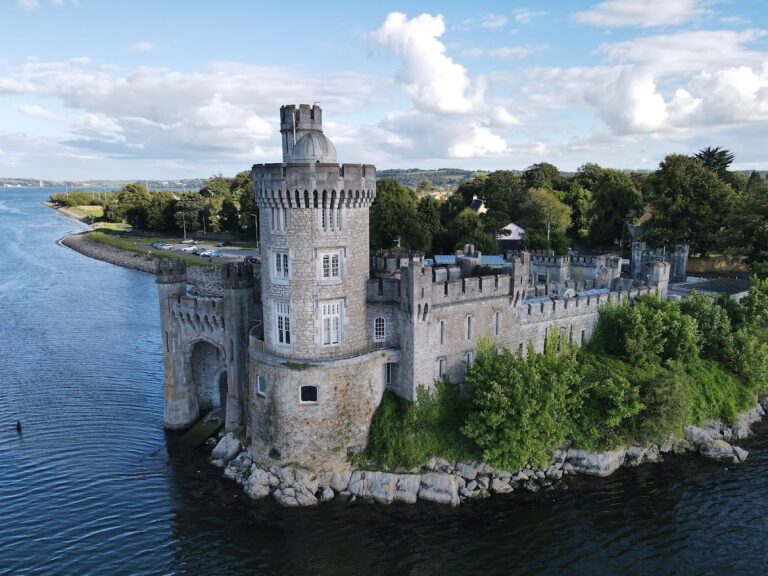
Blackrock Castle on the River Lee began as a sixteenth-century coastal fortification protecting Cork Harbour and later became a neo-Gothic complex,…

Birr Castle traces its history to an Anglo-Norman fortress established in 1170 and later became the home of the Parsons family. Its demesne preserves…

Slane Castle in County Meath has been the principal seat of the Conyngham family since 1701. Reconstructed in 1785, it remains associated with the…
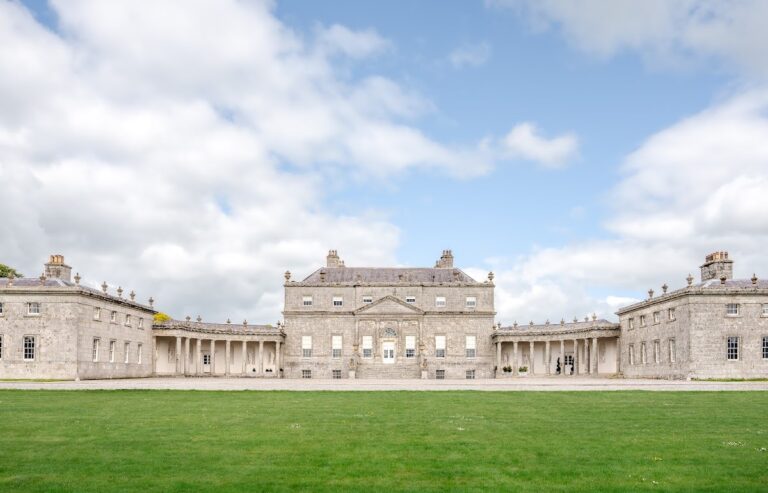
Russborough House is an eighteenth-century Georgian Palladian estate near Blessington, County Wicklow, built for Joseph Leeson and later preserved…
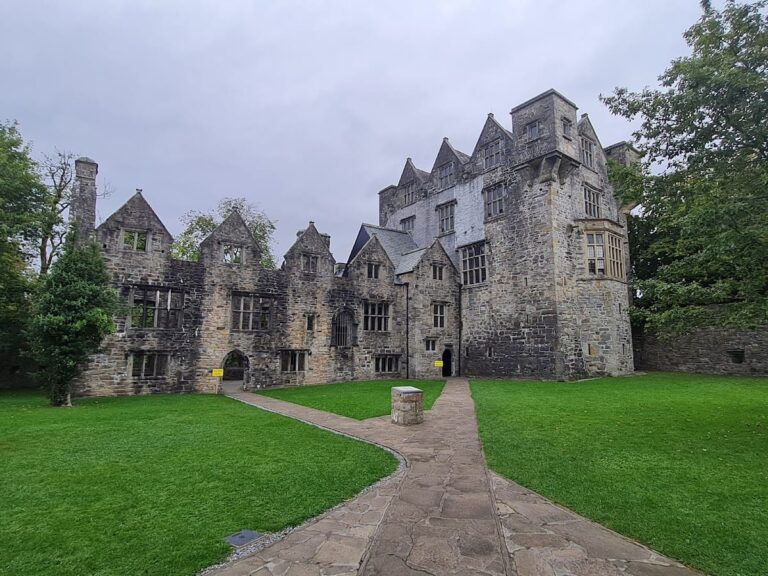
Donegal Castle was built by an O’Donnell chief in 1474 and became the seat of the rulers of Tir Conaill. Damaged after the Flight of the Earls, it…
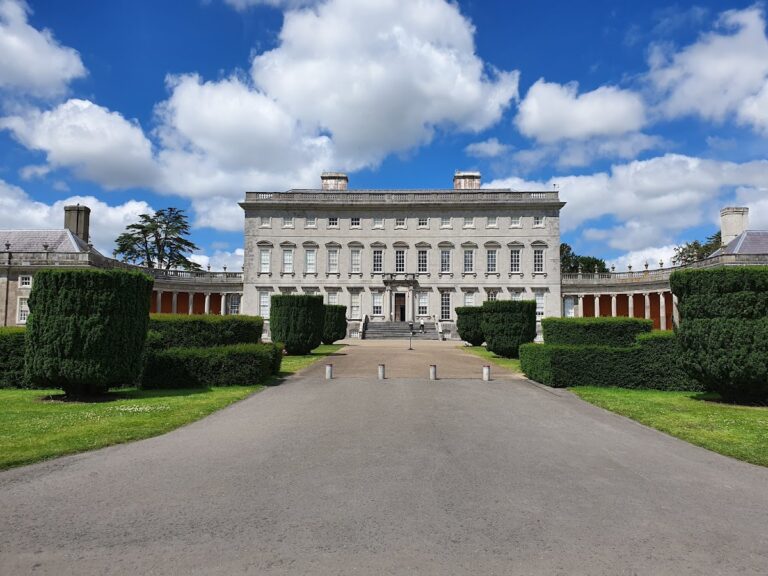
Castletown House in County Kildare was built from 1722 for William Conolly and developed through the eighteenth century as the centre of an extensive…
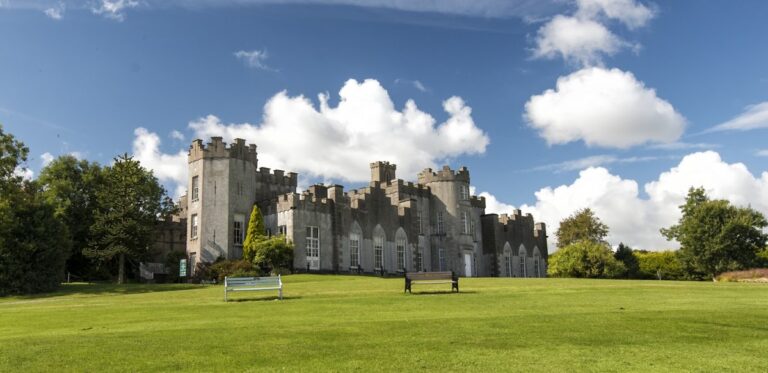
Ardgillan Castle is an eighteenth-century country house in County Dublin, developed by the Taylor family and later restored as a public historic…
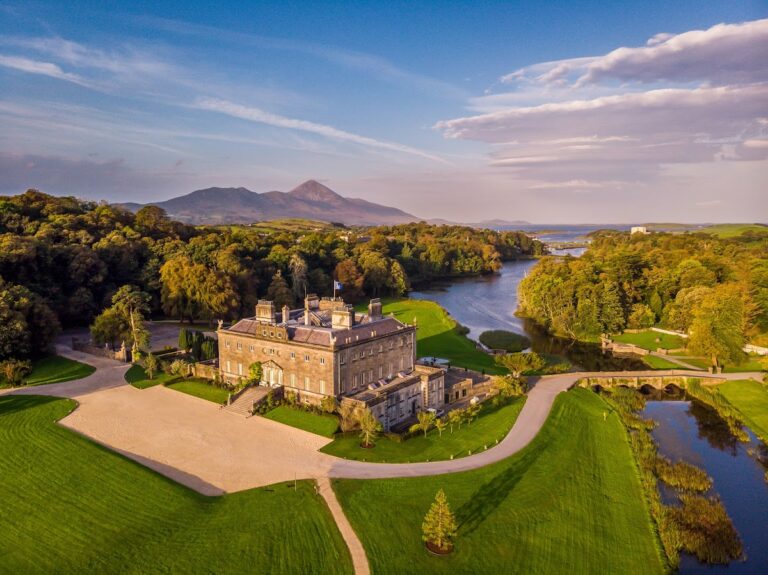
Westport House developed on the site of an O’Malley fortress and remained associated with the Browne family for almost 300 years. Its history…

The Rock of Dunamase is a fortified site in County Laois with origins in a ninth-century hill fort and a castle built during the second half of the…
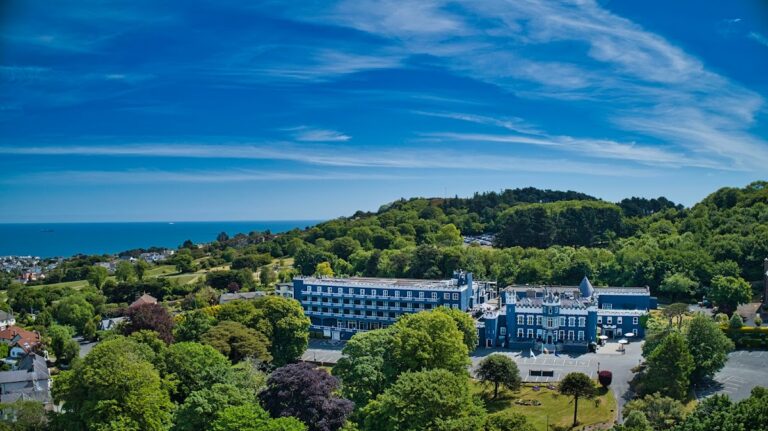
Killiney Castle began as the Georgian Mount Malpas estate around 1740, was remodelled with Gothic features in the nineteenth century, and later…
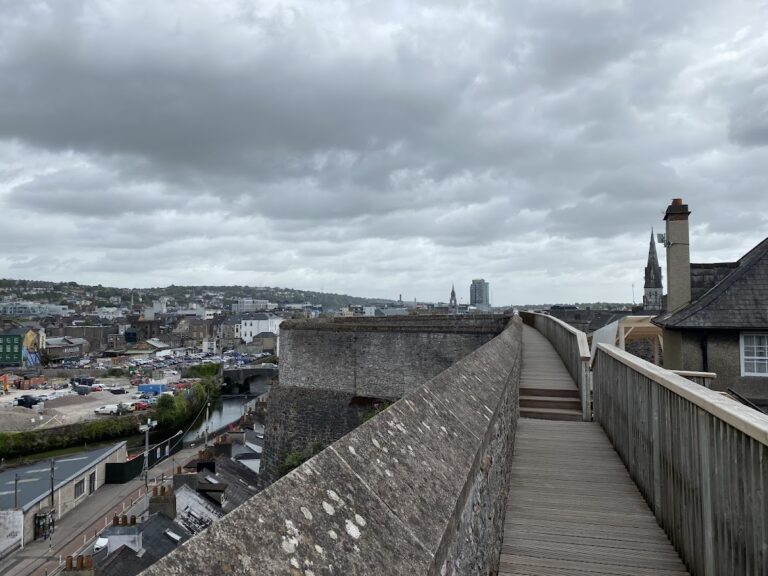
Elizabeth Fort in Cork developed from a 1601 timber-and-earth fortification into a seventeenth-century star fort, later serving as a barracks,…

Swords Castle was built around 1200 as the residence of John Comyn, Archbishop of Dublin. Its large pentagonal enclosure, chapel, gateway, and…
For details on how to use the maps, which sites are included, how popularity and ratings are determined, and how sites are classified, see the help page.
On this page5 sections
River strongholds and defensive enclosures
Cahir Castle occupies a rocky island in the River Suir. Its substantial towers, curtain walls and courtyards developed through repeated building campaigns, beginning in the thirteenth century and continuing with later enlargement. Narrow passages and winding stairs connect parts of the enclosed complex, while a portcullis protects a gateway.
The Great Hall belongs to the residential and ceremonial side of the castle and was partly rebuilt in the nineteenth century. Cahir’s surviving masonry therefore contains several periods, rather than one unchanged medieval plan. The island position and succession of defended spaces remain central to understanding the stronghold.
King John’s Castle in Limerick uses a broad perimeter with large round towers and no central keep. Projecting towers allowed defenders to cover the adjoining walls, and the entrance stood between two towers with an outer defensive approach. The courtyard formerly contained a hall, kitchens and stables.
Much of that internal accommodation has disappeared, while restored walls and towers retain the main defensive outline. This provides a useful counterpart to castles organized around a large residential tower: here the perimeter itself supplied the principal strongpoints around a shared open court.
Tower houses and later domestic wings
Bunratty Castle is a substantial fifteenth-century tower house. Its present building belongs to a succession of castles at the site, and the earlier structures should not be confused with the standing tower. Later owners altered and improved the residence, including its roofing.
The restored interior contains furniture, tapestries, paintings and other objects from later centuries. These furnished rooms help explain the domestic use of a large fortified tower, while the dates of the objects differ from those of its medieval masonry. The adjoining folk park is a separate group of historic buildings around the castle.
Donegal Castle combines a fifteenth-century tower house with a later Jacobean manor range. The connecting wing, larger windows and new gable changed the accommodation while retaining the older tower as part of the complex. A small gatehouse controls entry through the enclosing boundary.
The tower received new floors and a roof during the restoration of the early 1990s, and the manor range was also repaired. Its visible form makes the extension from compact tower to larger residence clear, while the reconstructed timberwork needs to be distinguished from the earlier stone walls.
Malahide Castle: historic rooms and estate gardens
Malahide Castle developed as a long-lived residence within a substantial estate. Its rooms include the Gothic Great Hall and the Oak Room, while restored masonry preserves a building enlarged and altered over successive periods.
The grounds extend the residential setting with a walled garden, glasshouses and a landscaped park. These belong to the estate’s later development and plant-collecting history. The house and gardens therefore provide a broader domestic complex than a tower house enclosed by a small defensive boundary.
Birr Castle: gatehouse origins and estate buildings
Birr Castle developed around the gatehouse of an earlier stronghold. Seventeenth-century additions extended diagonally on either side, establishing the plan retained by the residence. A bridge over a dry moat separates its immediate surroundings from the wider park.
The estate includes a historic iron bridge and the Great Telescope, whose large supporting structure and instrument were reconstructed in the 1990s. These later features belong to the scientific and domestic history of the castle grounds. They add a different set of substantial structures to a residence whose plan began with a fortified entrance.
Explore the collection
Explore sites on the map or in the grid. Map icons reflect each site’s primary function, helping you identify different kinds of places at a glance. Narrow this collection by primary function, by a site type within the castle and residence group, or by civilization and era. Additional filters cover popularity and rating. Select a map marker to view the site’s details and open its article, or open the article from its grid entry.