Blackrock Castle: A Coastal Fortification and Observatory in Ireland


Site at a Glance
- Rating
- 4.4
- Popularity
- Medium
- Country
- Ireland
- Primary era
- Modern
- External website
- Open
- Eras represented
- Early Modern, Modern
- Civilizations
- British, Irish
- Site type
- Military
- Remains
- Castle
On this page7 sections
History
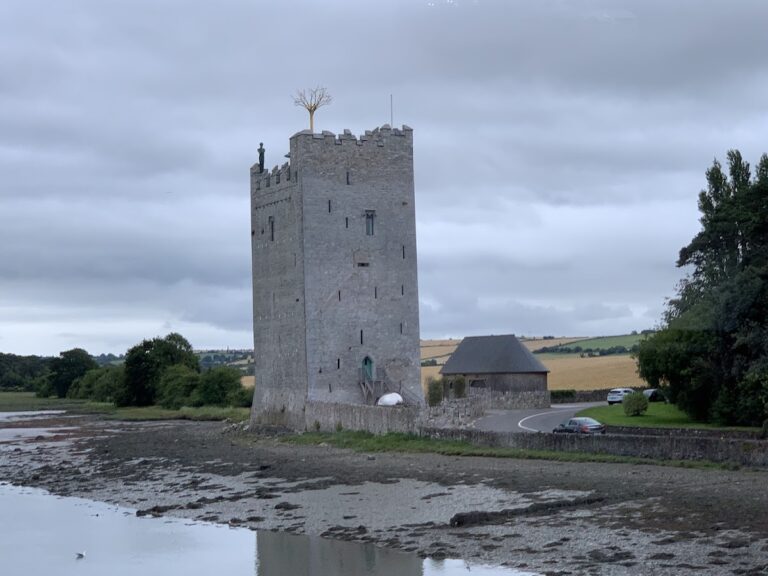
Blackrock Castle is a coastal fortification in Ireland, located about 2 kilometres from Cork city centre on the River Lee. First established in 1582, it developed into the neo-Gothic complex created by rebuilding in 1828 and 1829. Its original purpose was to protect upper Cork Harbour and the port from pirates and other invaders.
Foundation and civic ownership
In the late sixteenth century, the citizens of Cork petitioned Queen Elizabeth I, the English monarch who ruled from 1558 to 1603, for a fort at Blackrock. A round tower was added around 1600, and the castle had been redeveloped by 1604. James I, who succeeded Elizabeth and ruled England and Ireland from 1603 to 1625, granted a charter in 1608 that placed the castle under the ownership of Cork.
The municipal government of Cork, known as Cork Corporation, used the fortification for civic purposes as well as defence. The Council Book of Cork mentions Blackrock Castle in 1613 and 1614. In 1722, fire destroyed the old four-storey tower, which the citizens rebuilt at a cost of £296. The corporation also held banquets and other festive gatherings there.
Civic ceremonies and nineteenth-century rebuilding
Some gatherings were connected with the custom known as “throwing the dart,” held at least from the eighteenth century every three years in August. During the ceremony, the mayor threw a dart about four feet long from a boat to signify the corporation’s jurisdiction over the harbour.
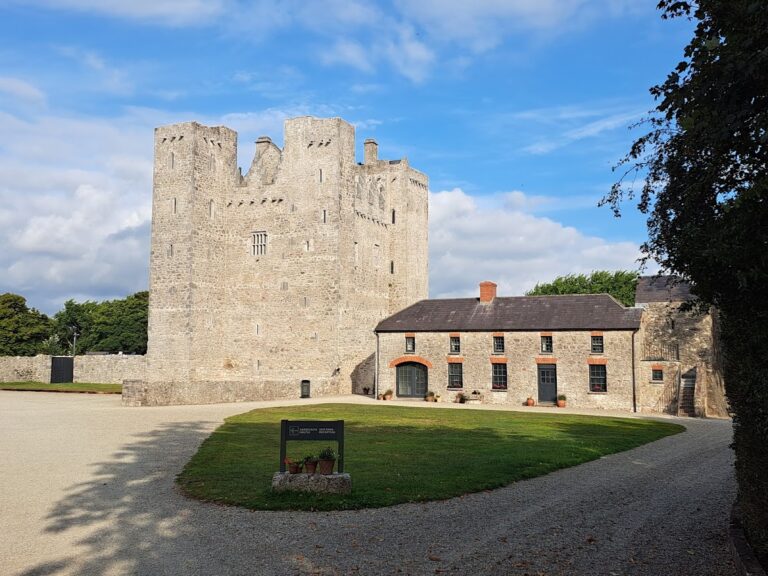
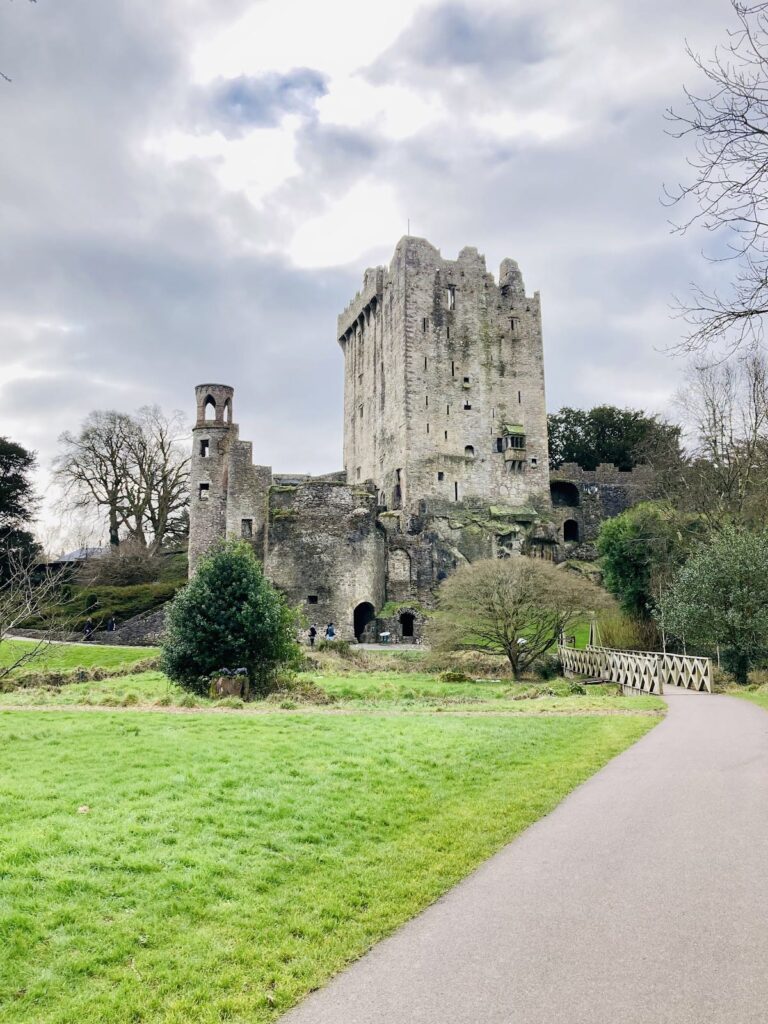
A banquet was followed by another destructive fire in 1827. Reconstruction began in 1828 under Mayor Thomas Dunscombe and was completed in March 1829. George Richard Pain and James Pain directed the work, which cost the city of Cork £1,000. Three storeys were added to the earlier tower, and the associated outbuildings were reconstructed. The resulting neo-Gothic complex, using Gothic-inspired forms revived in the nineteenth century, established the essential form of the castle that survives.
Changing uses in the modern period
During part of the twentieth century, Blackrock Castle passed into private ownership. It served successively as a private residence, offices, the headquarters of a rowing club, and a restaurant. Cork Corporation reacquired it in 2001 and began adapting the complex as an observatory and museum.
An observatory was added in 2002. In the early 2000s, Cork City Council, Cork Institute of Technology, a higher-education institution involved in scientific and technical research in Cork, and a private benefactor worked together on the redevelopment. The resulting “Cosmos at the Castle” project opened in 2007 as a centre for scientific research, public outreach, and communication.
Remains
Blackrock Castle is a limestone fortification built with ashlar masonry, meaning regularly dressed stone blocks laid in orderly courses. The surviving neo-Gothic buildings are arranged around an inner courtyard. The complex rises five storeys and reaches more than 100 feet, or approximately 30 metres, in height, combining the earlier waterside tower with the nineteenth-century buildings around it.
Waterfront tower
The earliest surviving part is a circular tower standing at the water’s edge. It measures 10.5 metres in diameter, and its walls are 2.2 metres thick. The tower was enlarged during the rebuilding of 1828 and 1829, when three storeys were added and the surrounding outbuildings were reconstructed. Its present form therefore incorporates the earlier defensive structure within the taller neo-Gothic complex.
Courtyard buildings and astronomy facilities
The buildings surrounding the inner courtyard form the main neo-Gothic group. They now contain an interactive astronomy centre, an observatory, laboratories used by astronomical researchers from Cork Institute of Technology, and a restaurant. Earlier exhibitions included a “tour of the universe” and a radio telescope that allowed school groups to transmit composed messages toward nearby stars. These facilities give the rebuilt coastal fortification a scientific and educational use alongside its surviving historic fabric.