Cahir Castle: A Medieval Fortress on the River Suir


Site at a Glance
- Rating
- 4.6
- Popularity
- Medium
- Country
- Ireland
- Primary era
- Medieval
- External website
- Open
- Eras represented
- Medieval, Early Modern
- Civilizations
- Irish
- Site type
- Military
- Remains
- Castle
On this page8 sections
History
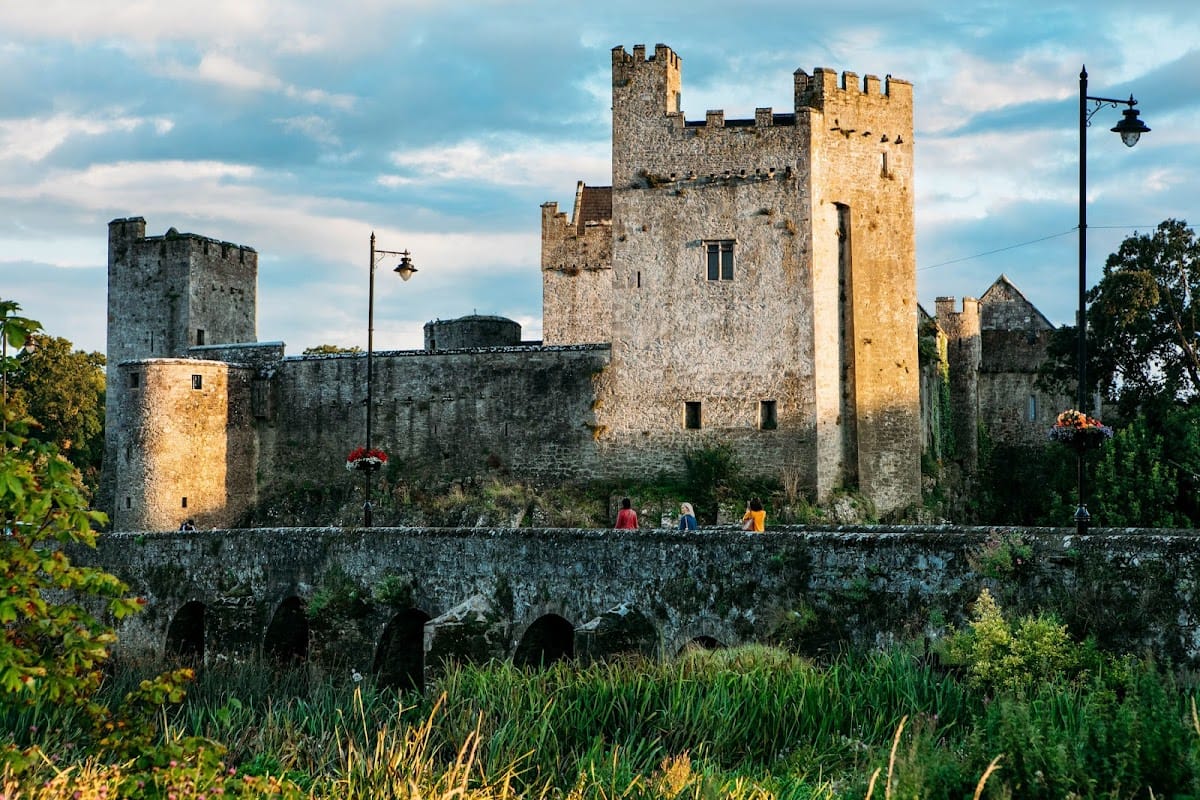
Cahir Castle is a medieval Irish fortress in Cahir, Ireland, built on an island in the River Suir by rulers associated with the O’Brien dynasty. Construction began in 1142 under Conchobar Ua Briain, King of Thomond, while the castle’s central structure took shape in the thirteenth century. It developed from an earlier cathair, a fortified stone enclosure, which gave its name to both the castle and the locality.
Origins and the O’Brien stronghold
The earlier stone fortification stood against Norman expansion moving north from Ardfinnan Castle, about four miles to the south. The O’Brien family established the main medieval castle on and near this predecessor, creating a stronghold connected with the political power of Thomond, a medieval Irish kingdom centred in the region associated with the O’Brien family.
The Butler succession
In the late fourteenth century, Cahir Castle was granted to James Butler, who had been made Earl of Ormond in 1375 for his loyalty to Edward III of England. His son, James, the second Earl of Ormond, distributed lands around the barony of Iffa and Offa West among his children. The first Baron Cahir was created in 1542, establishing the title held by the head of the Cahir branch of the Butler dynasty.
The Cahir Butlers remained Roman Catholic and supported the Irish side during the Elizabethan wars, conflicts in which English efforts to extend royal control over Ireland met armed Irish resistance. This position set them apart from their Anglican relatives. In 1599, the Earl of Essex’s army took the castle after a three-day siege, and Sir Charles Blount controlled it for the following year.
Sieges and conflict in the seventeenth century
In 1601, Lord Cahir joined the Earl of Tyrone during the continuing Irish struggle for independence. He was attainted for treason, meaning that he was formally deprived of his legal rights and property, but later received a full pardon.
The castle was also the scene of a killing in 1627 arising from an inheritance dispute. Lord Dunboyne, Lord Cahir’s son-in-law, killed his distant cousin James Prendergast. Dunboyne faced trial but was acquitted.
During the Irish Confederate Wars, the conflicts fought in Ireland from 1641 to 1653 and ending with the English Parliamentary conquest led by Oliver Cromwell, Cahir Castle was besieged twice. In 1647, George Mathew, guardian of the young Lord Cahir, surrendered it to Murrough O’Brien, sixth Baron Inchiquin, after Inchiquin’s victory at the Battle of Knocknanauss. Murrough O’Brien later became the first Earl of Inchiquin.
Cromwell’s forces besieged the castle in 1650 during the conquest of Ireland. It surrendered without a shot being fired. In March 1653, Edmund O’Dwyer met Colonel Jerome Sankey at Cahir Castle, and they agreed a treaty. Irish forces in Counties Tipperary and Waterford surrendered two weeks later.
Decline, restoration, and state ownership
The Butler family enlarged and remodelled the castle between the fifteenth and seventeenth centuries. It fell into ruin in the late eighteenth century, before partial restoration began in the 1840s. The Great Hall was partly rebuilt in 1840.
After Richard Butler Charteris, the last resident representative of the Butler-Charteris family at Cahir, died in 1961, the estate was broken up and sold. Cahir Castle was later acquired by the Irish state and restored by the Office of Public Works. It opened to the public in 1971 and is a National Monument of Ireland managed by the Office of Public Works.
Remains
Island fortress and surviving complex
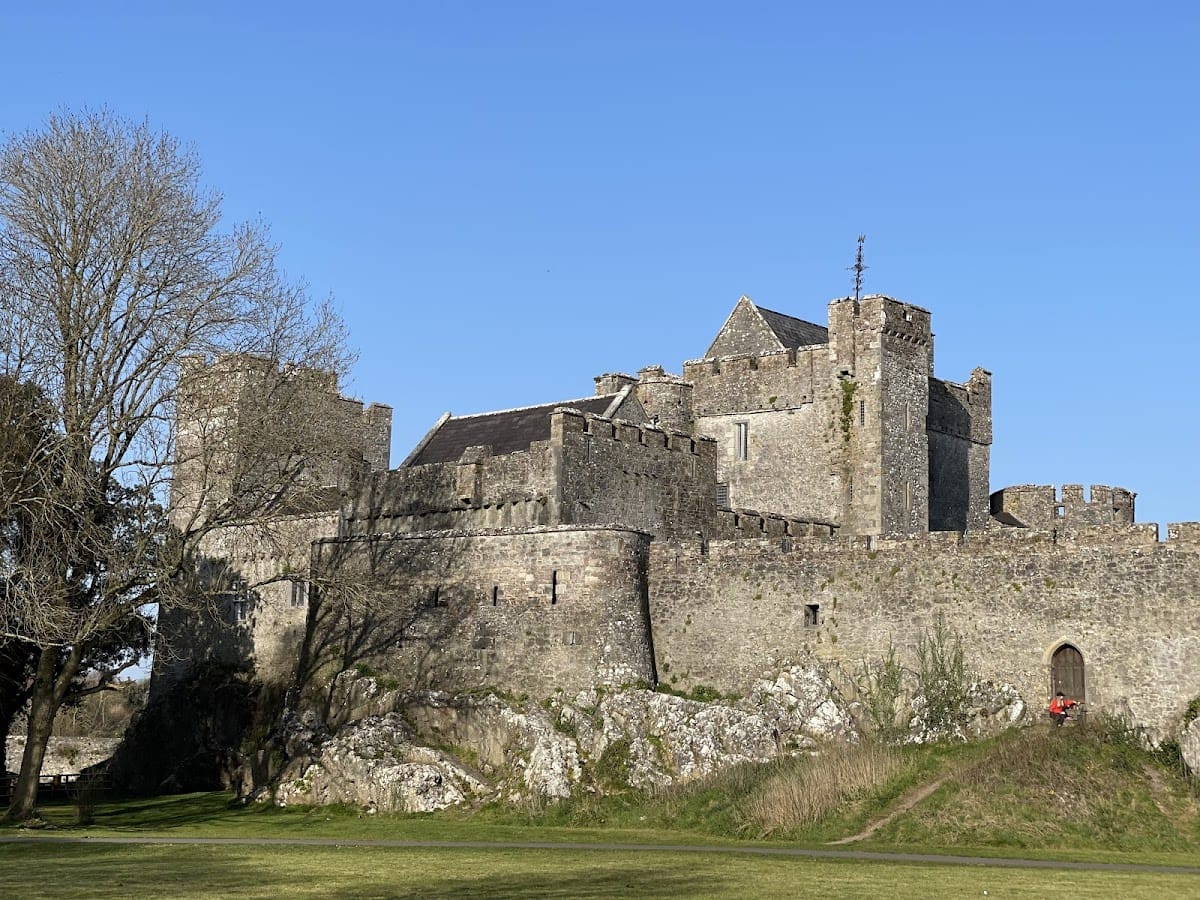
Cahir Castle occupies an island in the River Suir and now stands in the centre of Cahir, County Tipperary. It is one of Ireland’s largest castles and remains standing in a well-preserved state. Its surviving fabric combines the thirteenth-century core with later enlargement and remodelling carried out between the fifteenth and seventeenth centuries.
The complex has two principal parts formed through repeated rebuilding. The section beside the street was constructed about two centuries before the section that houses the audiovisual presentation. Together, these parts preserve the layered development of the fortress from its medieval construction through its later alterations.
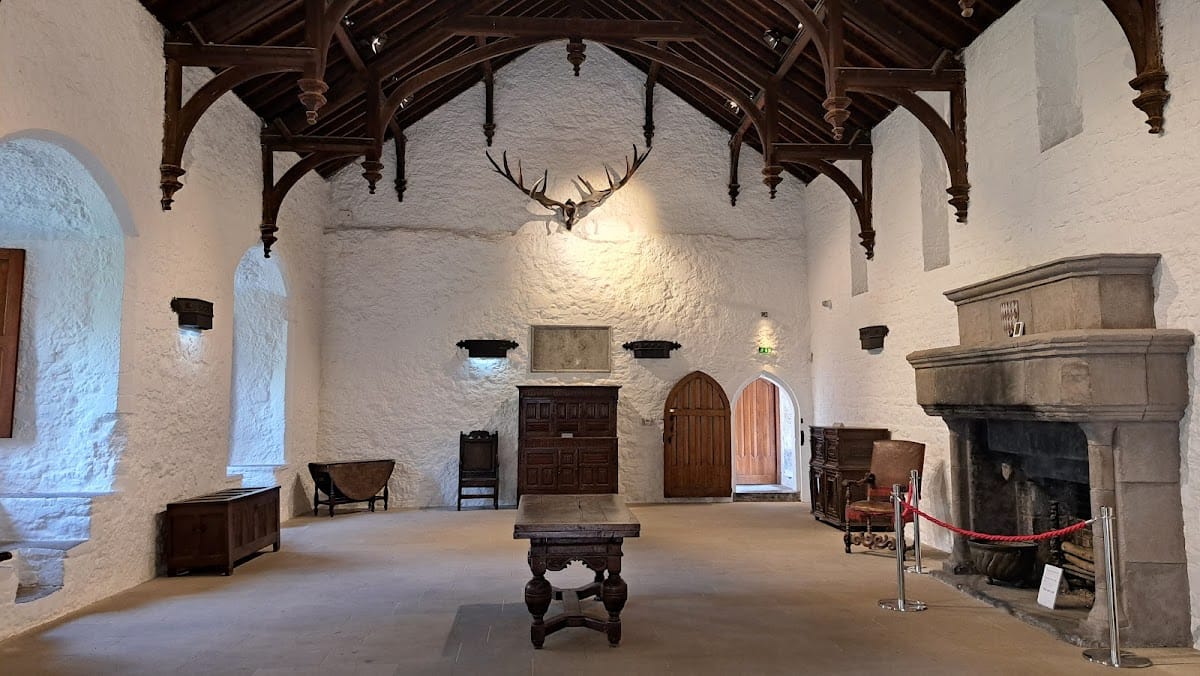
The Great Hall
The Great Hall forms part of the castle’s surviving historic fabric. It was partly rebuilt in 1840, linking the present appearance of this major interior space with the nineteenth-century restoration of the wider castle. Its fabric therefore reflects both the earlier castle and the later effort to recover portions of the building after its decline.