Slane Castle: Conyngham Family Seat in Ireland

Site at a Glance
- Rating
- 4.6
- Popularity
- Medium
- Country
- Ireland
- Primary era
- Early Modern
- External website
- Open
- Eras represented
- Early Modern
- Civilizations
- Irish
- Site type
- Domestic
- Remains
- Castle
On this page9 sections
History
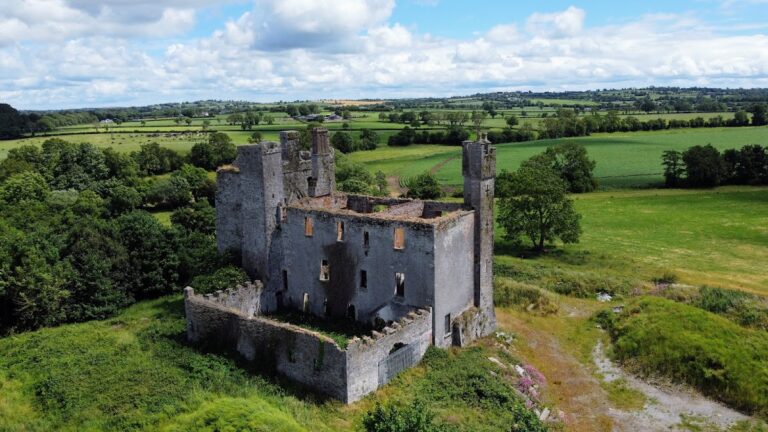
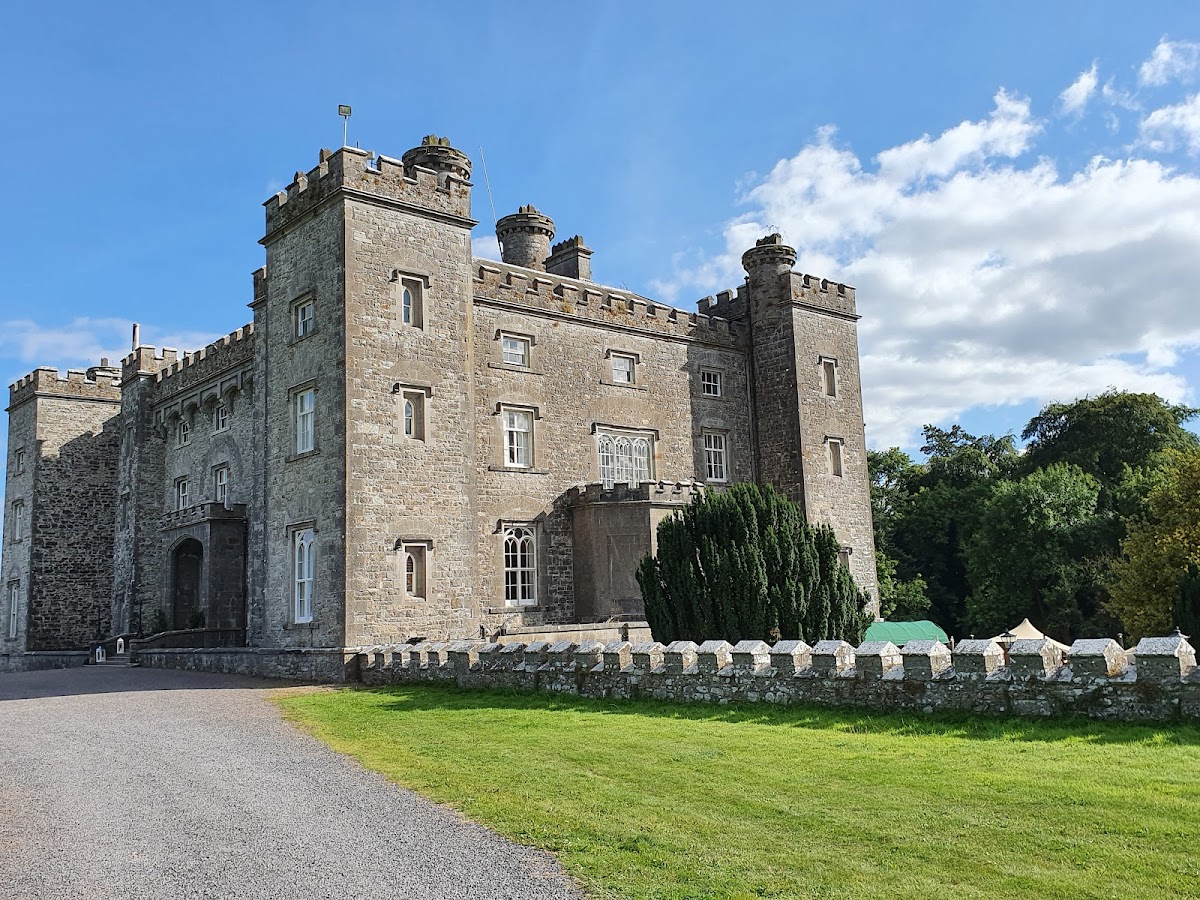
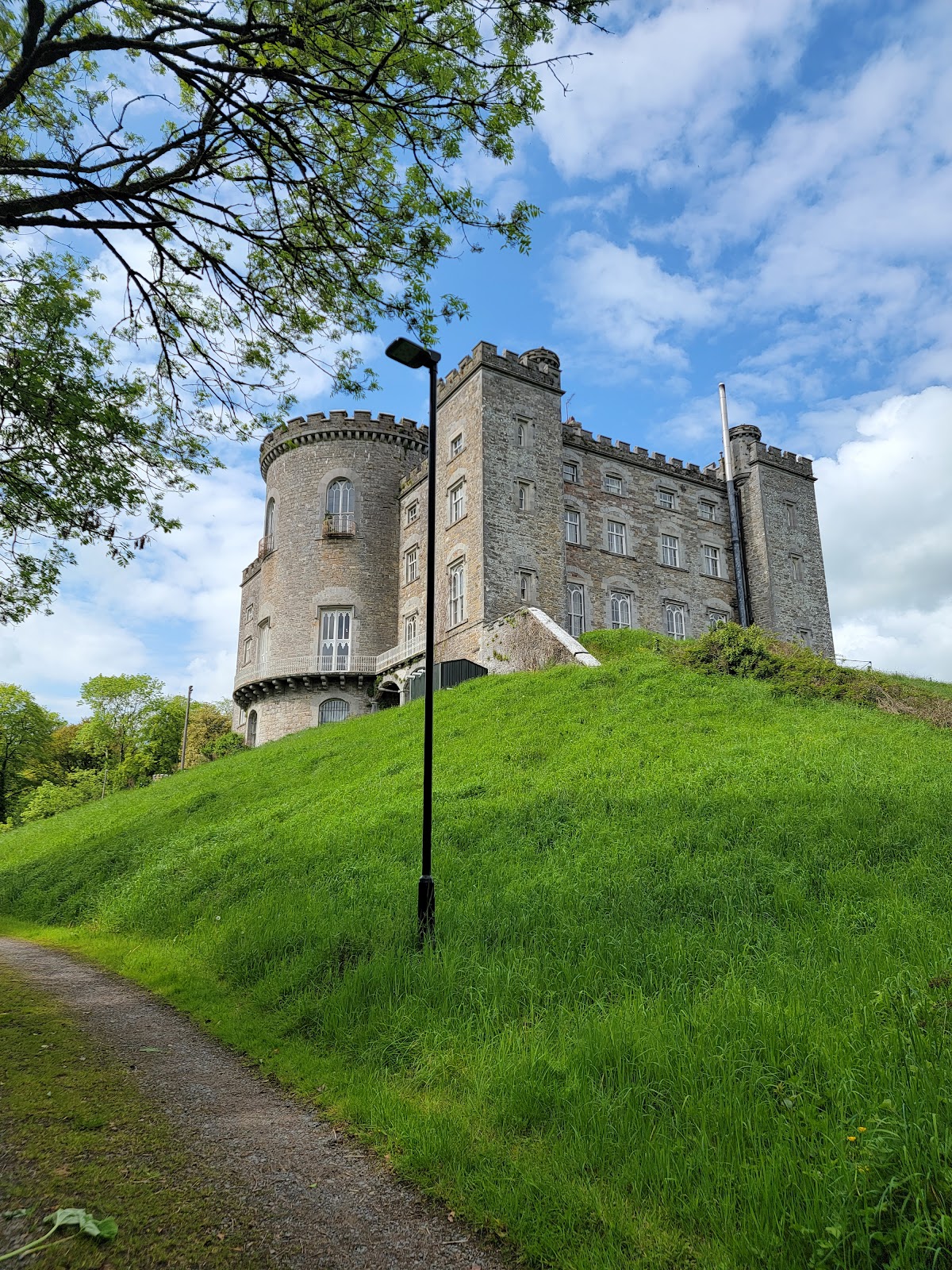
Slane Castle is a historic castle in Slane, County Meath, Ireland, overlooking the River Boyne in the Boyne Valley. Its present form dates principally from a reconstruction in 1785, and the estate has been the principal seat of the Conyngham family since 1701.
From the Flemings to the Conynghams
Before the Conynghams arrived, the Slane property belonged to the Catholic Fleming family. The Flemings supported the Jacobites during the War of the Grand Alliance, the conflict that followed the struggle between supporters of James II and William III. Christopher Fleming, the 17th Baron Slane, was the last Fleming lord of Slane. Queen Anne made him the 1st Viscount Longford in 1713.
The Conynghams were a Protestant Scottish family who came to Ireland in 1611 during the Plantation of Ulster, a seventeenth-century English and Scottish settlement programme that placed Protestant families in parts of northern Ireland. They first established estates in County Donegal. After the Williamite confiscations of 1701, which transferred property from many Jacobite supporters to supporters of William III, the family acquired land formerly held by the Flemings and moved its main residence from Donegal to Slane.
Brigadier-General Henry Conyngham purchased land at Slane in 1703. The castle in its present form was later constructed under the direction of William Burton Conyngham and his nephew Henry Conyngham, who became the 1st Marquess Conyngham.
The eighteenth-century reconstruction
A major reconstruction took place in 1785 under the direction of James Gandon, James Wyatt, and Francis Johnston, architects active in Ireland and Britain during the late eighteenth and early nineteenth centuries. This work established the principal form of the castle that survives today. The Conyngham family continued its association with the estate for more than three centuries.
Fire, restoration, and later use
In 1991, a fire caused extensive damage and gutted the eastern section facing the River Boyne. A ten-year restoration programme followed, and the castle reopened in 2001. Alexander, 9th Marquess Conyngham, is the present owner, while his eldest son is Rory, Earl of Mount Charles.
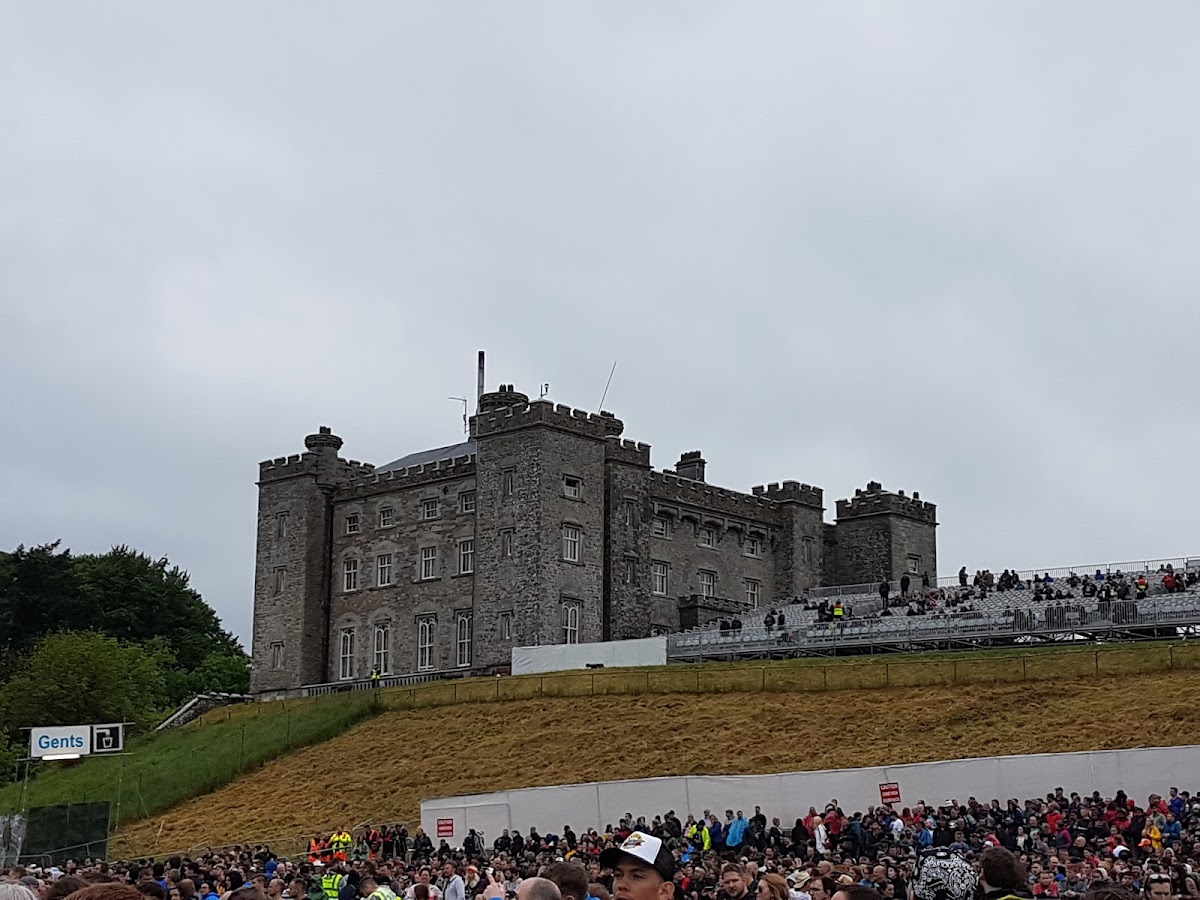
Since 1981, the grounds have hosted rock concerts. The programme began under the then Earl of Mount Charles, later the 8th Marquess Conyngham, who owned the castle at the time. Performers have included Thin Lizzy, the Rolling Stones, U2, Guns N’ Roses, Metallica, Queen, David Bowie, Bob Dylan, Bruce Springsteen, Madonna, R.E.M., Oasis, Bon Jovi, Foo Fighters, and Kings of Leon. Kings of Leon headlined the thirtieth-anniversary event on 28 May 2011.
The castle has also been connected with filmed music and documentary projects. U2 lived there for a period in 1984 while writing and recording The Unforgettable Fire. The group filmed U2 Go Home: Live from Slane Castle there in 2001, released in 2003. Red Hot Chili Peppers filmed a concert DVD during their 2003 performance, Celtic Woman filmed Celtic Woman: A New Journey there in 2006, and parts of Madonna’s documentary I’m Going to Tell You a Secret were filmed at the castle in 2004.
Remains
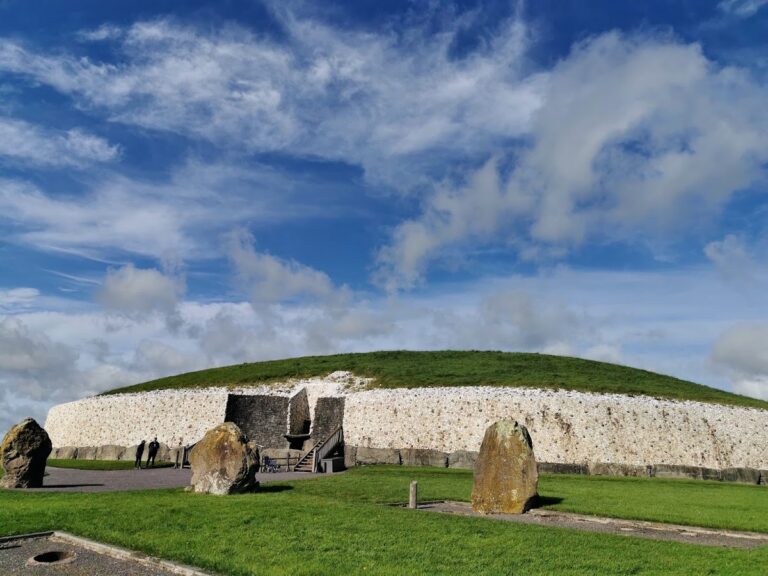
Slane Castle stands above the River Boyne, a few kilometres upstream from Newgrange and near the site of the Battle of the Boyne. The present building and its grounds occupy a landscape that includes the castle, formal access features, an amphitheatre-like setting, and earlier religious and traditional features.
Castle, gates, and grounds
The surviving castle principally reflects the 1785 reconstruction directed by James Gandon, James Wyatt, and Francis Johnston. Francis Johnston also designed the Gothic gates at Mill Hill, east of the castle. The gardens and surrounding grounds form a natural amphitheatre with capacity for approximately 80,000 people and notable natural acoustics, helping explain their later use for large outdoor concerts.
St Erc’s Hermitage
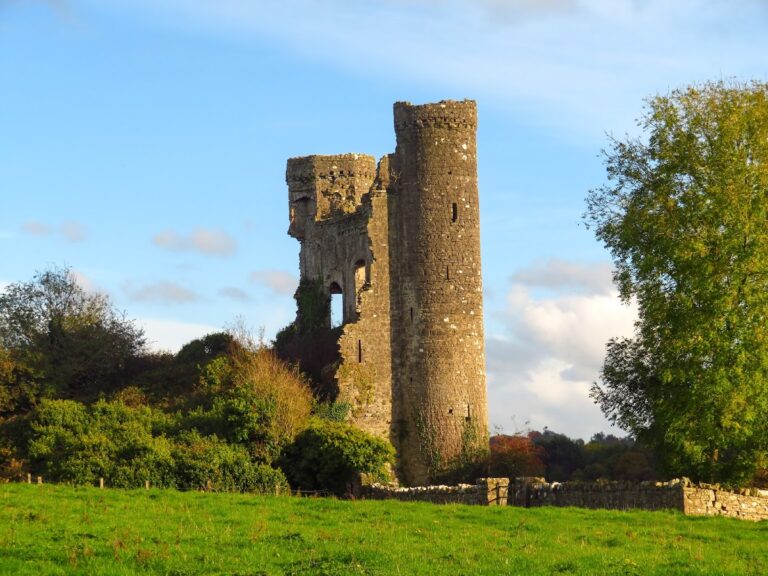
East of the castle, between the River Boyne and the village church, are the ruins of St Erc’s Hermitage, a fifteenth-century multistorey chapel. The remains preserve the site of this medieval religious building within the wider castle landscape.
Ancient well
About 500 metres west of St Erc’s Hermitage is an ancient well. In the Irish mythological text Cath Maige Tuireadh, it is associated with Dian Cecht, a healing deity linked with the Tuatha Dé Danann, a supernatural people in Irish mythology. The well is said in that tradition to have healed the mortal wounds of the Tuatha Dé Danann, except decapitation. After Christian reinterpretation of traditionally pagan sites, it became more commonly known as Our Lady’s Well.
Cannon from the River Boyne
A cannon associated with Slane Castle was found in the nearby River Boyne in 2003, adding a military object to the material history of the estate and its surrounding landscape.
Nearby sites