Schloss Rosenhof: A Historic Austrian Estate in Sandl
Visitor Information
Google Rating: 4.7
Popularity: Very Low
Country: Austria
Civilization: Early Modern, Modern
Site type: Domestic
Remains: Palace
History
Schloss Rosenhof is situated near the municipality of Sandl in Austria and was originally constructed by members of the Austrian nobility. Its origins trace back to 1760, when Count Alois Thomas Raymond Harrach established the building as a hunting lodge amidst the scenic Mühlviertel region.
In 1773, ownership of the lodge transferred to Count Ferdinand Bonaventura von Harrach, who held several estates including Freistadt and Harrachstal. It was during his stewardship that the name “Rosenhof” was adopted, honoring his wife and daughter, both bearing the name Rosa. Count Ferdinand expanded the estate’s role beyond a hunting retreat, transforming it into a model agricultural property that cultivated flax, potatoes, cabbage, and beets, while also supporting livestock farming.
Following Count Ferdinand’s passing, his daughter Rosa inherited Rosenhof. Her marriage to Prince Kinsky in 1777 brought the estate into the Kinsky family, who have maintained ownership ever since. Between 1780 and 1792, the castle underwent enlargement with the construction of the east wing. Later, in 1827, Franz de Paula Josef Kinsky added the west wing, resulting in the castle’s present day form.
The estate’s administrative functions were centralized at Rosenhof from 1876 onward, leading to additional minor renovations to accommodate its evolving role. During the final phase of the Second World War, the castle served as a safe repository for the Freistadt city archive. However, in 1945, Soviet troops looted the premises and caused damage to the archive contents. After the war, necessary repairs were carried out to address this damage, culminating in a substantial renovation project completed in the early 1980s. Today, Schloss Rosenhof remains a private residence of the Czernin-Kinsky family, preserving its historical lineage.
Remains
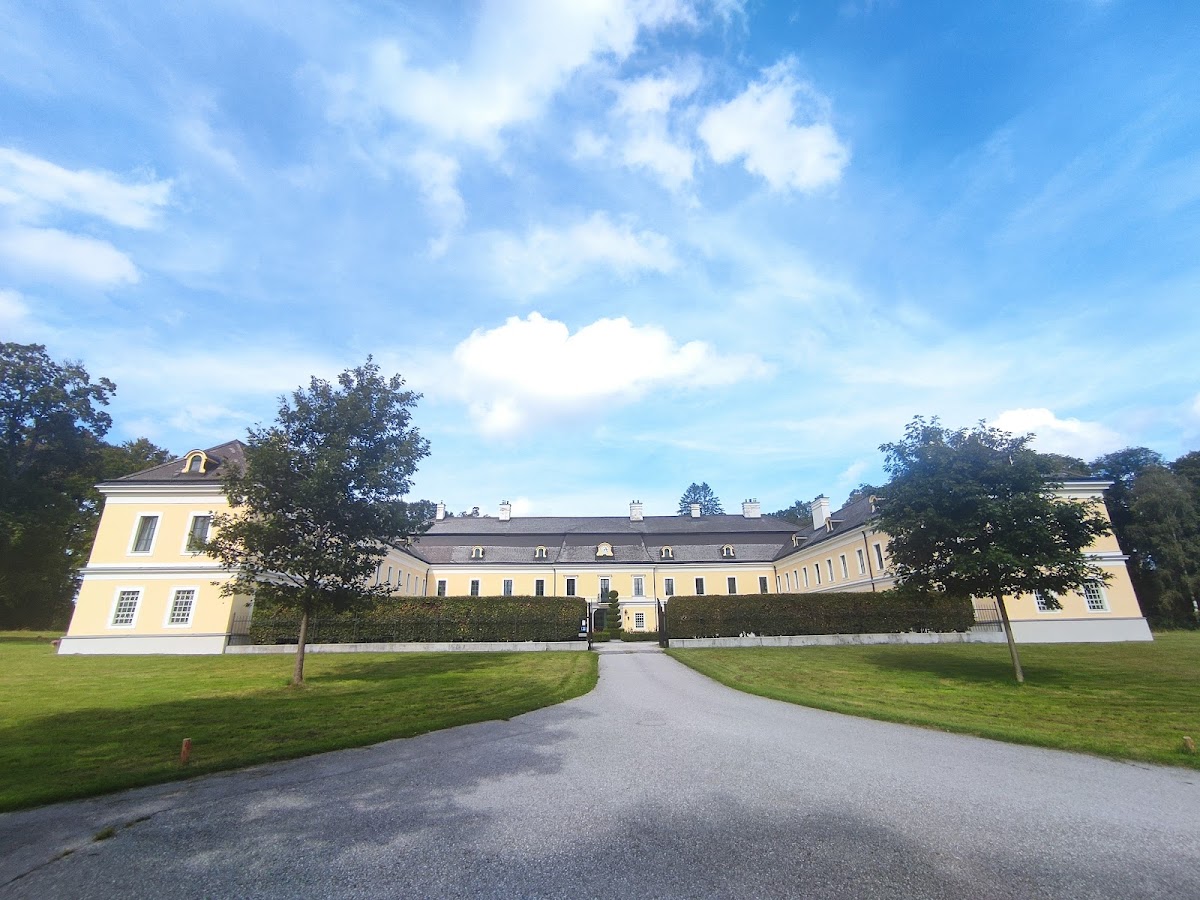
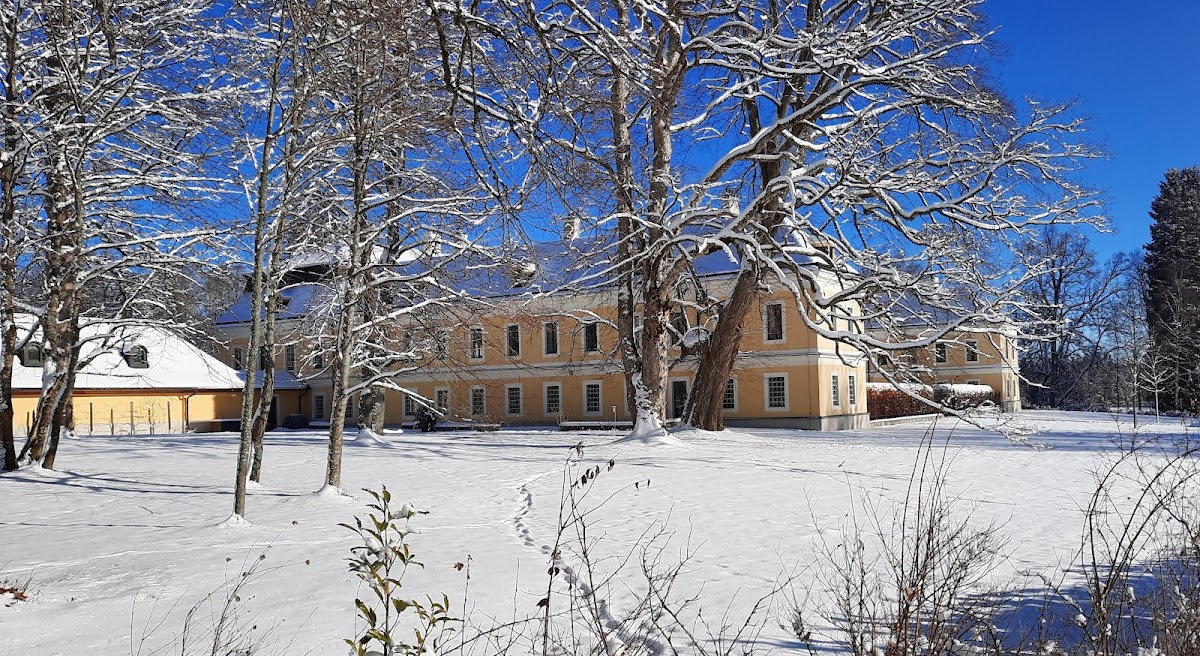
The Schloss Rosenhof estate is characterized by its two-story, horseshoe-shaped building nestling on a hillside at an elevation of 964 meters. The layout centers on an honor court, a formal courtyard typically used for ceremonial or official purposes. The main structure includes a central block topped by a broken mansard roof—a roofing style with a double slope on each side—and two side wings capped with hipped roofs, which slope on all sides. The roof framework dates to the 18th century, while the dormer windows inserted in the 19th century rise vertically from the roof, allowing light and ventilation.
The castle’s exterior presents a reserved and understated facade. Its entrance lies within a slightly projecting central section called a risalit, framed by columns and featuring a roof pierced by rounded dormers with decorative curved sides known as volutes. Opposite this side, the garden-facing facade bears the coat of arms representing the Kinsky family, signifying the estate’s lasting family heritage.
In 2010, the castle was expanded with two additions at the rear: a heating house and a garage, each connected to the main building via corridors. The entire property is set within an extensive park, itself surrounded by dense stands of conifer trees, which highlight the estate’s woodland surroundings.
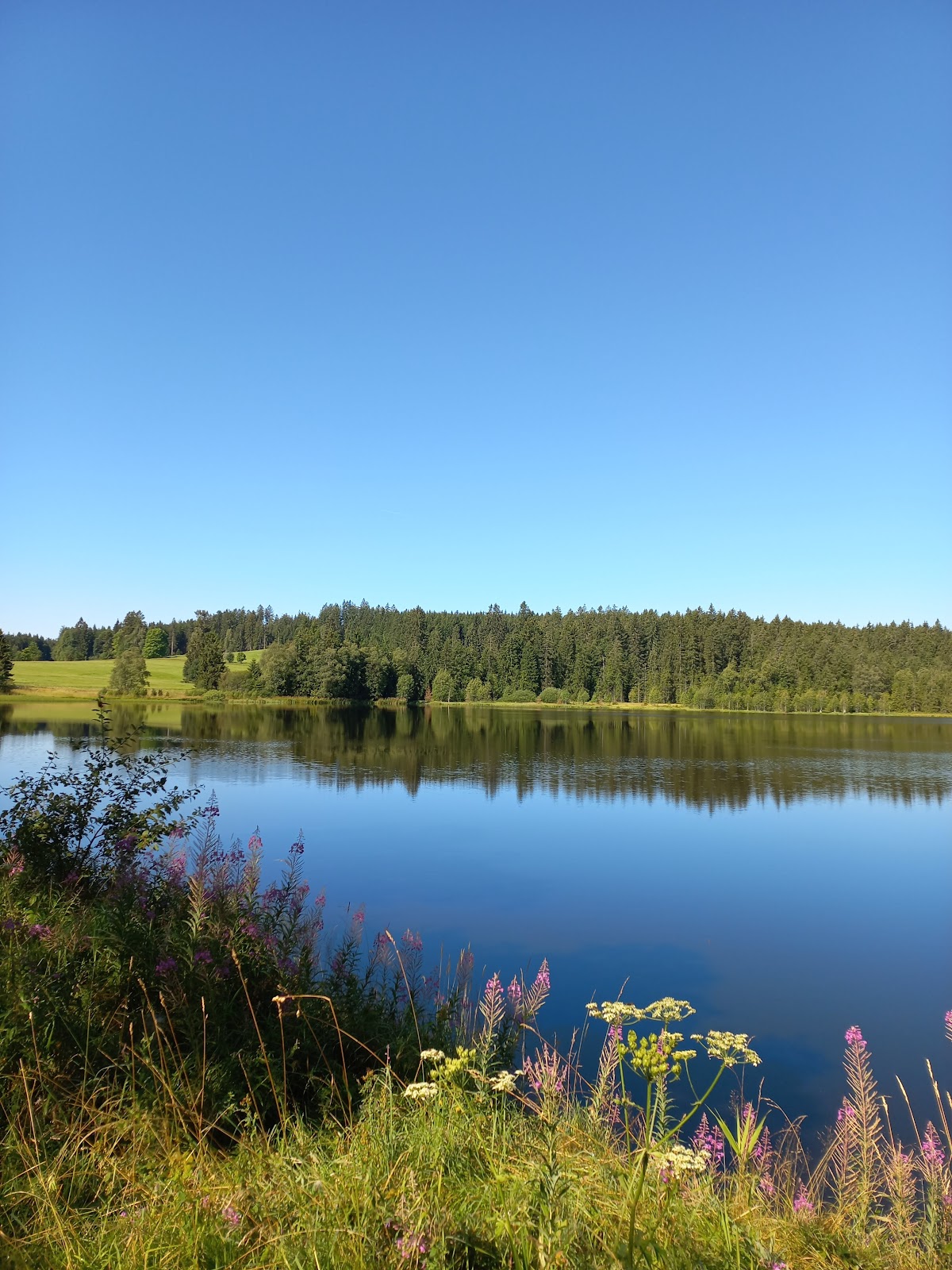
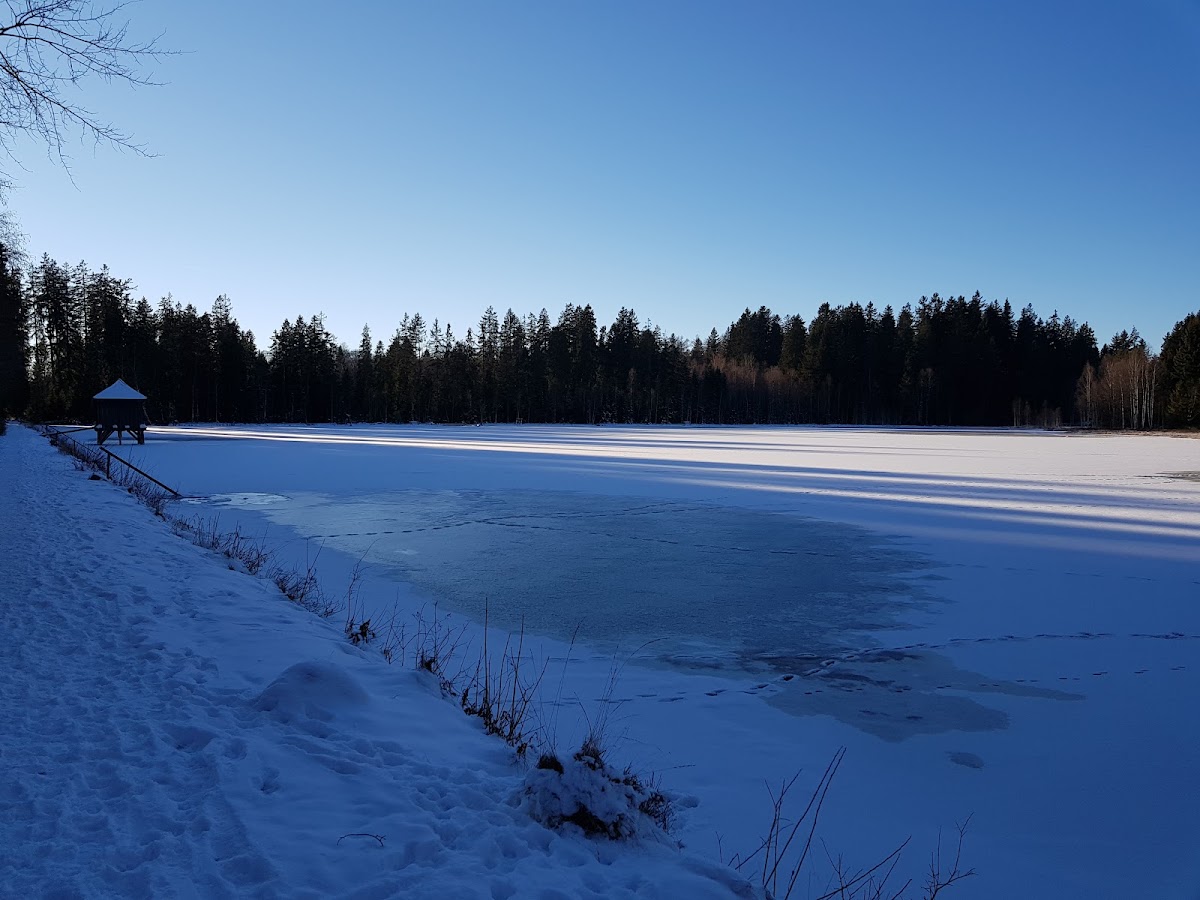
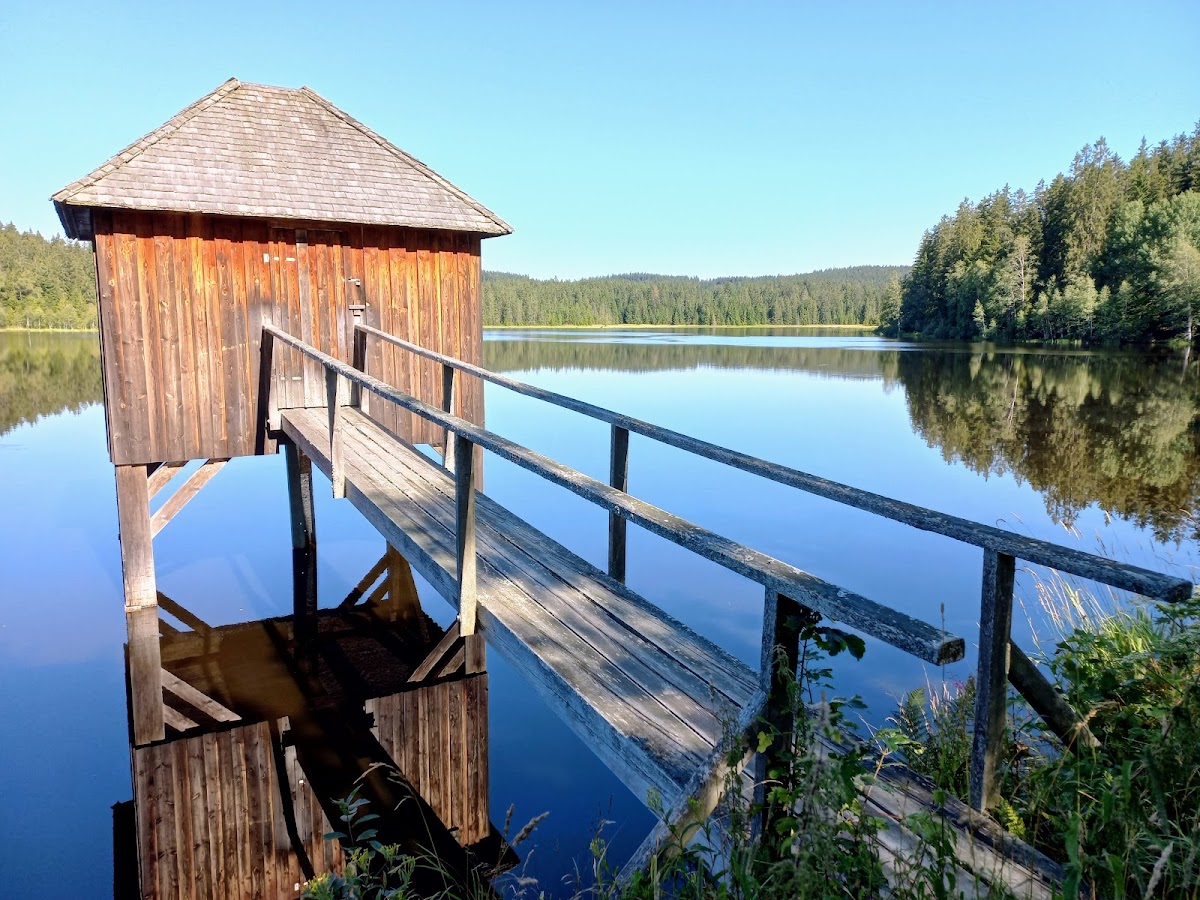
Supporting the estate’s significant forested land holdings are ancillary structures including a forestry administration building and a sawmill. Nearby lie the Rosenhofer Teiche ponds; historically, these bodies of water were created to supply water for timber rafting along the nearby Aist river system, a practice that ended in 1947. The smaller, lower pond has become a favored swimming spot in the locality.
Inside the castle, furnishings have been brought from other Kinsky family residences, reflecting a continuity in interior decoration. Among notable features is a stairwell painting depicting the Pardubitzer Steeplechase, a famous horse race. The northwest corner houses a festival hall built in 1792, which showcases the Josephinian Classicism style — an architectural form associated with the reforms of the Holy Roman Emperor Joseph II — and is decorated in white and blue tones.
Nearby sites