Sokolčí: A Gothic Castle Ruin in Czechia

Site at a Glance
- Rating
- 4.5
- Popularity
- Very Low
- Country
- Czechia
- Primary era
- Medieval
- External website
- Open
- Eras represented
- Medieval
- Civilizations
- Holy Roman Empire, Kingdom of Bohemia
- Site type
- Military
- Remains
- Castle
On this page9 sections
History
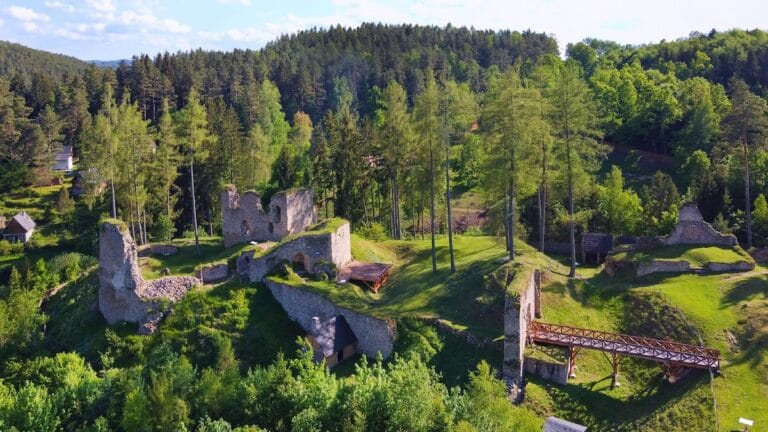
Sokolčí is a Gothic castle ruin in Czechia, near Kaplice, whose construction followed 1358 and is attributed to Jindřich of Velešín. Its foundation may have resulted from a change in ownership that year, when Jindřich sold his share of Velešín to his brother Beneš. The castle was a compact aristocratic residence and may also have protected merchants using a branch of the Linz route through the Černá valley.
Foundation and Rožmberk ownership
Two forged charters later created an older tradition for the castle’s foundation. A fifteenth-century forgery commissioned by Oldřich of Rožmberk claimed that King Přemysl Otakar II had confirmed Vok of Rožmberk’s ownership of Sokolčí in 1264. Another forged charter stated that King John of Luxembourg, the Bohemian ruler from 1310 to 1346, had granted Sokolčí and Příběnice to Vok. The abbot of Vyšší Brod affirmed that document’s authenticity in 1460.
In 1387, Beneš of Velešín sold Sokolčí and the settlement of Benešov to Ulrich I of Rožmberk. The castle then became part of the Nové Hrady estate, a landed domain organized around the town and castle of Nové Hrady. The Rožmberks apparently had little reason to maintain the property, and Sokolčí gradually deteriorated. It was already described as ruined in 1541.
Protection and historical setting
Sokolčí is a protected cultural monument of the Czech Republic. Its surviving walls and earthworks preserve the remains of a medieval castle whose Gothic architecture belonged to the dominant European building tradition between roughly the twelfth and sixteenth centuries.
Remains
Setting and overall layout
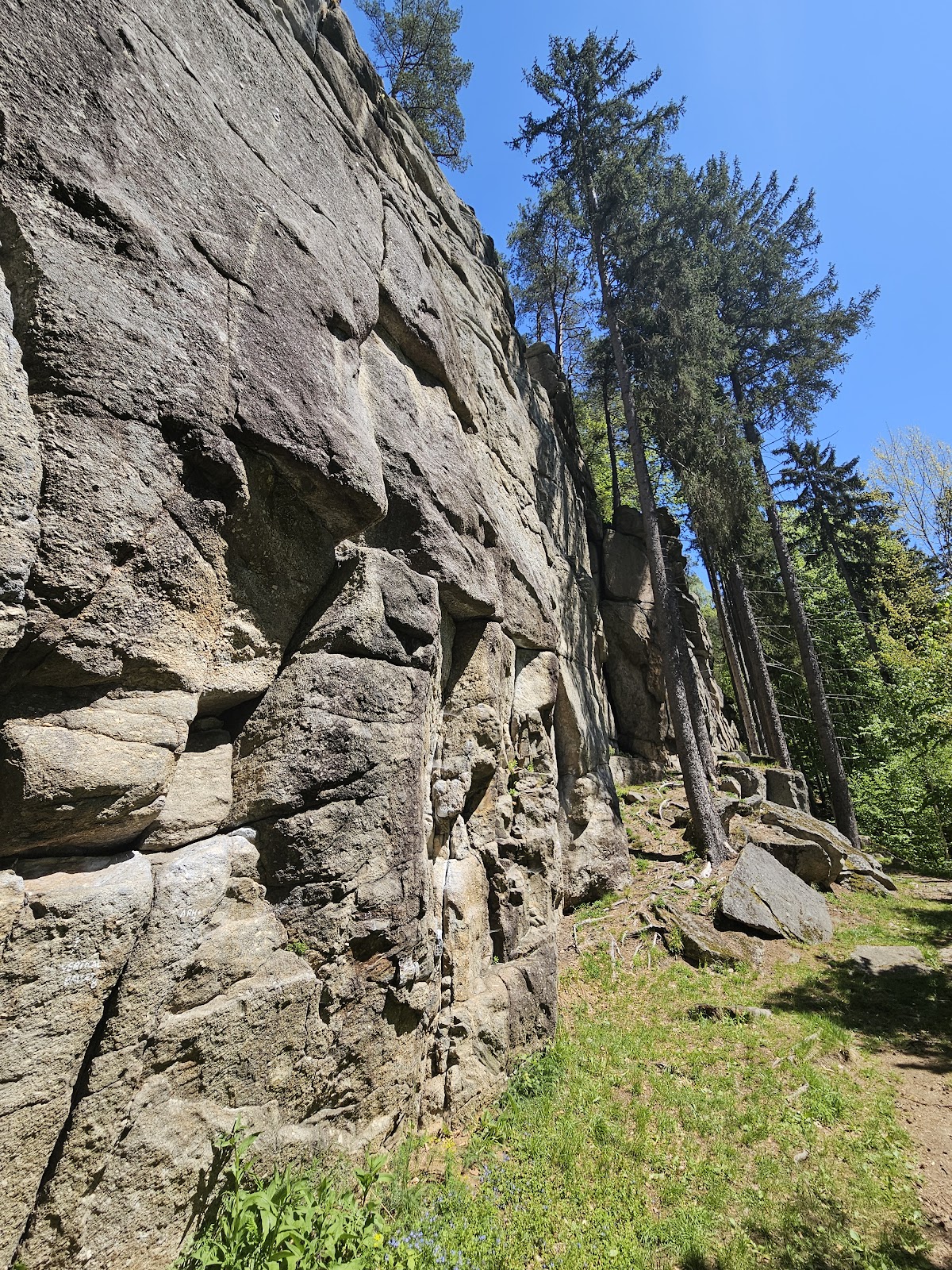
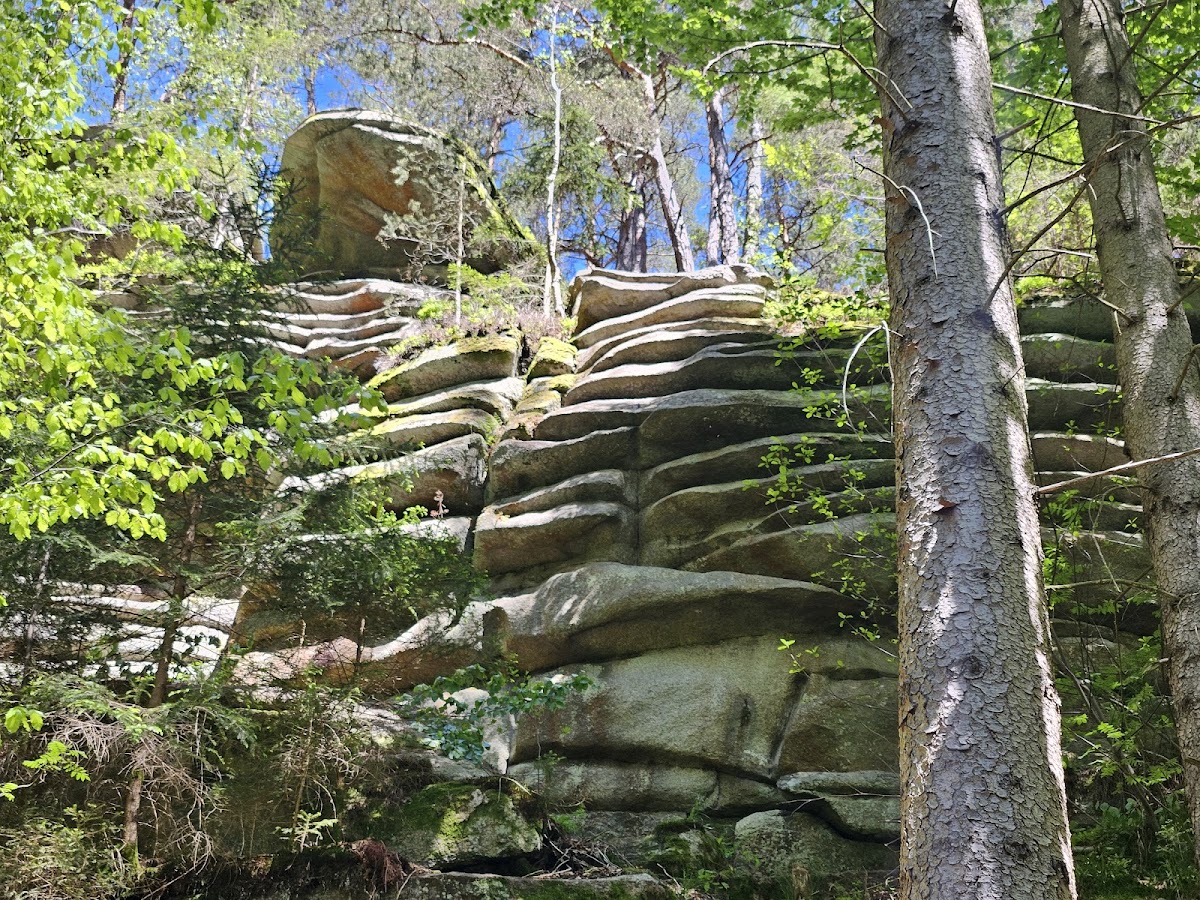
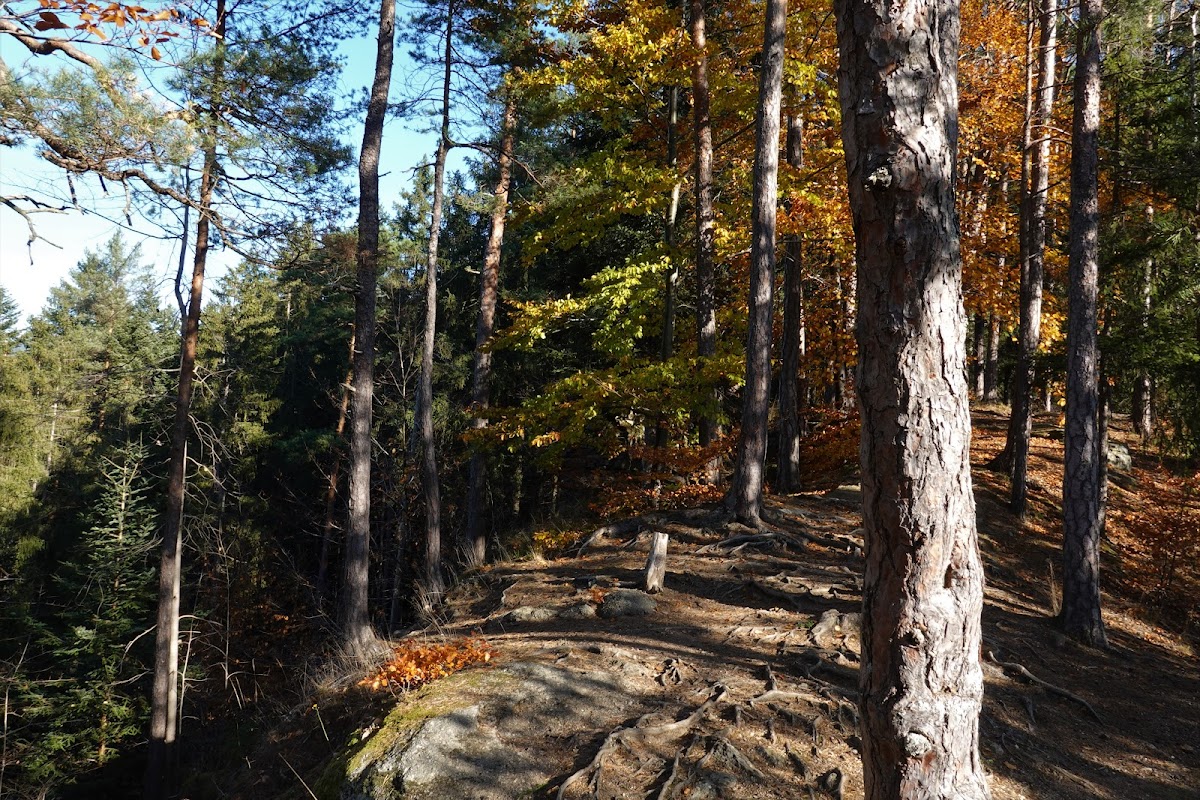
The ruin stands at about 580 metres above sea level on a rocky spur above the Černá River, within the Soběnov Highlands Nature Park and the cadastral territory of Děkanské Skaliny, approximately 4.5 kilometres east of Kaplice. Sokolčí was a relatively small but carefully built block-plan castle, an arrangement that grouped its main residential and representative buildings into a compact complex. Its walls were comparatively weak, and timber formed an important structural element in some of the buildings.
Outer bailey
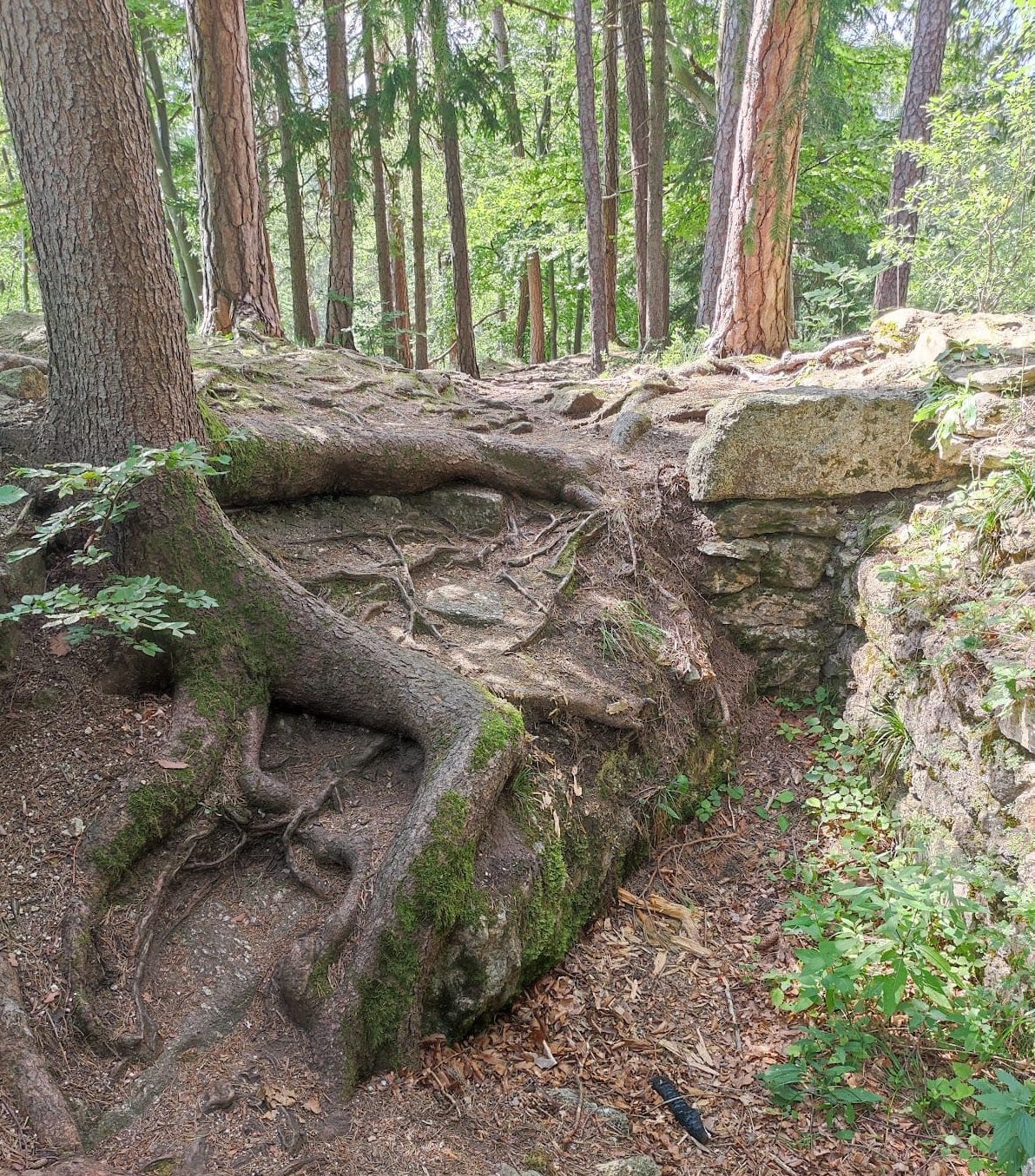
An extensive outer bailey, the enclosed area beyond the principal fortified core, occupied part of the approach to the castle. An embankment, a neck ditch cut across the landward approach to the spur, and additional fortifications protected it. Only a low bank on the inner side of the ditch survives. Surface features indicate that a large building with a projecting section once stood in the bailey, whose gate was positioned at the southern end of the ditch.
Inner castle defenses
A second ditch cut into the rock defended the elongated, approximately triangular inner castle. Access was provided by a gate tower that projected partly into the ditch. A fragment of a rectangular building adjoins the gate tower at the southeastern corner. Parts of the perimeter walls survive among the earthworks, together with two towers.
Residential buildings
The remains of a rectangular residential tower stand at the northeastern corner of the inner castle. A palace extended from the tower along part of the northern perimeter wall, and two of its cellar windows remain. Elsewhere within the inner castle, only small fragments of the surrounding walls and limited traces of buildings survive. A larger structure, built at least partly of timber, probably occupied the full width of the enclosure.
Rocky surroundings
The rocky outcrop associated with the castle contains climbing routes. Across the Černá River, the slopes of Hradišťský vrch contain frost-riven rock shelters with pseudokarst caves, cavities formed by processes other than the dissolution of soluble rock. The largest cave lies directly opposite the castle, while a smaller one is situated in the rocks below it.