Zavlekov: A Gothic Fortified Manor House in Czechia
Site at a Glance
- Rating
- 4
- Popularity
- Very Low
- Country
- Czechia
- Primary era
- Medieval
- Eras represented
- Medieval, Modern
- Civilizations
- Holy Roman Empire, Kingdom of Bohemia
- Site type
- Military
- Remains
- Castle
On this page7 sections
History
Zavlekov is a Gothic fortified manor house in Czechia, probably founded after 1334 by Dluhomil of Velhartice. It served as a noble residence until the early sixteenth century and was recorded as deserted by 1544. The site later became a prominent castle-like ruin through a nineteenth-century Romantic reconstruction, and it has been protected as a cultural monument, a legally protected historic or archaeological property, since 1964.
Foundation and medieval ownership
Dluhomil of Velhartice owned Zavlekov in 1334 and 1377. His son Bušek of Zavlekov inherited the estate and lived there with his wife Eliška in 1394. In 1374, Bušek assigned Eliška Zavlekov, Tužice, and Mladice as her dower, property connected with marriage and intended to provide a woman with economic security. The transfer also included the Mladice farm and other tenant farms.
After Bušek’s death, Eliška sold her share in 1404 to Jan of Herštejn and Velhartice, Bušek’s nephew. Jan had already inherited most of the estate several years earlier. This sale is the first written mention of Zavlekov’s fortified residence. The estate comprised a demesne farm, meaning an agricultural holding worked for the direct benefit of a lord, the village of Zavlekov, a second demesne farm at Mladice, and the settlements of Stojanovice, Chvališovice, Jarkovice, Sviní, and Konkovice. It also included farms at Tužice, Újezdec, and Točice.
Inheritance disputes and later lords
Jan of Herštejn and Velhartice had three sons, Arnošt, Půta, and Vilém. During the 1450s, Vilém disputed his brothers’ claims to the estate and to property formerly held by Eliška. King George of Poděbrady ordered the land records to be examined. They showed that Jan had properly purchased the estate, and the disagreement was settled in 1465.
Jan Herštejnský of Velhartice later held Zavlekov and sold it around 1480 to Půta Švihovský of Rýzmberk, a prominent nobleman who did not reside there. In 1504, Půta’s son Břetislav Švihovský of Rýzmberk pledged the estate for three years to Přibík of Chlum for 700 kop of groschen. A kop was a Bohemian accounting unit equal to 60 groschen. Přibík transferred his rights to his mother, Kateřina of Michnice at Nalžovy, whose 1539 will returned them to him.
Abandonment and later reconstruction
Břetislav later redeemed Zavlekov and sold it in 1544, together with the village of Vidhošť, to Jan Dlouhoveský of Dlouhá Ves for 825 kop of groschen. The sale described the fortress as deserted. It may have been abandoned as early as 1504 because its site was confined.
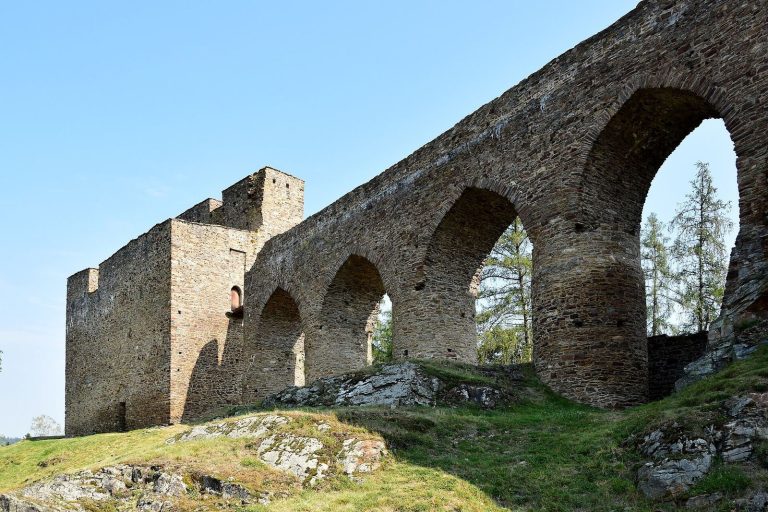
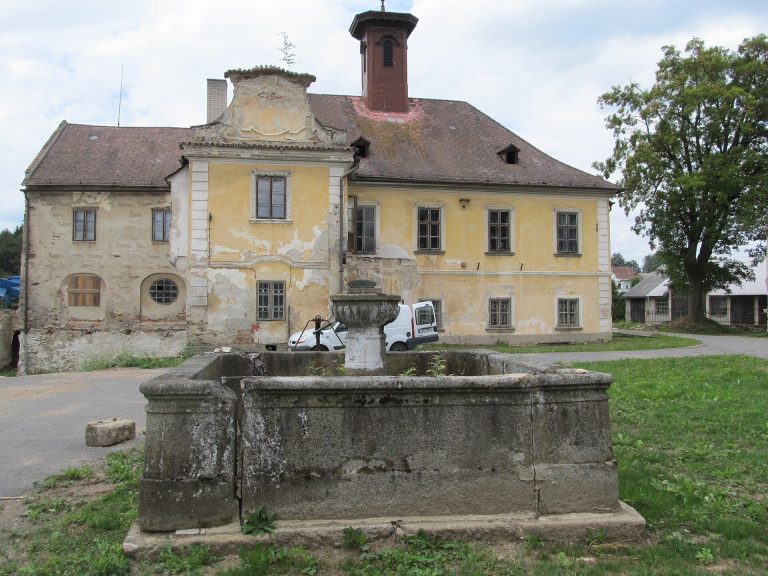
Jan Dlouhoveský built a new fortified residence directly in Zavlekov village, inside an agricultural courtyard. That residence later disappeared, and a granary was constructed on its remains. Its only surviving element in the twentieth century was a Late Gothic portal. In 1856, Karl Count Taaffe, owner of the Elischau estate, had the earlier ruin rebuilt in the Romantic manner, a nineteenth-century approach that altered old ruins to create a picturesque medieval appearance. This intervention gave Zavlekov much of its present castle-like character.
Remains
Rocky spur and fortress enclosure
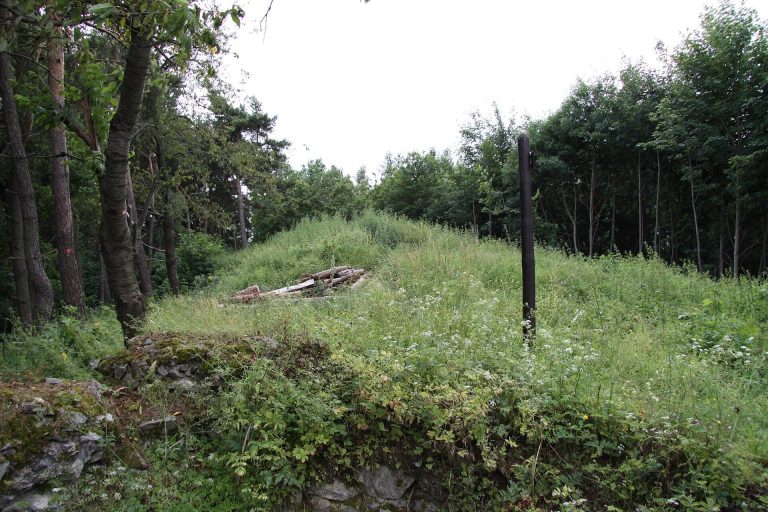
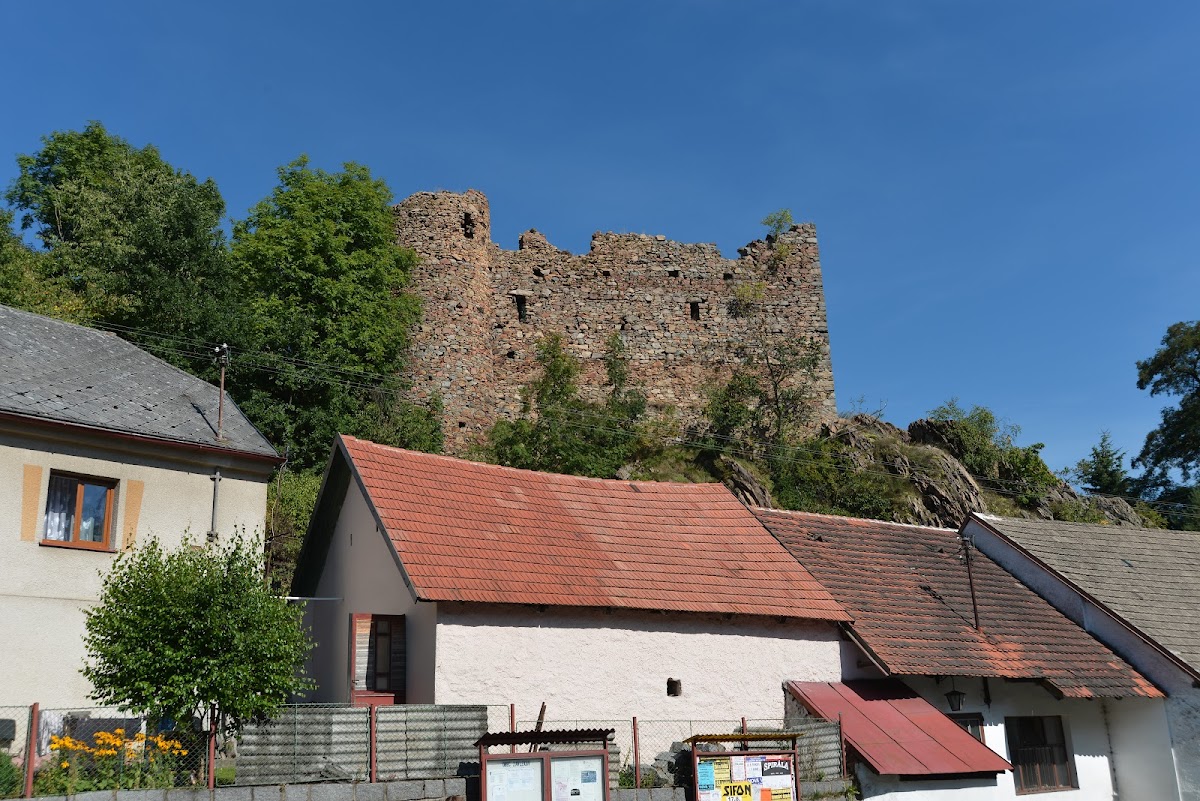
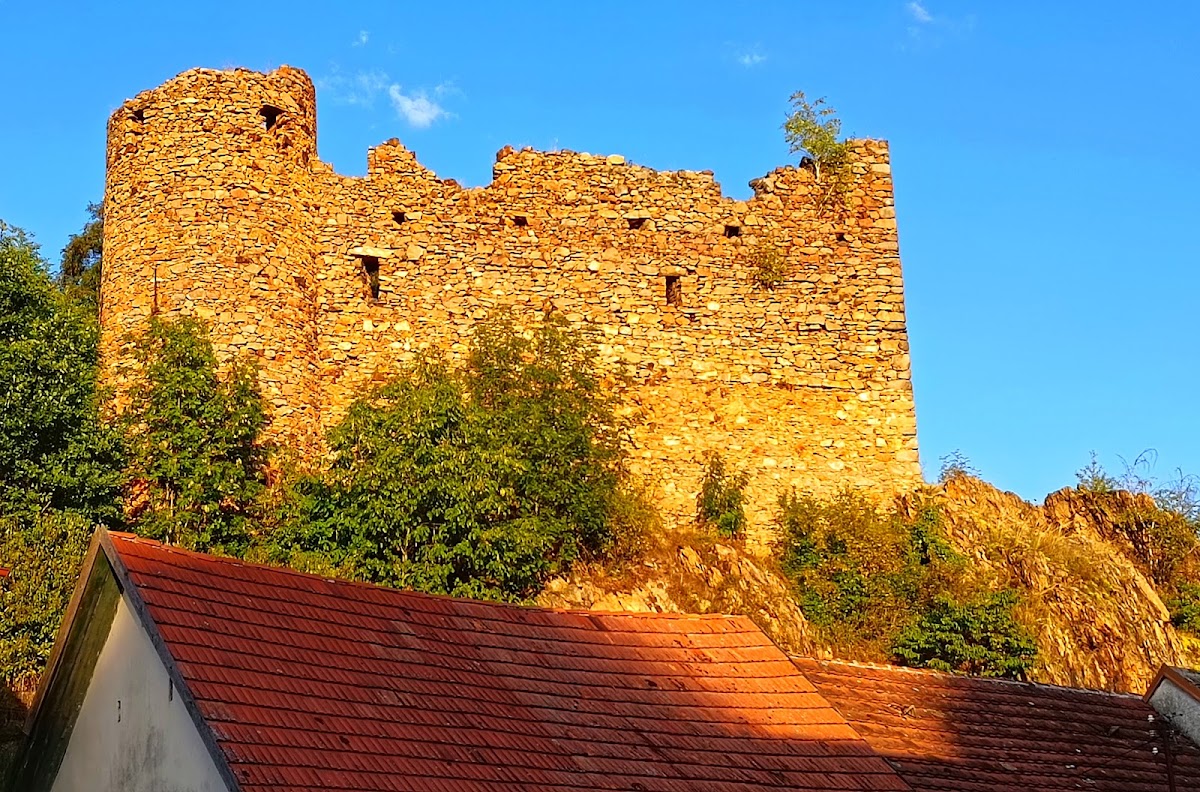
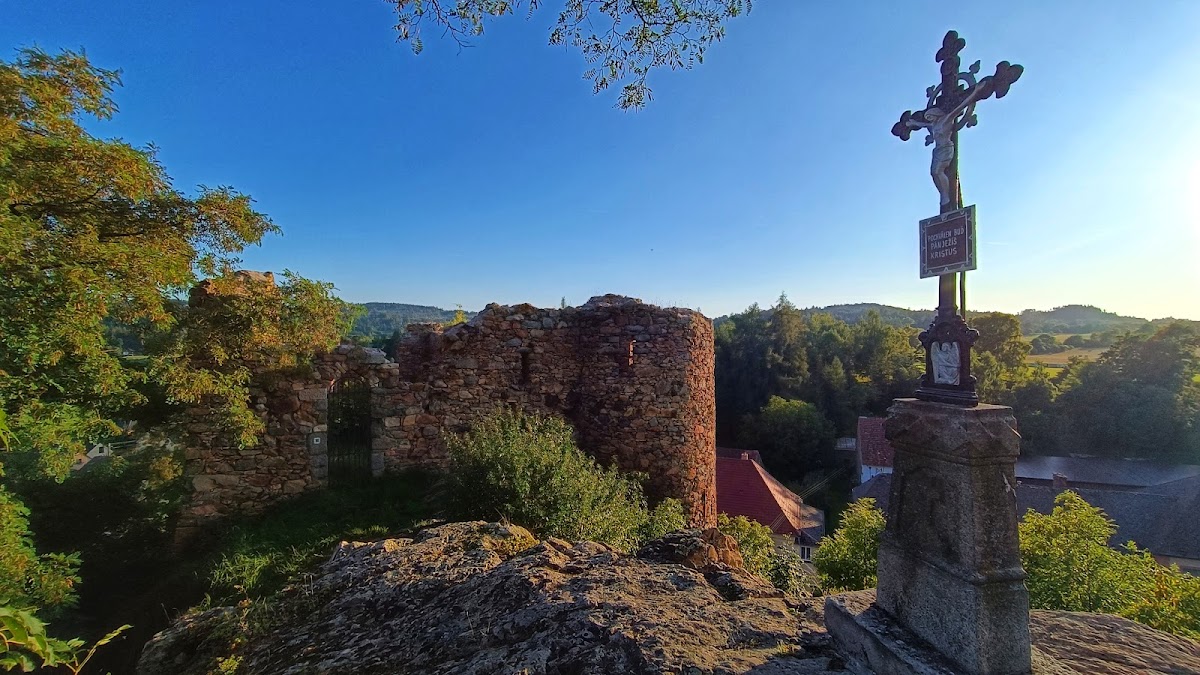
The ruin occupies a rock on Hora hill in the Blatná Uplands. The hill reaches 583 metres, while the fortress site lies at about 570 metres. Zavlekov is a spur fortress, a fortified residence built on a projecting rocky ridge and approached across a narrow neck. A ditch cut through the rocky neck separates the site from the surrounding terrain.
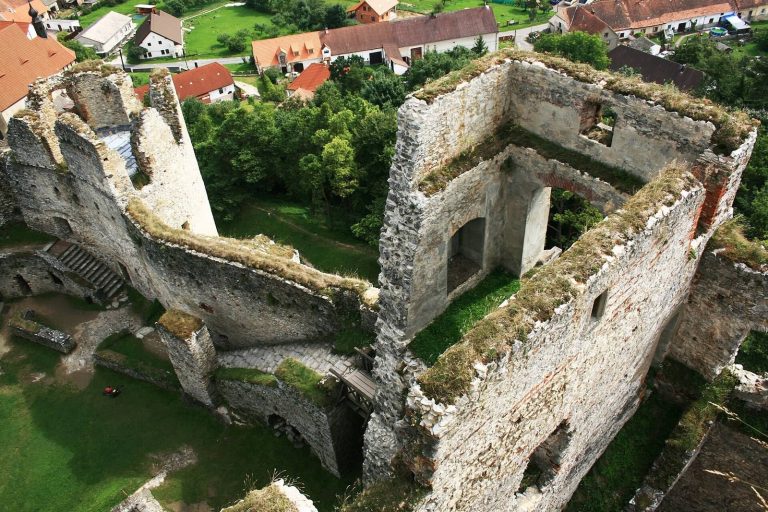
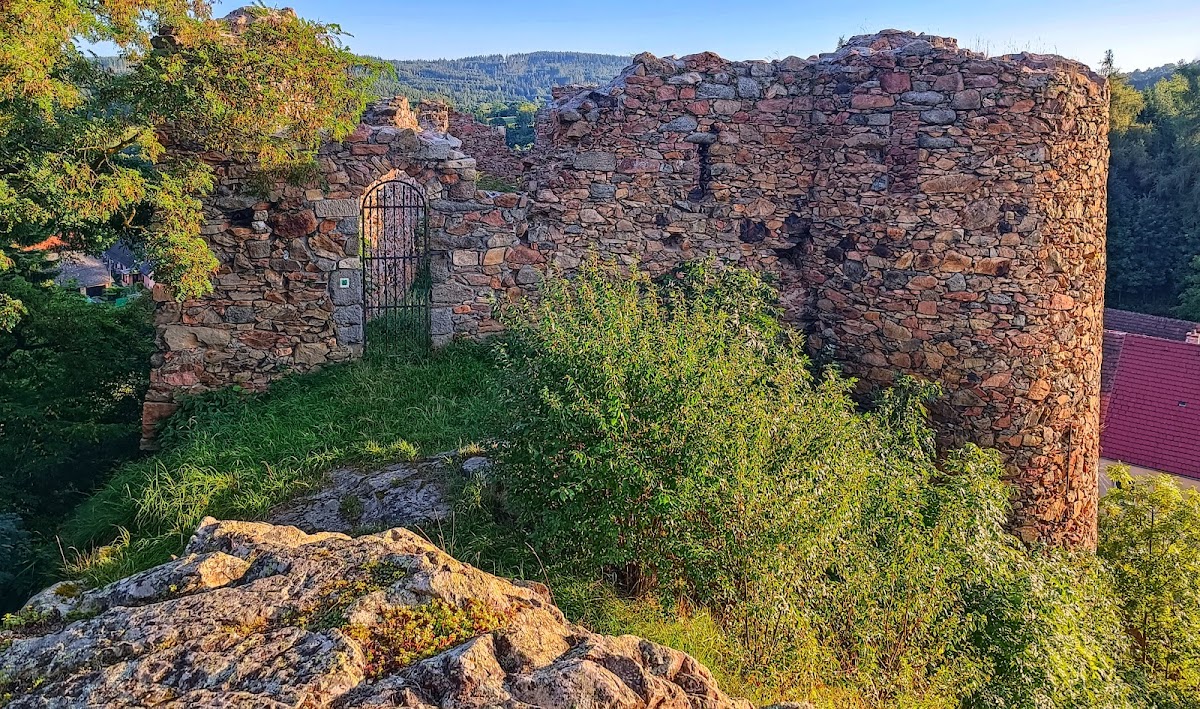
The fortress core has a trapezoidal plan and is built of rubble stone. A ditch surrounds the enclosure, with access crossing the narrow rocky neck on the northern side. The surviving walls rise to the level of the first floor, although some of the masonry belongs to the nineteenth-century reconstruction. The original fabric includes unvaulted cellars and a Gothic sandstone portal at the level of the former first storey.
Entrance and reconstructed features
The northwestern corner contains a cylindrical bastion, a projecting defensive structure, that protected the entrance area. It was added during the Romantic alteration of the ruin rather than belonging to the original medieval fortress. The combination of medieval rubble-stone fabric, the ditch, the rocky approach, and nineteenth-century additions gives the surviving site its present layered character.