Roman Sites in Jordan: Explore Theatres, Temple Courts and Ancient Cities
Roman sites in Jordan include large hillside theatres, smaller performance buildings, temple platforms and decorated public fountains. At Umm Qays and Pella, streets and public buildings belong to wider ancient cities, with later Christian construction changing parts of their centres. Amman preserves several substantial Roman monuments within the modern capital.
The examples below focus on the scale and arrangement of these structures: two neighbouring theatres built for different-sized audiences, a fountain façade designed around apses and niches, and urban districts where Roman buildings were incorporated into later complexes.
Primary Function: All
Type: All
Popularity: All
Rating: All
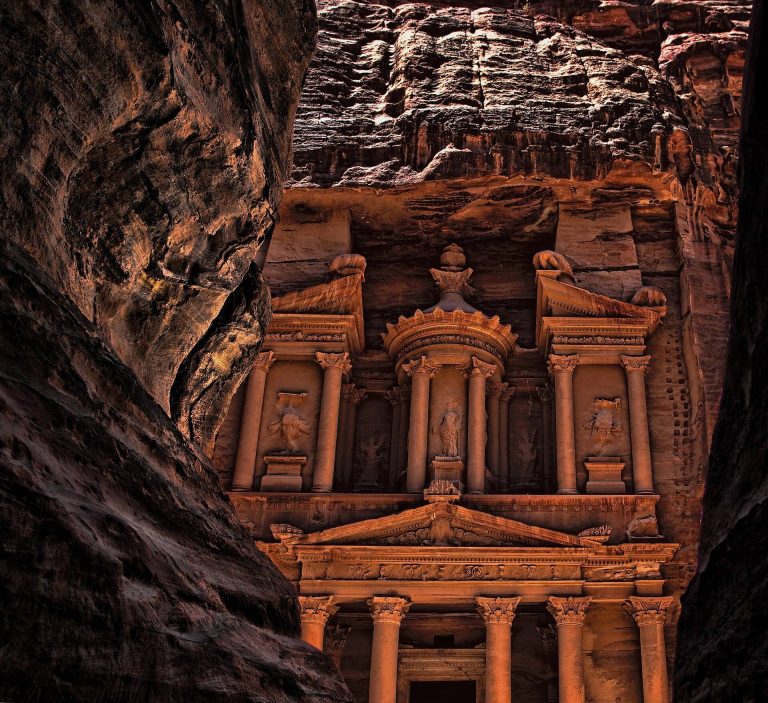
Petra was the capital of the Nabataean Kingdom and a major centre of caravan commerce, religion, and water management. Its rock-cut monuments, Roman…
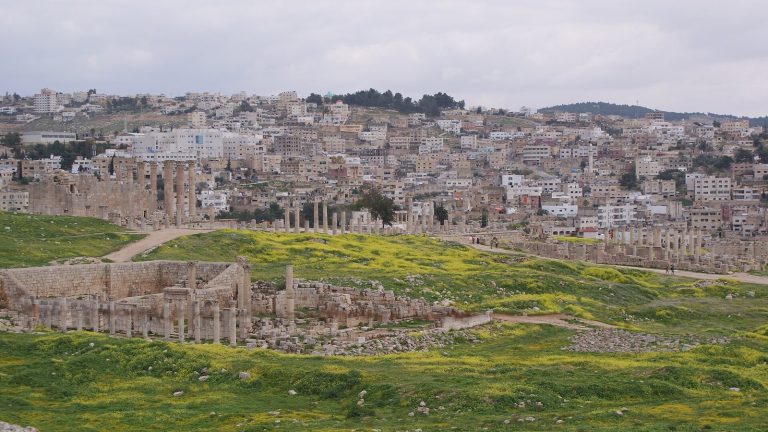
The Archaeological Site of Jerash preserves the ancient city of Gerasa, whose history extends from a Neolithic settlement through Hellenistic, Roman,…
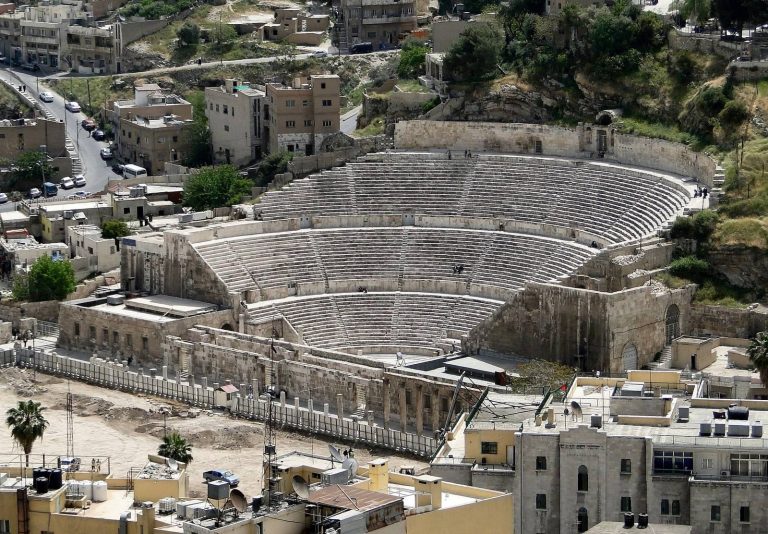
Amman’s Roman Theater is a second-century monument built into Jabal Al-Joufah when the city was known as Philadelphia. Its restored auditorium, stage…
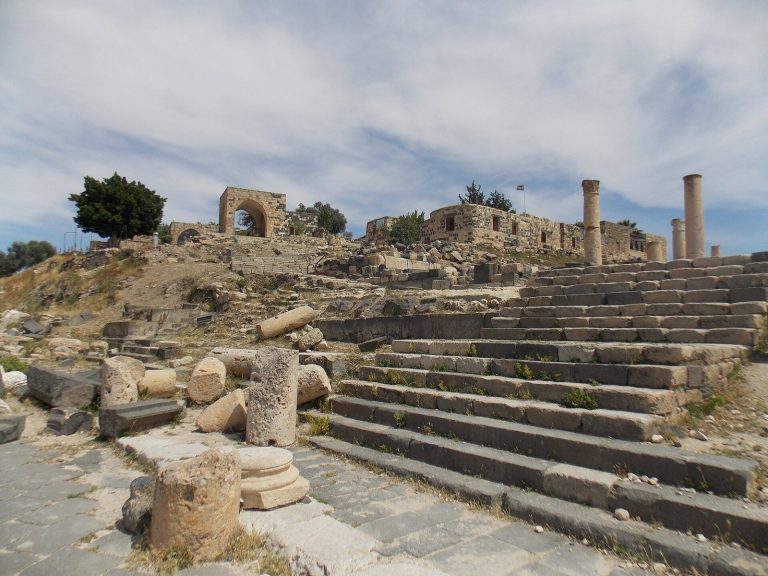
Umm Qays preserves ancient Gadara, a Hellenistic city that became a major Greek cultural center, a Roman Decapolis city, and a Christian episcopal…
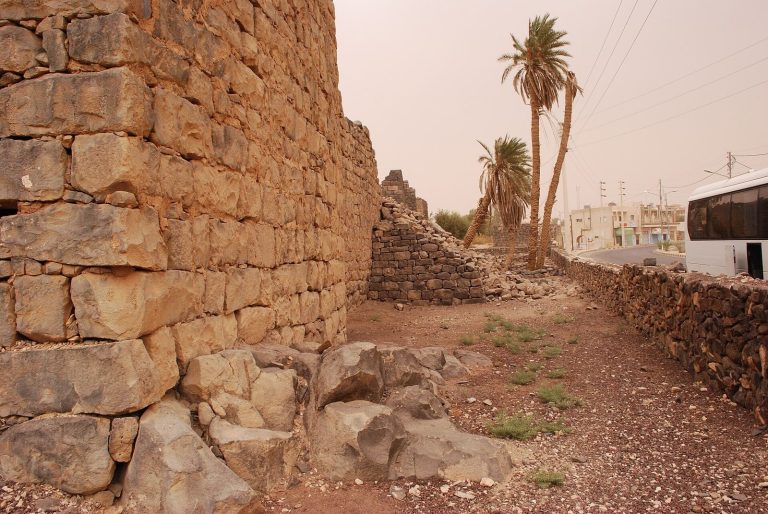
Al-Azraq Castle developed from Roman military installations guarding the Azraq oasis and routes across the eastern Jordanian desert. Its basalt walls…
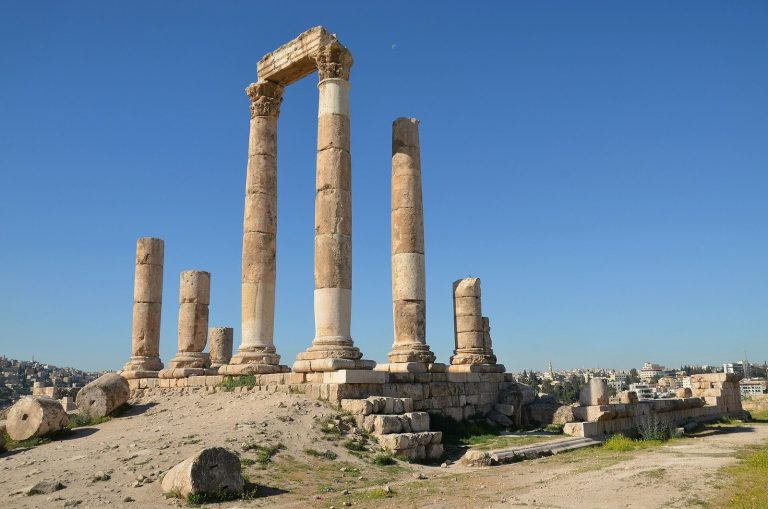
The Roman Temple of Hercules forms part of Amman Citadel, an ancient hill settlement with evidence of occupation from the Neolithic period through…
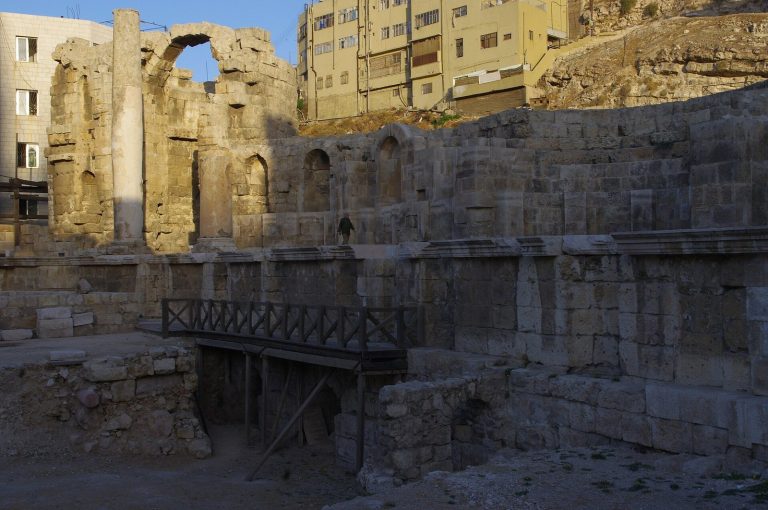
Roman Nymphaeum Amman was built in ancient Philadelphia during a major period of urban construction. Its later conversion, reuse, and restoration…
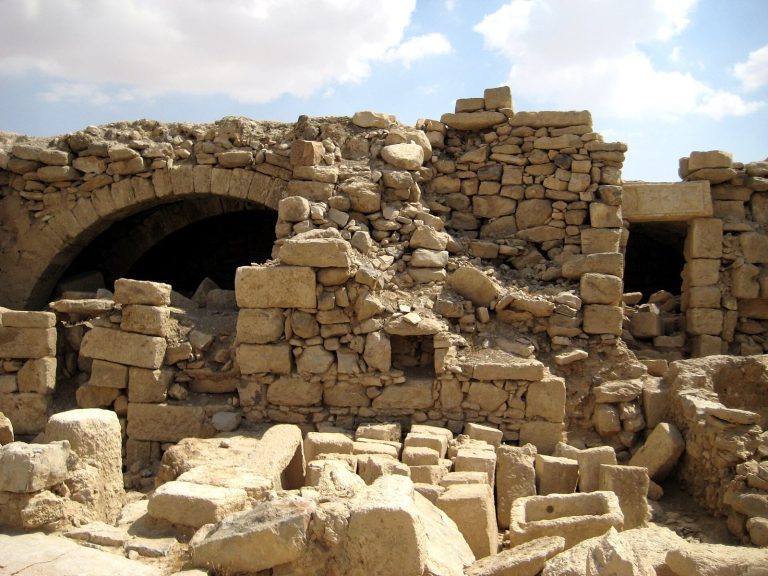
Umm ar-Rasas preserves the remains of a Roman military station that developed into a Byzantine Christian and early Islamic town, with churches,…
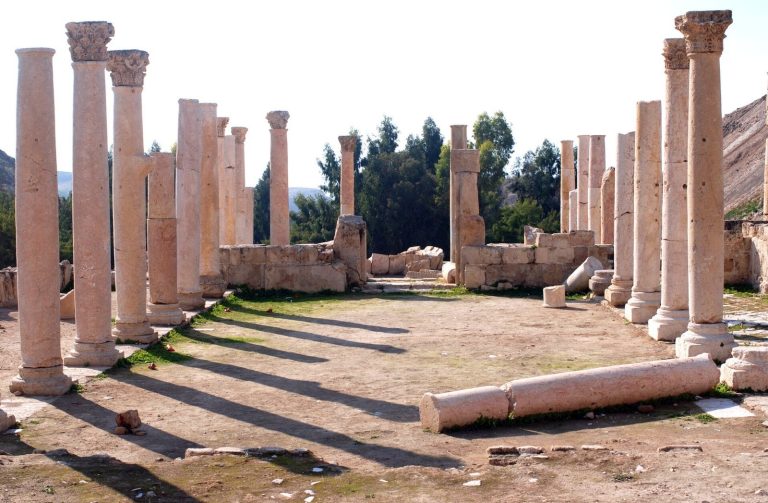
Pella in northern Jordan preserves evidence of occupation from the Neolithic period through the Islamic era, including Bronze Age fortifications,…
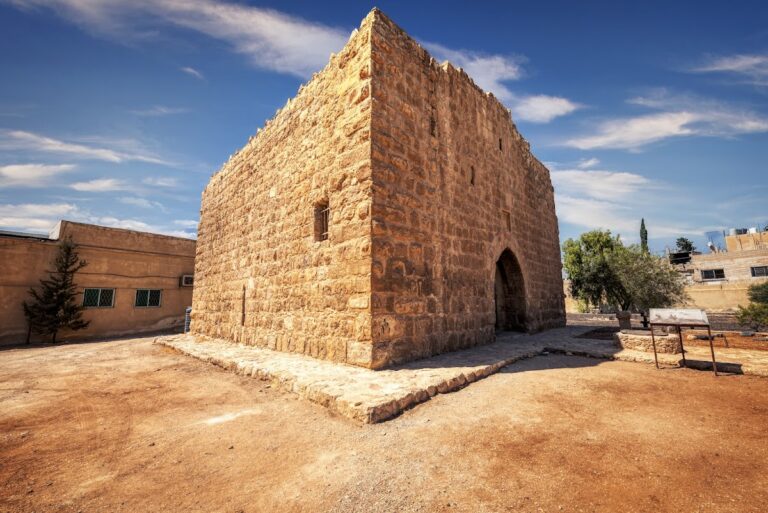
Qasr Shabeeb is an archaeological castle in western Zarqa, Jordan, with Roman, Islamic, Ottoman, and Hashemite-period associations. Its square plan,…
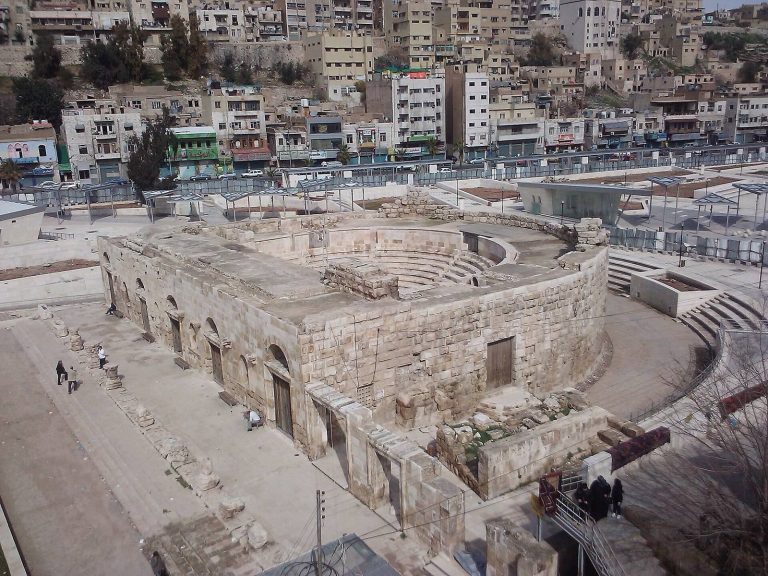
The Odeon Theater is a second-century Roman performance building in Amman, Jordan, associated with the forum of ancient Philadelphia and restored for…
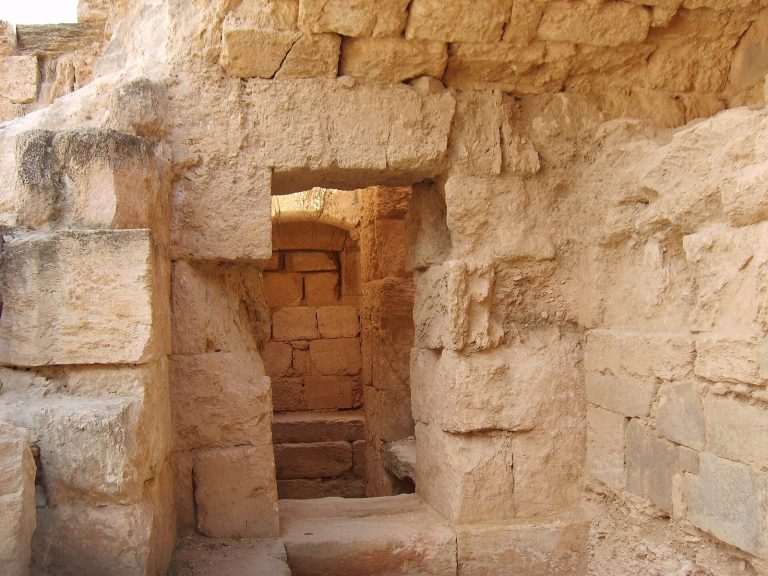
Roman Theater Beit Ras belonged to Capitolias, a planned Roman city founded around AD 97–98 in northern Jordan. The site preserves evidence of urban…
For details on how to use the maps, which sites are included, how popularity and ratings are determined, and how sites are classified, see the help page.
On this page6 sections
Amman’s large theatre and smaller odeon
The Roman Theatre in Amman uses the slope of Jabal al-Joufah to support its semicircular auditorium. Broad horizontal passages divide the seating levels, and stairways break them into wedges. The seating faces north, with ground-level side entrances leading towards the orchestra and stage. Rooms behind the stage accommodated performers preparing for an appearance.
Much of the stage building was reconstructed during twentieth-century restoration. The original rose high enough to enclose the performance space opposite the audience, while the hillside provided the support behind the seats. The ancient arrangement accommodated approximately six thousand spectators.
The nearby Odeon offered a much smaller auditorium beside the same forum area. Ten rows of stone benches held an audience of about five hundred. Archaeologists believe it was roofed, although the roof has not survived and its precise construction is uncertain. Its compact seating contrasts directly with the much larger theatre across the public space.
The temple platform on Amman’s citadel
The building commonly called the Temple of Hercules occupied a raised platform on the citadel hill. Its entrance porch had six tall columns, and a larger sacred enclosure surrounded the temple. Surviving columns and the podium establish its elevated position above the lower city.
Fragments of a colossal marble statue were found nearby, including fingers and an elbow. Neither the statue’s identity nor the temple’s dedication is entirely secure. Later builders reused carved stone from the Roman temple in a Byzantine church on the hill, adding a separate religious phase to the citadel’s buildings.
Amman’s nymphaeum and sculpture niches
The Roman Nymphaeum in Amman was a large public fountain with a façade arranged around three apses and projecting side sections. Niches held sculpture, and holes in the masonry record the fixings for lost marble facing. Parts of the high central and side apses survive, while much of the outer structure has disappeared.
The fountain stood beside the Wadi Amman watercourse, with arches spanning the channel through the structure. Pools and reservoirs belonged to its water arrangements, although the exact operation of some features remains uncertain. Modern conservation has repaired the masonry and partly reconstructed one apse.
Streets and water supply at Umm Qays
Umm Qays, ancient Gadara, occupies a ridge with steep slopes towards the surrounding valleys. Its principal paved street ran east–west between colonnades, with wheel ruts still marking parts of the surface. Baths, theatres and other public buildings occupied different areas of the settlement.
Water came from springs, cisterns and a long aqueduct system with underground sections. Excavations have also identified tunnels within the town itself, separate from the external conduit. The street and water remains record both movement across the ridge and the infrastructure serving the buildings along it.
Pella’s Roman buildings and later basilica
At Pella, Roman public buildings developed around a well-watered valley between older settlement hills. Their remains include a small odeon and baths associated with the later civic complex. The city continued to expand and rebuild during the Byzantine period, when churches occupied prominent positions across the site.
The central basilica had rows of columns and a court in front of its entrance. Incorporation into this later complex helped preserve parts of the earlier odeon and bathing structures. The church belongs to Pella’s Christian development, while the adjoining Roman remains identify an older public district within the same urban centre.
Explore the collection
Explore sites on the map or in the grid. Map icons reflect each site’s primary function, helping you identify different kinds of places at a glance. Narrow the results by primary function, site type or era, with additional filters for popularity and rating. Select a map marker to view the site’s details and open its article, or open the article from its grid entry.