Château d’Aiguèze: A Fortified Castle in France
Site at a Glance
- Rating
- 4.6
- Popularity
- Very Low
- Country
- France
- Primary era
- Medieval
- Eras represented
- Medieval, Early Modern
- Civilizations
- French, Merovingian
- Site type
- Military
- Remains
- Castle
On this page10 sections
History
Château d’Aiguèze is a fortified castle in France, built and developed as a defensive stronghold above the Ardèche River. Its earliest fortification is attributed to the Merovingian period, the Frankish dynasty that preceded the Carolingians, and its initial purpose was to defend the Carolingian realm associated with Charlemagne.
Early fortification and feudal strengthening
Tradition places the castle’s foundation on the cliff in the aftermath of the Battle of Poitiers in 732. According to this tradition, the lord of Balazuc built it at the request of Charles Martel, the Frankish military and political leader who defeated an Umayyad force at Poitiers. The fortress was intended to protect the Kingdom of Provence and the emerging Carolingian Empire from incursions described as Saracen attacks, while also controlling navigation on the Ardèche and Rhône.
Around 1080, Raymond de Saint-Gilles, Marquis of Provence, ordered his vassal Pons de Balazuc to reinforce the fortress. This work took place at the beginning of the feudal period, before the two men departed for the First Crusade in 1096. The First Crusade was a western European military expedition launched to seize Jerusalem and other territories in the eastern Mediterranean.
Medieval conflicts and changing lordship
In 1196, Nicolas of Viviers, the count-bishop of Viviers, conquered the fortress. Around 1210, Simon IV de Montfort took possession of it in the name of Philip II Augustus of France during the Albigensian Crusade, a thirteenth-century campaign against the Cathar movement in southern France.
In 1374, Charles V of France sold half of the lordship to Pions Bordon, the general inspector of the salt tax at Pont-Saint-Esprit. The castle was seized in 1388 during the Tuchin uprising, an insurgency active in parts of southern France during the later fourteenth century and associated with the wider conditions of the Hundred Years’ War. After the Tuchins were massacred in 1389, the village and castle were destroyed and abandoned for a long period.
Rebuilding and modern ownership
The castle and village were rebuilt in the early sixteenth century by successive lordly families who headed the Barony of Aiguèze. These included the Beauvoir du Roure, Harcourt-Lorraine, and Vogüé families. The Romanet family has owned the castle since 1789, with ownership continuing through its descendants.
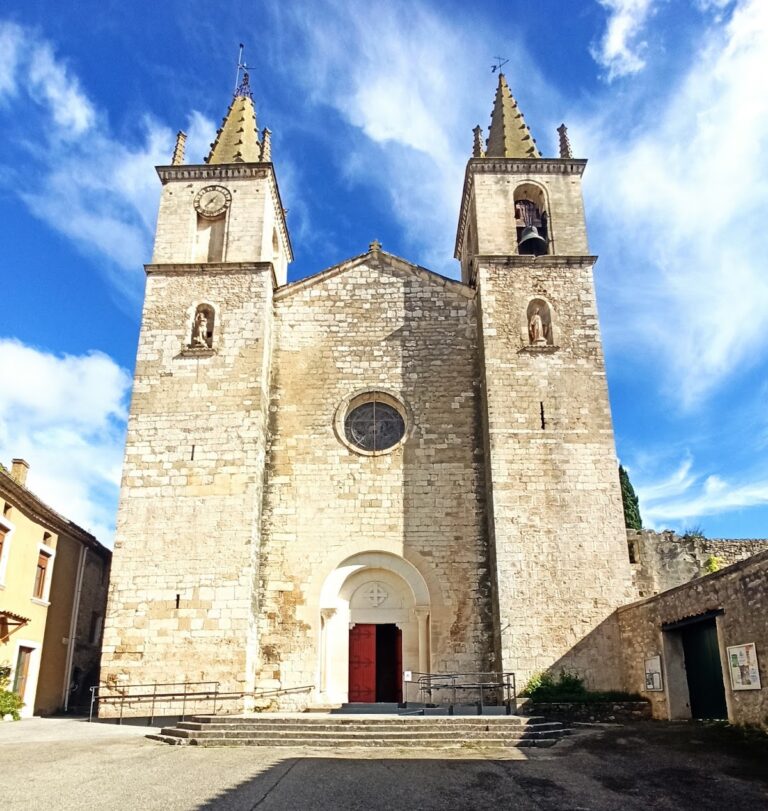
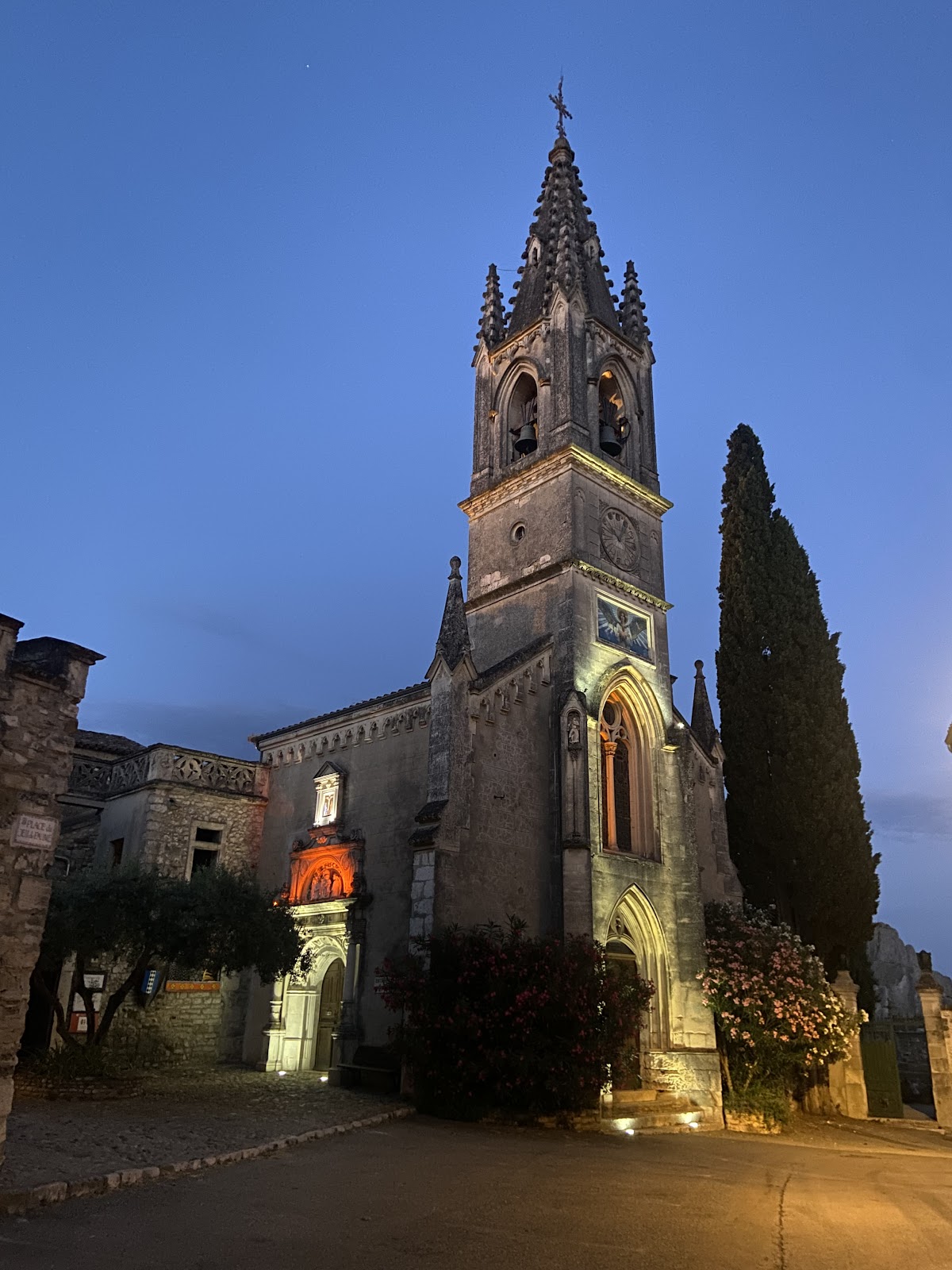
From 1901, Frédéric Fuzet, a member of the Romanet family and archbishop of Rouen, undertook major restoration work on the castle, the eleventh-century Church of Saint Roch at Aiguèze, and the medieval village. The castle’s historical use was defensive, while its present destination is private. Aiguèze is also associated with a medieval village classified among the Most Beautiful Villages of France.
Remains
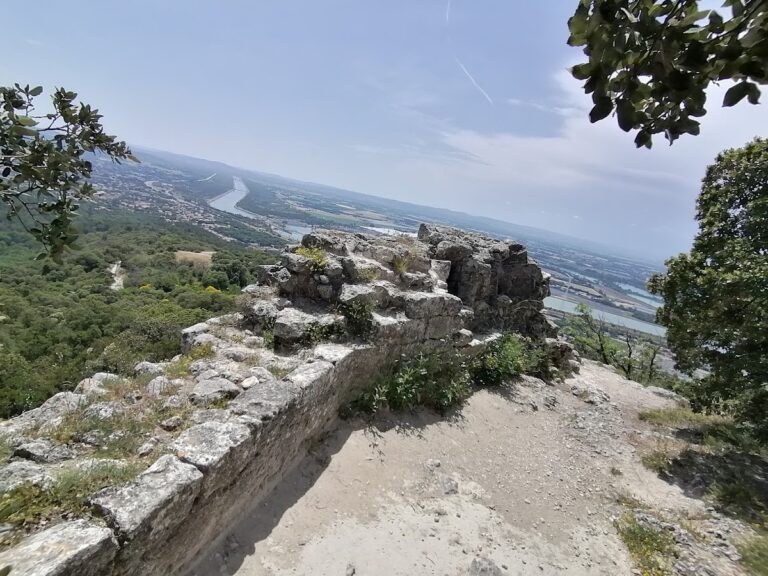
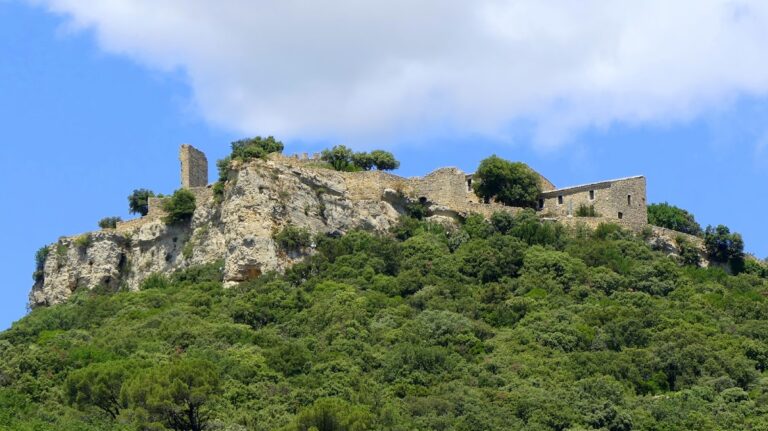
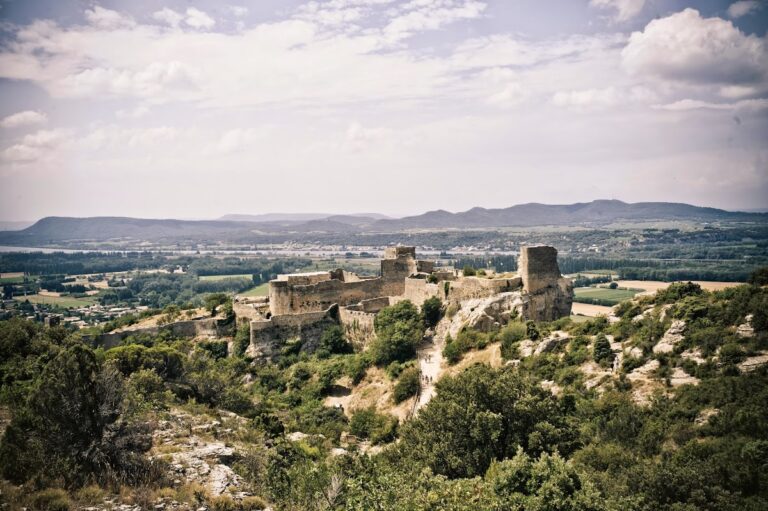
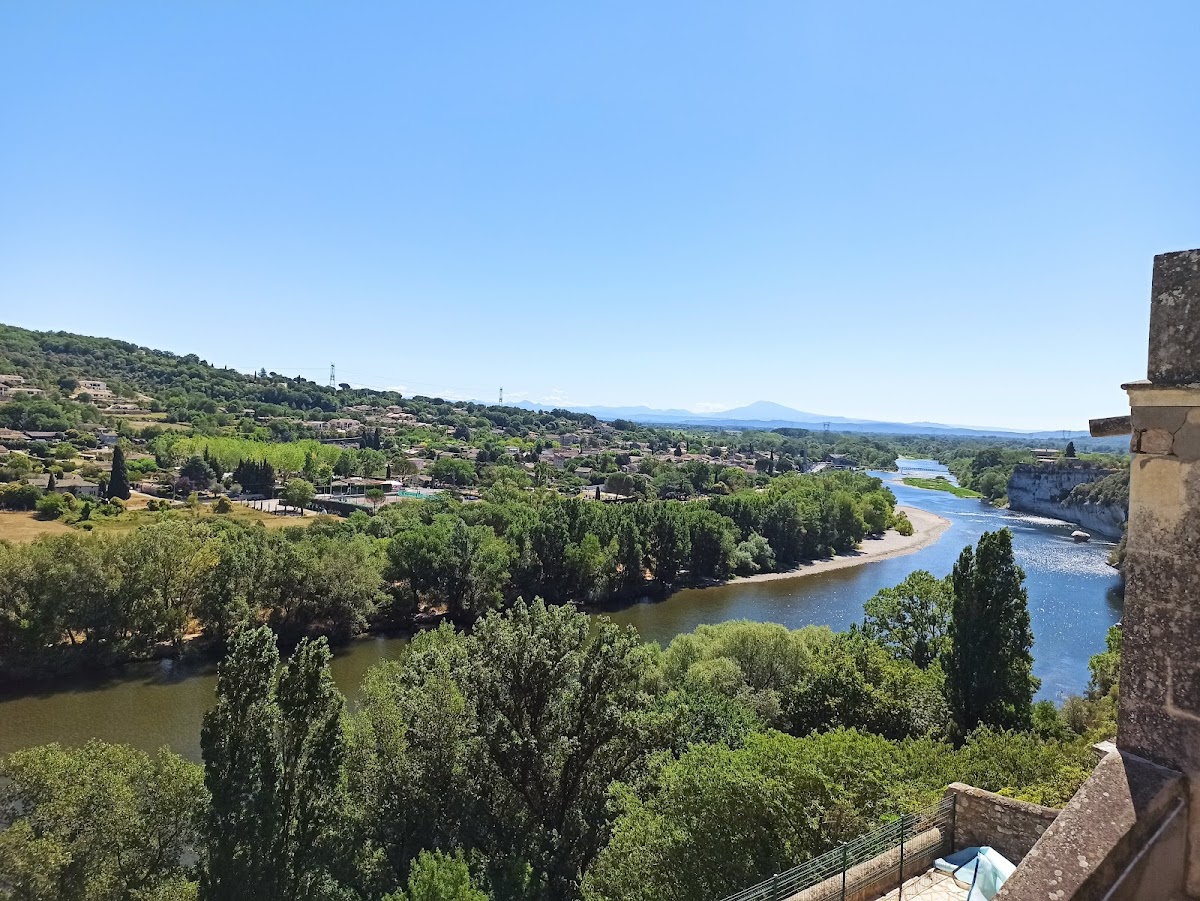
The castle ruins occupy a cliffside position above the Ardèche River, overlooking the Gorges de l’Ardèche. The complex is described as a medieval troglodytic fortress, using the cliff and naturally formed spaces as part of its defenses. Substantial fortifications extend along the rock, including natural wall-walks formed beside the cliff face.
Fortifications and towers
Saracen Tower
The Saracen Tower is identified as an eleventh-century structure within the fortified complex. It forms part of the tower system that follows the cliffside defenses and is connected to the later round tower.
Donjon
The twelfth-century donjon, the principal fortified tower of a medieval castle, is one of the three principal towers at Château d’Aiguèze. Its position belongs to the defensive organization of the fortress during the period of feudal strengthening.
Round tower
A round tower dating from the thirteenth century is connected to the Saracen Tower. Together with the eleventh-century tower and the twelfth-century donjon, it forms the principal surviving tower group.
Seigneurial residence
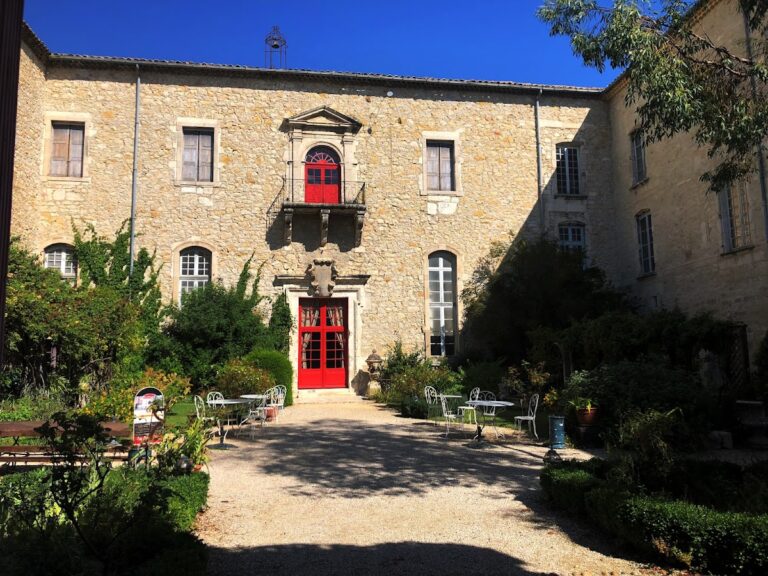
The site also includes a seigneurial residence with medieval-Renaissance character, generally described as a manor house in medieval style. It forms the residential element of the complex alongside the cliffside fortifications and towers.
Nearby sites