Caesar’s Camp: An Ancient City and Fortified Plateau in France


Site at a Glance
- Rating
- 4.5
- Popularity
- Low
- Country
- France
- Primary era
- Classical
- Eras represented
- Iron Age, Classical, Medieval
- Civilizations
- Celtic, Roman
- Site type
- Military
- Remains
- Camp
On this page7 sections
History
Caesar’s Camp is an ancient city in France, located at Laudun-l’Ardoise in the Gard department. Covering about 18 hectares, it occupied a dominant position above the Rhône corridor and the meeting point of the Cèze and Tave valleys. The site was occupied from the fifth century BC, during the Iron Age, through Late Antiquity, the later phase of the ancient world from roughly the third to the eighth centuries AD.
Iron Age and Roman occupation
Early occupation began in the fifth century BC, and fortifications from the fifth century BC show that the rocky plateau had a defended settlement during the Iron Age. Later phases include further defenses from the first century BC and the first century AD. Numerous traces of ancient habitation survive at Saint-Jean-de-Rouzigues, overlooking Orsan.
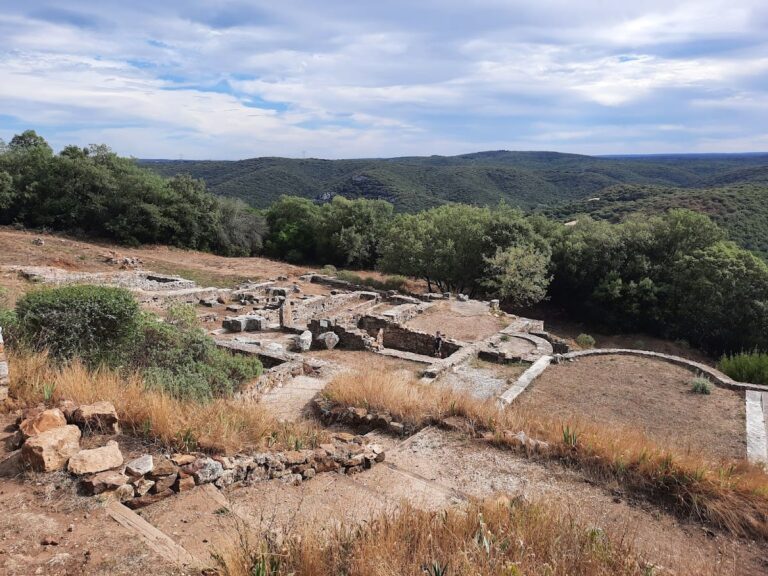
During the first century AD, the settlement developed a monumental center containing a forum, the principal public square of a Roman city, an Augustan-era civil basilica, and a tribunal used in the administration of justice. An oil mill, dated to the first or second century AD, formed part of the site’s productive facilities. Cemetery areas dating from the fifth to seventh centuries AD reflect continued use into Late Antiquity.
Religious traditions and medieval occupation
A sun cult was practiced on the plateau. Its memory survives in the legend of the Golden Goat, which said that at midnight on 24 June, Saint John’s feast day, a chasm opened and released a golden goat representing the sun at the summer solstice. The tradition also claimed that the goat guarded treasure left in the chasm by Hannibal, described in the story as the “king of the Saracens of Africa.”
After the ancient occupation, Benedictine monks, members of the religious tradition based on the Rule of Saint Benedict, lived in monastic cells on the plateau until the thirteenth century. This medieval phase added religious buildings and extended the site’s history beyond its ancient urban and defensive functions.
Remains
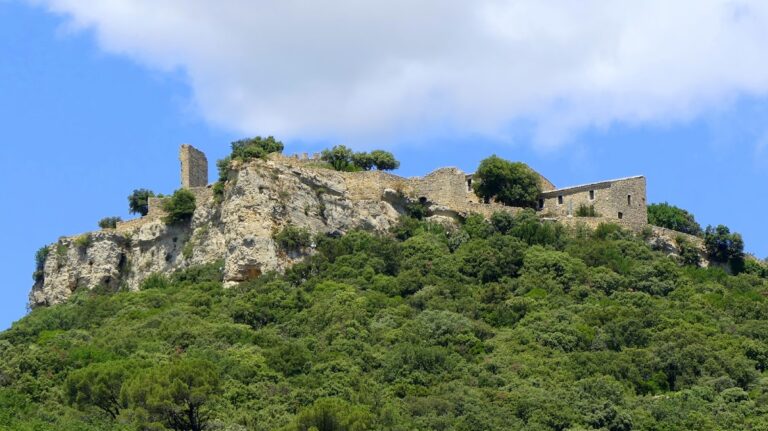
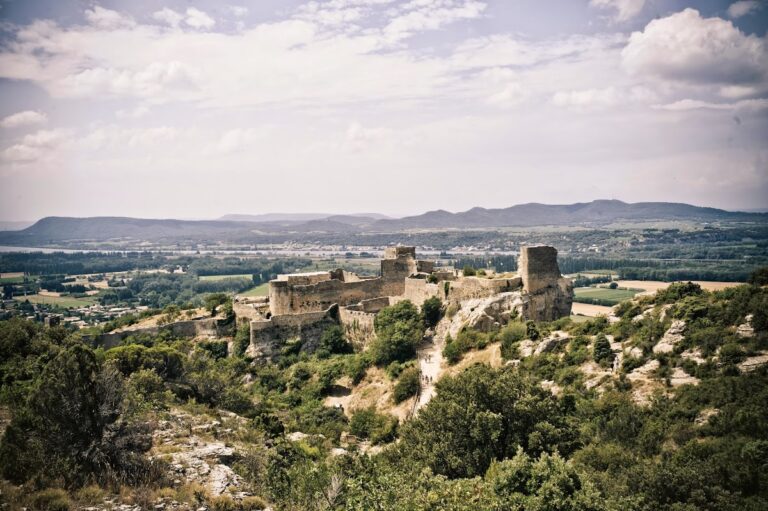
Caesar’s Camp occupies a rocky spur whose natural defenses were strengthened by walls and towers. The plateau entrance was closed by an enclosing wall about 1.5 metres thick, while further defensive remains survive along its southern side. The surviving archaeological layout includes fortifications, the principal gate of the Roman city, a secondary opening through the defenses, a tower, civic buildings, productive installations, places of worship, and cemetery areas.
Fortifications and entrances
The defensive wall was reinforced with circular towers, one of which remains standing. Three openings in the wall were each more than 5 metres wide. Other surviving elements include a rampart, a postern, a tower, and the principal gate of the Roman city. Together, these remains show how the natural strength of the spur was supplemented by constructed defenses from several ancient periods.
Roman civic and productive buildings
The monumental center dates from the first century AD and comprised a forum, an Augustan-era civil basilica, and a tribunal. The basilica was a public building associated with legal, administrative, and commercial activities, while the forum served as the city’s principal public square and the tribunal as a place connected with justice. An oil mill dating from the first or second century AD also survives among the remains.
Medieval buildings and burial areas
At the west of the site, wall fragments mark the monastic cells occupied by Benedictines until the thirteenth century. Two ruined places of worship remain, including a Romanesque oratory dedicated to Saint Peter in Chains and a chapel dedicated to Saint John. A Romanesque chapel of Saint-Jean-de-Rouzigues is also identified among the remains. Cemetery areas dating from the fifth to seventh centuries AD form another surviving part of the archaeological site.