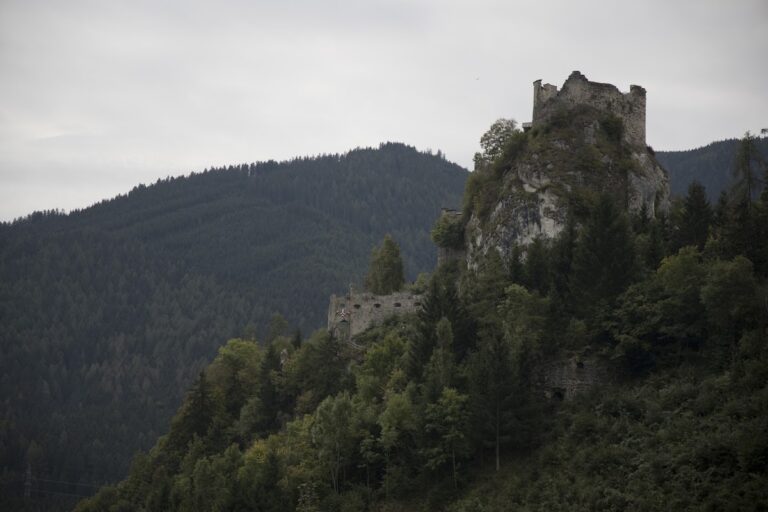
Frauenburg Castle: A Medieval Fortress in Austria
Visitor Information
Google Rating: 4.4
Popularity: Low
Country: Austria
Civilization: Early Modern, Medieval European
Site type: Military
Remains: Castle
History
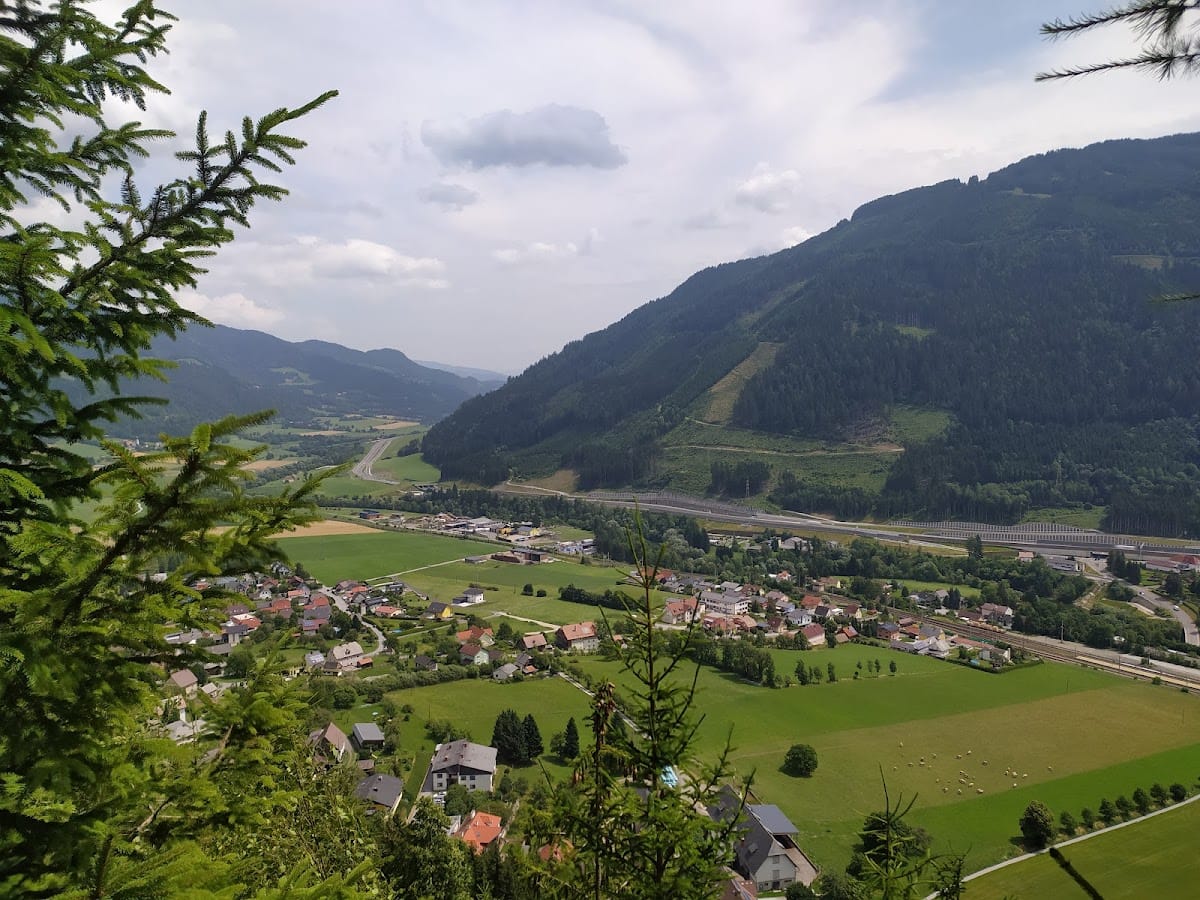
Frauenburg Castle stands on a hill above the market town of Unzmarkt-Frauenburg in Austria, a site originally developed by medieval builders in the 13th century. Its strategic location commands a ridge that oversees an important route connecting Austria to Italy and where the interests of Carinthia, Salzburg, and Styria once intersected.
The castle’s origins trace back to an early wooden fortress that predates written records, but it first appears in documents around 1260. The stone castle was constructed in the 1230s by the Minnesänger and nobleman Ulrich von Liechtenstein, who replaced the older wooden structure with a more durable stone residential tower. He named the fortress Frauenburg, a title that endures to this day. During a turbulent period in 1248, Ulrich was imprisoned within the castle walls for over a year. In 1268 and 1269, the castle briefly fell under the control of King Ottokar of Bohemia, but it soon returned to the Liechtenstein family’s possession.
The lineage of the Liechtenstein family continued to govern Frauenburg until the male line ended in the 15th century. In 1437, ownership passed to the Stubenberg family, related through kinship ties. The Stubenbergs undertook significant expansions, adopting Gothic architectural elements and strengthening the castle’s defenses by adding an outer bailey. Despite these enhancements, the family did not choose Frauenburg as their primary residence. Notably, in 1597, the celebrated mathematician Johannes Kepler was a guest at the castle during the time it was under Andreas von Stubenberg’s care.
Financial troubles forced the Stubenberg family to sell Frauenburg and its surrounding lordship to the Schwarzenberg family in 1666. During the early 19th century, the Schwarzenbergs shifted their administrative base to the town of Murau. This administrative relocation led to a decline in the castle’s upkeep and strategic importance. A destructive fire in 1861 further damaged parts of its fortifications, hastening its deterioration. Despite this, the medieval residential tower endured through the years.
In 1962, the west wall of the tower collapsed, prompting restoration efforts by the Styrian Castle Association. These efforts involved reconstructing the fallen wall using concrete to stabilize the structure. Today, Frauenburg Castle remains privately owned by descendants of the Schwarzenberg family. It is recognized as a protected historic monument, maintaining its presence as a landmark tied closely to the region’s medieval heritage.
Remains
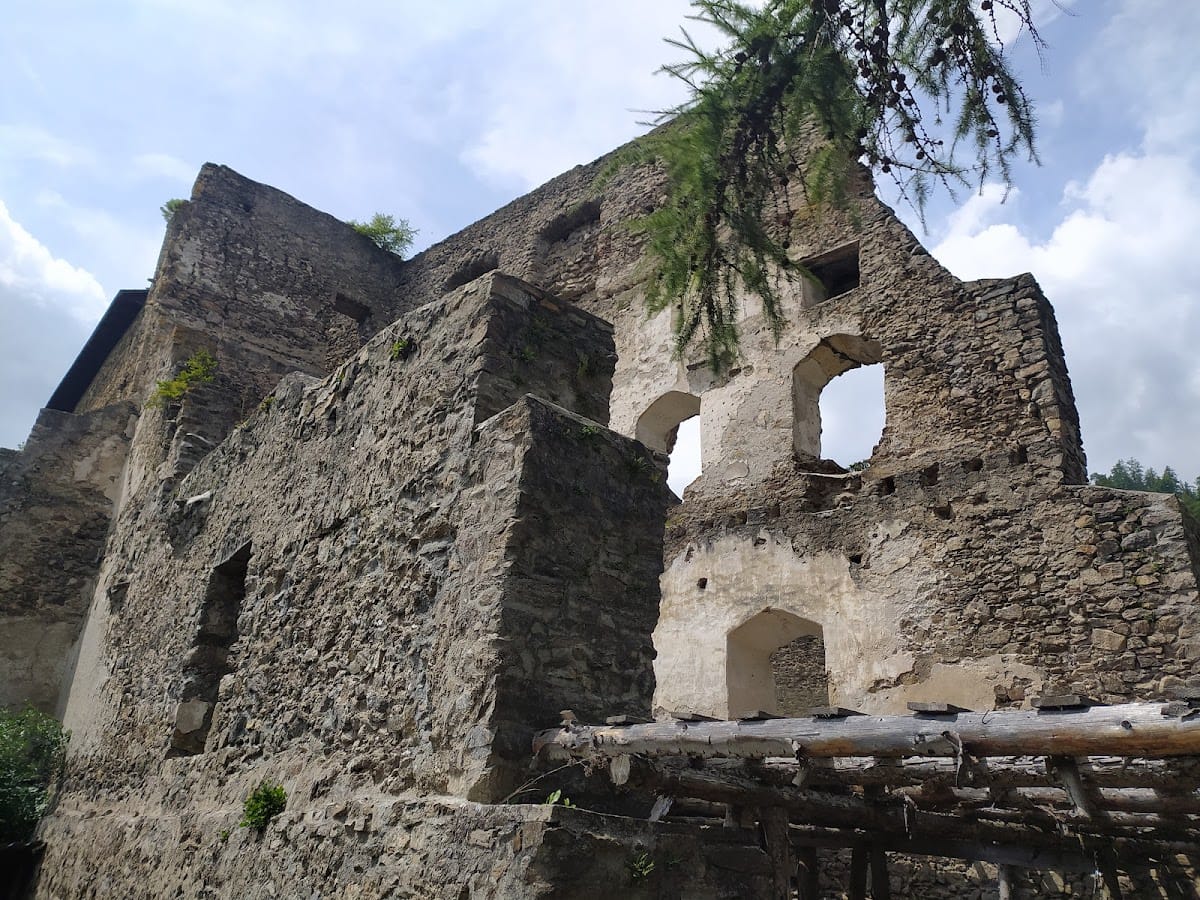
Frauenburg Castle extends along a steep ridge over several terraces that descend from south to north, covering an area approximately 200 meters long. Its masonry is characterized by small rubble stones, with corners reinforced by long blocks of lighter-colored stone, providing both strength and visual contrast.
At the lowest terrace stands the Church of St. Jakob, constructed around 1250. Originally built in a Romanesque style, it underwent later Baroque modifications. By the 14th century, the church became integrated into the castle’s fortifications. Inside, traces remain of an earlier Romanesque building, and notably, a Roman inscribed stone was reused in its construction, reflecting a layered historical narrative.
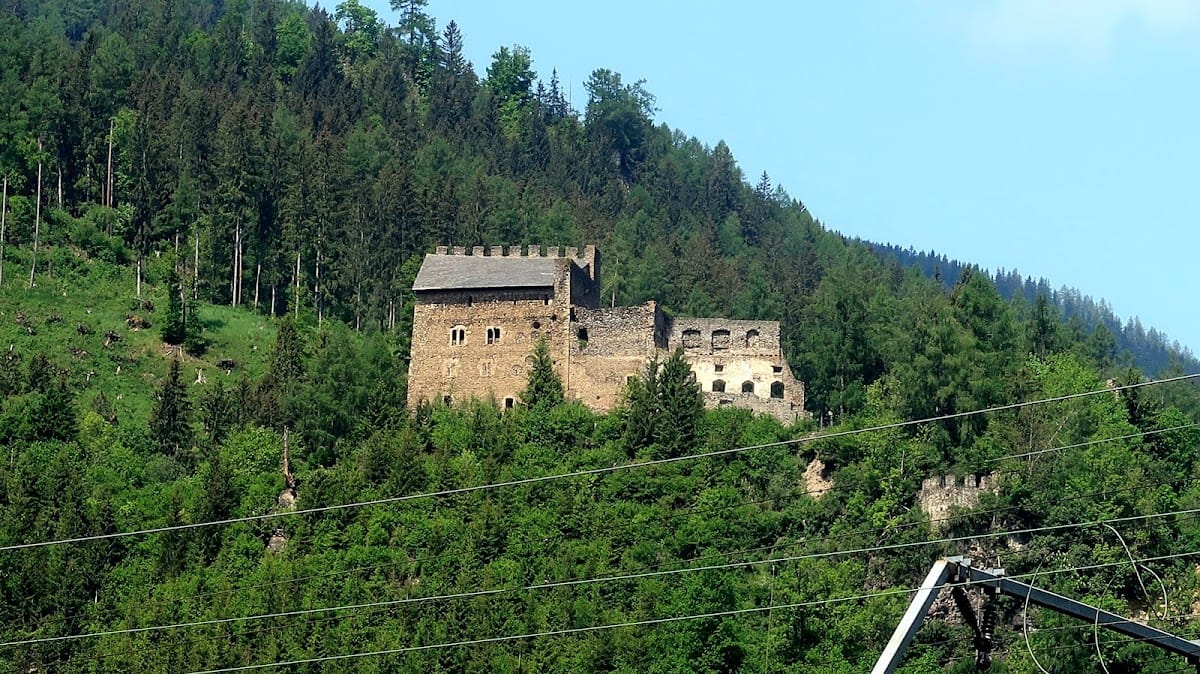
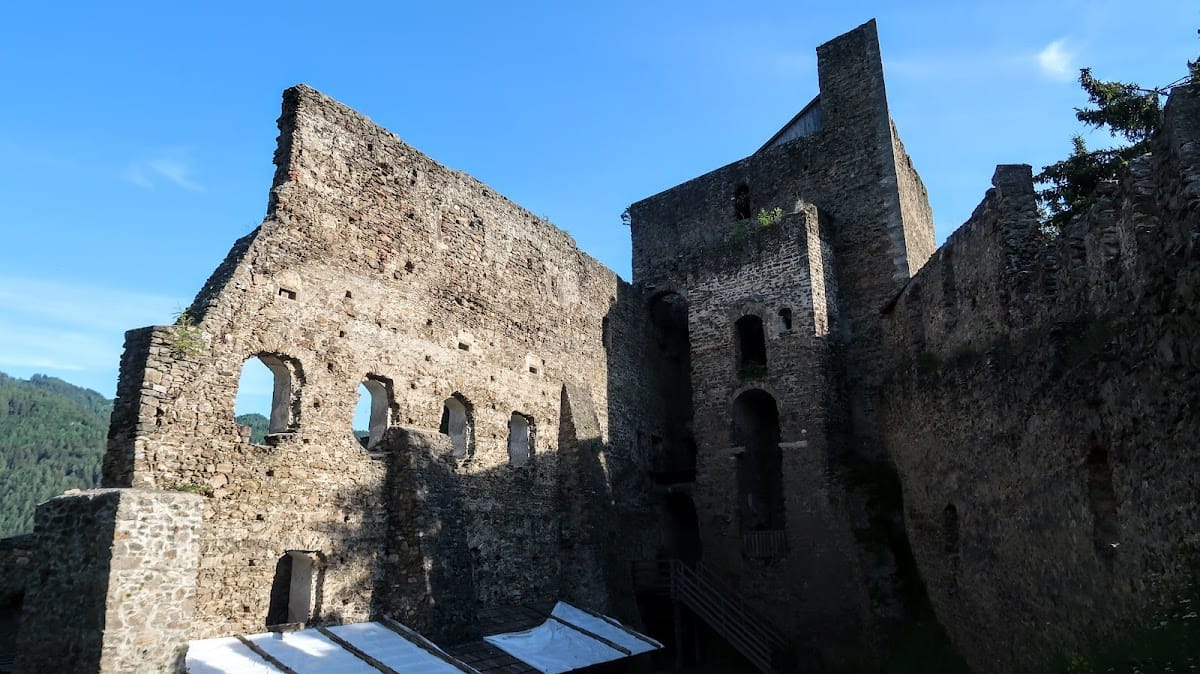
The principal feature of the castle is its main residential tower, or palas, situated at the southernmost and highest point on the ridge. This imposing four-story structure measures roughly 16 meters long and between 6 and 10 meters wide in a trapezoidal shape, providing about 700 square meters of usable floor space. Its walls are two meters thick, and the top is crowned with battlements, though these lack a walkway. A sloping shed roof angles steeply to the mountain side, designed to protect the tower from assaults originating from that direction.
Internally, the first and second floors served as living spaces, originally divided into three rooms each. Among these was a large hall with a fireplace, a kitchen area, and a chapel accompanied by an adjoining latrine on the second floor. The southwest side features Romanesque paired windows, which still retain their central stone columns. The ground floor, illuminated only by narrow slits, functioned as a cellar and storage area accessible solely from above. The original entrance was positioned high on the tower wall, 8.5 meters above the courtyard, reached by a wooden staircase. The third floor includes three round-arched windows looking out over the valley and a lancet window facing the courtyard. The side facing the mountain remains without windows, contributing to the tower’s defensibility.
Beneath the tower lies a vaulted elongated cellar room accessed at ground level through a five-meter rock-cut tunnel starting from the courtyard. Attached to the tower’s northern side within the courtyard is a three-story annex. This annex began as two robust pillars that were later connected by masonry arches and bridges, supporting a wooden balcony. The balcony was reached by a ramp leading to the tower’s original high entrance. This annex may have served as the apse, or semicircular end, of the castle’s chapel.
Northeast of the tower, archaeological remains reveal a 14th-century residential building with a partly preserved southeastern wall and a dungeon located on its ground floor. This building was later extended with Gothic additions along its southeast facade. Close by are the ruins of a second castle chapel erected in 1434, identifiable by fragments of its Gothic rib vaulting, a structural technique that uses intersecting stone ribs to support the ceiling.
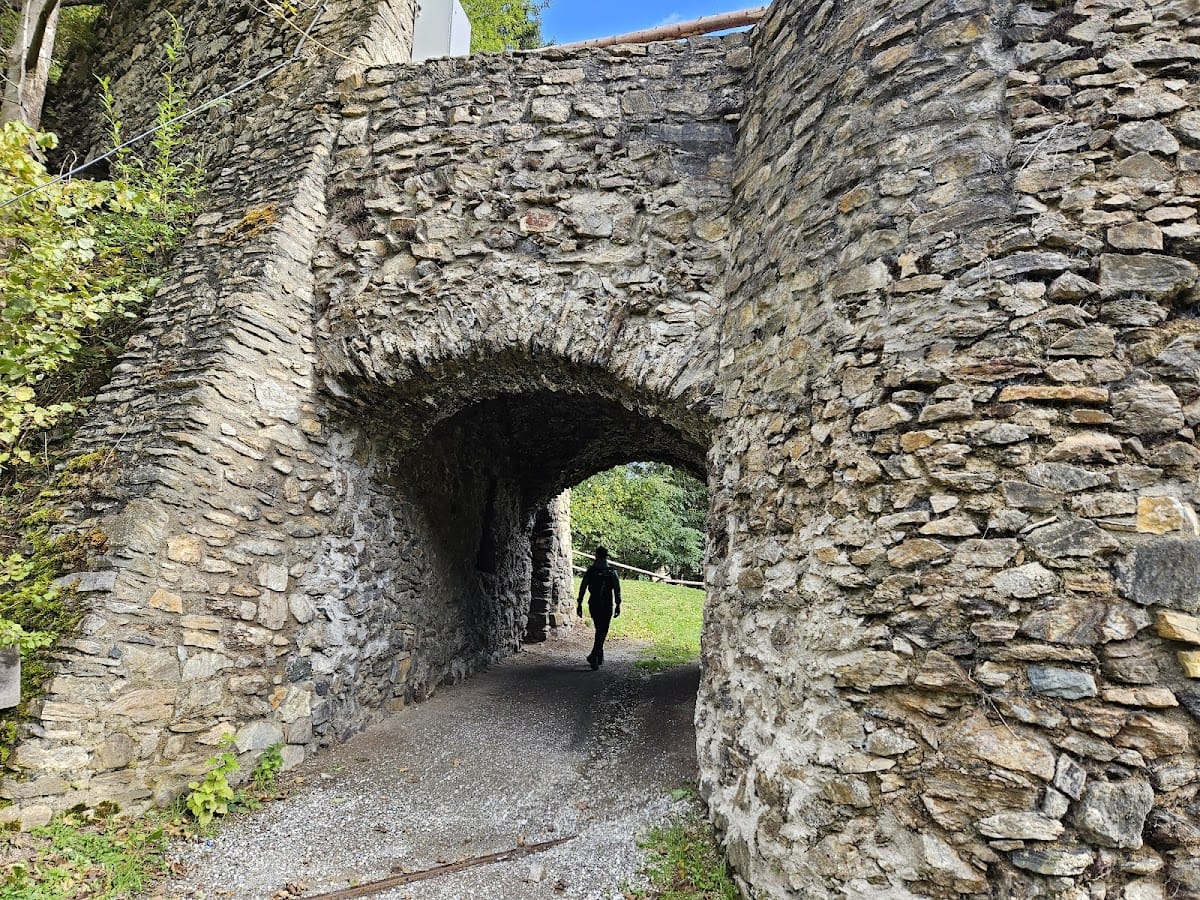
Encircling the inner castle is a high ring wall featuring the remains of a battlemented wall walk, once used for patrol and defense. Structures once attached directly to this wall include a square stair tower with a spiral staircase, offering access between levels of the castle. Two main gateways survive: one north of the stair tower, which probably defended an external tower, and another at the northern tip of the castle. The northern gate consists of a round-arched passageway protected by a walled forecourt and two machicolations, which are openings through which defenders could drop projectiles onto assailants below.
Within the castle grounds, additional gates are evidenced, while remnants of a circular defensive tower or rondel stand on the eastern side of the complex, underscoring the fortified nature of the site. Although the courtyard once contained a cistern for water collection, it no longer remains visible today.
The castle’s placement on a steep hill, with nearly vertical rock faces to the southeast and southwest, provided natural defenses that complemented its constructed fortifications. This commanding position allowed control over the vital route linking Austria and Italy, reinforcing Frauenburg’s historical role as a stronghold in a contested border region.
Nearby sites