Jánský Vrch: A Historic Episcopal Castle in Czechia
Site at a Glance
- Rating
- 4.6
- Popularity
- Medium
- Country
- Czechia
- Primary era
- Early Modern
- External website
- Open
- Eras represented
- Medieval, Early Modern, Modern
- Civilizations
- Holy Roman Empire
- Site type
- Domestic
- Remains
- Castle
On this page14 sections
History
Jánský Vrch is a castle in Javorník, Czechia, developed from a medieval stronghold associated with the Piast dynasty of Silesia in the late thirteenth or early fourteenth century. Its first written mention dates from 1307, when Richolf, the castellan of Javorník, witnessed a document issued by the margrave of Brandenburg. The castle stood on a low but prominent elevation above Javorník, in a position valued for both strategy and administration. From 1371 until 1945, it formed part of the property of the Wrocław bishopric and served as a residence for the bishops and archbishops of Wrocław.
Medieval origins and episcopal possession
The original foundation has traditionally been connected with Bolko I of Świdnica, a member of the Silesian branch of the Piasts. That attribution remains chronologically uncertain because Bolko I died in 1301. In 1348, Bolko II of Świdnica transferred his rights to the castle to Preczlaw of Pogarell, bishop of Wrocław, while retaining possession. After Bolko II died in 1368, Duke Henry of Falkenberg seized the castle with the assistance of its castellan, Matyáš Trencz. The property came into the bishop’s hands in 1371.
At the turn of the fourteenth and fifteenth centuries, the castle estate included Javorník and the villages of Bílý Potok, Uhelná, and Travná. Episcopal vassals in these settlements owed feudal service to Javorník Castle, which therefore served as both a fortified residence and an administrative center.
Hussite forces, followers of the Bohemian reformer Jan Hus, captured and seriously damaged the castle in 1428 while returning from the siege of Nysa. Bishop Konrad of Oels bought back the occupied properties in 1432 for a large sum. The Wrocław chapter then ordered the fortifications demolished so that the castle could not again be used as a hostile base. The abandoned castle and nearby villages were subsequently pawned to Pelkan of Kalkov in 1435, Jan Switling in 1445, and Mikuláš Streit in 1464.
Renaissance residence
Bishop Jan IV Roth, who led the Wrocław bishopric from 1482 to 1506, redeemed the pledge and began transforming the damaged castle into a Renaissance residence. His successor, Jan V Thurzo, completed the rebuilding during his tenure from 1506 to 1520. Two stone tablets made in Francesco Fiorentino’s workshop in Kroměříž commemorated the work.
Thurzo gave the residence the name Jánský Vrch, also known as Johannesberg, in reference to Saint John the Baptist, patron of the Wrocław bishopric and the personal patron of both bishops responsible for the rebuilding. The residence became a meeting place for artists and scholars. Among its visitors was Nicolaus Copernicus, the Renaissance astronomer whose planetary model placed the Sun at the center rather than Earth. Further alterations took place at the beginning of the seventeenth century.
Baroque and Classical transformation
Jánský Vrch survived the Thirty Years’ War without damage. By then, its military importance had declined because the narrow original promontory provided too little space for modern defensive improvements. A seventeenth-century castellan, Johann Tümling, later became the subject of a local legend that the Devil threw him from the castle rampart.
Baroque rebuilding began under Bishop Philipp Gotthard von Schaffgotsch, who lived at Jánský Vrch from his escape from Prussian captivity in 1766 until his death in 1795. The castle became a cultural center for artists from across the Habsburg monarchy, the Central European dynastic realm ruled by the Habsburg family. In 1766, Schaffgotsch appointed the composer, violinist, and conductor Karl Ditters von Dittersdorf as master of the castle chapel. During his thirty-year residence with the bishop, Dittersdorf composed forty comic operas, among other works.
Schaffgotsch’s successor, Prince-Bishop Joseph Christian Franz zu Hohenlohe-Waldenburg-Bartenstein, completed the alterations in a classical style between 1795 and 1817. He also established an ornamental garden and an English-style landscape park. Jánský Vrch remained a favored summer residence of the Wrocław bishops, particularly when political conditions in Prussia and later Germany were unfavorable to them.
The castle administered extensive episcopal properties in the Jeseník region. Their relative importance increased after the secularization of church property in Prussian Silesia in 1810, when church lands were transferred out of ecclesiastical ownership. The domain’s administration had been based at Jánský Vrch for 200 years.
A nineteenth-century cultural center and postwar transition
During the nineteenth century, Jánský Vrch continued to attract writers and intellectuals. Cardinal Melchior von Diepenbrock was a poet associated with South German Romanticism. During Bishop Heinrich Förster’s tenure, the poet Joseph von Eichendorff lived and worked at the castle in 1856 and 1857. Josef Christian von Zedlitz, whose father was the castle castellan, was also a frequent guest.
Friedrich Wilhelm Helle, a writer and editor, stayed at Jánský Vrch from 1881 to 1883 after leaving Prussia because he faced prosecution for insulting Protestantism and Old Catholicism. The bishop supported Helle’s work on his principal book, Jesus Messias.
The last residents and administrators included Cardinals Georg von Kopp and Adolf Bertram. Bertram lived at the castle after the evacuation of Wrocław and died there on 6 July 1945. He was initially buried at Jánský Vrch, and his remains were transferred to Wrocław Cathedral on 8 November 1991.
After the Second World War, ownership of the castle took several decades to resolve. The property was leased to the Czechoslovak state in 1959. In 1984, claims by the Czech and Polish Roman Catholic churches were settled and the castle was fully nationalized. Since 1 January 2002, Jánský Vrch has been a national cultural monument of the Czech Republic. It is state-owned and administered by the National Heritage Institute.
Remains
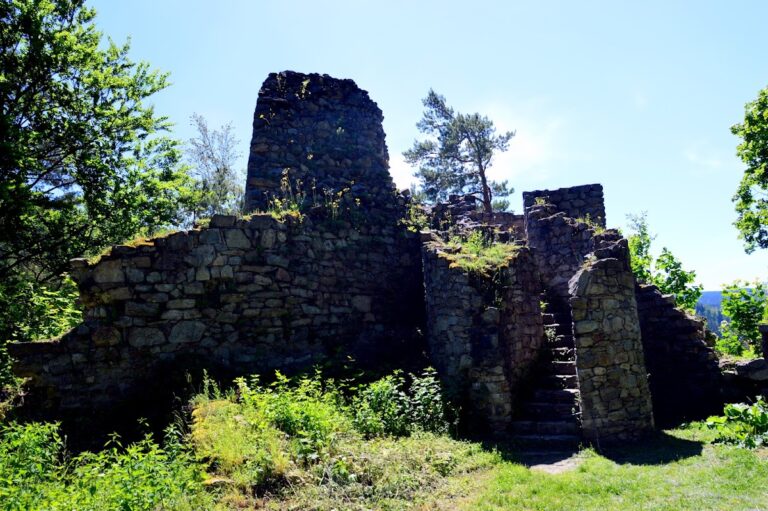
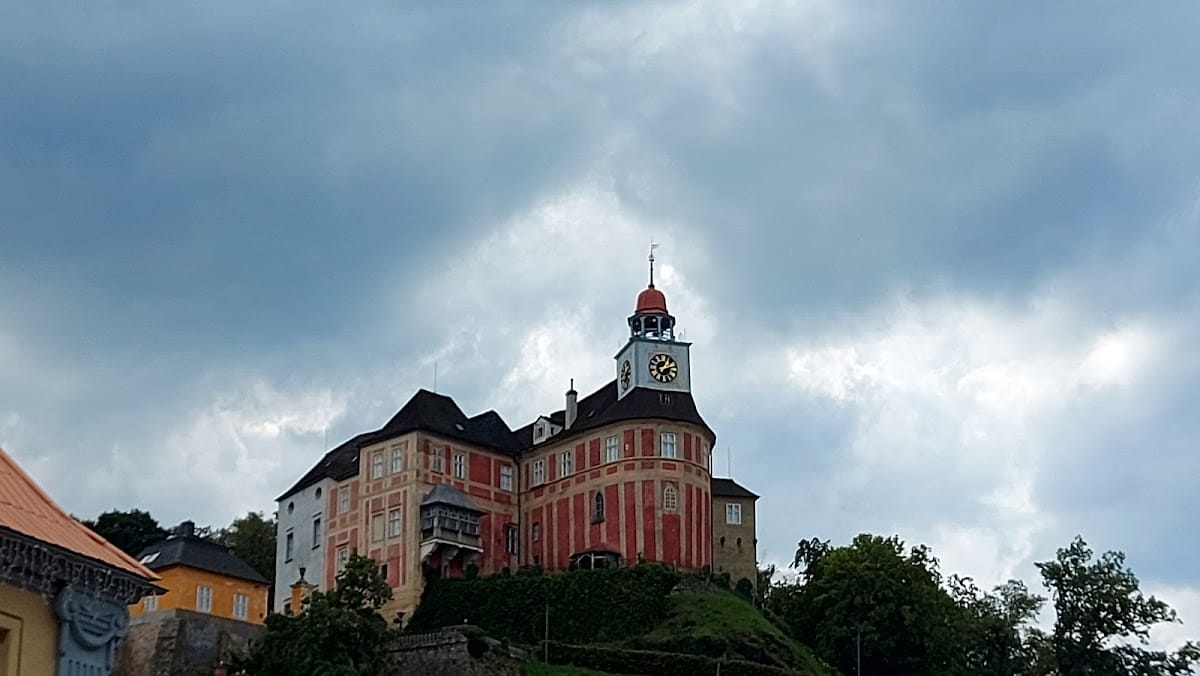
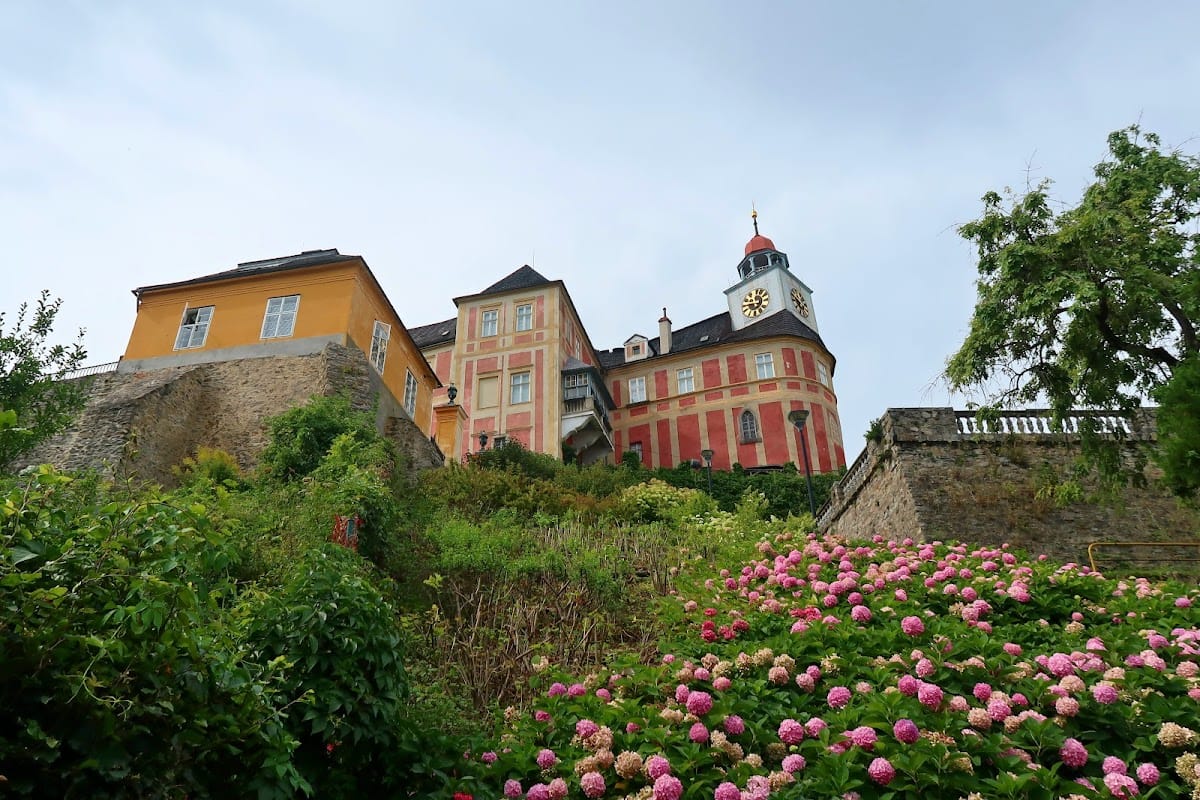
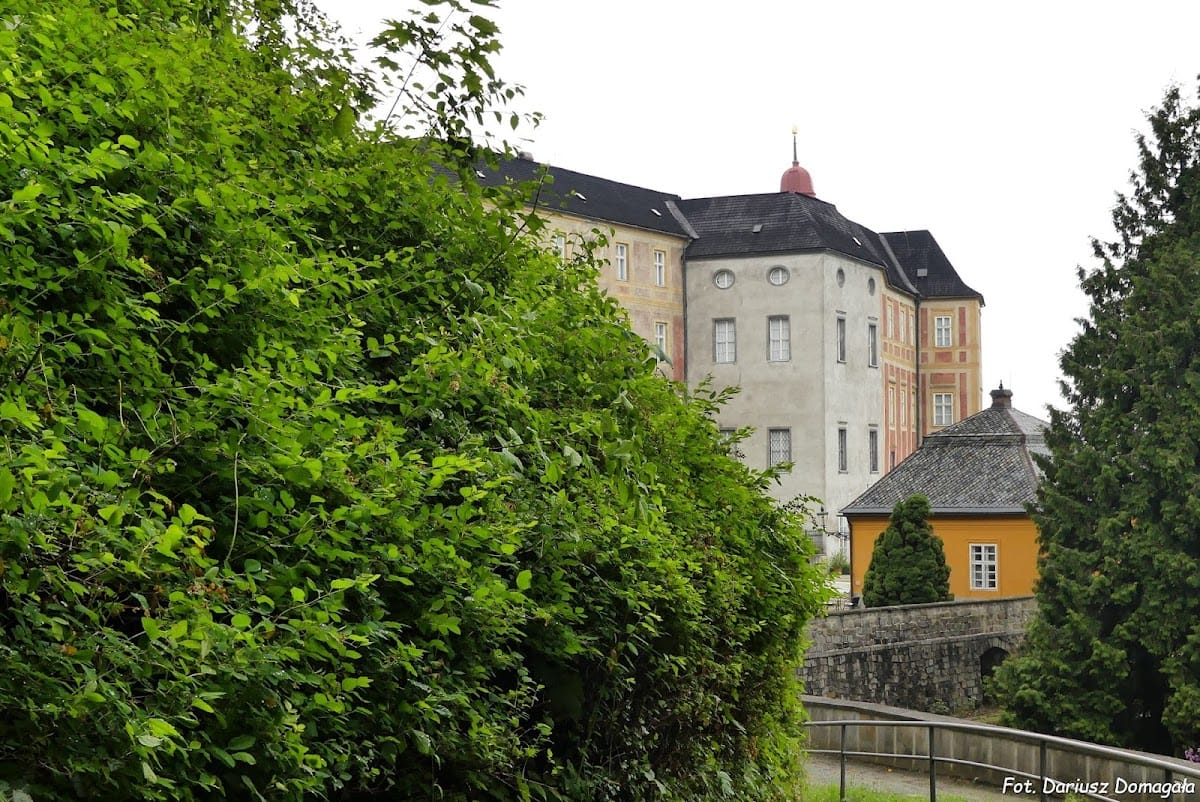
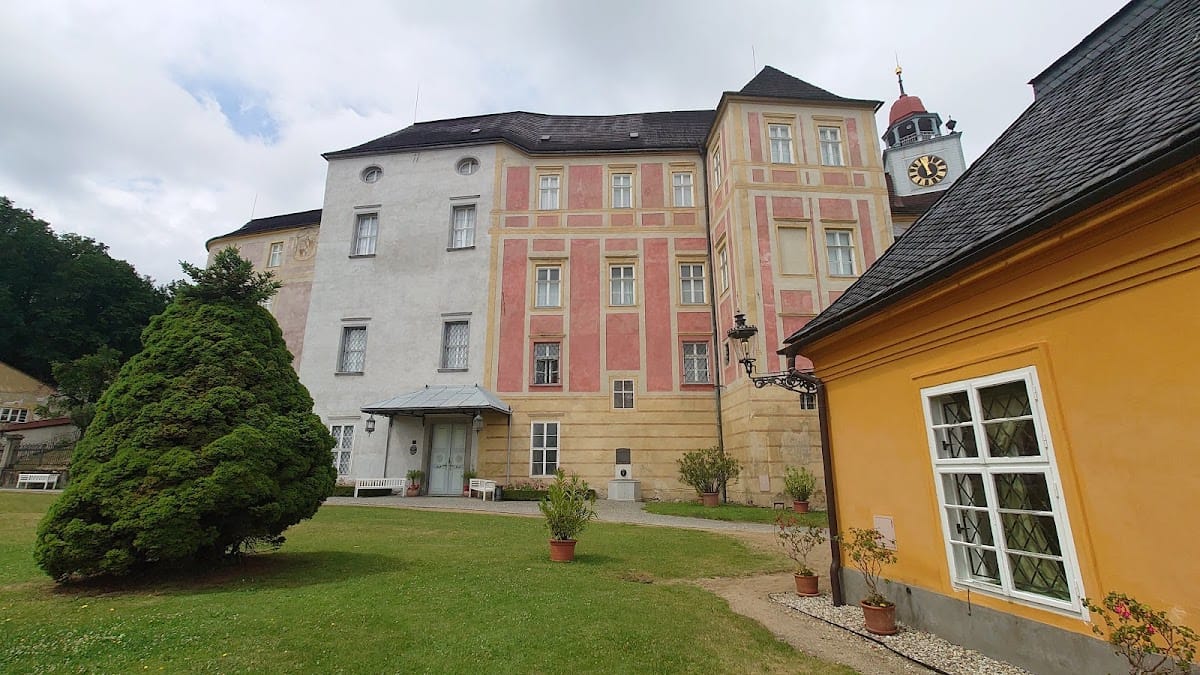
The present castle is a compact, elongated oval complex arranged along a north-south axis. Its buildings are broadly equal in height, with a smaller clock tower rising above them, and they enclose two courtyards, an upper and a lower. Late Gothic, late Renaissance, Baroque, and Classical buildings preserve the plan of the earlier stronghold while showing the successive changes from fortress to residence.
Fortifications and courtyards
The earliest high-medieval phase survives only faintly, while the late Gothic rebuilding around the turn of the fifteenth and sixteenth centuries broadly retained the original plan. The original approach came from the south. Nineteenth- and twentieth-century service buildings now occupy the position of a partly filled-in moat. A southern Classical building stands within the original fortification associated with the period around 1500.
Bergfried and concert hall
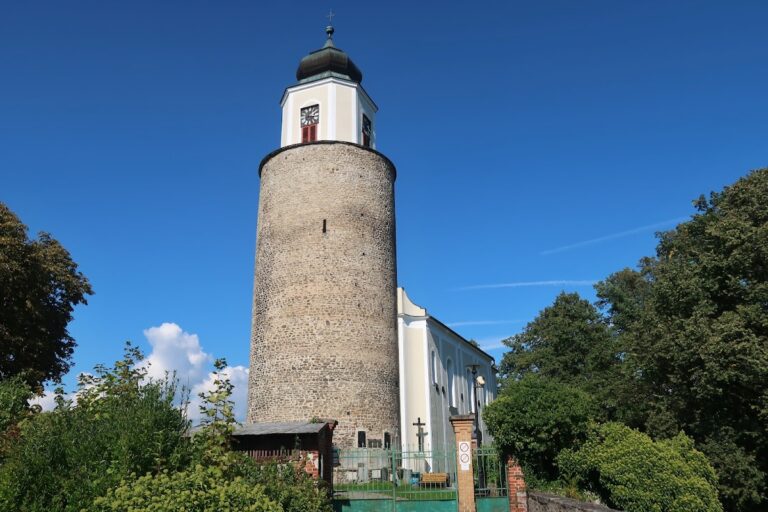
The most prominent part of the medieval castle was a massive bergfried, the principal defensive tower used for protection and refuge rather than permanent residence, on the southwest side. Much of the tower was incorporated into the surrounding fortifications and buildings, and its surviving form was substantially lowered. During the Baroque period, an oval concert hall was built on its foundations.
Chapel and clock tower
A chapel was inserted into a bend in the northern fortification during the Renaissance. It was regothicized, or altered to give it a Gothic appearance, in the mid-nineteenth century. The clock tower stands above the chapel and was also lowered in the eighteenth century.
Garden terrace and access path
On the eastern side, a Baroque garden terrace is enclosed by the original late Gothic fortifications. A pedestrian path from the town reaches the terrace from the north. The path was established at the beginning of the nineteenth century. Recent and ongoing reconstruction uses plaster colors to distinguish the castle’s successive construction phases.
Interiors and collections
Chapel sculptures and altar
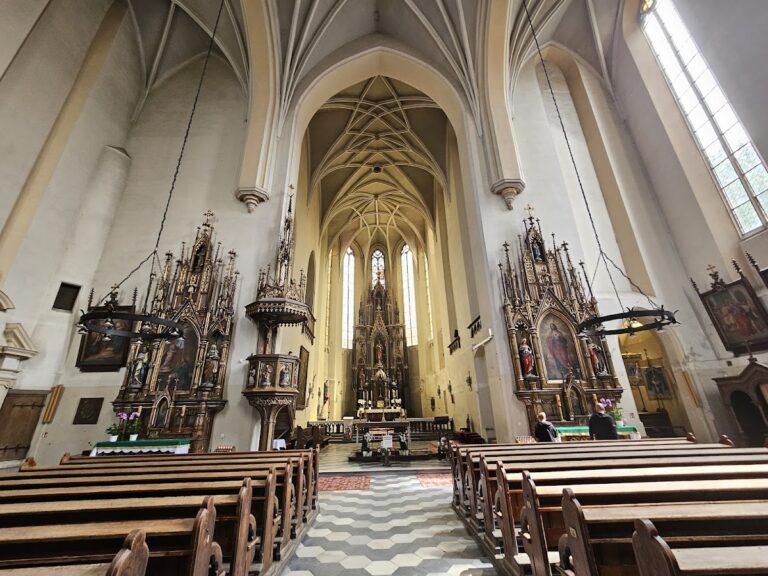
The castle chapel contains late Gothic sculptures of Saint Barbara, Saint Helena, and the Virgin Mary dated 1491. Its altar was made by a Dutch master in the early seventeenth century. These elements form part of the chapel’s surviving sequence of Renaissance and later alterations.
Rooms and artistic furnishings
The interiors are predominantly Baroque and Classical in their present arrangement. Several rooms retain historical wall paintings and wallpapers, together with substantial furnishings, especially from the nineteenth century. Musical instruments, paintings, and other artistic objects associated with the Wrocław bishops remain among the contents of the castle.
Tobacco-pipe collection
Jánský Vrch houses approximately 2,000 tobacco pipes dating from the eighteenth to the twentieth centuries and originating from a range of geographical areas. Founded by Emil Tománek and purchased for the castle in 1968, the collection includes particularly valuable pipes made of porcelain and sepiolite, a light porous mineral also known as meerschaum and traditionally carved into decorative objects. It is described as the largest collection of its kind in Central Europe.