Castles in Greece: Explore Hilltop Fortresses, Walled Settlements and Island Palaces
Castles in Greece include vaulted medieval residences, Venetian artillery fortresses, Ottoman citadels and defended settlements on the mainland and islands. Some are compact buildings around an inner court; others extend across a hill or enclose houses, mosques and streets. Later palaces also belong to the wider castle and residence group used by this map.
The examples below focus on substantial walls and buildings. They follow differences in defensive layout and internal use, from Chlemoutsi’s connected halls to Palamidi’s separate bastions and Ioannina’s fortified urban districts.
Primary Function: All
Type: All
Civilization: All
Popularity: All
Rating: All
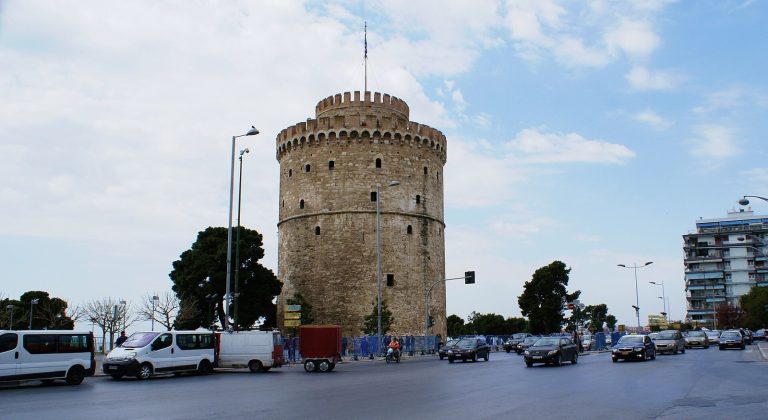
The White Tower of Thessaloniki is a fifteenth-century Ottoman fortification that guarded the city’s waterfront and later served as a garrison,…
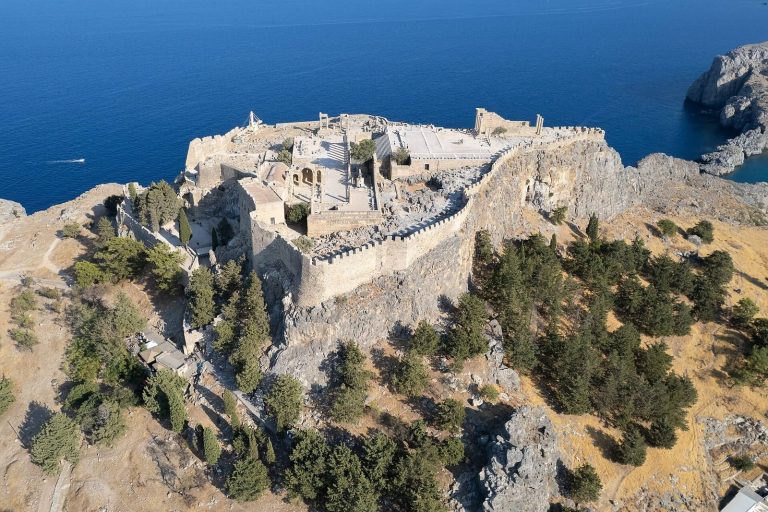
The Acropolis of Lindos is a 116-metre-high archaeological site where Greek sanctuaries, Roman structures, Byzantine and Hospitaller fortifications,…
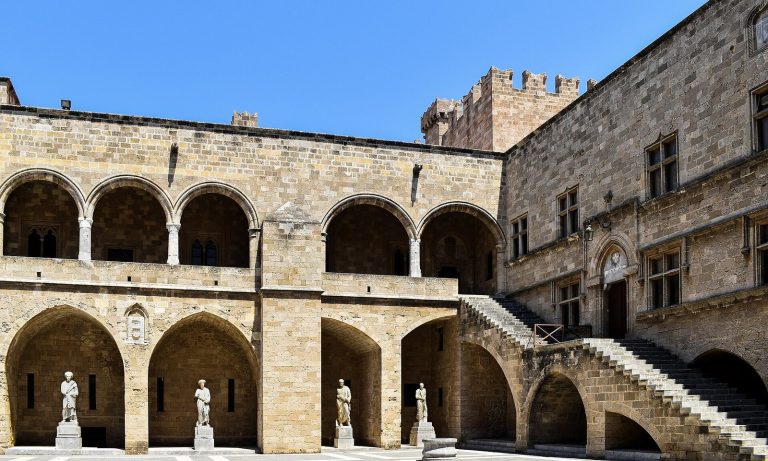
The Palace of the Grand Master in Rhodes, Greece, developed from a Byzantine citadel into the administrative residence and fortress headquarters of…
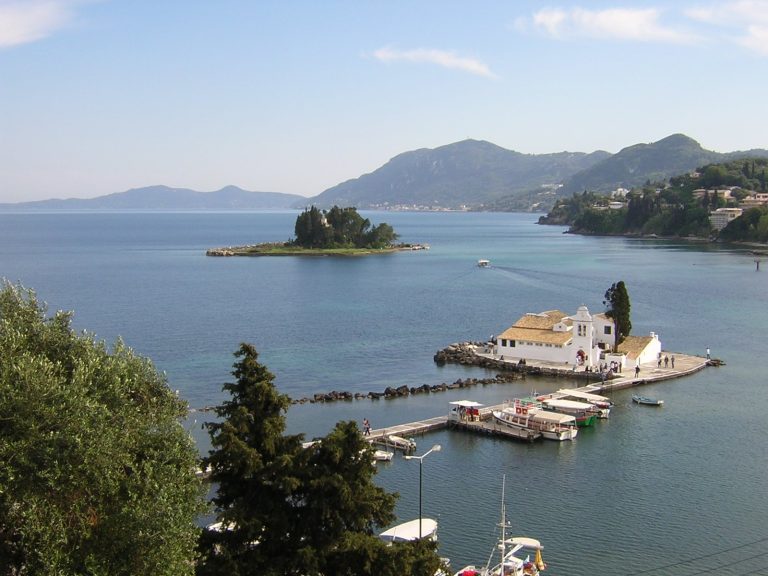
Achilleion is a palace on Corfu built for Empress Elisabeth of Austria-Hungary and later owned by Kaiser Wilhelm II. Its history combines royal…
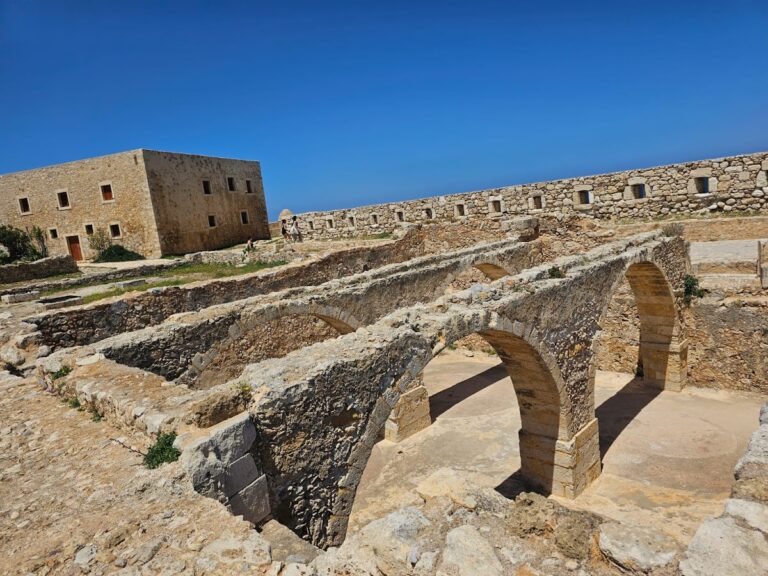
The Fortezza of Rethymno is a Venetian fortress built from 1573 on Paleokastro hill after the Ottoman attack of 1571. Its walls, bastions, military…
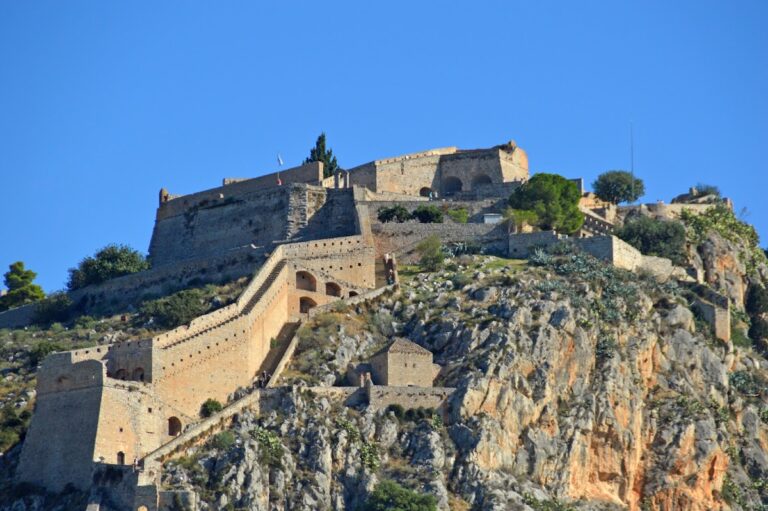
Palamidi is an eighteenth-century Venetian fortress above Nafplio, shaped by Venetian, Ottoman, and Greek rule and later used as a prison during the…
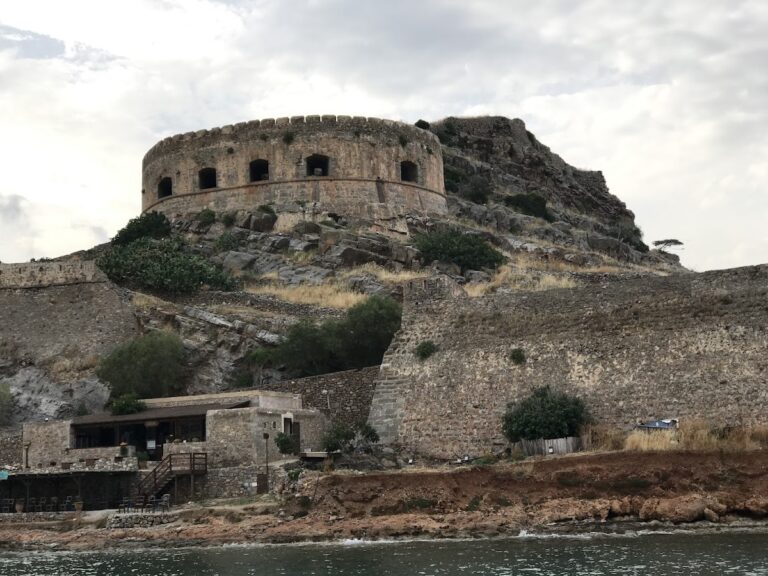
Spinalonga Fort on Crete was built by Venice to protect the port of Olous and later became an Ottoman community and an isolated settlement for people…
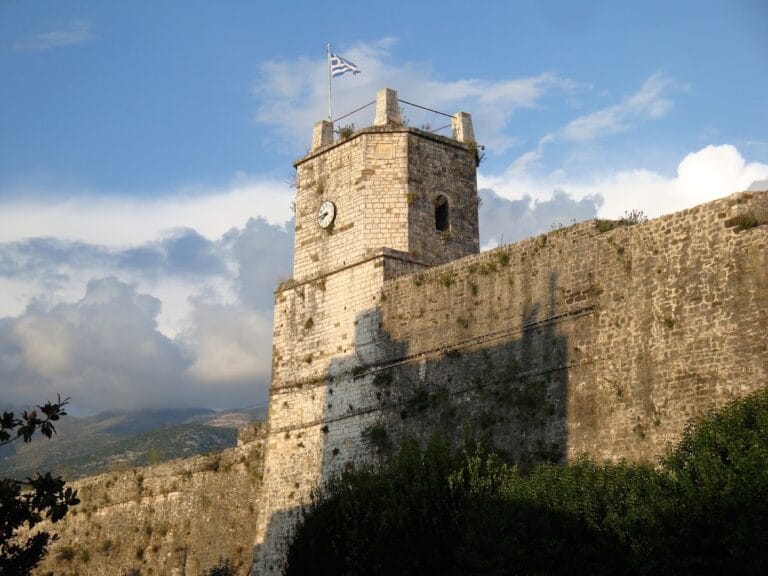
Ioannina Castle is a fortified urban citadel on Lake Pamvotis, shaped by Hellenistic, Byzantine, Ottoman, and modern Greek history. Its two citadels…
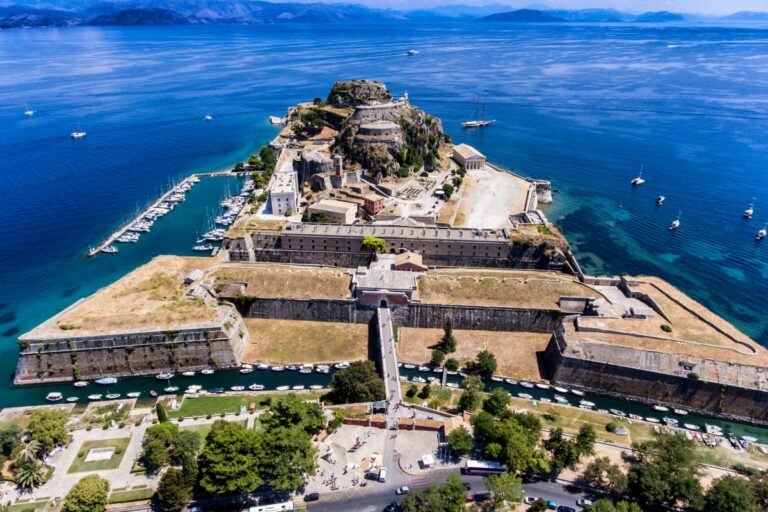
Corfu Old Fortress developed from a Byzantine refuge into a major Venetian citadel, resisting Ottoman sieges and later serving as a military, civic,…
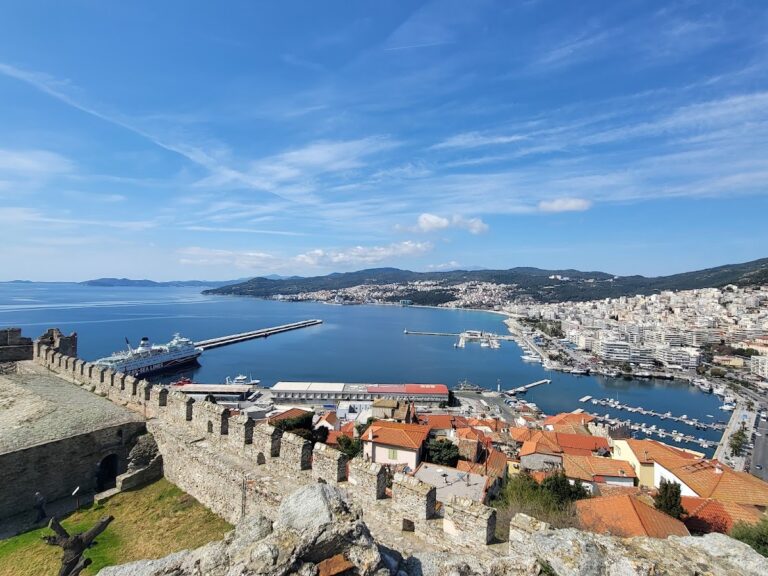
Kavala Fortress occupies the acropolis of the Panagia Peninsula in Greece, preserving defensive works shaped by Byzantine, Ottoman, Venetian, and…
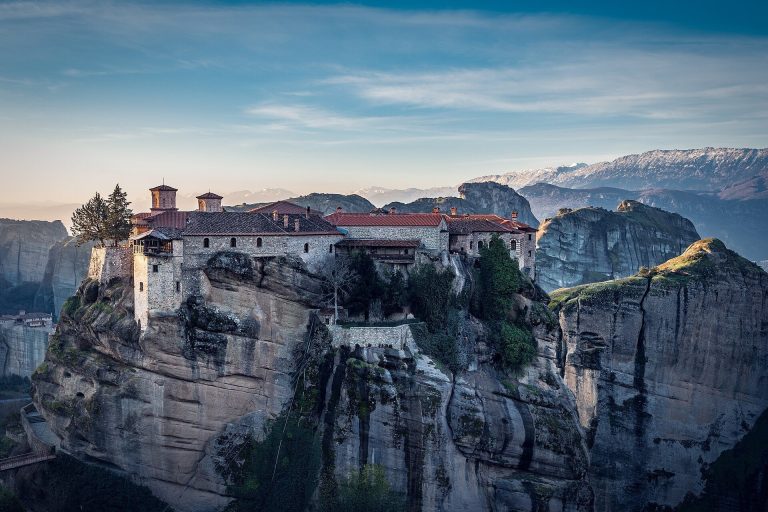
Varlaam Monastery, also known as the Monastery of All Saints, is a sixteenth-century Greek Orthodox foundation on a high rock in Meteora, Greece. Its…
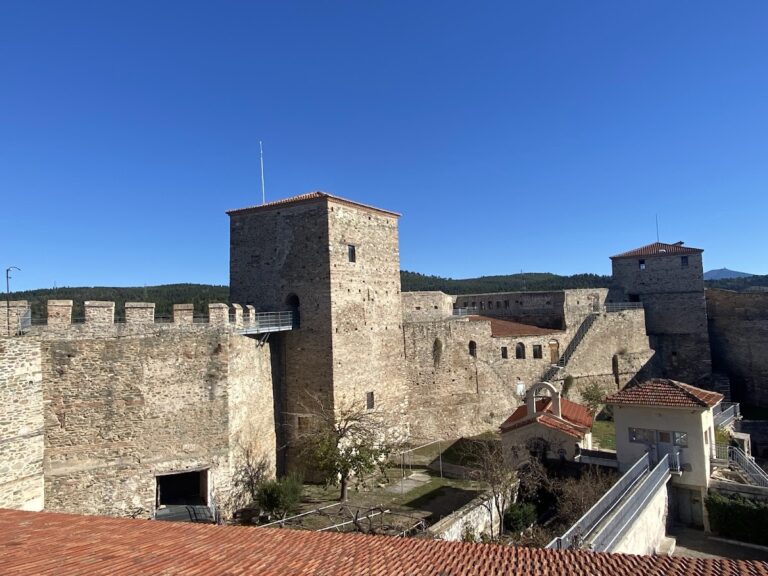
Heptapyrgion is a Byzantine fortress at the northeastern corner of Thessaloniki’s acropolis. Developed through Byzantine and Ottoman phases, it later…
For details on how to use the maps, which sites are included, how popularity and ratings are determined, and how sites are classified, see the help page.
On this page5 sections
Chlemoutsi: vaulted halls and medieval defences
Chlemoutsi Castle stands on a plateau above the coastal plain of Elis. An irregular hexagonal inner stronghold contains a ring of halls around a courtyard, while an outer wall encloses a larger ward on the easier approach. A vaulted passage between gates controls entry to the inner building.
The halls had windows set in deep recesses with stone seats, along with fireplaces and substantial vaulted roofs. Wooden floors formerly divided parts into two levels; beam sockets record their position where the floors have disappeared. These residential details make Chlemoutsi especially useful for understanding the accommodation inside a medieval fortress, beyond its outer wall circuit.
Hilltop and coastal artillery fortresses
Palamidi rises above Nafplio in a sequence of bastions linked by walls. Each bastion formed a distinct defensive work, with artillery positions, cisterns and storage rooms distributed across the hill. Saint Andrew’s Bastion included the headquarters and a chapel integrated into its walls.
The fortress’s layout differs from a single tower dominating one courtyard. Its several defended compartments use the hill’s slopes and changing levels, with later Ottoman work adding to the Venetian construction. Prison use introduced another function into parts of the complex.
Rio Castle occupies a coastal promontory at a sea crossing. Water protects the northern side, while a seawater-filled moat strengthens the landward approach. Detached defensive works stand in the moat and connect to the main fortress by bridges. Separate land and sea gates reflect the two directions from which people and supplies reached the enclosure.
Fortified settlements and citadel buildings
Spinalonga Fort has a defensive ring around its island shore, reinforced by bastions at high points. The walls were intended to prevent a hostile landing, while their irregular shape follows the terrain. Later houses and shops occupied terraces inside the enclosure.
The island subsequently served as a settlement for people with leprosy. Its surviving buildings therefore belong to different periods and uses within the older fortifications. The streets and domestic structures add a settlement to the military perimeter, rather than leaving the interior as an empty gun platform.
Ioannina Castle encloses an urban area on a promontory in Lake Pamvotis, with two separate citadels. The northeastern compound contains the Aslan Pasha Mosque complex, including its associated religious and service buildings. In the southeastern citadel, Its Kale, the Fethiye Mosque stands near the remains of Ali Pasha’s palace.
Substantial walls, gates and towers organize the different compounds. Mosques, a cavalry barracks and other standing buildings explain how the fortified area accommodated government, worship and military life alongside its defences.
Achilleion: classical sculpture and palace gardens
Achilleion on Corfu represents the later residential part of the collection. Its architecture uses classical columns, terraces and mythological sculpture, with a monumental staircase leading toward a large painting of Achilles. The Peristyle of the Muses connects the palace with an outdoor arrangement of columns and statues.
Terraced gardens extend the residence toward the sea. Here the main structures were designed for domestic life and display: reception rooms, decorated stairways and garden architecture take the place of the bastions and guarded entrances found at the fortified examples.
Explore the collection
Explore sites on the map or in the grid. Map icons reflect each site’s primary function, helping you identify different kinds of places at a glance. Narrow this collection by primary function, by a site type within the castle and residence group, or by civilization and era. Additional filters cover popularity and rating. Select a map marker to view the site’s details and open its article, or open the article from its grid entry.