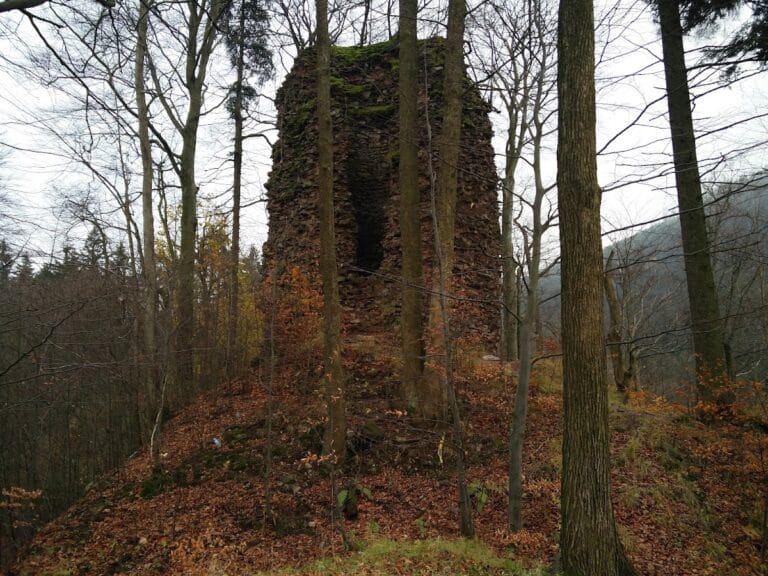
Střmen: A Medieval Rock Castle in Czechia
Site at a Glance
- Rating
- 4.7
- Popularity
- Medium
- Country
- Czechia
- Primary era
- Medieval
- Eras represented
- Medieval
- Civilizations
- Holy Roman Empire, Kingdom of Bohemia
- Site type
- Military
- Remains
- Castle
On this page9 sections
History
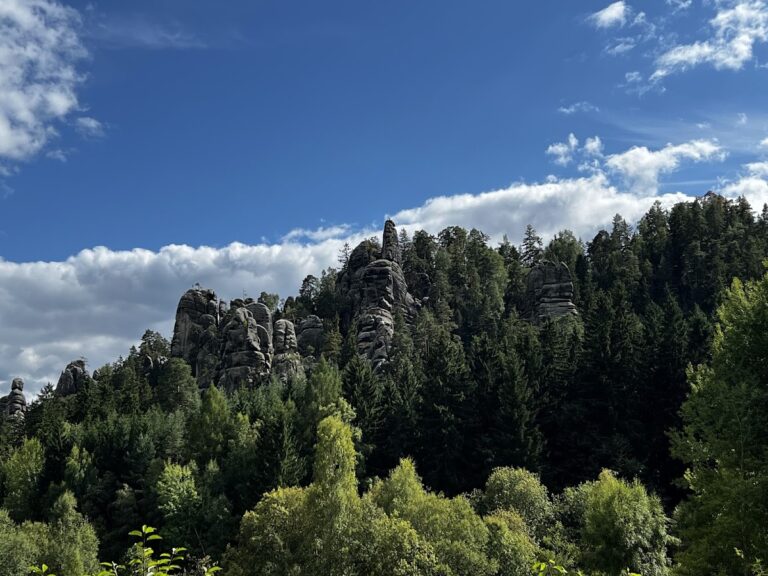
Střmen is an abandoned medieval rock castle in Czechia, near Teplice nad Metují, in the Adršpach–Teplice Rocks. Its foundation date is uncertain, but it was probably established during the medieval period and has been attributed to the Lords of Rýzmburk, also known as the Lords of Skalitz. Their coat of arms displayed a golden stirrup on a blue shield. The castle probably served as a guard post controlling the route from Teplice nad Metují toward Adršpach.
Foundation and royal authority
Střmen’s small size suggests that it was not designed as a permanent residence. Instead, it may have functioned as an observation or military post connected with nearby Adršpach Castle. The Maiestas Carolina, a fourteenth-century legal and constitutional code associated with the Bohemian crown, lists Střmen as a royal castle that the ruler could pledge under specified conditions. This places the site within the sphere of royal authority, even though it could be transferred as security.
Albert of Skalice owned the castle in 1359. Tas of Vízmburk may have held it in 1362, although his acquisition is also dated to 1372. Střmen was later associated with the knight Wickman, whose name was connected with the German name for Teplice nad Metují. Members of the Berka of Dubá, a Bohemian noble family, are recorded as owners in 1363 and still held the castle in 1436.
Hussite Wars and destruction
During the Hussite Wars, religious and political conflicts in fifteenth-century Bohemia between Hussite reformers and their opponents, including Catholic forces, a Hussite army reportedly captured Střmen in 1428 under Matěj Salava of Lípa. No written evidence confirms that event. In 1433, the castle belonged to Jan Krušina of Lichtenburg, a supporter of the Hussite cause who was killed by Catholic burghers in Broumov in 1434.
Střmen was probably captured by a Silesian army in the years that followed and was definitively demolished by the Silesians in 1447. A separate tradition places its destruction in the fourteenth century and attributes its occupation to a band of robbers. The last references to the ruined or deserted castle date from 1534 and 1607. Its surviving remains are protected as a cultural monument within the Adršpach–Teplice Rocks National Nature Reserve.
Remains
Rock setting and layout
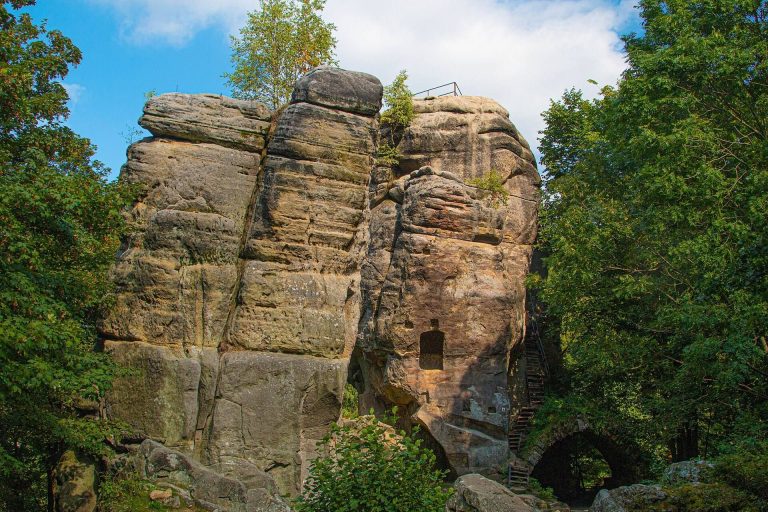
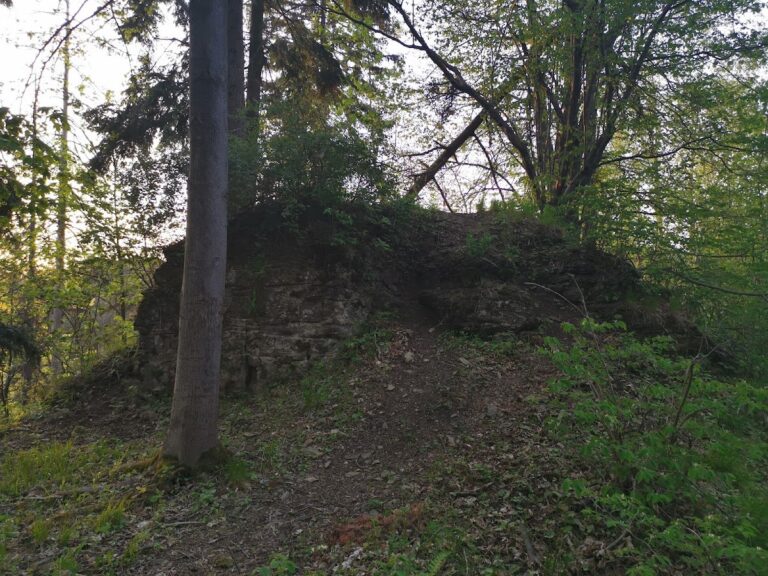
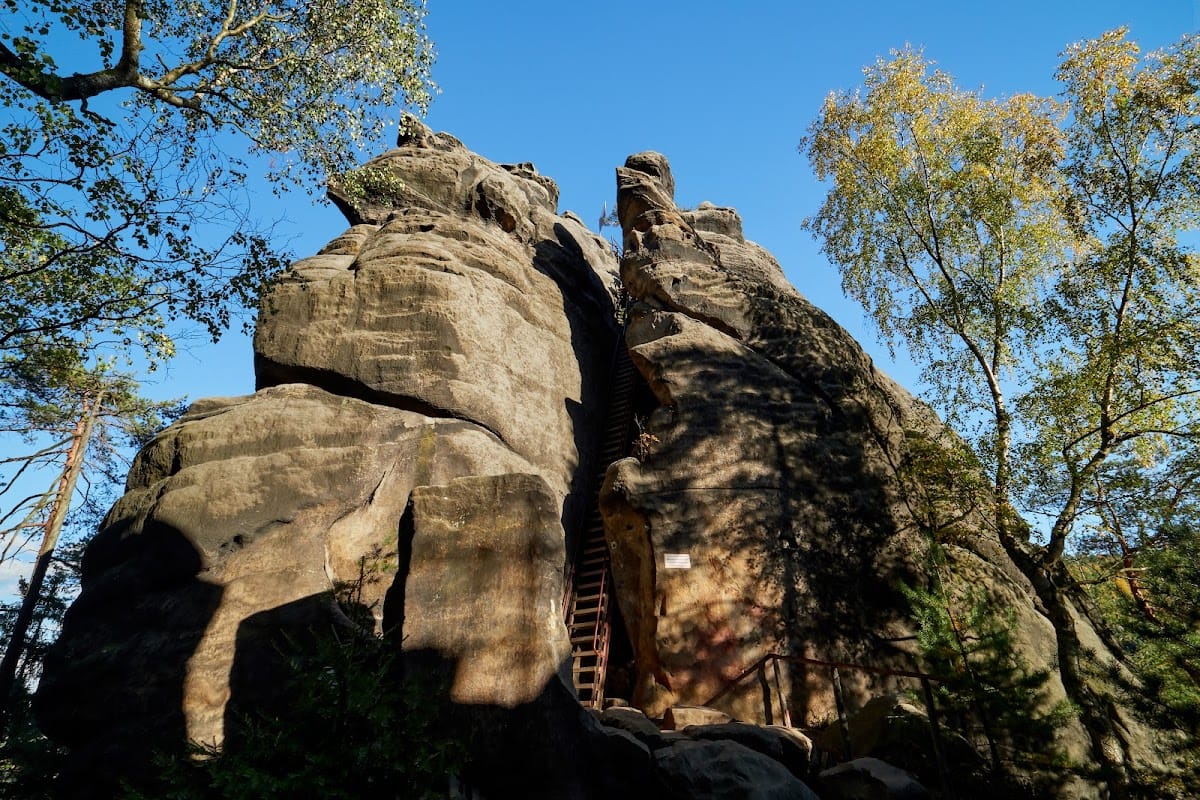
The castle occupied a rock formation west of Střemenské Podhradí, above the right bank of the Anenský stream at the lower end of the Anenské valley. The surviving remains are sparse and are arranged around a rock reached by a steep staircase of approximately 300 steps. The fortification relied on the natural rock formation and timber construction rather than extensive masonry buildings.
Fortification
Timber levels in the rock cleft
A narrow cleft between the rocks was closed with timber and divided into several levels. Stairs connected these levels and led toward the summit of the rock. Grooves preserved in the stone held a small timber-framed structure, providing physical evidence of how the builders adapted the natural formation for defense and occupation.
Rock towers and courtyard
The fortification included two rock towers with a small courtyard at their base. Their position formed the principal defensive arrangement on the rock, while the route from Teplice nad Metují through Střemenské Podhradí, Záboř, and Janovice passed below the castle. The castle’s defensive role, however, concerned the route toward Adršpach.
Summit building
A single timber building with a square ground plan stood on the summit of the rock. Together with the timber structure held in the rock grooves and the connected levels below, it shows how Střmen used wooden buildings and adapted rock surfaces to create a compact fortified post.