Burg Dürnstein: A Medieval Castle in Austria
Visitor Information
Google Rating: 4.5
Popularity: Low
Country: Austria
Civilization: Medieval European
Site type: Military
Remains: Castle
History
Burg Dürnstein is located near the municipality of Dürnstein in Austria and was constructed during the High Middle Ages by the regional nobility of the time. The castle first appears in historical records in 1144 under the name “castrum Dierenstein,” indicating its early establishment as a fortified site in the area.
Initially, Burg Dürnstein served as the residence of the Dürnsteiner noble family. This lineage came to an end in 1192, after which the castle fell into the possession of the Wildoner family branch, who adopted their name from the castle itself. By the close of the 13th century, in 1299, Steiermark’s territorial princes assumed control of the castle, maintaining ownership for over three centuries until 1608.
Around the year 1500, a water supply system was installed at the castle, reflecting advancements in infrastructure. However, by the late 1500s, the castle’s importance waned, and it began to deteriorate. This decline culminated in 1610 when Bishop Hans Jakob von Gurk abandoned Burg Dürnstein, valuing the surrounding forested lands above the fortress itself.
During the early 19th century, specifically in 1809, the ruins of the castle found renewed strategic use when Austrian forces employed them as a defensive position against the advancing French army. Later in the 19th century, the Diocese of Gurk formally transferred ownership of the castle ruins to the local community of Dürnstein, ensuring its preservation within the region.
Strategically situated on a rocky outcrop that once marked the boundary between Styria and Carinthia, Burg Dürnstein overlooked the so-called “Italian main road.” This important trade route featured a customs station at the castle’s location, underscoring its role in regional administration and control over movement between territories.
Remains
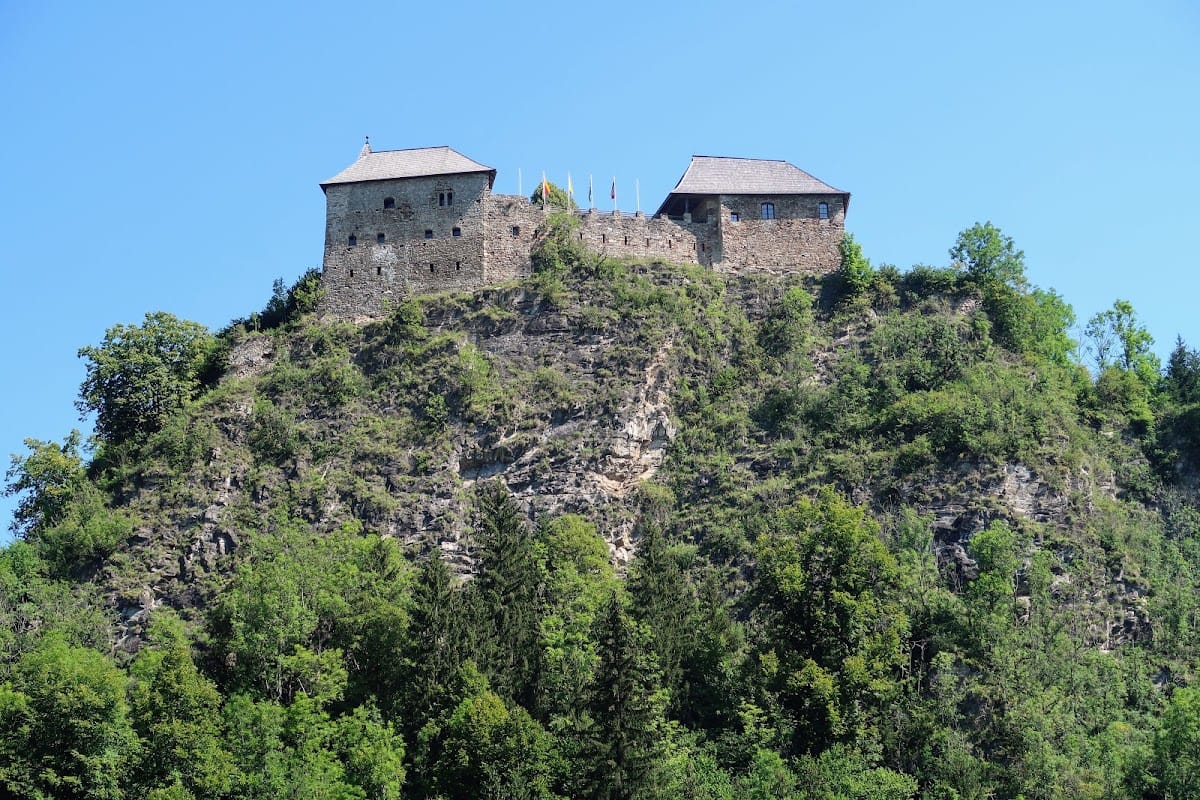
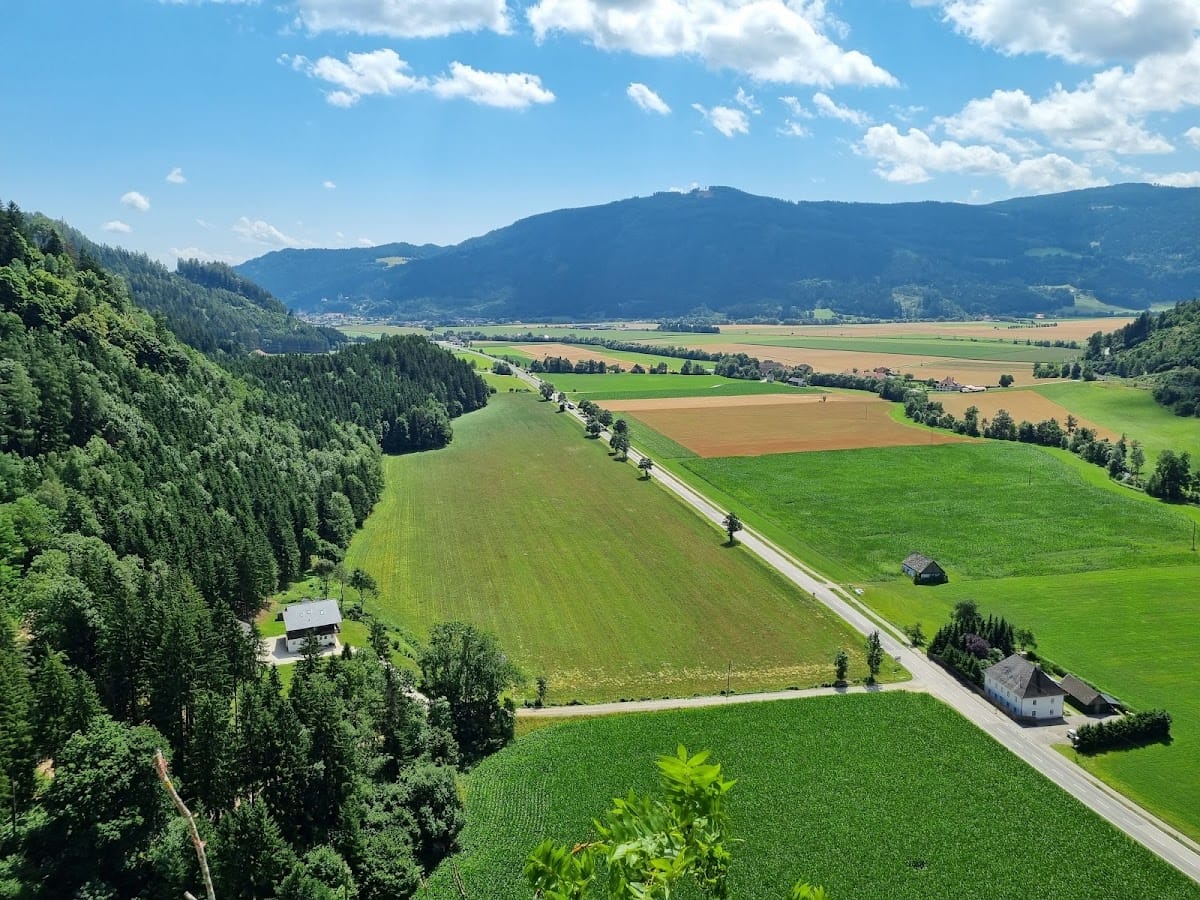
Burg Dürnstein’s ruins illustrate a well-planned medieval fortress anchored on a rocky spur about 100 meters above the valley floor of the Olsa valley. The castle’s position is naturally fortified by steep to nearly vertical cliff faces on the south, west, and north sides, providing substantial protection against attackers.
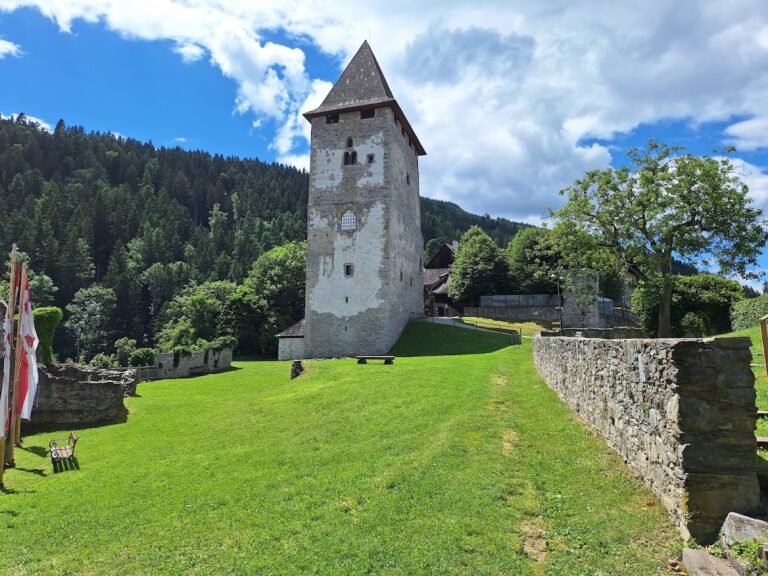
Approaching the castle from the north, visitors would encounter a round tower topped with a pointed projection. Its lower part consists of roughly shaped stone blocks arranged to resemble ashlar masonry, a finely dressed stone technique, dating back to the 13th century. This tower is among the oldest surviving elements of the castle today.
The path leading to the entrance is flanked on the west by a zwinger, an outer defensive ward or enclosed killing ground designed to trap invaders. This structure mainly consists of layered rubble masonry built in the 14th century, with some segments featuring earlier construction styles such as ashlar and herringbone patterns from the 12th and 13th centuries.
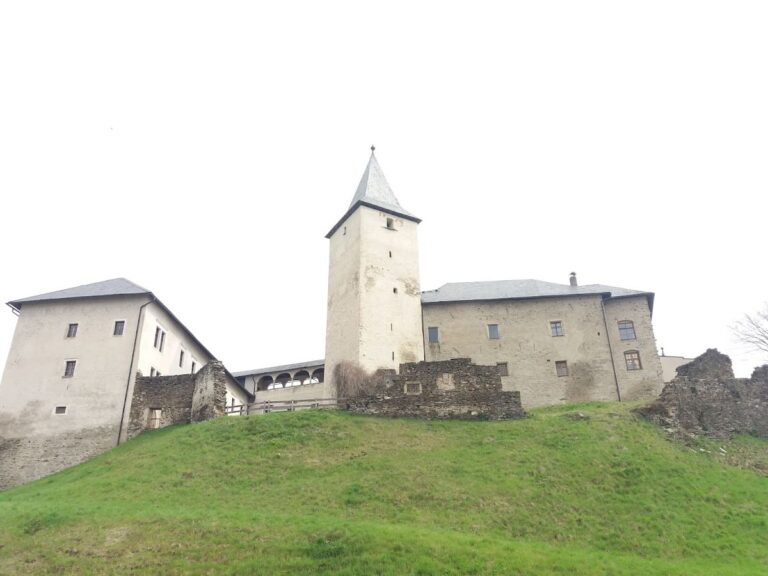
After a bend in the access way stands a reconstructed gatehouse adjoining the north side of the east wing of the castle. The east wing itself runs north to south and its walls are composed of rubble masonry reflecting the original building phase; its upper floor, on the other hand, is a more recent addition not dating from the medieval period.
Inside the gate lies a gate hall that has been preserved in its original state. It is noteworthy for its groin vault ceiling—a structural feature where two barrel vaults intersect at right angles, distributing weight efficiently and allowing for a covered entrance space.
On the southwestern slope sits the west wing, dating from the same era as the tower. This portion includes a series of narrow, closely spaced vertical openings known as arrow slits, each approximately 1.7 meters high. These slits allowed defenders to shoot arrows while remaining protected behind the thick walls.
The courtyard, nestled between the east and west wings, is spacious and bordered to the north by a defensive ring wall that follows the edge of the cliff. This wall is pierced by elongated arrow slits, enabling a wide field of fire along the precipitous northern face. To the south, the courtyard is enclosed by a connecting wing that was added later, bridging the two main wings of the castle and completing the enclosed courtyard space.
Together, these components reflect both the defensive priorities and the architectural styles of Burg Dürnstein throughout its active history, and despite its ruinous state, significant portions remain preserved in situ, offering insight into medieval castle construction in the region.
Nearby sites