Burgruine Taggenbrunn: A Medieval Hilltop Castle in Austria
Site at a Glance
- Rating
- 4.2
- Popularity
- Low
- Country
- Austria
- Primary era
- Medieval
- External website
- Open
- Eras represented
- Iron Age, Medieval, Early Modern
- Civilizations
- Celtic, Holy Roman Empire
- Site type
- Military
- Remains
- Castle
On this page10 sections
History
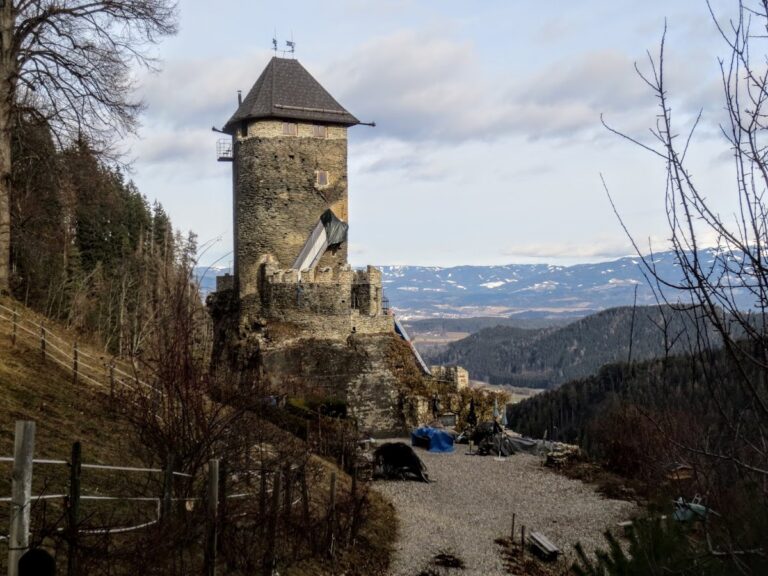
Burgruine Taggenbrunn is a ruined hilltop castle in Austria, near St. Veit an der Glan in Carinthia, built in the first third of the twelfth century for the Archbishopric of Salzburg. Its construction followed an earlier fortified Celtic-Roman settlement dating to the sixth century BC, and the area had belonged to Salzburg since 860, when Louis the German, a ninth-century ruler of East Francia, made a donation to the archbishopric.
Medieval Foundation and Conflict
Tagenus of Pongau built the medieval castle on the remains of the earlier ring-wall settlement, a fortified community enclosed by a continuous defensive wall. Taggenbrunn first appears in written records in 1142 as “Rahuinus de Takkenbrunnen.” In 1157 it was explicitly called a castle, Castrum Takenbrunne.
The fortress became involved in the political struggles of the thirteenth century. During the conflict between Philip of Spanheim, the elected Archbishop of Salzburg, and Ulrich, Bishop of Seckau, Duke Ulrich III of Carinthia intervened in support of his brother Philip. Taggenbrunn was destroyed in 1258 and rebuilt in 1268.
In 1292, during Ulrich of Heunburg’s revolt against Duke Albert I and Duke Meinhard of Carinthia, Ludwig, the Carinthian duke’s son, was captured and briefly held at Taggenbrunn by Salzburg Archbishop Konrad IV. In 1308, Otto of Liechtenstein-Murau became governor of Carinthia and received Taggenbrunn from Salzburg as a residence. The castle then served as the centre from which Carinthia was administered.
Late Medieval Fortification and Decline
Taggenbrunn was again drawn into a regional conflict in 1479, when Archbishop Leonhard von Keutschach opened it to Hungarian forces allied with him against Emperor Frederick III. Imperial troops destroyed the fortress, which remained in imperial possession until 1494. Frederick’s son, Maximilian I, then returned it to the Archbishopric of Salzburg.
Between 1497 and 1503, Leonhard von Keutschach expanded Taggenbrunn as a modern fortification. He was also the principal builder responsible for the final expansion of Hohensalzburg Fortress to approximately its present size. Salzburg officials and administrators continued to occupy Taggenbrunn until 1692, while the castle was first described as a ruin in 1796.
Ownership and Restoration
When the Salzburg ecclesiastical principality ceased to exist as a sovereign state in 1803, Taggenbrunn passed to Austria and became a state domain. Antonie von Reyer purchased it in 1858. The property passed to the Paulitsch family in 1883 and later that year to the Kleinszig family.
Entrepreneur Alfred Riedl bought Taggenbrunn in 2011, after which the Riedl family renovated the castle and surrounding buildings. The restoration of the tasting house took three years and was completed with its opening in April 2015. Taggenbrunn is classified as a historic monument, and the restored complex now accommodates commercial and cultural uses, including a restaurant or bistro, a watch shop, exhibition spaces, and a performance venue.
The Taggenbrunn Festival began in the restored castle hall in 2019, presenting classical music, jazz, and opera. In 2021, the exhibition Zeiträume was established in collaboration with Austrian artist André Heller. Through animation and multimedia graphics, it addresses planetary change, ecological problems, and the consequences of climate change.
Remains
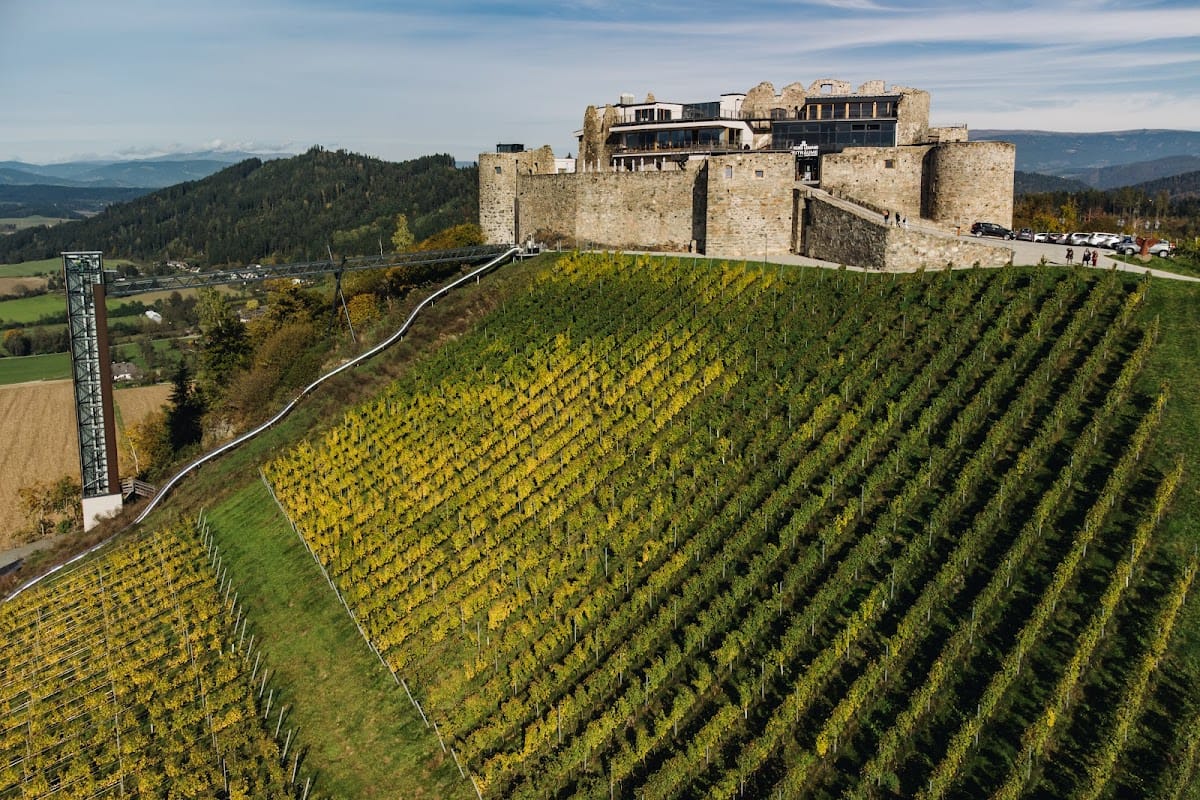
Taggenbrunn occupies a hilltop at approximately 636 metres above sea level in the municipality of St. Georgen am Längsee. The castle stands on the remains of a fortified Celtic-Roman settlement from the sixth century BC, while the surrounding complex includes historic service and residential buildings, restored exhibition and performance spaces, a tasting house, and vineyards covering approximately 45 hectares.
Castle and Performance Spaces
The castle itself is preserved as a ruin on the elevated site. Its restored castle hall functions as a performance space, and exhibition rooms are linked with a watch shop and a bistro. These uses form part of the renovated complex around the medieval remains.
Surrounding Historic Buildings
Granary
The nearby granary retains its original form and is one of the last well-preserved buildings of its size in the surrounding area. Its heavy roof slates still rest on the original roof framework, preserving an important part of its historic construction.
Pfleg Building and Marhaus
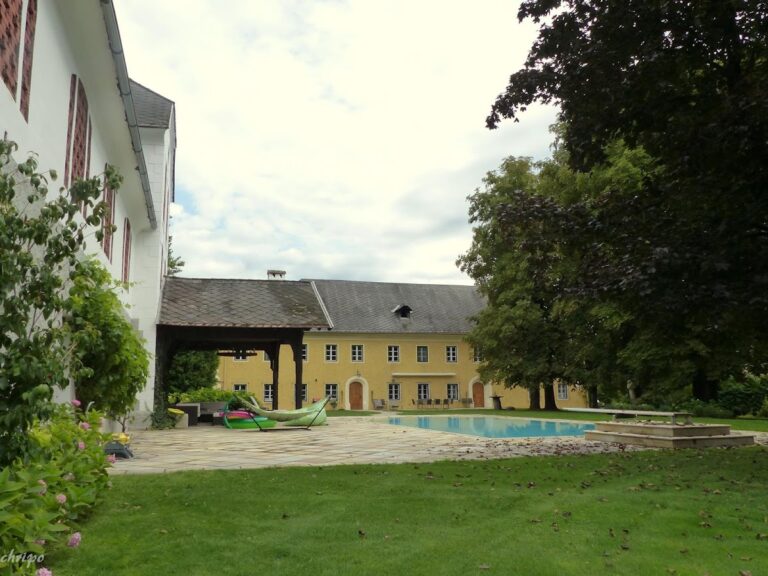
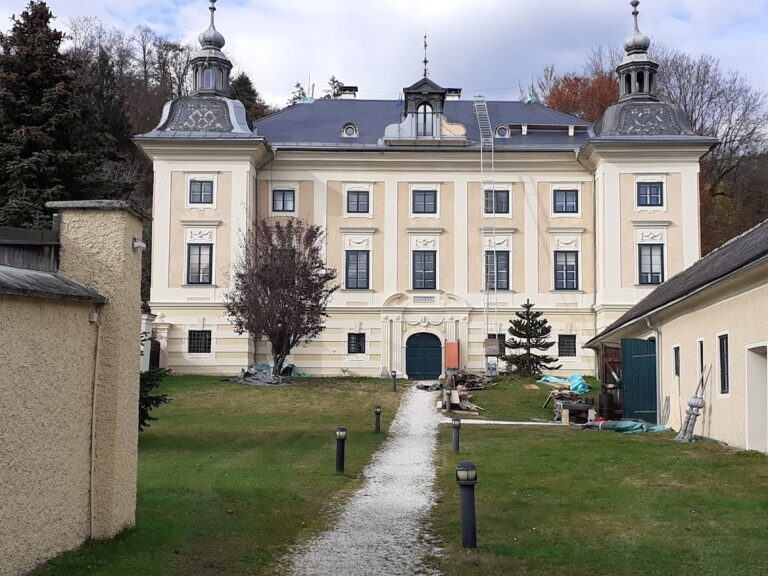
The Pfleg building and the Marhaus also survive in their original form. Together with the granary, they belong to the historic buildings surrounding the castle and remain part of the restored site complex.
Restored Tasting House and Landscape
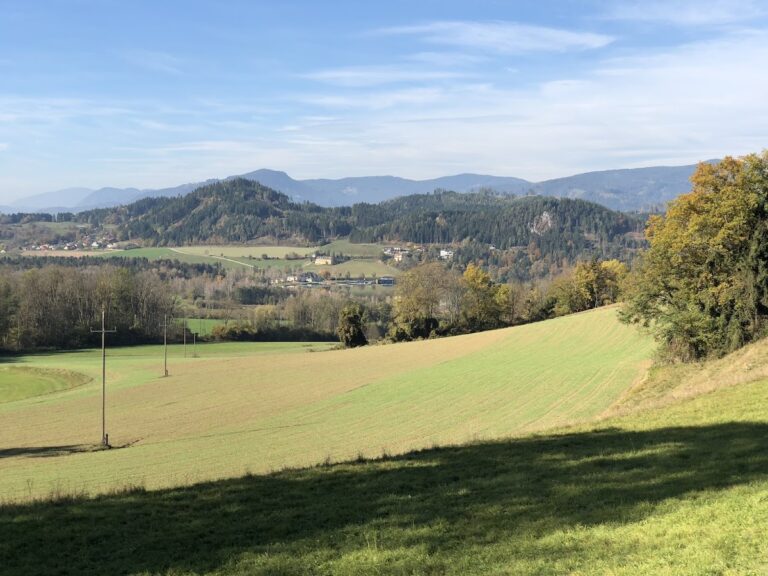
A restored tasting house forms part of the buildings around Taggenbrunn. Vineyards extending across approximately 45 hectares now surround the castle and contribute to the present agricultural landscape of the hilltop complex.