Petersberg Castle Ruins: A Salzburg Fortress in Austria
Site at a Glance
- Rating
- 4.7
- Popularity
- Low
- Country
- Austria
- Primary era
- Medieval
- Eras represented
- Medieval, Early Modern
- Civilizations
- Holy Roman Empire
- Site type
- Military
- Remains
- Castle
On this page11 sections
History
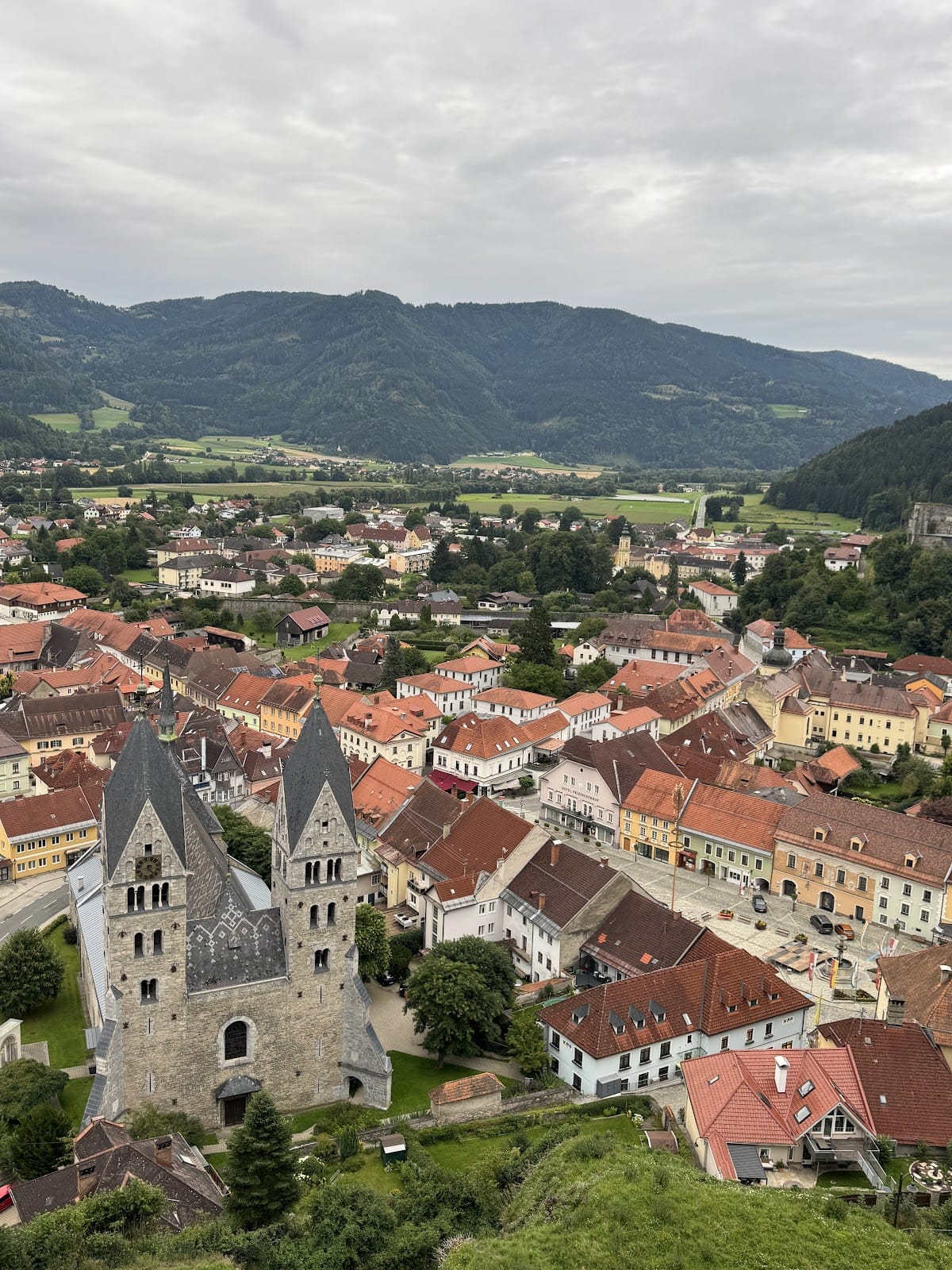
Petersberg Castle Ruins are the remains of a medieval hilltop fortress above Friesach in Austria, built under the Archbishops of Salzburg around 1076 during the Investiture Controversy. This major medieval conflict concerned whether secular rulers or the papacy should appoint bishops and other church officials. Archbishop Gebhard of Salzburg supported Pope Gregory VII, and the castle was established on Petersberg to block King Henry IV’s route across the Alpine passes.
Friesach and the Salzburg Fortress
Friesach, situated on the Metnitz River, was first documented in 860, when King Louis the German granted an estate there to Archbishop Adalwin of Salzburg. Although the surrounding territory was sometimes controlled by the Bishops of Gurk and the dukes of Carinthia, Petersberg probably remained in Salzburg’s possession. The fortress resisted an attack by Duke Engelbert II of Carinthia in 1123 or 1124, and Friesach returned to Salzburg’s control in 1124.
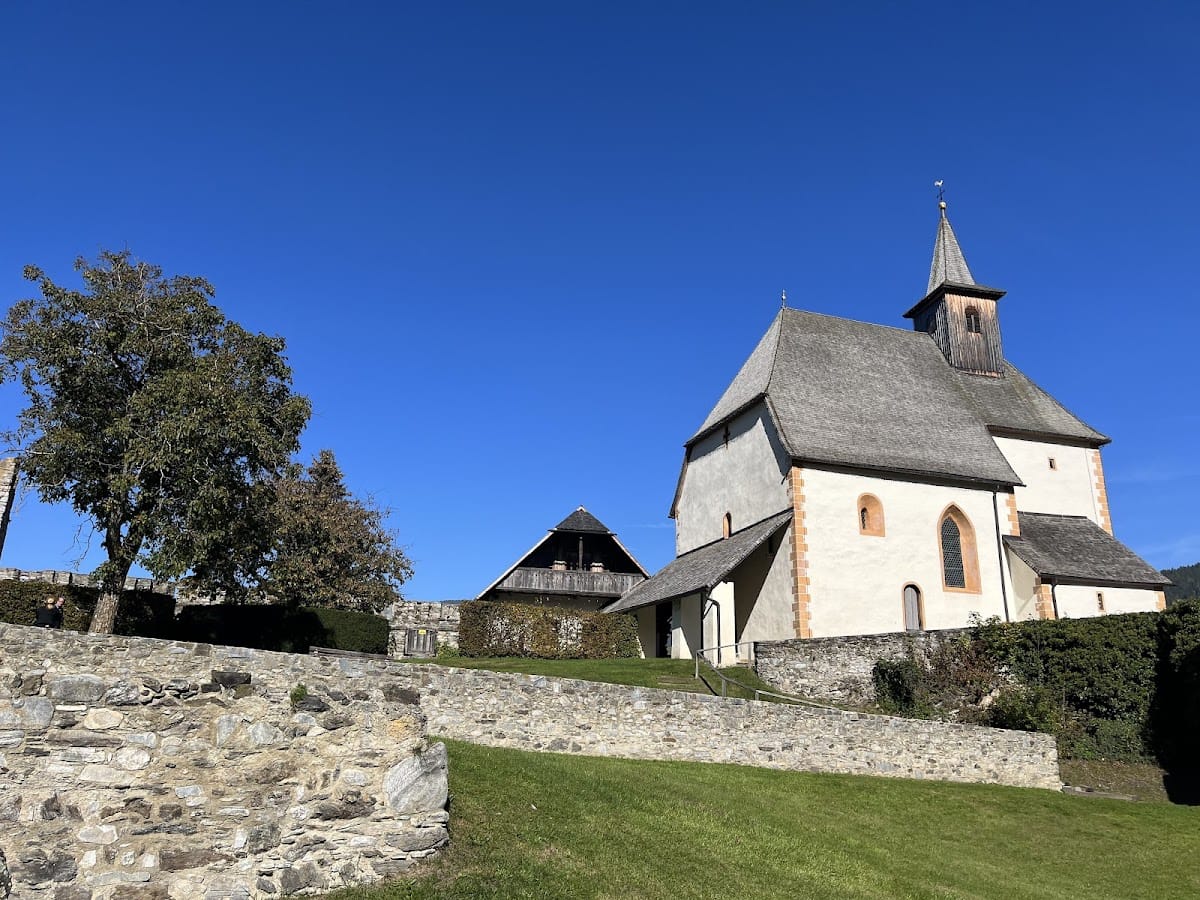
Archbishop Konrad von Abensberg then greatly enlarged the castle. By around 1140, a chapel dedicated to Saint Rupert, the traditional founder and patron of the Salzburg church, had been built there. Petersberg became a secondary residence of the archbishops of Salzburg and a refuge during military conflicts. King Conrad III stayed at the castle in 1149 while returning from the Second Crusade, a major European military expedition to the eastern Mediterranean.
Conflict and Expansion
Emperor Frederick I Barbarossa occupied the castle in 1170 after Archbishop Adalbert III of Bohemia supported Pope Alexander III. Barbarossa’s conflicts with the papacy and rival ecclesiastical princes shaped many political and military struggles in the German kingdom. In 1192, King Richard I of England passed through Friesach while fleeing toward England.
The fortress again withstood an attack in 1292, when troops of Duke Albert I of Austria campaigned against Archbishop Rudolf von Hoheneck of Salzburg. Hungarian forces occupied Petersberg from 1479 to 1490 during the wars between Emperor Frederick III and Matthias Corvinus, the fifteenth-century king of Hungary.
From 1495, Archbishop Leonhard von Keutschach modernized the castle and gave both the fortress complex and the town fortifications their present appearance. After Petersberg lost its military importance, a major fire largely destroyed it in 1673. The castle was then abandoned and gradually fell into decay.
Remains
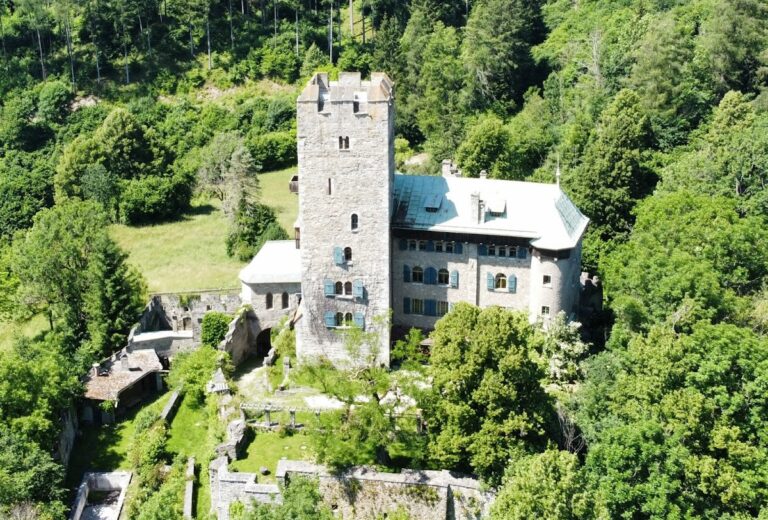
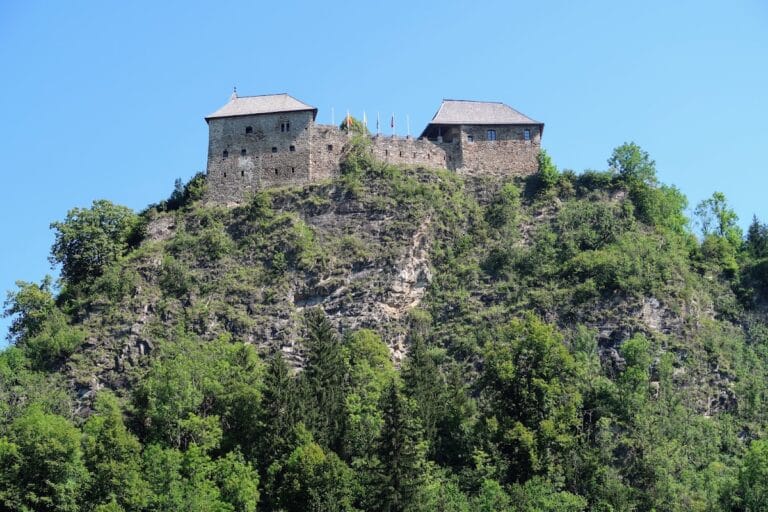
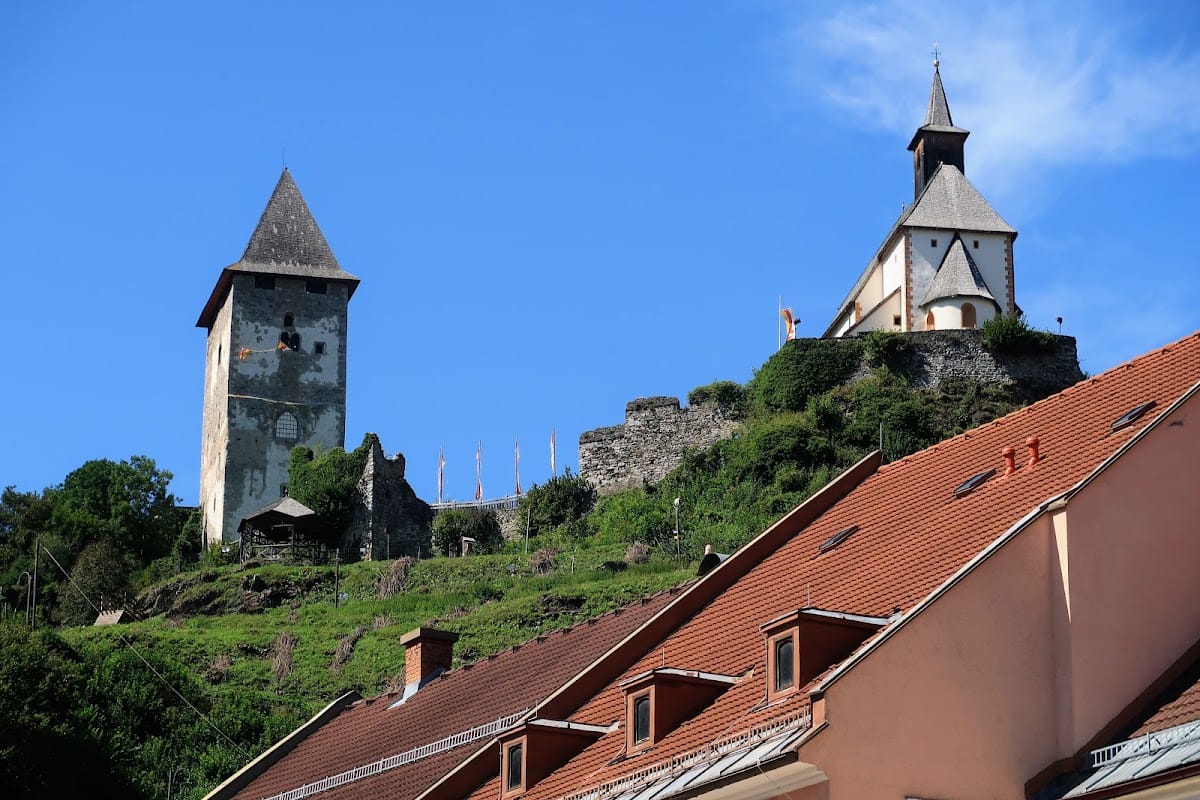
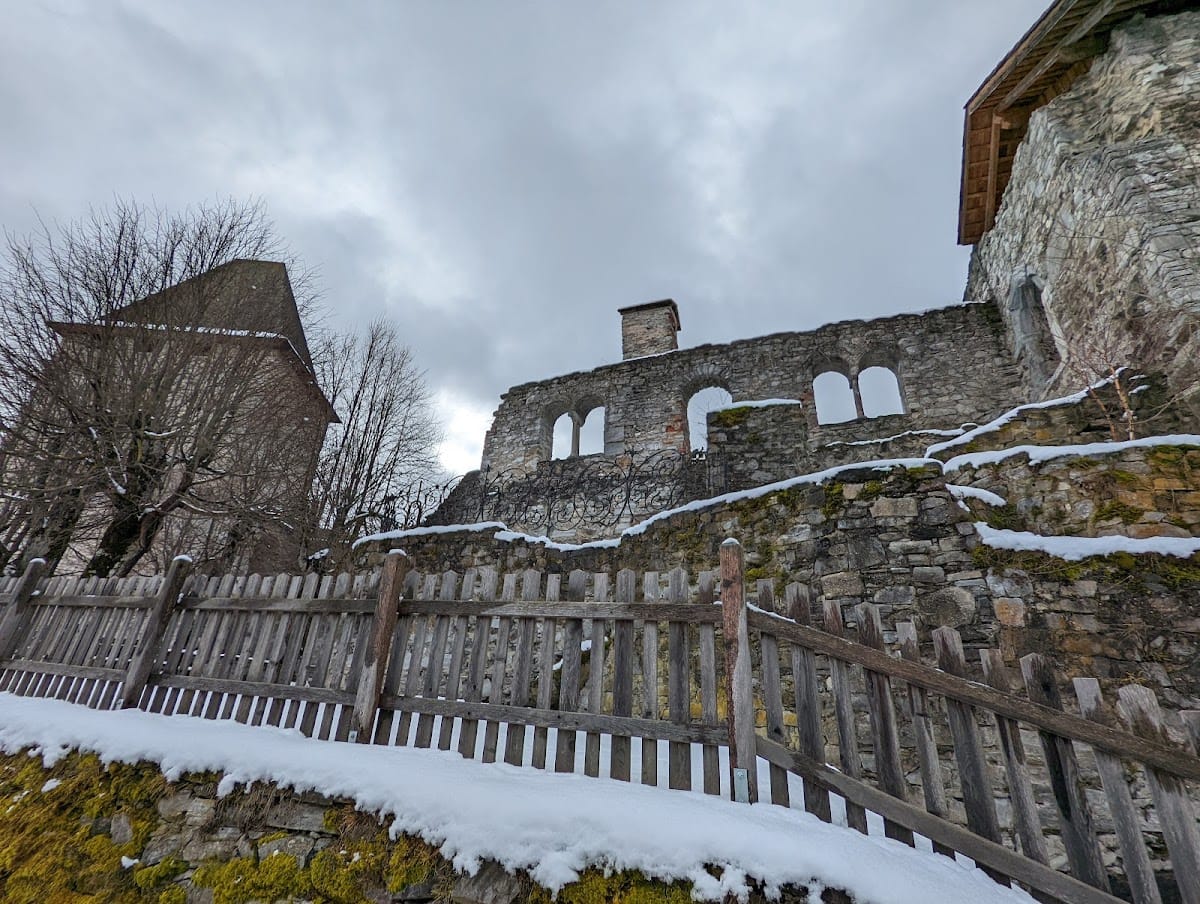
The surviving fortress occupies the hilltop of Petersberg and extends from the lower bailey to a larger fortified area reaching the rocky summit. Its remains include the dominant six-storey fortified tower, chapel structures, former residential and administrative buildings, defensive towers, and part of the entrance system.
Fortified Tower and Chapels
Bergfried and Rupert Chapel
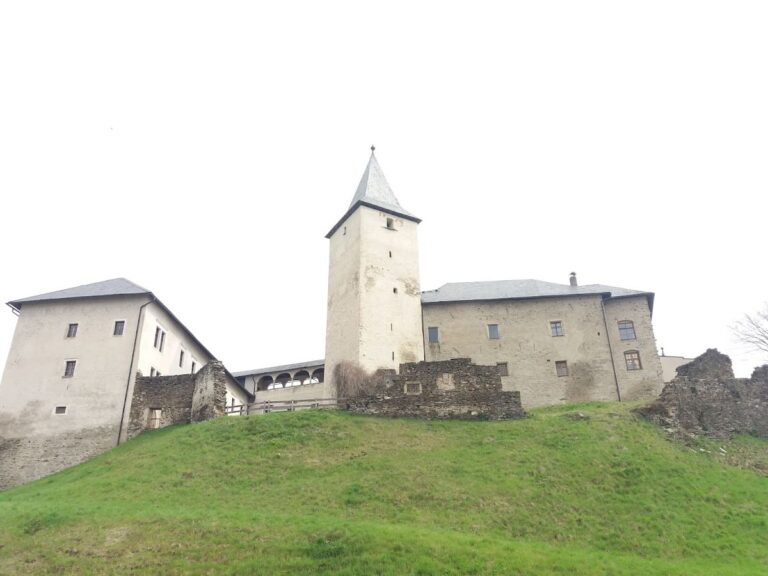
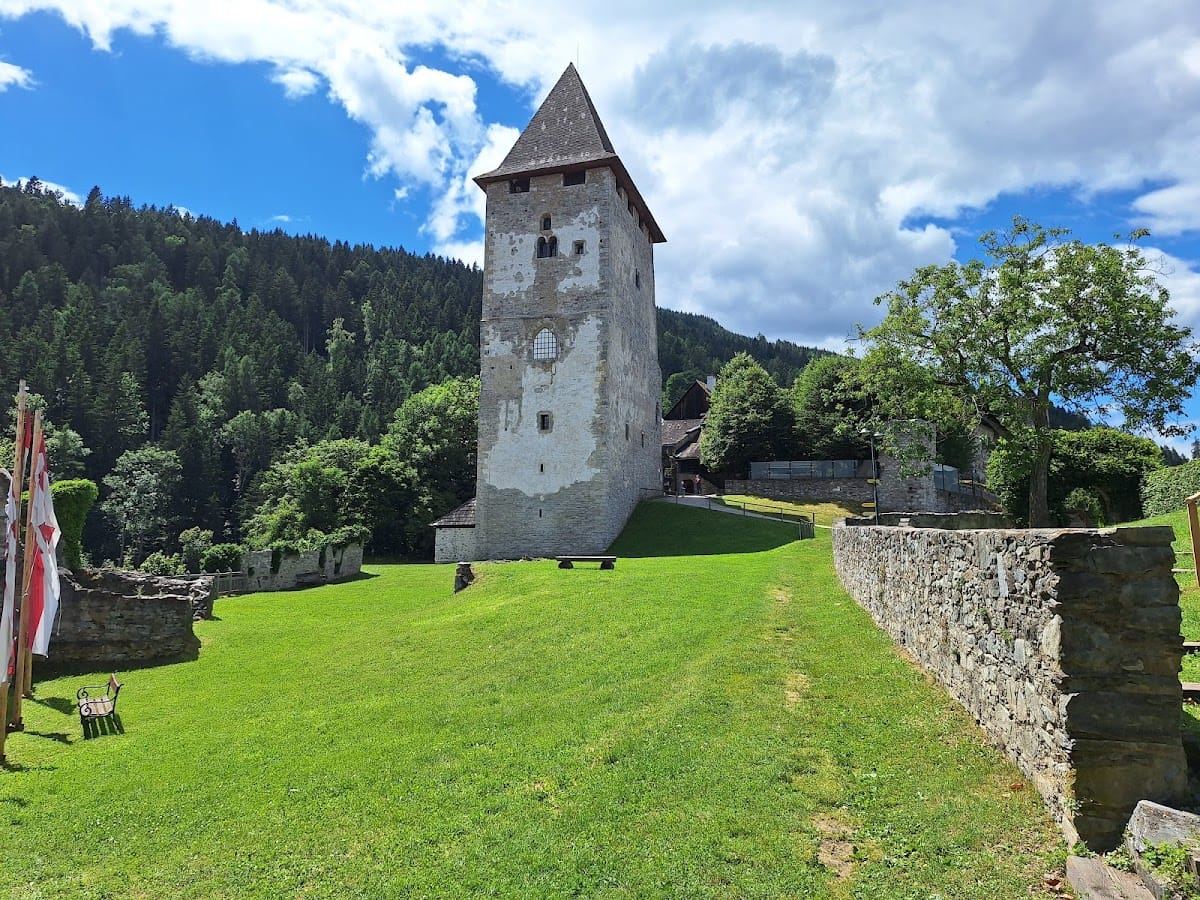
The principal surviving feature is a six-storey bergfried, the main fortified tower of a medieval German-speaking castle. Built around 1200, it served primarily for defense, refuge, and the display of authority rather than as an ordinary residential hall. The tower contained the monumental room known as the Rupert Chapel. After partial deterioration, it was restored beginning in the late nineteenth century and now houses the Friesach town museum.
Gebhard or Konrad Chapel
Immediately beside the tower are the remains of an older chapel, identified as the Gebhard Chapel or Konrad Chapel. Its position beside the bergfried preserves part of the castle’s earlier religious and institutional complex.
Lower Bailey
Southern Administrative Building
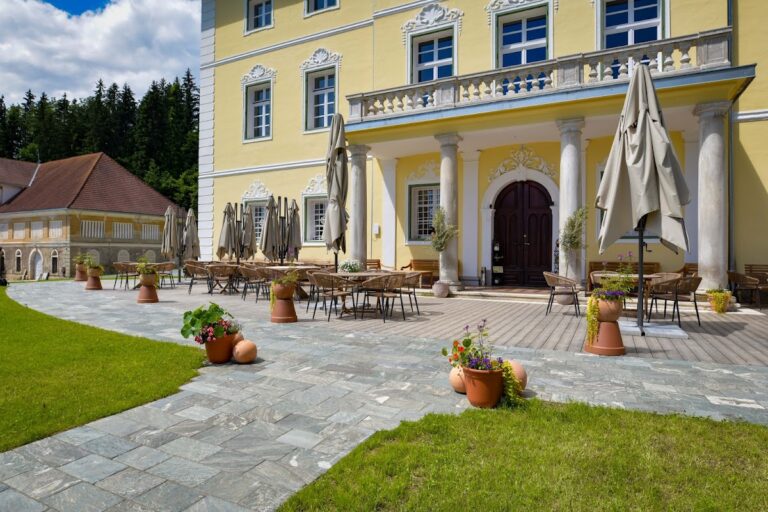
The lower bailey is enclosed by the remains of former castle buildings. On the south side of the courtyard stands the best-preserved structure, a long, three-storey building formerly associated with castle administration. Constructed in the sixteenth century, it has an arcade-fronted side facing the courtyard and now contains a restaurant.
Western and Northern Buildings
Ruins along the western and northern sides of the lower courtyard belonged to representative buildings constructed between the thirteenth and fifteenth centuries. They include Eberhard II’s Palace and the Leonhard Building, which formed part of the more prominent architectural groups within the castle.
Upper Bailey and Entrances
West of the lower bailey lies the upper bailey, a large fortified area extending to the rocky summit at Petersberg’s highest point. A partly enclosed defensive shell tower stands on both the northern and southern sides of this upper area. The main entrance was on the western side, while access to the upper bailey came from the north. Part of the former gate tower survives.