Vízmburk Castle: A Medieval Fortress in the Czech Republic
Visitor Information
Google Rating: 4.7
Popularity: Low
Official Website: www.vizmburk.cz
Country: Czechia
Civilization: Medieval European
Site type: Military
Remains: Castle
History
Vízmburk Castle is located within the municipality of Havlovice in the present-day Czech Republic. It was established by the medieval Bohemian nobility during the 13th century, a period when regional lords fortified key positions to secure their territories.
The first recorded mention of Vízmburk dates to 1279, when it appears in Dalimil’s Chronicle linked to Tas z Vízmburka. Tas was likely the castle’s original owner, a member of the influential noble family known as the Lords of the Golden Spur, who played a significant role in settling the northeastern part of Bohemia in that century. Upon Tas’s death in 1304, ownership passed to his son Jaroš. Before 1309, Jaroš sold the fortress to Milota of Pnětluky, marking the castle’s first major transfer between noble houses.
Between 1327 and 1330, control over Vízmburk shifted to the Lords of Dubá, under whom the castle remained for more than a century. The last known proprietor from this family was Jiří of Dubá and Vízmburk, who, notably, did not use the castle as a permanent residence. After the Hussite Wars, the castle’s garrison engaged in cross-border raids targeting towns in nearby Silesia, reflecting the unsettled nature of the region during that time.
In 1447, amid ongoing border conflicts, a coalition of Silesian princes bought Vízmburk along with several surrounding castles. Their aim was to reduce unrest by dismantling these fortified sites, an event documented in the Old Czech Chronicles. As a result, Vízmburk was deliberately destroyed to prevent further military use. Over time, local legends developed, describing hidden treasures concealed within the castle’s underground cellars, adding a layer of myth to its historical narrative.
Archaeological interest in Vízmburk began in 1972, led by Antonín Hejna of the Czechoslovak Academy of Sciences. Initially expected to last a single season, excavations continued until 1984 due to significant discoveries such as 13th-century rib vaulting. The project unearthed walls reaching up to eight meters in height and numerous artifacts from the castle’s active centuries, earning it the nickname “Podkrkonoší Pompeii” in popular media. Following Hejna’s death in 1986, site management shifted to state heritage authorities. Efforts to stabilize and preserve the remains faced challenges, partly due to the fragile sandstone material used in construction. Since 2002, dedicated preservation work has aimed to secure and maintain the ruins for future generations.
Remains
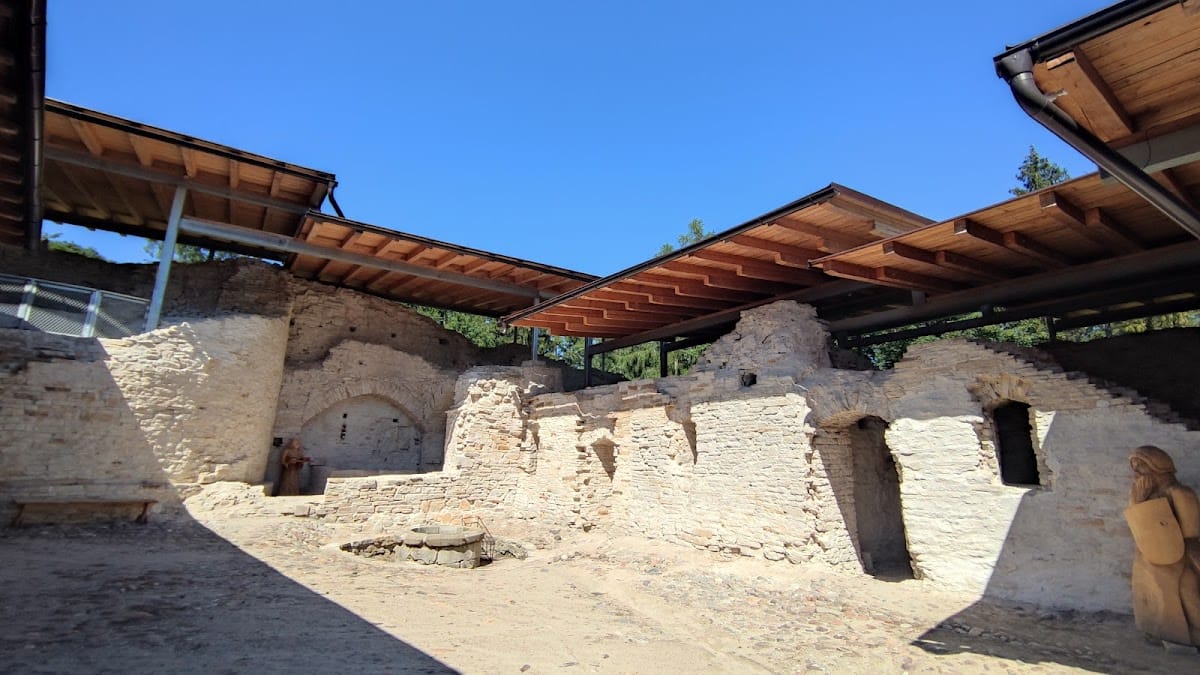
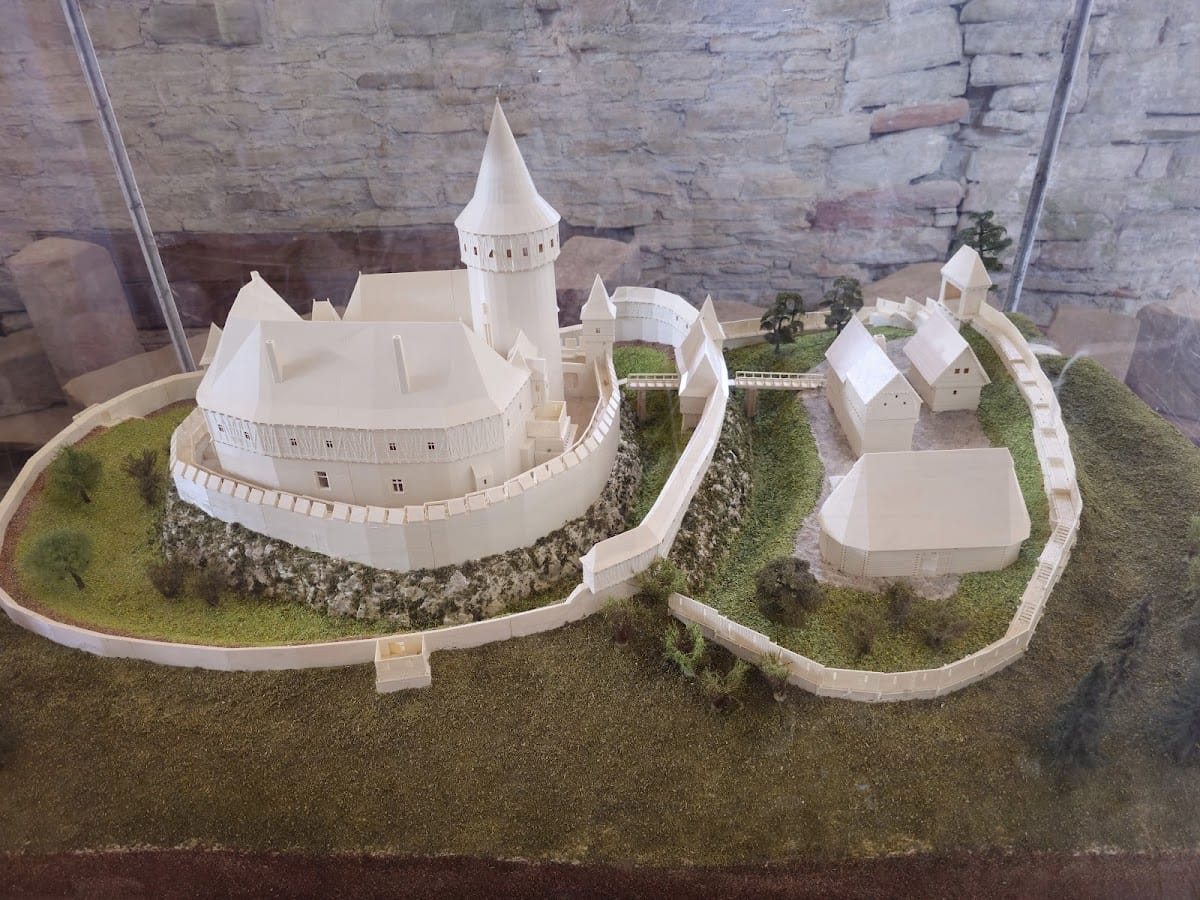
The remains of Vízmburk Castle reveal a two-part layout, characteristic of medieval fortifications composed of a central stronghold enclosed by an outer defensive space known as a zwinger. The core of the castle was protected by a moat and featured a gate with flanking towers on its entrance side, offering strong initial defense against attackers. Surrounding the core, the zwinger acted as an additional fortified enclosure, creating a layered protective system.
A prominent feature of the castle is the round bergfried, or main tower, situated in the northwest corner. Measuring over eleven meters in diameter and fortified with walls 4.2 meters thick, the bergfried rises to about eight meters, equivalent to the height of its first floor, making it the dominant structural element of the site. The ground floor of this tower contains a rare architectural detail: within its thick walls lies a double space comprising a small corridor, approximately 1.25 meters long and 0.5 meters wide, alongside a vertical shaft measuring 67 by 78 centimeters near the top. Scholars have suggested this shaft might have served either as a secure latrine for prisoners or as a hidden treasury, reflecting the tower’s defensive and administrative functions.
Beneath the bergfried’s front wall, within the zwinger, stands a square building interpreted as either a smith’s workshop or the castle’s original kitchen. This location would have been practical for both defense and service activities. On the western side, a second gateway led to a smaller courtyard surrounded on three sides by residential palace wings. Between the bergfried and the opposite wing, the northern curtain wall was partially filled in later to accommodate a kitchen outfitted with a central polygonal chimney, indicating adaptation to the needs of castle life over time.
The rear palace wing contained a large hall vaulted with ribbed cross vaults—an architectural form providing both strength and decorative effect during the 13th century. Within one corner of the castle complex, archaeologists infer the likely position of a chapel, underlining the religious dimension typical of noble residences in the Middle Ages.
The courtyard itself covered an area estimated at 30 to 40 square meters and was encircled by the bergfried and various domestic buildings, including the hall, chapel, kitchen, and smithy, creating a compact, functional space for castle inhabitants.
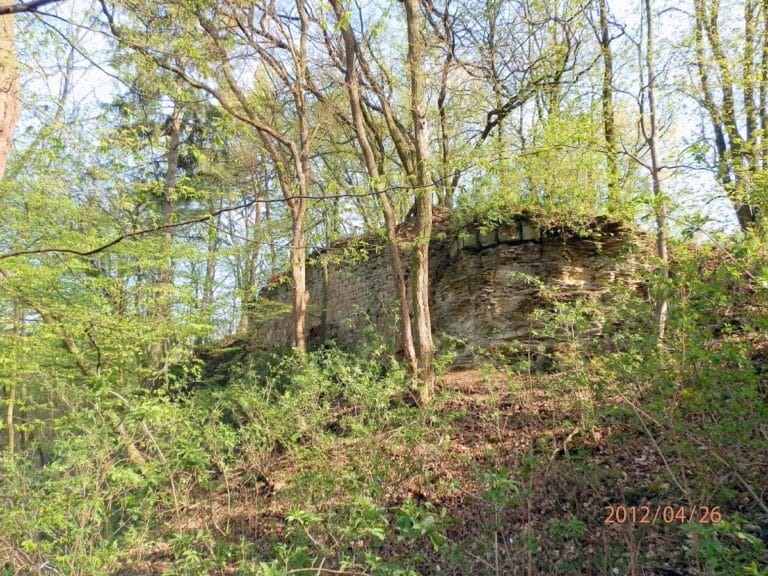
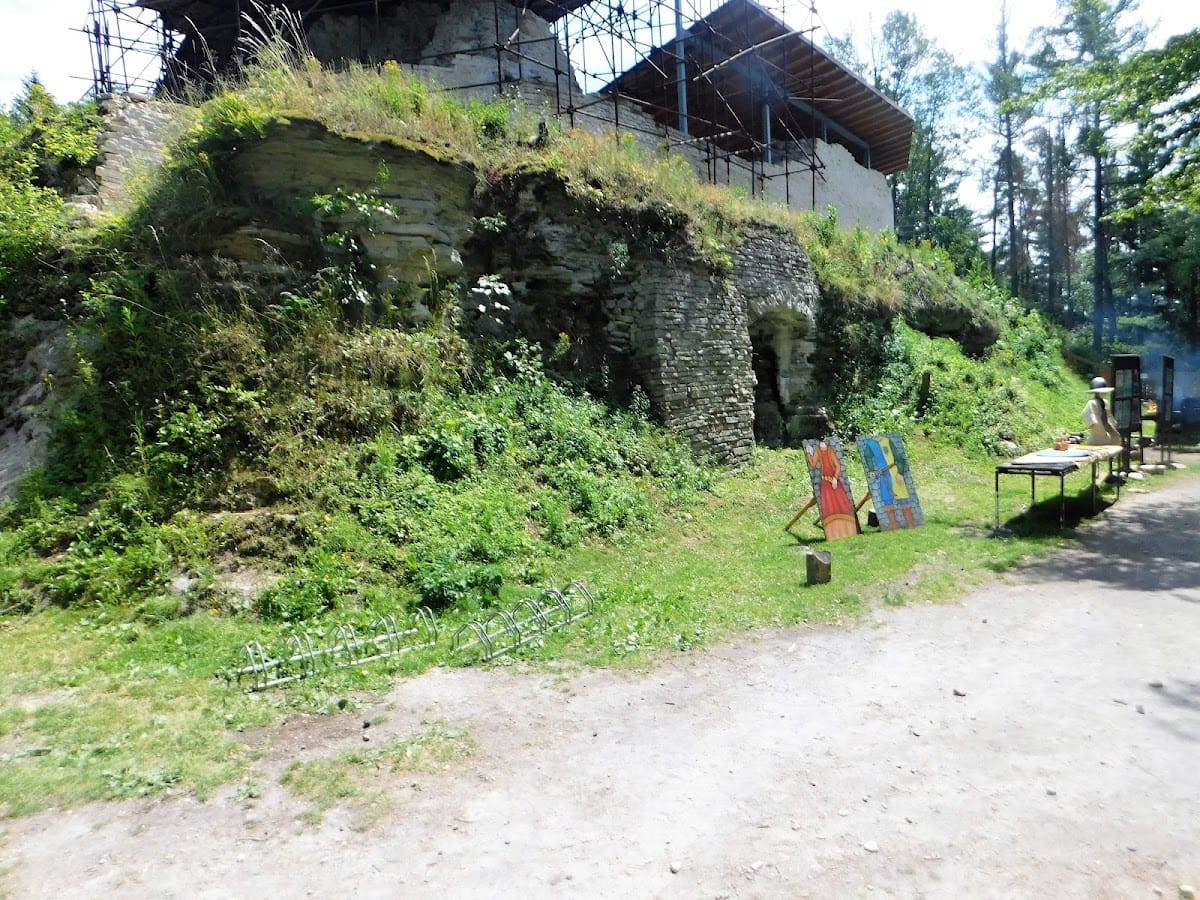
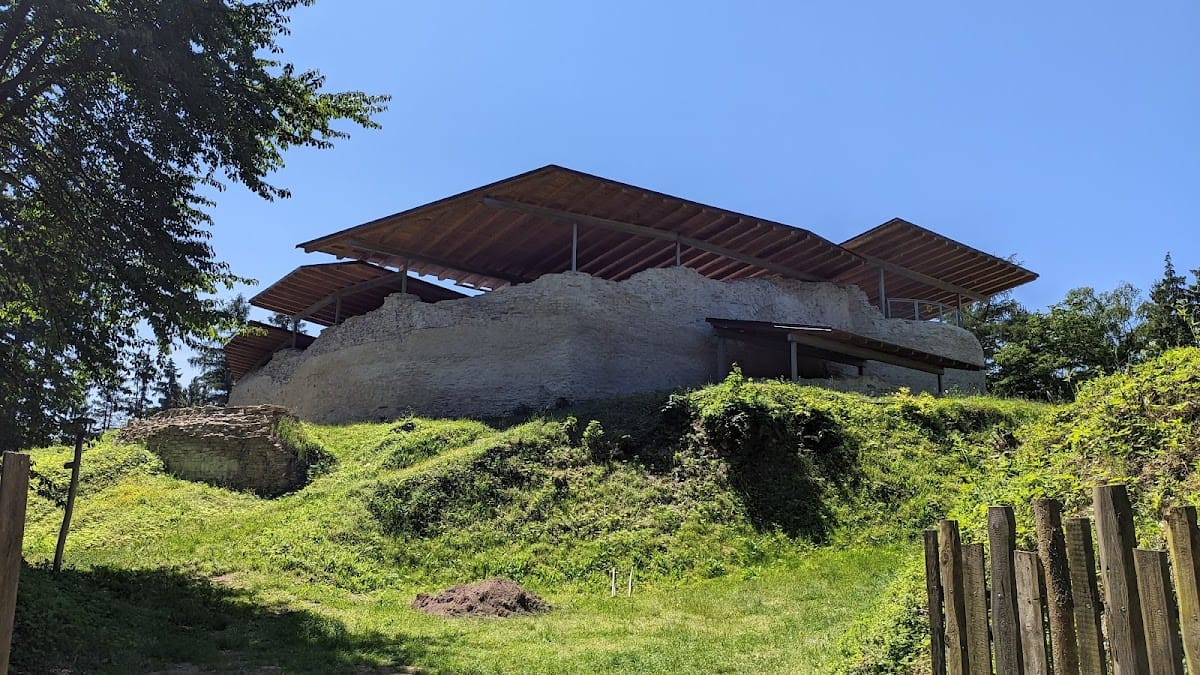
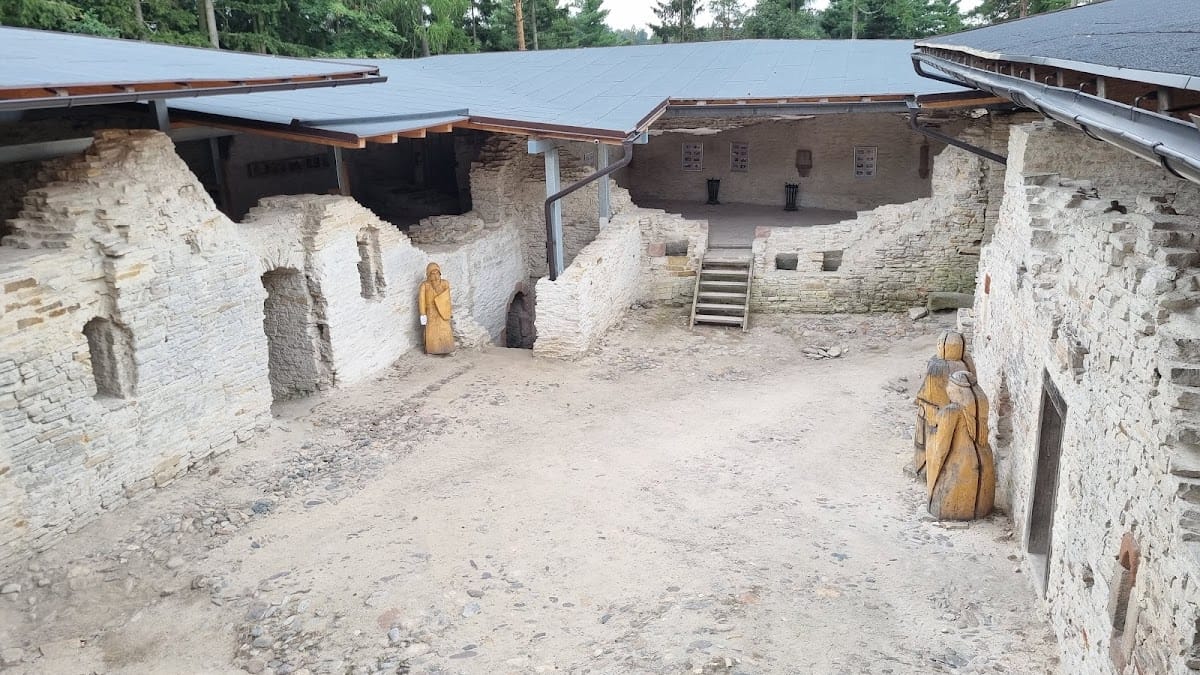
Most structures were constructed from local soft sandstone, bonded with clay mortar. While this material was readily available and workable, it has proven vulnerable to weathering, complicating long-term preservation. Excavations beginning in the 1970s uncovered extensive fragments of the castle’s masonry and numerous artifacts. Following partial stabilizations and restorations completed by 2021—including rebuilding walls, repairing cellars, opening the tower for access, and roofing the majority of the complex except the courtyard—the castle’s remains stand as a testament to its medieval origins and complex history.
Nearby sites