Choustníkovo Hradiště: A Gothic Castle Ruin and Former Convent in Czechia


Site at a Glance
- Rating
- 4.1
- Popularity
- Very Low
- Country
- Czechia
- Primary era
- Medieval
- Eras represented
- Medieval
- Civilizations
- Holy Roman Empire, Kingdom of Bohemia
- Site type
- Military
- Remains
- Castle
On this page9 sections
History
Choustníkovo Hradiště is a Gothic castle ruin in Czechia, built by Půta of Turgov before 1316 as part of the medieval defensive landscape of Bohemia. Its first written mention comes from that year, when King John of Luxembourg, a medieval king of Bohemia from the Luxembourg dynasty, pledged the town of Dvůr Králové and the surrounding area to Půta, who is identified as the castle’s builder.
Medieval ownership
In 1382, the castle was recorded as belonging to the brothers Václav and Jan Krušina of Lichtenburg. The Lichtenburgs were a noble family whose members held estates and offices in medieval Bohemia. They sold Choustníkovo Hradiště to Heřman of Choustník, who enlarged it. His descendants retained the castle until 1410, when the family died out. During the fifteenth and sixteenth centuries, the property passed frequently between different owners.
War and repair
From 1636 to 1651, Choustníkovo Hradiště belonged to the Danish Count František z Ulfelda. In 1645, Swedish forces under General Torstenson captured and damaged the castle during the Thirty Years’ War, the major European conflict that lasted from 1618 to 1648. After František z Ulfelda joined the Swedish side, ownership passed to his brother Korfic z Ulfelda.
Following several further changes of ownership, Count Jan Špork purchased the damaged castle and arranged its repair after 1664. His son, František Antonín Špork, inherited the property and transformed it after 1705 into a convent for female Celestines. The Celestines were a Catholic religious order, and the women’s convent followed the Rule of Saint Augustine, a set of religious principles governing communal life.
Convent and ruin
František Antonín Špork’s daughter, Marie Eleonora Františka Šporková, became the convent’s abbess. After her death in 1717, the office was held by the Countess of Rutland. The nuns remained in the former castle until 1739, when they moved to a new convent on Jindřišská Street in Prague.
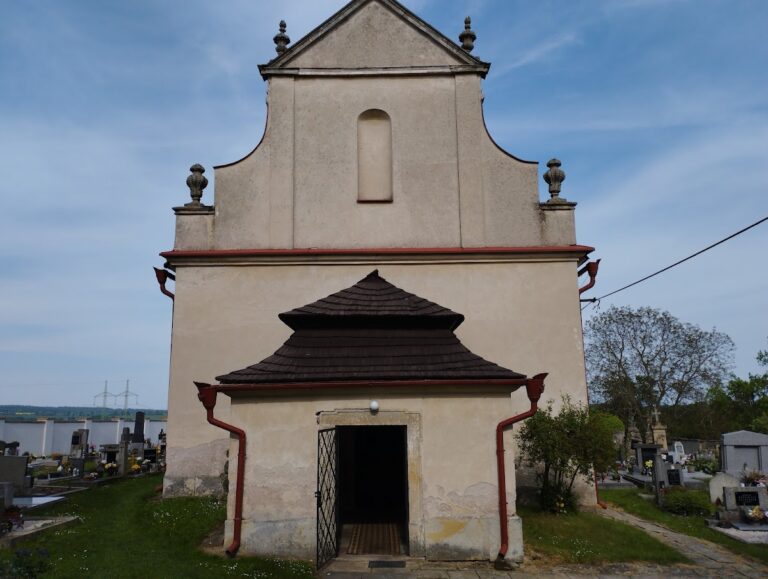
After the move, the site was used briefly for agricultural purposes. Its buildings were then rapidly dismantled for construction material, leaving the castle as a ruin. Choustníkovo Hradiště has been protected as a cultural monument since 1964.
Remains
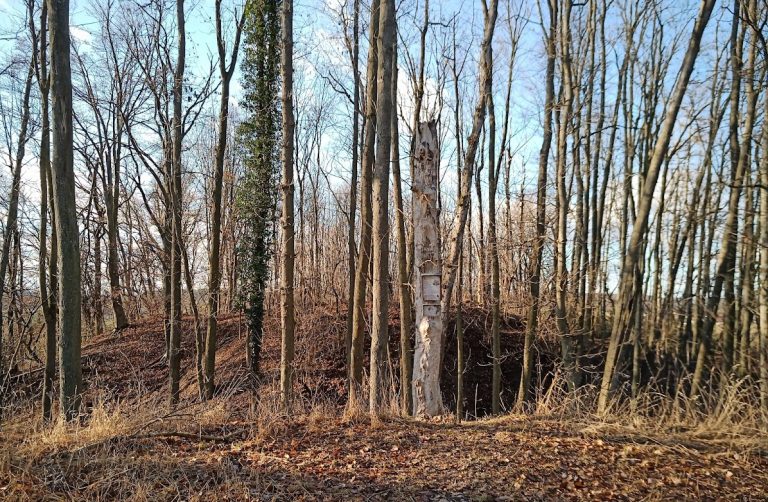
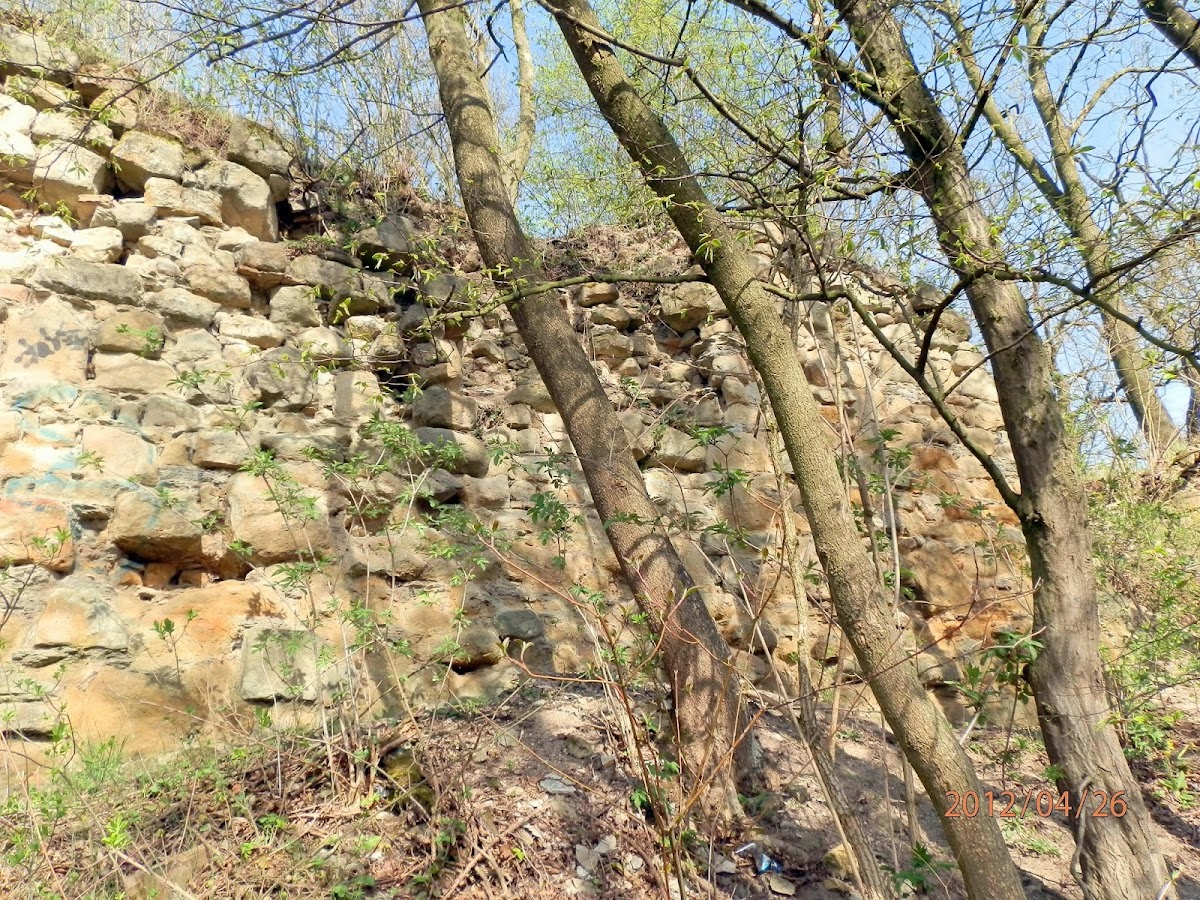
The castle occupied a three-part spur. A ditch protected its accessible eastern side, while successive outer defenses separated the castle core from the approach. The surviving remains consist chiefly of ruined structures and terrain features, with the former palace cellar providing the principal specifically preserved architectural element.
Outer defenses
Beyond the first ditch lay an elongated rectangular outer bailey, whose main purpose was defense. A second outer bailey also had a rectangular plan and was protected by another ditch. On its southern side, a rampart extended from the southwestern corner of the first outer bailey. Buildings of uncertain date stood on both sides of this section.
Castle core
Palace
A third ditch marked the approach to the inner castle core. At its western end stood the palace, whose surviving barrel-vaulted cellar preserves a fragment of the castle’s built fabric. The rest of the core is represented chiefly by terrain remains and ruined traces along the perimeter.
Defensive tower
The northeastern corner of the core was occupied by a bergfried, the principal defensive tower of a medieval Central European castle. Additional buildings were arranged along the perimeter wall. Together, these remains reflect the Gothic organization of the castle core and its layered defensive setting.