Tombs of the Kings of Pontus: A Royal Necropolis in Amasya, Turkey
Site at a Glance
- Rating
- 4.4
- Popularity
- Very High
- Country
- Turkey
- Primary era
- Classical
- Eras represented
- Classical
- Civilizations
- Kingdom of Pontus
- Site type
- Burial
- Remains
- Necropolis
On this page7 sections
History
The Tombs of the Kings of Pontus are a royal necropolis on Mount Harşena in Amasya, Turkey, created for the Hellenistic Kingdom of Pontus, a kingdom shaped by the spread of Greek culture after Alexander the Great’s campaigns. The earliest burial dates to the third century BCE and the latest to the first century CE.
The necropolis developed after Mithridates I founded Pontus and established Amaseia, modern Amasya, as its capital. Five tombs are attributed to Pontic rulers: Mithridates I, who died in 266 BCE; Ariobarzanes, who died in 250 BCE; Mithridates II, who died about 210 BCE; Mithridates III, who died about 190 BCE; and Pharnaces I, associated with about 155 BCE.
In antiquity, the area was known as the Valley of the Kings, a name linked to Pontus’s size and celebrated Hellenistic past. The kingdom was the largest in northern Anatolia, and its royal necropolis was renowned in the Hellenistic world as the largest burial ground in northern Anatolia and the Armenian Highlands. Amasya then lay in Lesser Armenia, a region of Anatolia distinct from Greater Armenia.
The tombs were added to Turkey’s tentative list for UNESCO World Heritage in the cultural category on April 13, 2014.
Remains
Setting and distribution
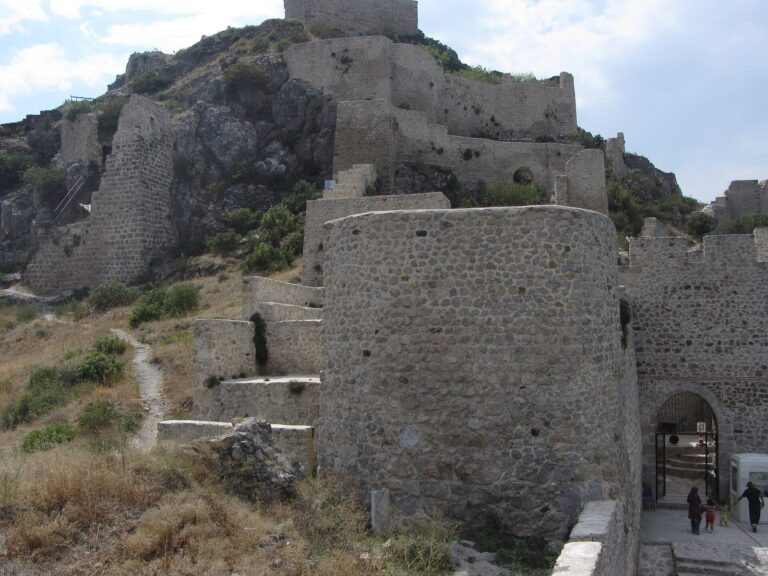
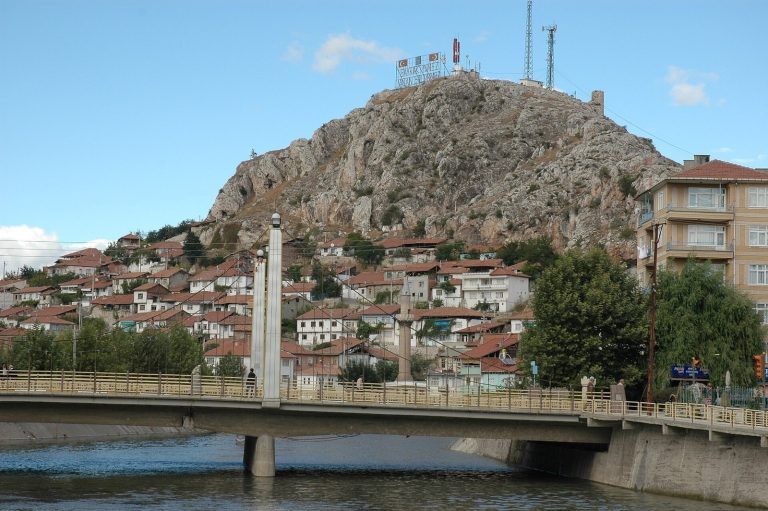
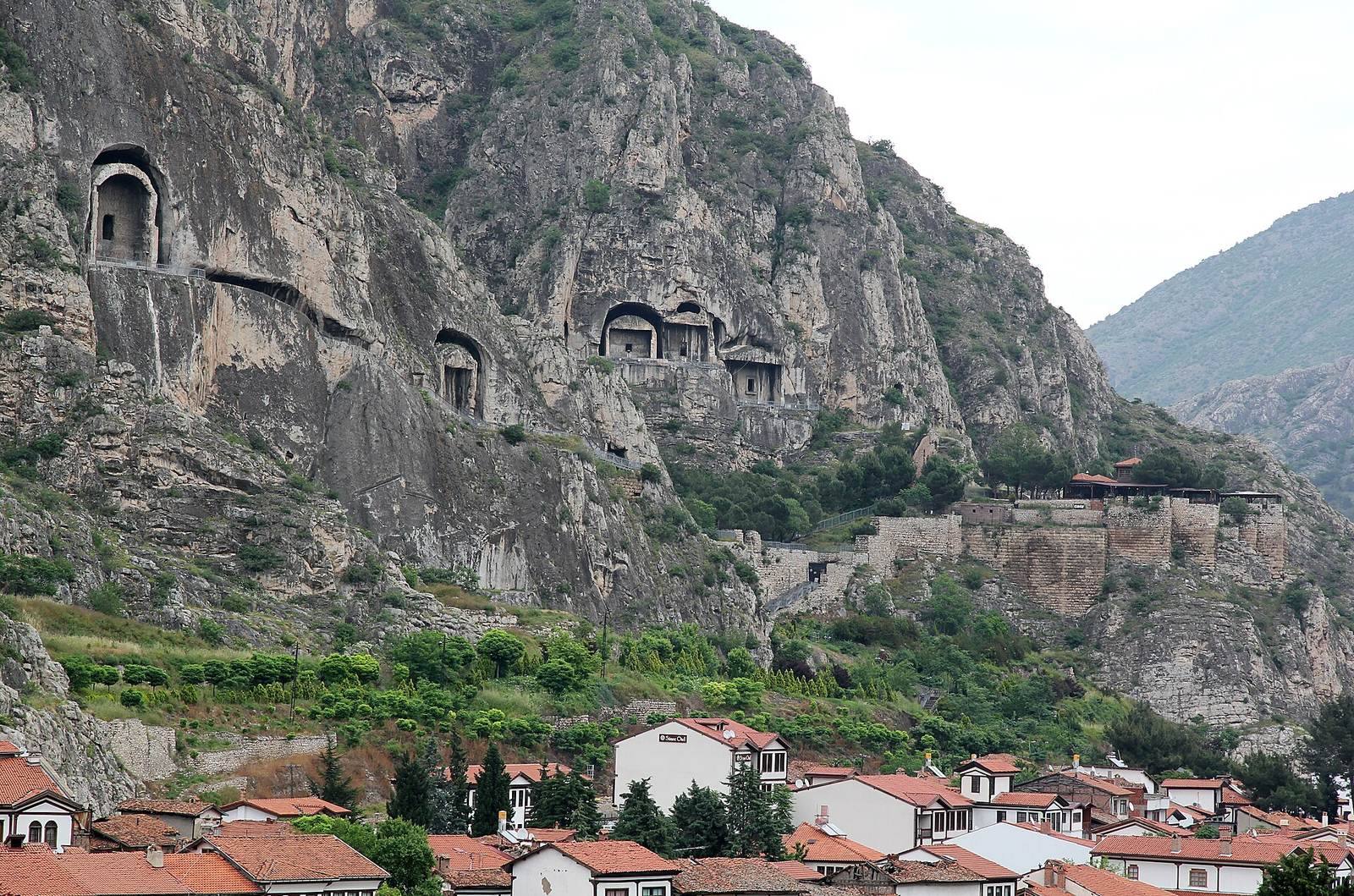
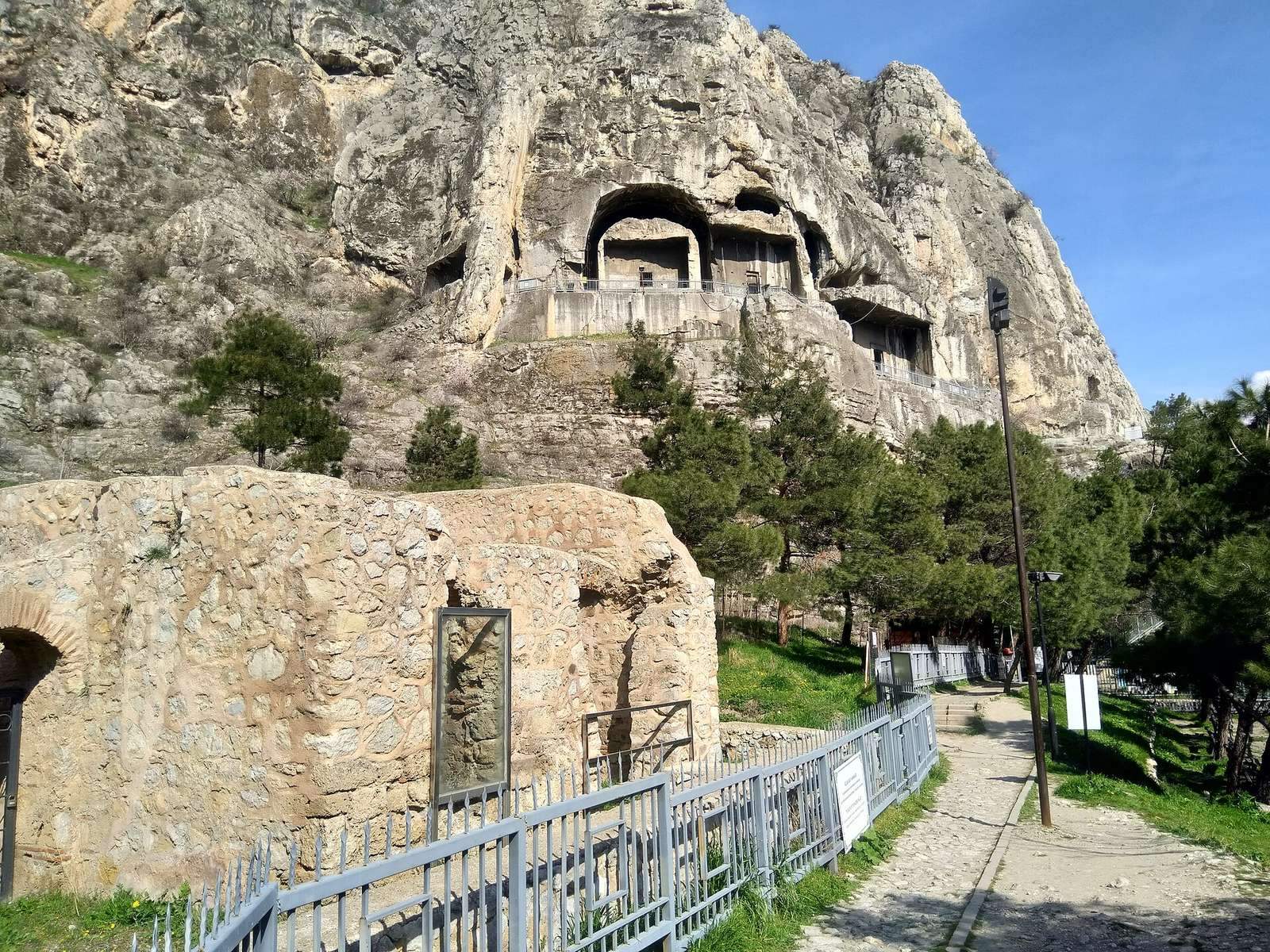
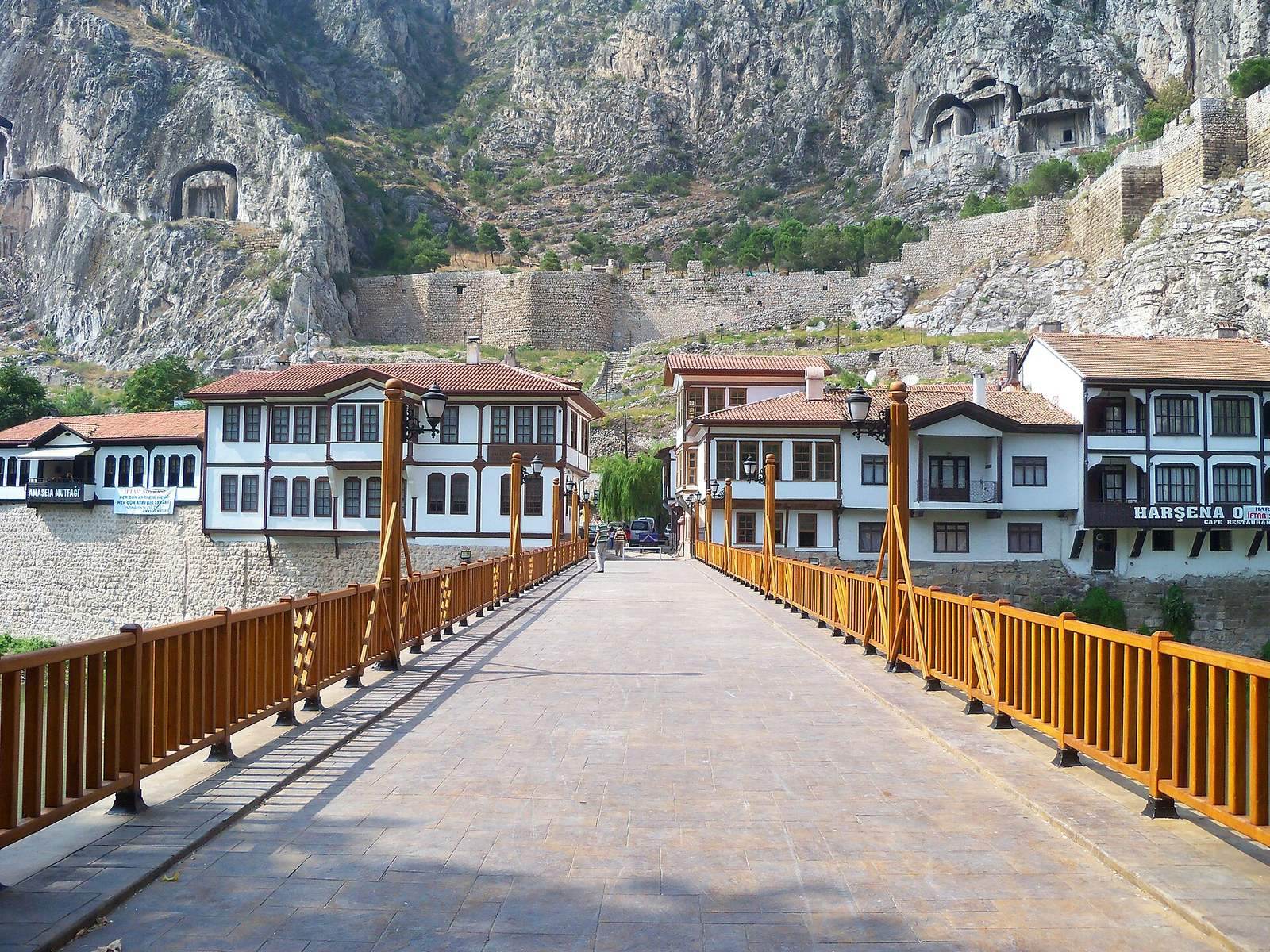
The necropolis occupies the southern slope of 272-metre Mount Harşena, north of Amasya and the Yeşilırmak River. Its royal tombs are cut into limestone and range from 8 to 15 metres high. Five form a group in the Maidens’ Palace area, while nine lie within Amasya Fortress on the mountain slope. In total, 21 rock-cut royal tombs are found around the city.
Rock-cut tombs
Approaches and burial chambers
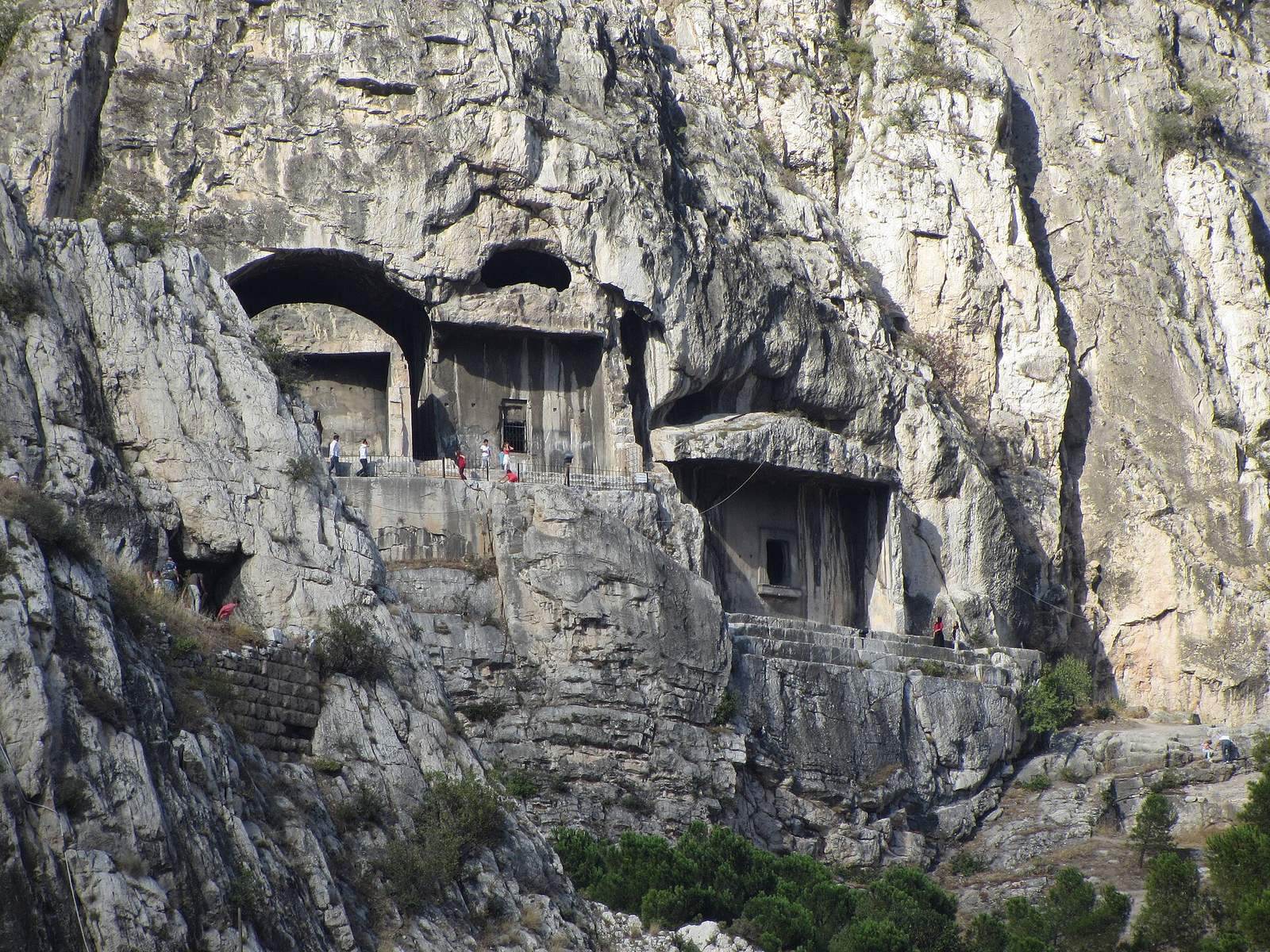
Three of the five tombs in the Maidens’ Palace group are reached by two separate stairways cut into the rock. The other two are approached through a stepped tunnel. Each has an elevated entrance to its burial chamber, which can be reached only by ladder.
Carved façades
Three tombs in this group have façades with columns. One has six columns, while the other two have four each. The remaining two tombs have rounded tops and no columns. The largest tomb measures 15 by 8 by 6 metres.
Inscription and preservation
A Greek inscription above one rock-cut tomb states that Metrodorus, a fortress commander, dedicated an altar and a flower bed to the gods for King Pharnaces I. The elevated position of the tombs has helped preserve them, and they survive in a presentable condition.