Amasya Castle: A Historic Fortress in Türkiye


Site at a Glance
- Rating
- 4.5
- Popularity
- Medium
- Country
- Turkey
- Primary era
- Classical
- External website
- Open
- Eras represented
- Classical
- Civilizations
- Kingdom of Pontus
- Site type
- Military
- Remains
- Castle
On this page8 sections
History
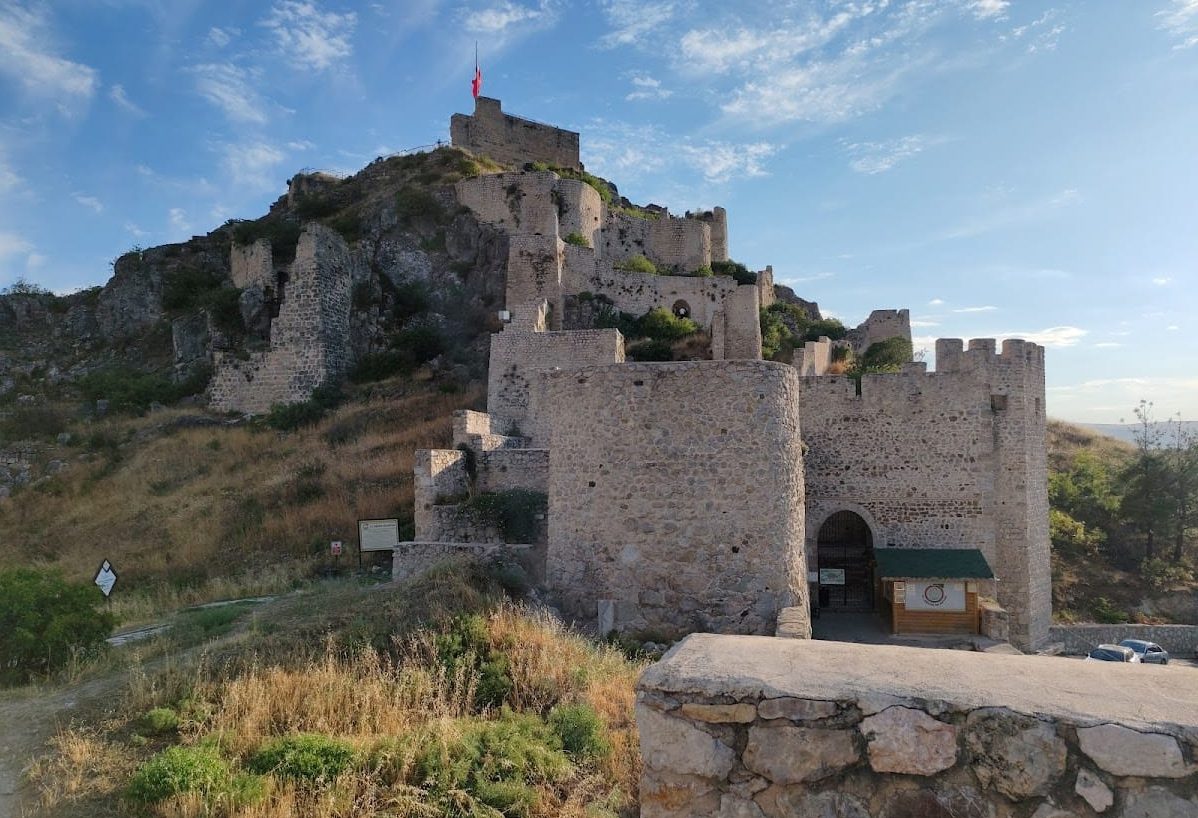
Amasya Castle, also known as Harşene Castle, is a partially standing fortress in Amasya, Türkiye, on the steep slopes above the Yeşilırmak River. It was repeatedly attacked, destroyed, transferred between rulers, and restored during the Persian, Roman, Pontic, and Byzantine periods. The wars between Rome and Pontus, an ancient kingdom on the southern Black Sea coast, caused particularly severe damage.
Restoration under the Danishmends
After the Danishmend conquest of Amasya in 1075, the castle underwent substantial restoration. The Danishmends were an Oghuz Turk dynasty that ruled parts of Anatolia during the eleventh and twelfth centuries. Their rebuilding returned the fortress to active use, and it continued to serve a military purpose for centuries.
Ottoman refuge and later decline
In the early fifteenth century, the Ottoman prince Çelebi Mehmed, later Sultan Mehmed I, took refuge in Amasya Castle while fleeing the forces of Timur. Also known as Tamerlane, Timur was a Central Asian conqueror whose campaigns affected much of the Middle East and Anatolia in the late fourteenth and early fifteenth centuries. Mehmed later reunited much of the Ottoman state after the political crisis that followed Timur’s defeat of the Ottoman army.
The castle remained in use until the eighteenth century, when it lost its military importance. Its surviving fabric now consists of fortifications, underground water installations, tombs, and other ruins distributed across the mountain slopes and the area below the fortress.
Remains
Fortifications and entrances
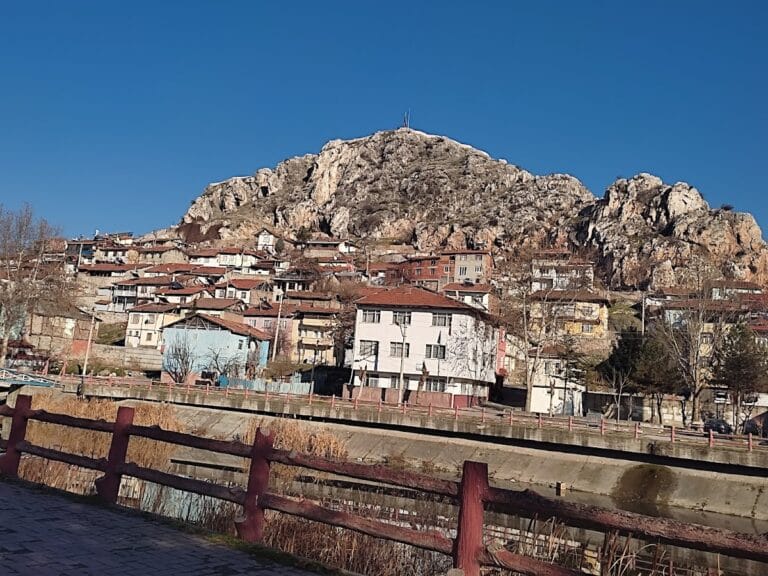
The fortress occupies the rocky northern slopes of Mount Harşena above the Yeşilırmak. Four gates are identified as Helkıs, Saray, Maydonos, and Meydan. Eight defensive positions extend beyond the main castle toward the riverbanks. The upper fortifications use ashlar masonry, made from regularly cut and fitted stone blocks, while the defensive walls use rubble masonry of irregular or roughly shaped stones. These walls extend for about 2 kilometres.
Cisterns and underground passages
A network of rock-cut cisterns and connecting tunnels lies in the middle of the castle. Several steep stair-tunnels descend from exterior openings on the hillsides to enclosed wells, water reservoirs, cisterns, and tombs below. The Cilanbolu cistern is reached by an underground stairway descending about 186 metres. Its tunnel is 8 metres in diameter and contains 150 steps, although the lower steps, which originally continued farther, have not survived. The cistern itself extends for about 300 metres.
Rock-cut royal tombs
On a sheer limestone cliff, approximately 20 to 25 metres above the surrounding ground, are 18 large and small rock-cut tombs dating from the third century BC. These monumental tombs with galleries are associated with the kings of Pontus, the ancient kingdom that ruled along the southern coast of the Black Sea.
Lower ruins and hillside buildings
Below the castle are the ruins of a bastion, a projecting defensive position, and a mosque. On the southern hillside, the remains of Kızlar Sarayı survive from its use during the Ottoman period. Along approximately 800 metres of the ancient fortress walls beside the Yeşilırmak are traditional Amasya houses, hamams, or bathhouses, and mosques.