Turhal Kalesi: A Byzantine-Period Castle in Turkey
Site at a Glance
- Rating
- 4.3
- Popularity
- Low
- Country
- Turkey
- Primary era
- Medieval
- Eras represented
- Medieval
- Civilizations
- Byzantine
- Site type
- Military
- Remains
- Castle
On this page7 sections
History
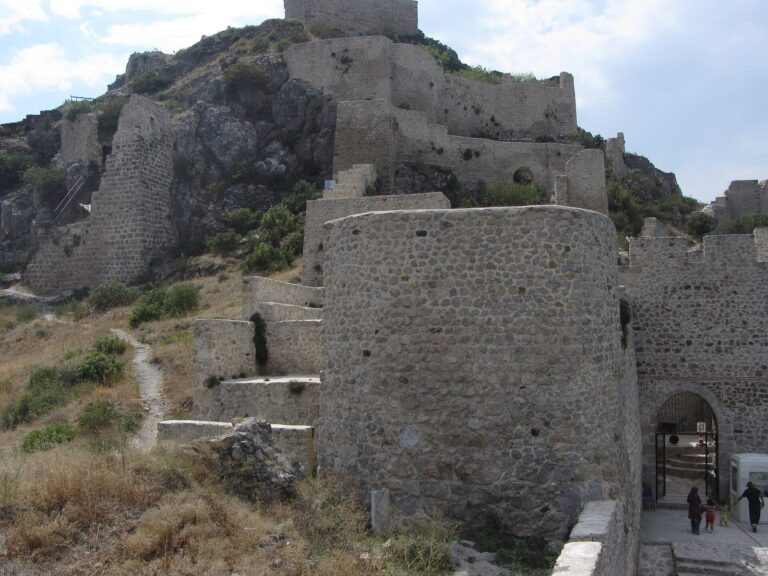
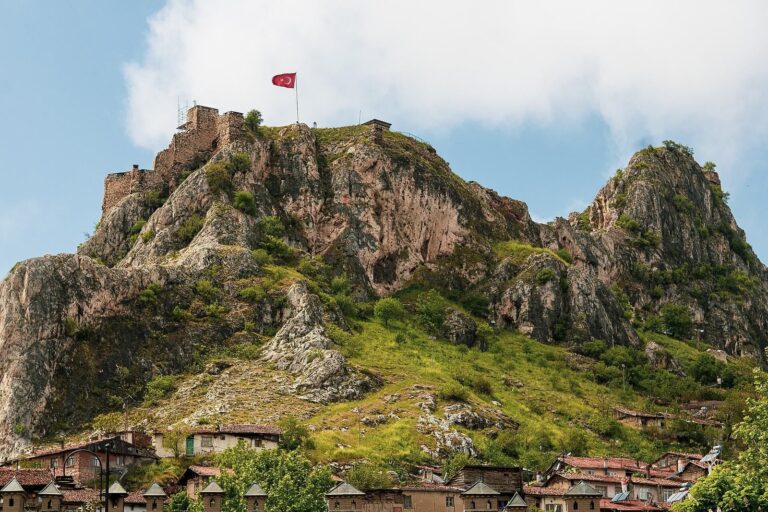
Turhal Kalesi is a stone-built castle in Turkey, above the town of Turhal in Tokat Province, whose summit has been attributed to the Byzantine period, the medieval eastern Roman Empire. The castle occupies a steep rock mass overlooking Turhal and the plain, and its history has been interpreted through surviving masonry, tunnels, inscriptions, and archaeological material.
Ancient and Byzantine interpretations
The castle has been connected with the ancient city of Gaziura, although this remains a historical identification rather than an established modern name. Henry John van Lennep proposed linking the site with Gaziura, and Henri Grégoire later identified Turhal with that ancient city. G. E. Bean found a weathered inscription and associated the castle with ceramics dated to the Iron Age, an archaeological period that broadly preceded the Classical period in Anatolia and the eastern Mediterranean, as well as with Classical-period material. These finds provide evidence for activity associated with the castle, while not establishing a single construction date for the visible structure.
Interpretations of the surviving buildings have varied. Charles Texier assigned the castle to the Middle Ages. J. G. C. Anderson attributed the summit section to the Byzantine period and considered the other structures earlier. H. H. Von der Osten also regarded the castle as Byzantine and noted its Greek inscriptions, texts written in the Greek language and alphabet. The differing assessments reflect the complex appearance of the surviving walls and the presence of both later and apparently ancient elements.
Travelers and archaeological investigations
The earliest known description comes from the seventeenth-century traveler Evliya Çelebi, who characterized the castle as unhealthy. In the nineteenth century, William John Hamilton described a passage extending toward the center of the mountain and judged the large stone blocks to have an ancient appearance. Texier found the stairs ascending toward the summit sound, while those descending were damaged or irregular. Van Lennep observed that the walls had deteriorated. Andreas David Mordtmann found no remains beyond an ancient stepped tunnel and considered the visible masonry modern, whereas Heinrich Barth described the fortress gate and parts of the walls as ruined and regarded other sections as later construction.
J. A. R. Munro identified Greek inscriptions at the castle, and Waldemar Belck supported his observations while also associating a tunnel with the water supply. David George Hogarth described Turhal Kalesi as an impressive but ruined structure on a high rock. Later observations by Anderson, Von der Osten, Grégoire, and Bean continued to link the site with Byzantine, earlier, and ancient phases without reducing its history to a single period.
Remains
Rock setting and internal circulation
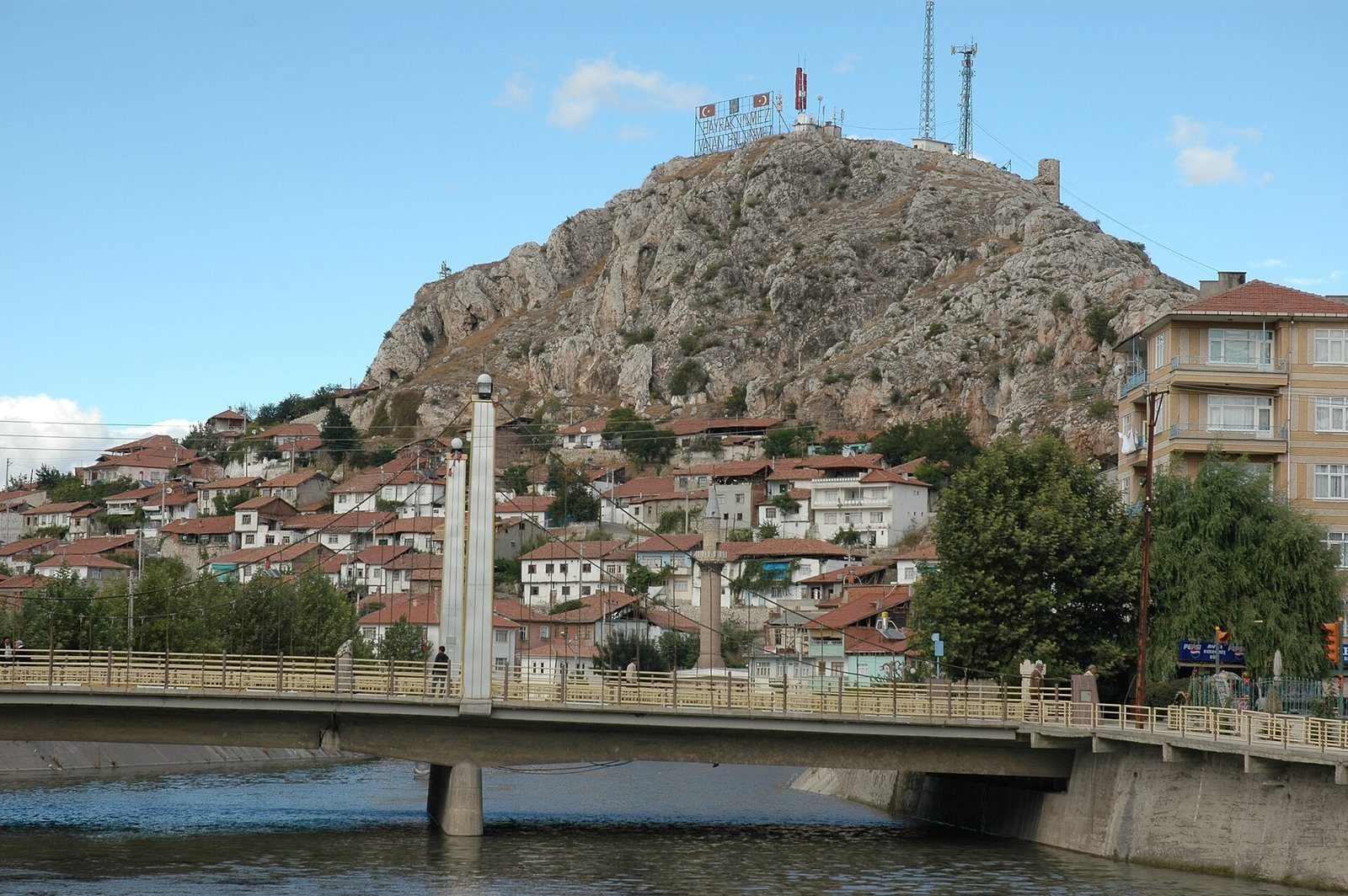
Turhal Kalesi stands on a steep, rugged rock mass approximately 180 metres above the plain floor. From this elevated position, the castle overlooks Turhal and the plain, with the Yeşilırmak nearby. Stone forms the principal construction material, and the surviving complex is preserved in a mixed condition, with intact or nearly intact features alongside ruined sections.
A passage or tunnel extends toward the center of the mountain. An ancient stepped tunnel has also been described, and Waldemar Belck associated a tunnel with the castle’s water supply. The stairs rising toward the summit have been described as sound or nearly intact, while the stairs descending from it are broken, damaged, or irregular. Together, these features reveal the castle’s vertical arrangement within the rock.
Fortifications and storage
The fortress gate and portions of the walls survive in ruined form. Other sections were described as later construction, while the summit area has been assigned to the Byzantine period by J. G. C. Anderson. Large stone blocks with an ancient appearance have been noted within the castle, although Andreas David Mordtmann judged the visible masonry to represent modern stonework. Large grain silos, storage installations for cereal crops, were also reported inside the enclosure.
Inscriptions and ceramics
Greek inscriptions were identified at the castle by J. A. R. Munro and Waldemar Belck, and G. E. Bean found a weathered inscription. Ceramics associated with the site include material dated to the Iron Age and the Classical period. These inscriptions and objects contribute to the interpretation of activity at Turhal Kalesi across several historical phases.