Oluz Höyük: An Archaeological Mound in Türkiye
Site at a Glance
- Popularity
- Low
- Country
- Turkey
- Primary era
- Classical
- Eras represented
- Bronze Age, Iron Age, Classical
- Civilizations
- Achaemenid, Hittite, Kingdom of Pontus, Phrygian
- Site type
- City
On this page10 sections
History
Oluz Höyük is an archaeological mound near Gözlek in Amasya District, Türkiye, with an occupation sequence extending from about 4500 BCE into the medieval period.
Bronze Age and Hittite occupation
The earliest occupation reaches back to about 4500 BCE. The Early Bronze Age horizon, from a period when bronze became widely used, is dated to the fourth millennium BCE. Two cultural levels belong to the Hittite period, in the 15th–13th centuries BCE. The Hittites were an ancient Anatolian people whose empire flourished in the Late Bronze Age, and finds from these levels indicate an important settlement. Archaeologist Şevket Dönmez has proposed that the site may be the Hittite city of Šanaḫuitta, whose location has not been securely identified. One further level is placed uncertainly between the Early Iron Age and Late Bronze Age, a span that includes the Hittite imperial period.
Iron Age and Persian phases
The Iron Age sequence includes levels from the ninth–eighth centuries BCE associated with Early Phrygian culture, as well as a seventh-century BCE Middle Iron Age horizon. A phase dated to 600–500 BCE is interpreted as a Late Iron Age city in Kašku Land, a northern Anatolian region associated with the Kaska people in Hittite texts, under Phrygian cultural influence. Pottery changes in the 500–425 BCE phase are interpreted as signs that local workshops were adopting new Anatolian influences.
A cultural horizon dated to 425–200 BCE has Persian or Achaemenid characteristics and is divided into two phases. The Achaemenids were the Persian ruling dynasty that established an empire in the sixth century BCE. The site’s Hellenistic horizon is dated to 200–47 BCE, and its architectural layer is placed in the late second to early first century BCE. The Hellenistic period followed Alexander the Great’s conquests, as Greek cultural influence spread across western Asia and the eastern Mediterranean.
Later occupation and archaeological investigation
The latest listed occupation is a medieval, or Late Byzantine, layer dated to the 10th–14th centuries CE. Late Byzantine refers to the later centuries of the Byzantine Empire.
An Istanbul University team led by Şevket Dönmez identified Oluz Höyük during surveys conducted from 1997 to 1999. Systematic excavations under his direction began in 2007. Work in 2008 established a fuller sequence, described as seven architectural layers grouped into four principal cultural horizons.
Remains
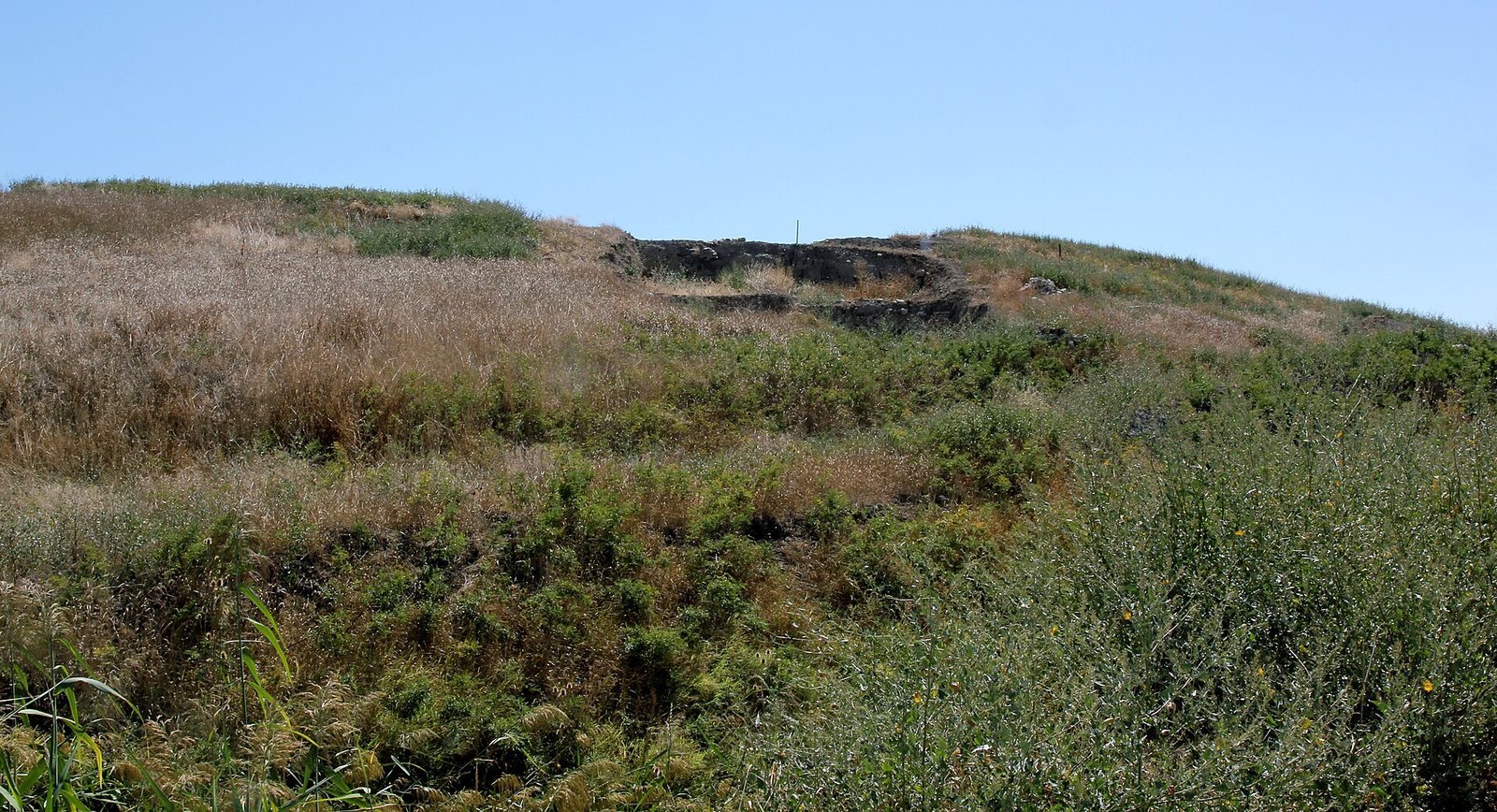
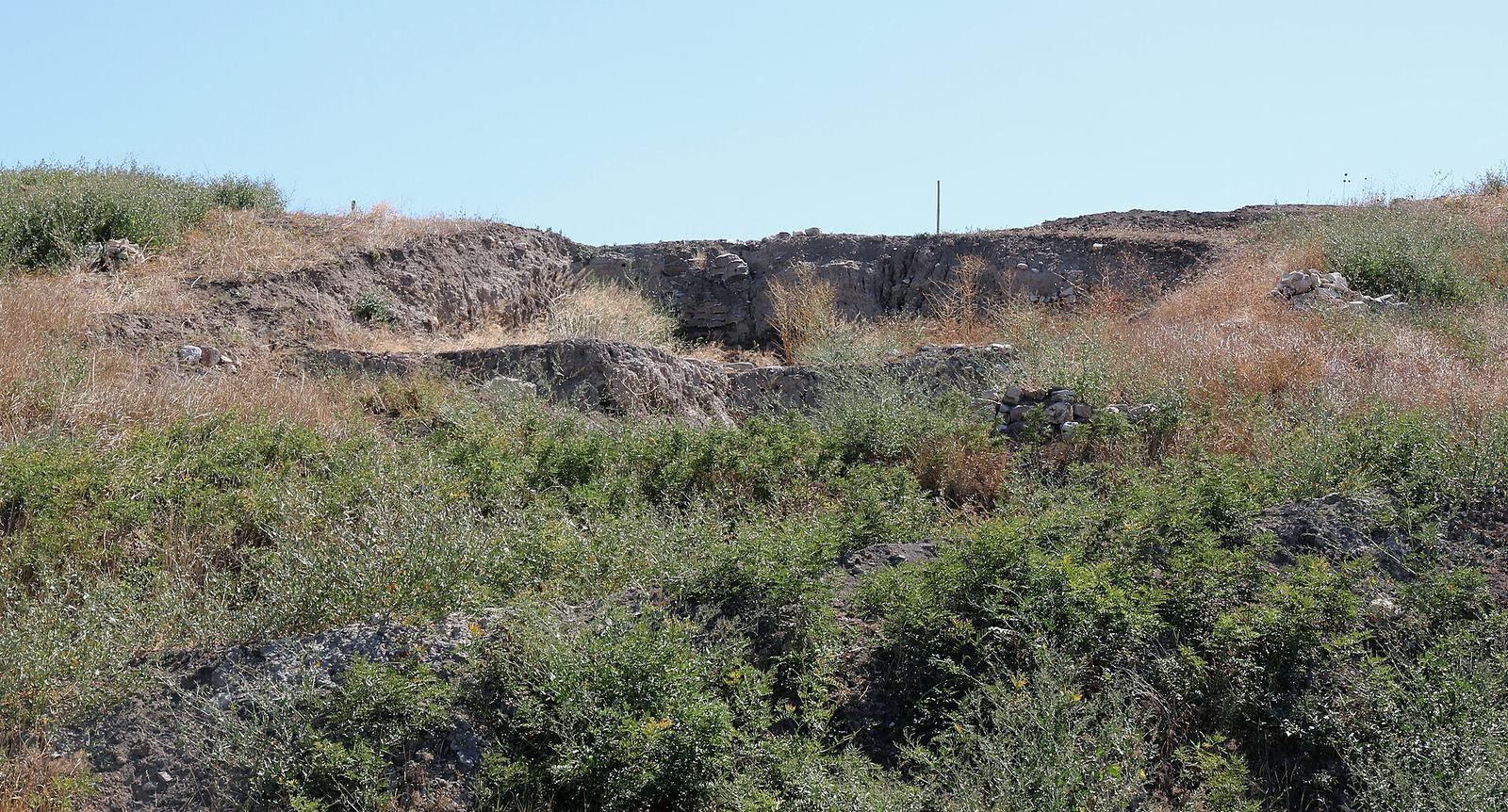
The nearly circular mound stands on the western edge of the fertile Geldingen Plain, about 15 metres above it. It covers approximately 4.5 hectares and measures roughly 280 by 260 metres. Excavation began in trench A, on the western part of the summit, and trench B, on the eastern slope; trenches C and D were added later. Excavated walls are built mainly from unworked or partly dressed stone set with simple mud mortar, and flat stones form some floors. A lower level associated with Phrygian settlement has mudbrick walls arranged in a clearer plan.
Hellenistic settlement
Residential buildings made from roughly dressed rubble stone were excavated alongside streets and lanes. Finds from this horizon include an iron helmet, sandstone and terracotta oil lamps, locally made and imported pottery, and coins.
Persian-period buildings and road
A paved monumental road in trench A runs southwest to northeast. On its northern side are the remains of a complex building thought to have been a small palace or manor. Six columns and their bases have been uncovered, together with an audience hall identified as an apadana (a large columned audience hall associated with Persian palaces), a throne hall, and an administrative hall. A pillared hall excavated in 2019 may have served as a station in the Persian postal system, where couriers and horses could be passed along an imperial route.
Iron Age and Bronze Age finds
Phrygian-associated levels have yielded plain and painted pottery with Late Phrygian characteristics, an ivory stamp seal showing a lion fighting a deer, and the lower part of a stone figure of Kubaba, an ancient Anatolian goddess. Scythian-type arrowheads also came from a level interpreted as a Phrygian settlement. Finds from the Hittite-period levels include a stone seal, a bronze sickle, a terracotta loom weight, and pottery fragments. The Early Bronze Age horizon is represented by part of a stone casting mould, spindle whorls, and hand-formed pottery.
Temple and burial evidence
A fire temple and an associated worship hall have been identified as sacred structures linked to ancient Iranian religious activity, although their specific cultural attribution remains uncertain. In 2011, excavations uncovered an Islamic-style cemetery with 99 burials arranged at three levels. The cemetery disturbed deeper Hellenistic and Persian-period deposits. In trench B’s fifth level, a pit contained mixed bones from five adults, interpreted as the remains of people who had been killed and thrown there rather than buried.
Later discoveries and collections
Excavations reported in 2025 revealed human-faced glass beads and infant jar burials. These finds have been interpreted as evidence of Phoenician influence and of ritual practices otherwise chiefly associated with the Levantine coast. Some finds from Oluz Höyük are displayed at the Amasya Archaeological Museum.