Sivý Kameň Castle: A Medieval Fortress in Slovakia
Visitor Information
Google Rating: 4.8
Popularity: Low
Country: Slovakia
Civilization: Medieval European
Site type: Military
Remains: Castle
History
Sivý Kameň Castle is located in the village of Podhradie, Slovakia. It was built by the medieval Hungarian Kingdom, serving as a strategic fortress in the region. The castle’s origin dates back to the latter half of the 13th century, although some historical accounts suggest it may have been constructed later, between 1320 and 1352.
The fortress was initially established to secure an important trade route following the Nitra valley, which led northwards toward the Turiec Basin and ultimately to the border with Poland. The first written mention of the castle appears in 1352, when its rulers were recorded as castellani de Baymocz et Kesselőkő. Its original Hungarian name, “Kesselőkő,” translates to “Vulture Stone,” referencing a local characteristic or symbol. The current Slovak name, meaning “Gray Stone,” likely comes from the light gray color of its remaining walls. Until 1388, the castle was under the control of castellans from nearby Bojnice, after which ownership transferred through several hands.
In 1434, King Sigismund granted the castle as hereditary property to Gregor Majthényi from Demandice. This transition marked the castle’s transformation into the center of a small feudal estate under the Majthényi family. The castle’s fortunes were challenged in 1524 when it was set aflame. The Majthényi family took the opportunity during the latter half of the 16th century to rebuild and expand the fortress, adding a so-called lower castle to its structure.
Further turmoil followed in the early 17th century during the anti-Habsburg uprising led by Gabriel Bethlen. In 1626, the fortress was seized by General Mansfeld’s forces and soon afterward was plundered by local inhabitants. These events prompted the Majthényi family to abandon Sivý Kameň as their residence, relocating to a castle in Nováky.
In the early 1700s, kuruc troops supporting Francis II Rákóczi occupied the castle. However, in 1708, imperial forces retook and deliberately burned the fortress, destroying valuable family archives held there. Since then, Sivý Kameň has remained a ruin. Today, the remains of the castle lie within a protected nature monument and have been recognized as a national cultural monument of Slovakia since 1973. Conservation efforts to preserve the site began in 2013 and continue to this day.
Remains
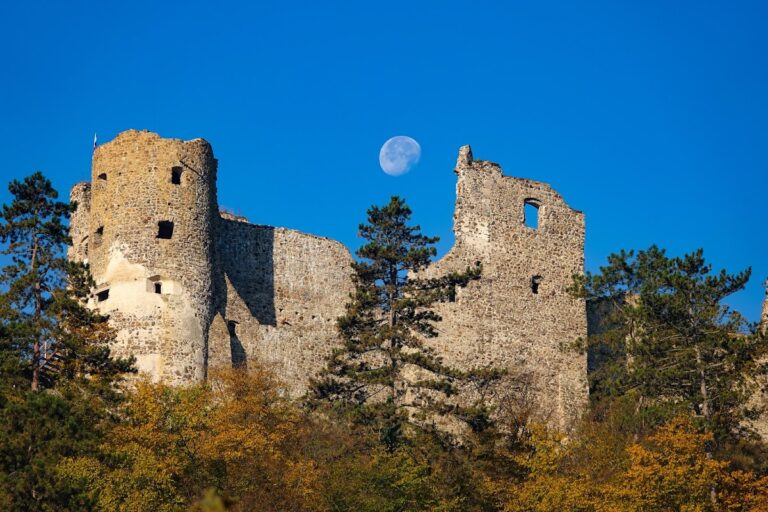
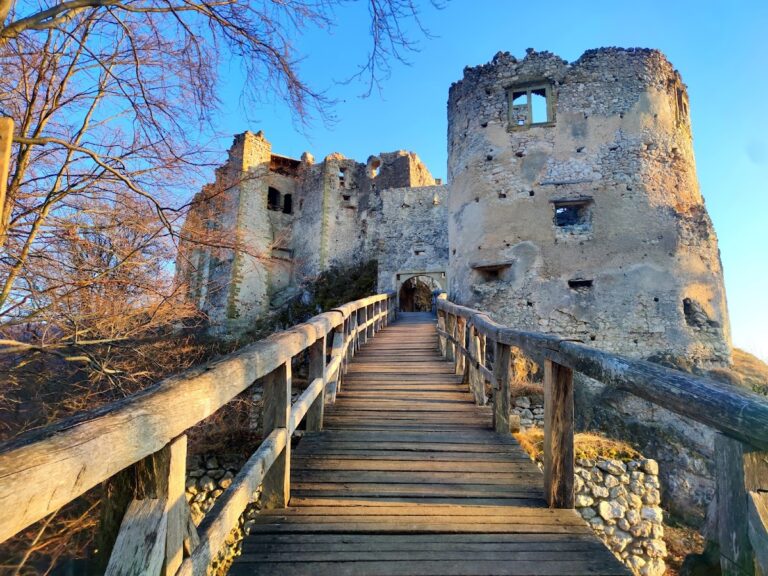
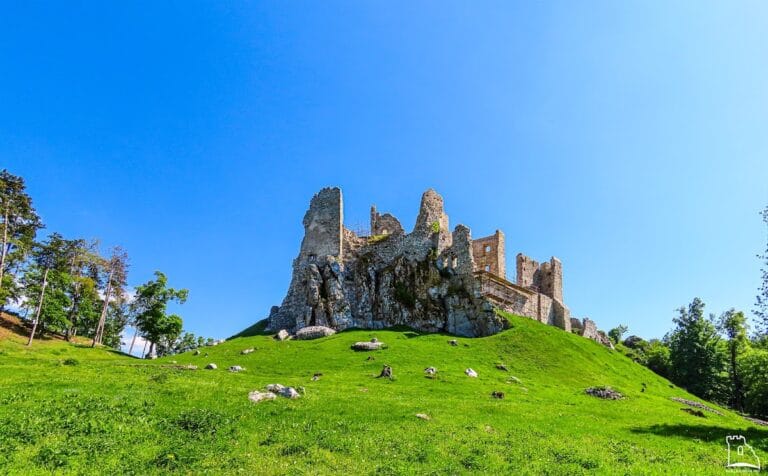
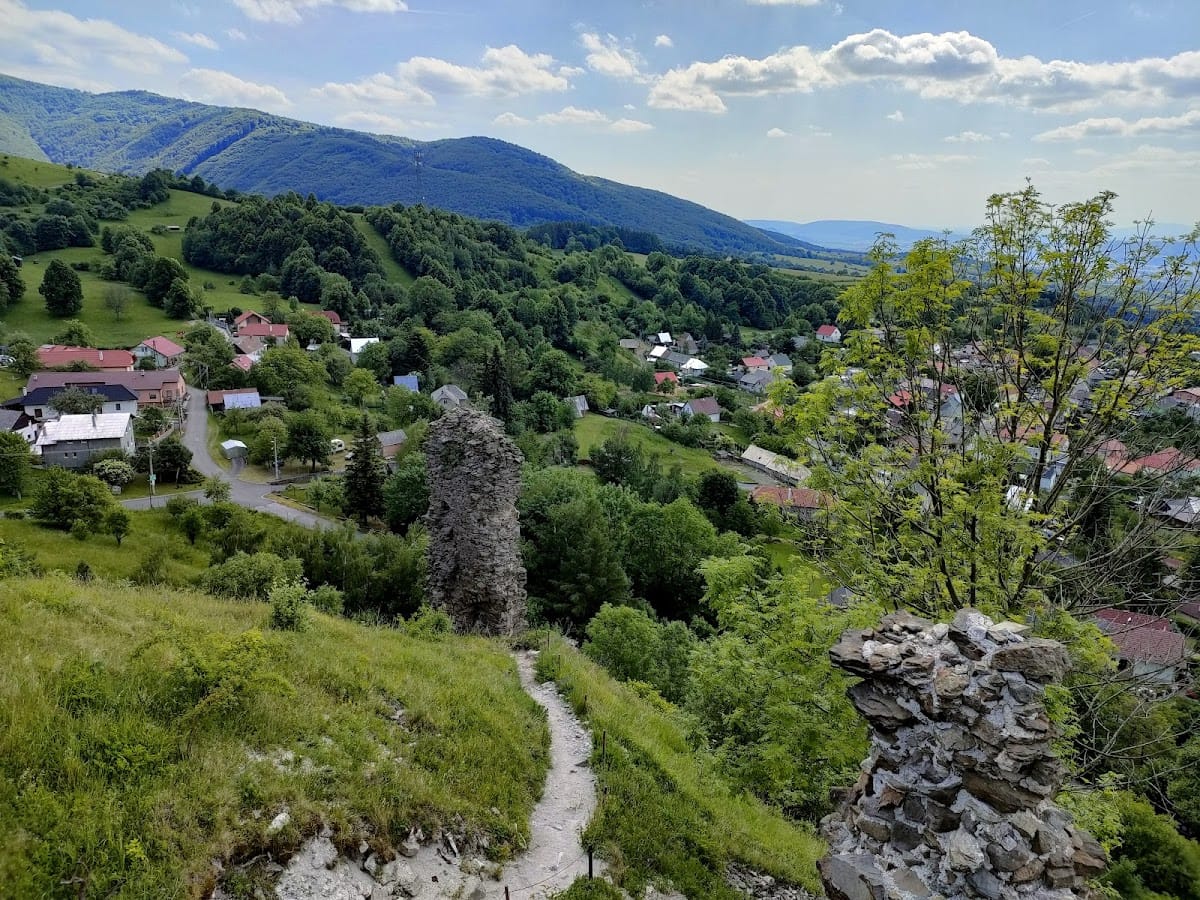
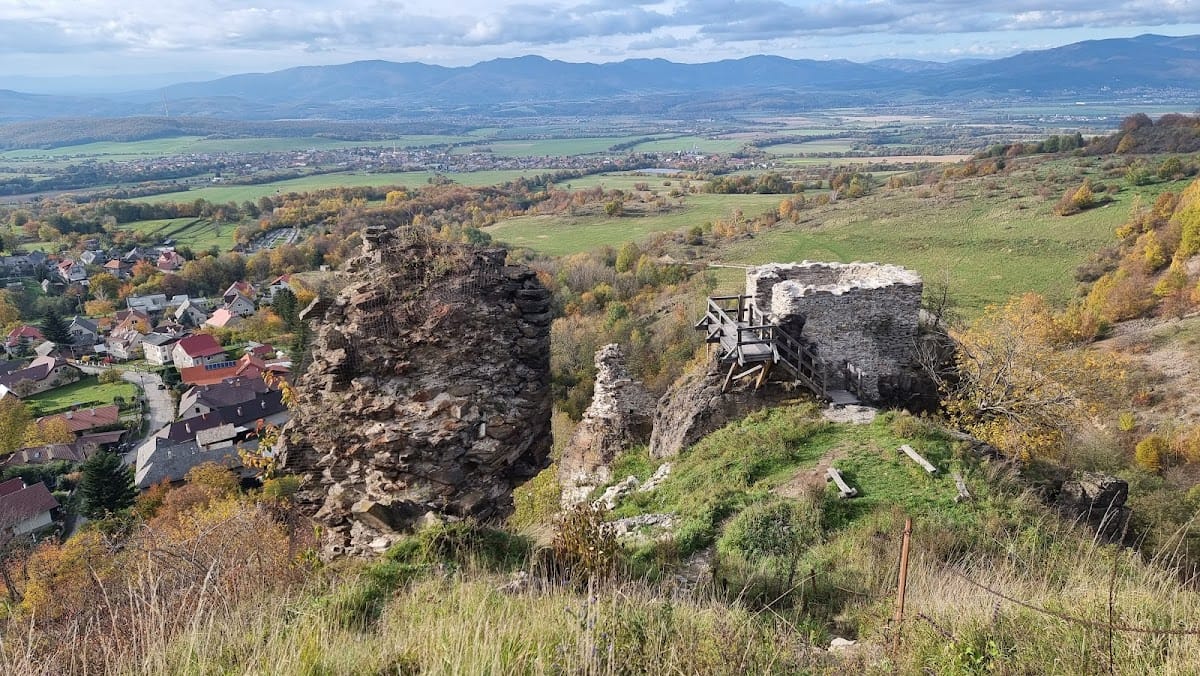
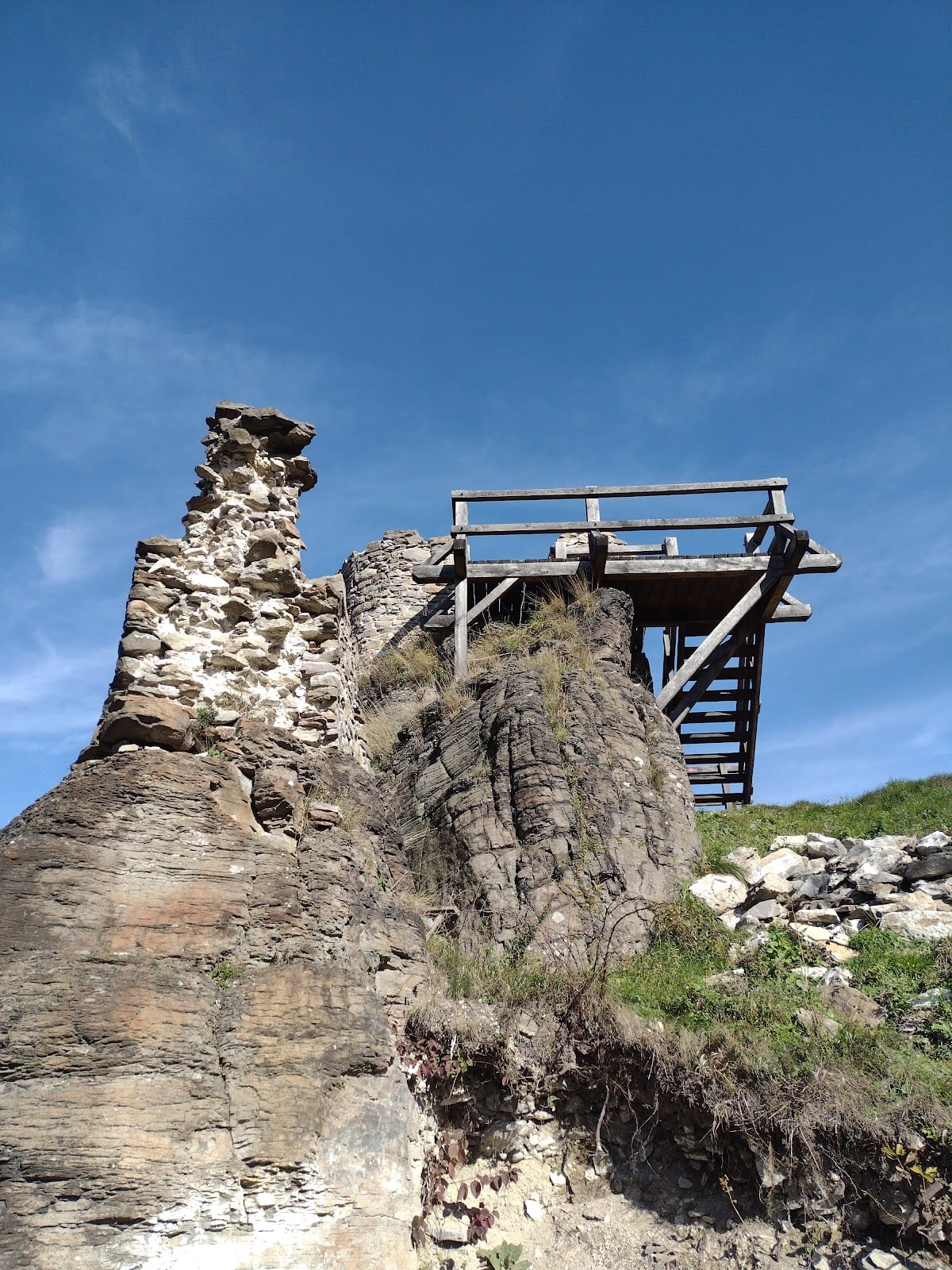
Sivý Kameň Castle is situated atop an andesite hill bordered by the Ťapkov stream, positioned where the Upper Nitra Basin meets the Vtáčnik mountain range. Its original design likely featured a quadrangular defensive tower, a residential building, and a small courtyard, all encircled by a protective wall. Over time, the castle’s footprint expanded with the addition of a lower section, known as the lower castle, constructed during the Majthényi family’s reconstruction in the 16th century.
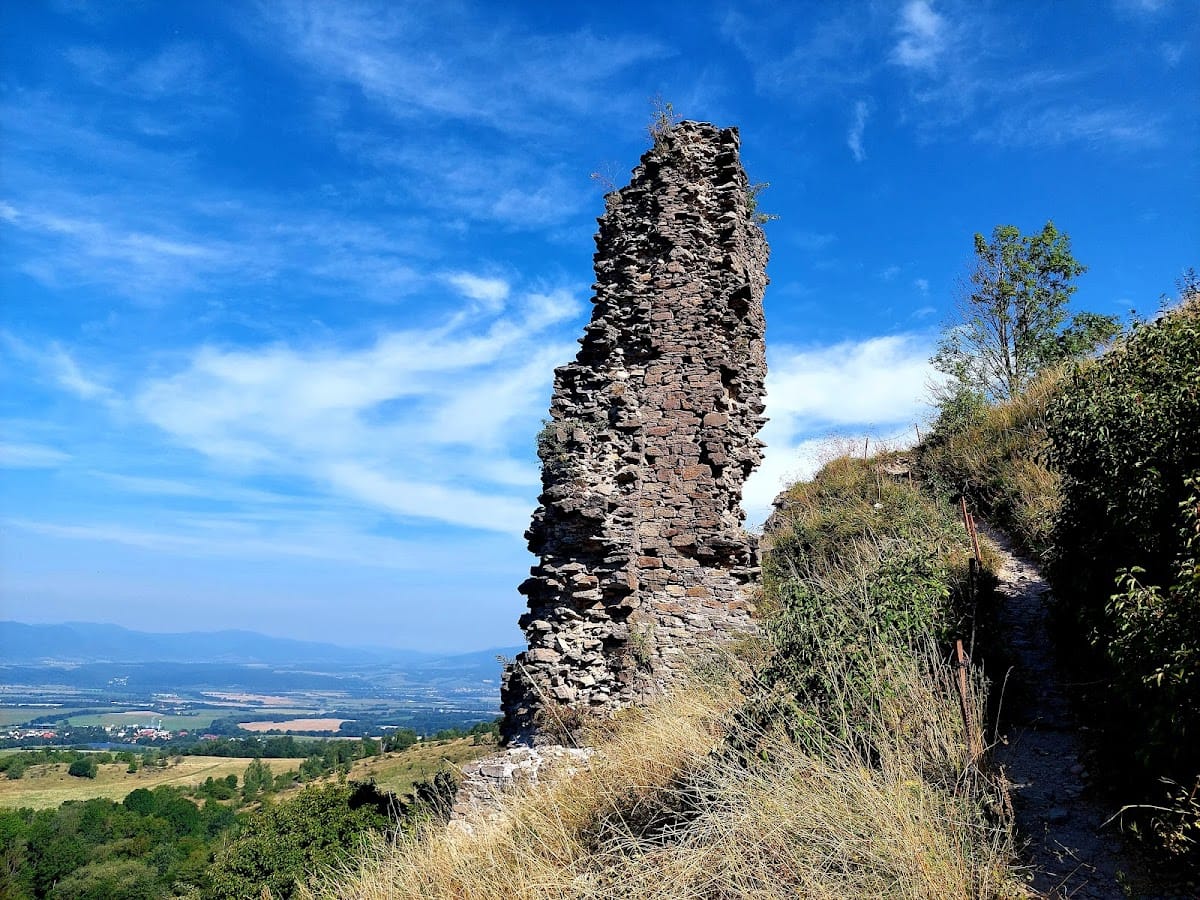
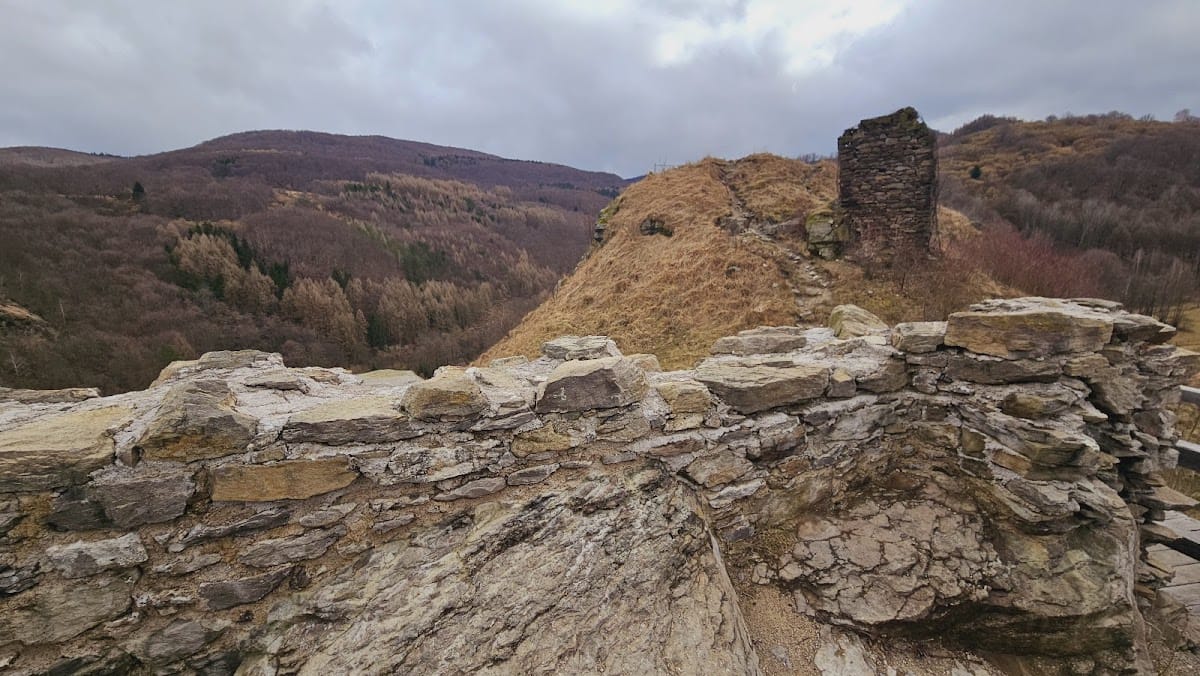
The fortress was primarily built from locally sourced light gray stone, giving the ruins their distinctive hue and inspiring the Slovak name “Sivý Kameň,” which means “Gray Stone.” The surviving walls, though fragmentary, reflect this coloration and the medieval building techniques used in their construction.
Due to centuries of damage, including warfare and deliberate dismantling by villagers from Podhradie who repurposed stones for local buildings, much of the original layout has become difficult to discern. Despite this, the outline of the main defensive structures and the expanded lower castle section remain visible on the site. Preservation efforts in recent years have focused on stabilizing these stone ruins to protect them from further decay.
While no specific decorative elements, inscriptions, or archaeological objects such as tools or pottery have been preserved or documented, the remaining walls and foundations offer a tangible connection to the castle’s centuries-long history and past strategic importance in the region.
Nearby sites