Schloss Ochsenburg: A Medieval Castle and Renaissance Palace in Austria


Site at a Glance
- Rating
- 5
- Popularity
- Very Low
- Country
- Austria
- Primary era
- Medieval
- Eras represented
- Medieval, Early Modern
- Civilizations
- Habsburg, Holy Roman Empire
- Site type
- Domestic
- Remains
- Castle
On this page9 sections
History
Medieval Origins and Collegiate Ownership
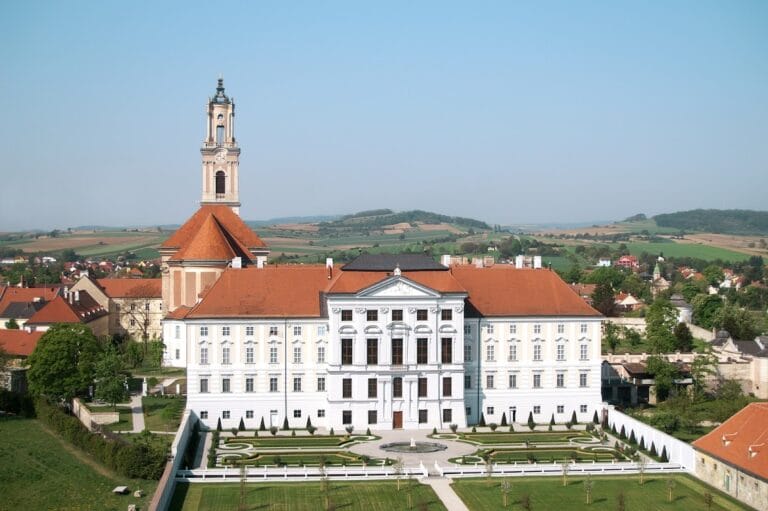
Schloss Ochsenburg is a medieval castle and later palace in St. Pölten, Austria, built originally by the Lords of Ochsenburg and substantially transformed in the Renaissance style during the sixteenth century. The complex belonged to the Collegiate Monastery of St. Pölten, a religious institution served by a community of canons, from 1383 until 1530.
After 1530, the Lassberger family held Schloss Ochsenburg until 1675, when ownership passed to the Lords of Leisser. The Collegiate Monastery regained the castle in 1699 under Provost Christoph Müller, the head of the monastic community.
Ecclesiastical Administration and Later Use
The Josephinian Reforms, the church and administrative changes introduced under Emperor Joseph II, dissolved the Collegiate Monastery of St. Pölten in 1784. Schloss Ochsenburg then passed to the Lower Austrian Religious Fund. In 1785, the newly established Diocese of St. Pölten received the right to use the property.
During the Second World War, the castle served as a hospital and later declined. Following renovation, it became the summer residence of the bishops of St. Pölten. In 2010, the diocese offered Schloss Ochsenburg for sale for approximately three million euros. No buyer had been found by mid-2011, so renovation was announced while the search continued. Schloss Ochsenburg and the farm estate immediately to its east are protected as historic monuments.
Remains
Castle Setting and Surviving Complex
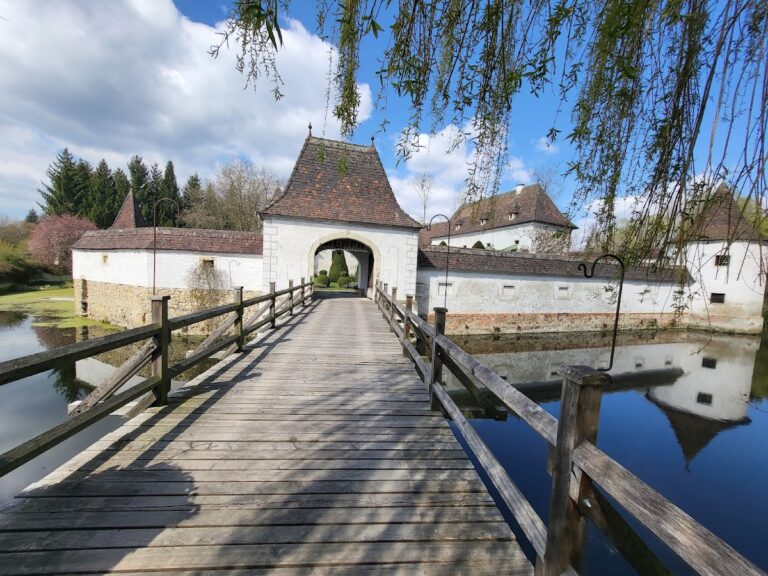
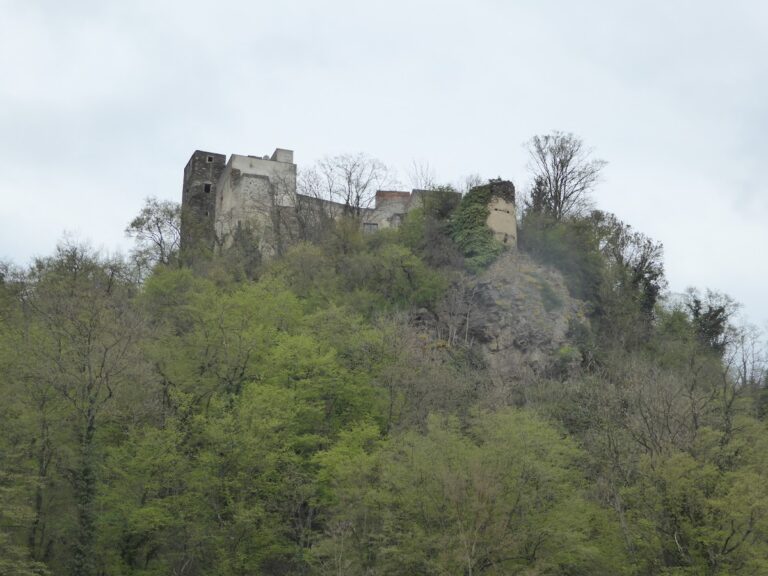
Schloss Ochsenburg stands on a rocky promontory about 30 metres high above the right bank of the Traisen, in Ochsenburg, the southernmost district of St. Pölten. The preserved complex incorporates the medieval castle, whose substantial surviving parts were remodelled during the sixteenth-century Renaissance transformation. The Ochsenburg Bridge lies in front of the castle, and an entrance to the complex is documented.
Renaissance and Baroque Additions
South Wing
A south wing in the Baroque style, a period associated with elaborate and dynamic design, was probably built around 1698 under the architect Jakob Prandtauer. This addition forms part of the later architectural development of the medieval and Renaissance complex.
Nikolaus Chapel
The Nikolaus Chapel was redecorated during the eighteenth century, with substantial involvement by Martin Johann Schmidt, an Austrian painter also known as Kremser Schmidt.
Historic Depictions
Schloss Ochsenburg appears in a 1672 engraving by Georg Matthäus Vischer. A second engraving, made by Aquilin Hacker in 1750, depicts Ochsenburg and provides a later historical representation of the complex.