Schloss Pottenbrunn: A Castle and Seat of a Lordship in Austria
Site at a Glance
- Rating
- 4.5
- Popularity
- Very Low
- Country
- Austria
- Primary era
- Medieval
- Eras represented
- Medieval, Early Modern
- Civilizations
- Duchy of Austria, Habsburg, Holy Roman Empire
- Site type
- Domestic
- Remains
- Castle
On this page9 sections
History
Schloss Pottenbrunn, also known as Schloss Trauttmansdorff, is a castle in Pottenbrunn, within St. Pölten, Austria. It was first recorded in 977 as a possession of Salzburg and later served as the seat of the Pottenbrunn lordship, an estate and the authority exercised over it.
Medieval records and Grabner expansion
The Alachthof, a predecessor of the present castle, appears in records from 1268 as a fortified house belonging to the Alachters of Pottenbrunn, the first holders of the lordship.
In 1505, the castle and lordship passed by inheritance from the Pottenbrunners to Sebastian Grabner the Elder. He enlarged the castle through 1527, using Rosenburg, which he also owned, as a model. His sons Georg and Josaphat continued the work. Georg had one daughter, while Josaphat died without children, so their younger brother Leopold inherited the lordship.
Renaissance palace and changing owners
Around 1600, Leopold’s eldest son, Sebastian Grabner the Younger, transformed the outer bailey into a two-winged residential palace. Its Renaissance style belonged to a European cultural and artistic period whose architectural traditions developed from the late medieval era onward.
Sebastian’s son Friedrich Christoph Grabner zu Rosenburg left for Franconia because of his Protestant faith and sold Pottenbrunn to the Jörger family before 1618. The east wing was altered in the early nineteenth century and again around 1920.
Twentieth-century damage and restoration
Viennese oil magnate David Fanto acquired the castle and its land in 1916. His heirs sold the property to the Trauttmansdorff family in 1926, and the family remains its owner.
On 13 April 1945, the castle’s owners, who belonged to a resistance group, were murdered. The building stood in a combat zone, suffered severe artillery damage, and was ransacked by Russian troops.
The tower collapsed in 1961 and was rebuilt in 1966 with public assistance. From 1970, the Old Castle housed a tin-figure museum with 35,000 figures; the museum has since closed. The New Castle has undergone comprehensive renovation in recent years.
The inhabited complex now accommodates Lernwerkstatt Pottenbrunn in part of the castle. Run by an association, the school is a private alternative-education institution with public rights, allowing it to issue certificates with the standing of those from public schools.
Remains
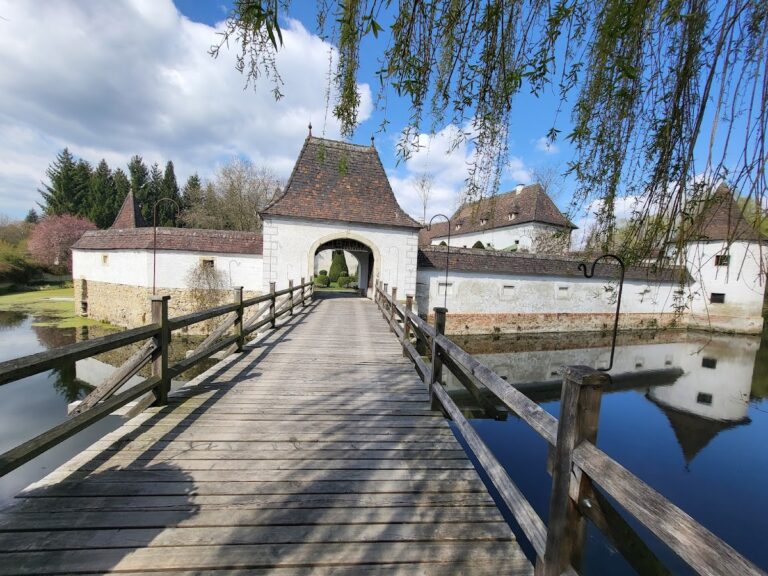
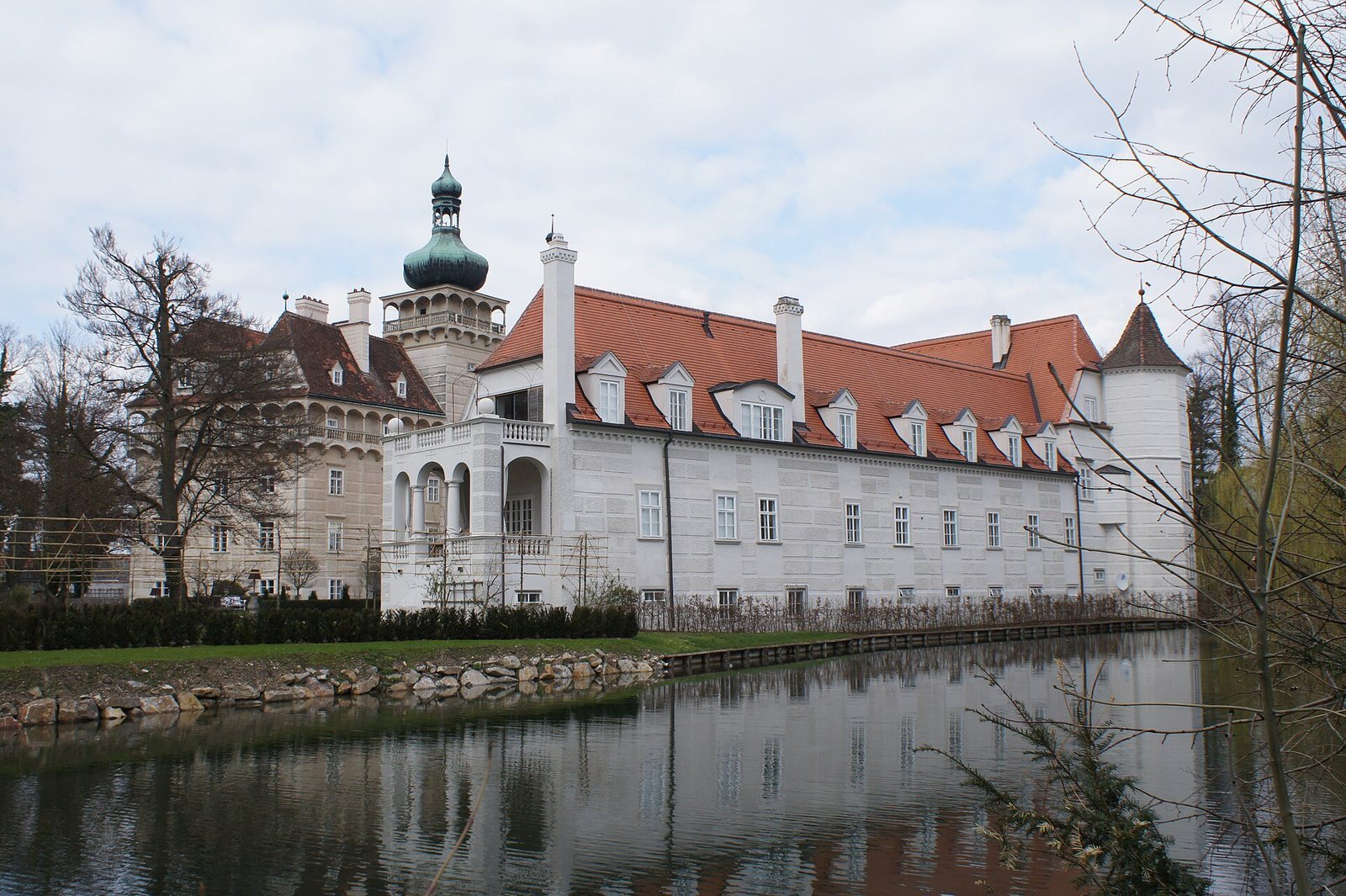
The castle complex stands on a castle island and brings together a medieval core, the Old Castle, and a two-winged Renaissance palace, the New Castle.
Moats and water supply
The surrounding moats remain filled with water. Their supply comes from the Pottenbrunner Brunnader, also called the Föhrenbach, a tributary that joins the Traisen from its right bank.
Castle buildings
Old Castle
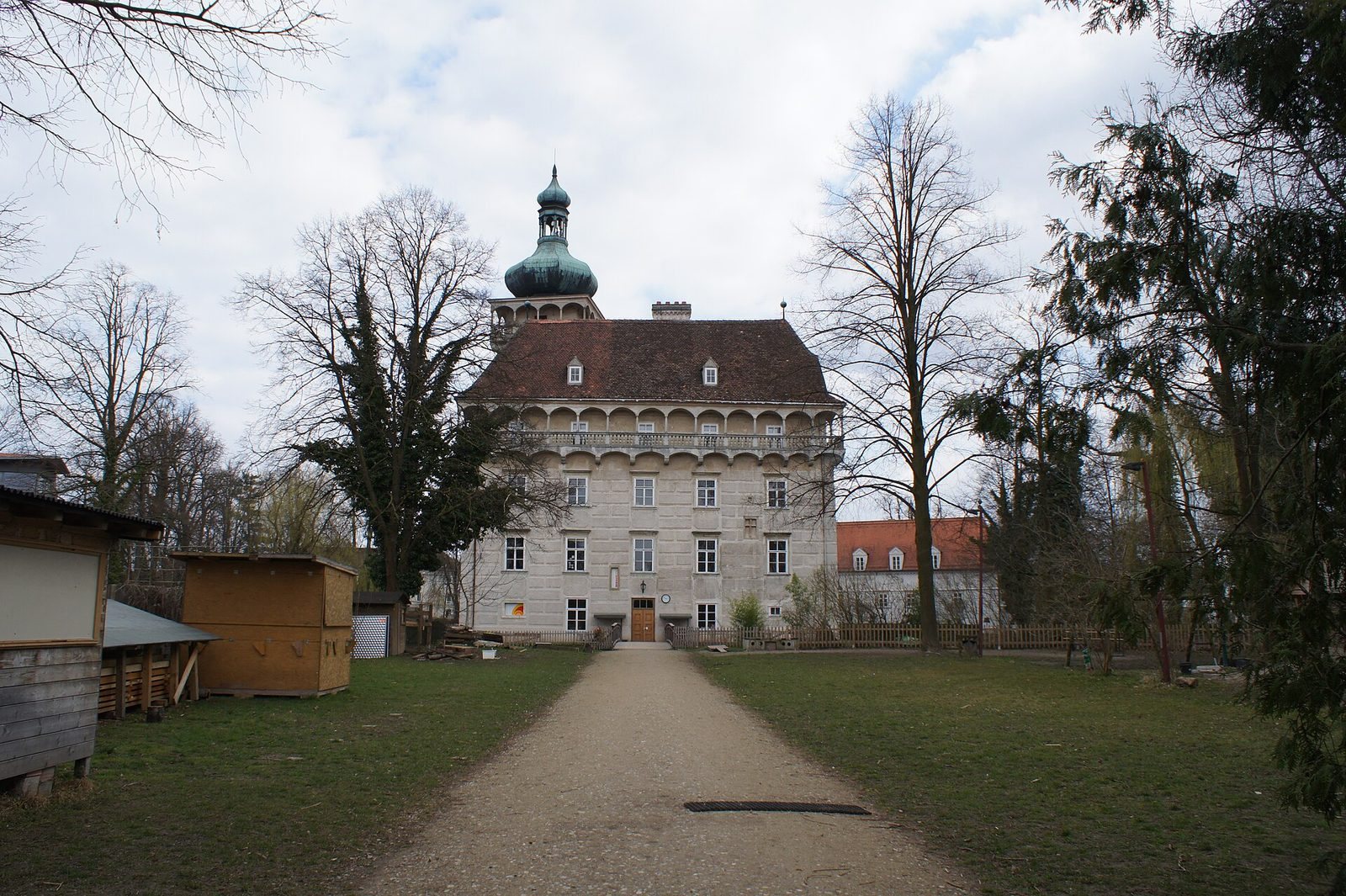
The Old Castle has a rectangular plan and four storeys beneath a steep roof with sloping ends. A tall tower with an onion-shaped dome stands at its northeast corner, and a narrow gallery runs around the fourth storey.
New Castle
The exterior fronts of the New Castle’s two wings stand at the water’s edge. Octagonal towers flank the wings, and a bridge leads to the entrance.