Schloss Mergenthau: A Historic Castle and Manor near Kissing, Germany
Visitor Information
Google Rating: 4.7
Popularity: Low
Official Website: www.gut-mergenthau.de
Country: Germany
Civilization: Early Modern, Medieval European
Site type: Domestic
Remains: Palace
History
Schloss Mergenthau is located near the village of Kissing in Germany. The site originated as a large castle complex built by the medieval Germanic civilization in the early 11th century. Its primary purpose was to defend the possessions of the Welf dynasty near the city of Augsburg.
During its early history, the fortress gained strategic importance because of its proximity to the Gunzenle assembly site, a notable gathering place on the Lechfeld. It likely suffered destruction around 1078 or 1079 during regional conflicts, but the castle was soon repaired and remained in use. Over the centuries, ownership of the castle passed through several prominent figures, including Welf VI, who died in 1191, and later the Bishop Udalskalk of Augsburg. By 1249, historical records refer to the site as “castro nostro Mergatowe,” reflecting its established identity.
In the late 13th and 14th centuries, the castle experienced military confrontations. It was damaged and seized in 1296 during a feud involving Duke Rudolf of Bavaria and underwent another assault by Bavarian forces in 1372. Following these conflicts, the castle fell into ruin. Stones from the remains were repurposed, and local farmers began cultivating the land, marking a shift from military to agricultural use.
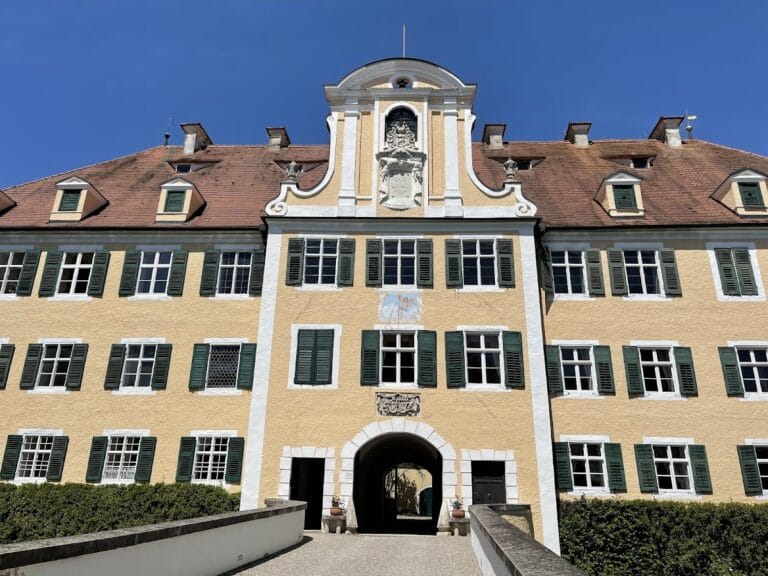
In the mid-17th century, between 1642 and 1650, the estate came under the control of the Jesuit College of St. Salvator in Augsburg. The Jesuits leased the property but suffered two instances of plundering during the War of Spanish Succession in 1703. Around 1713, they commissioned the construction of the current Baroque manor house, often called the “Jesuitenschloss.” This building, completed by 1715, was designed by Hans Georg Mozart, a relative of the famed composer Wolfgang Amadeus Mozart, and replaced earlier structures lost to war and decay.
Following the dissolution of the Jesuit order in 1773, ownership transferred to the Fromme Stiftung foundation and then to the Catholic Studienfonds, which sold the furnishings in 1808 and the buildings in 1809 at public auction. Subsequent proprietors included the Freiherr von Münch and later Andreas Samm, whose family continues to manage the estate. The site also holds a connection to Matthias Klostermayr, nicknamed the “Bairische Hiasl,” a notorious outlaw born in Kissing in 1736 who once worked as a hunting assistant for the Jesuits at Mergenthau.
Today, the remains of the medieval castle are officially protected as a historic monument by the Bavarian State Office for Monument Protection.
Remains
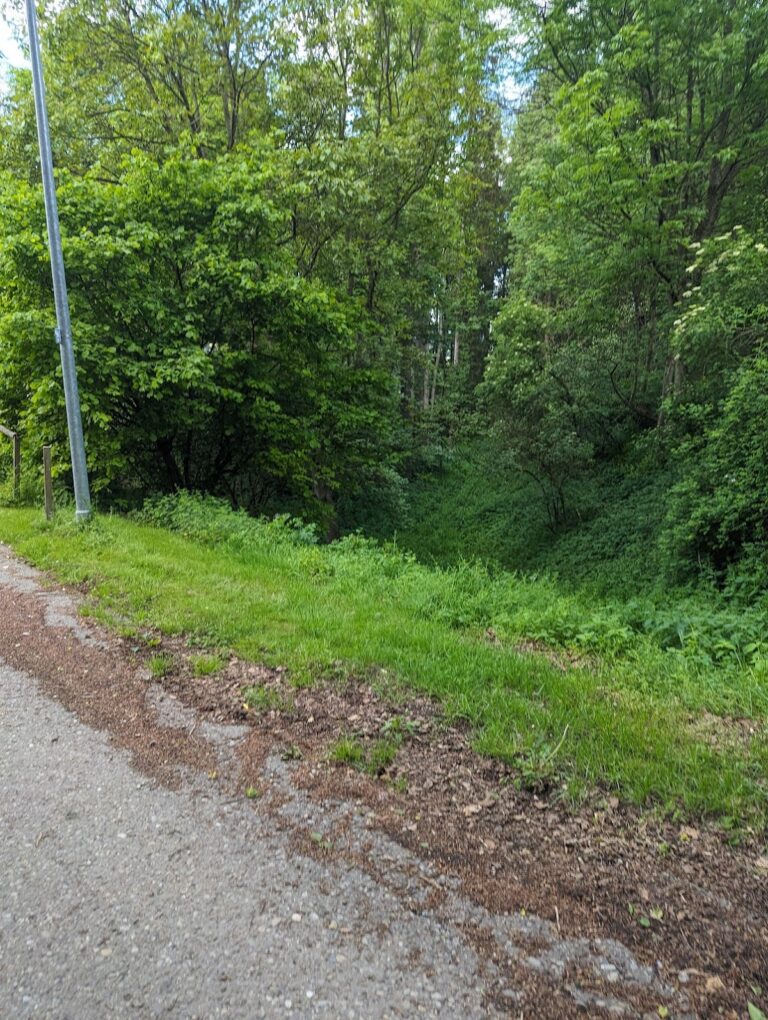
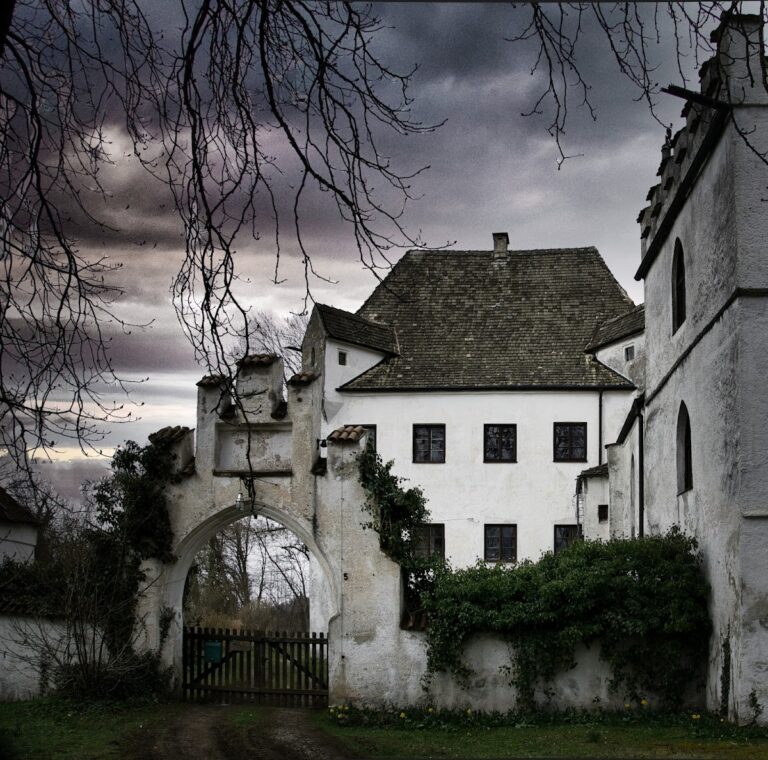
The Schloss Mergenthau site is situated atop a natural spur rising about 20 meters above the surrounding valley slope of the Lech River. Archaeological evidence reveals that the original medieval castle featured extensive earthworks including ramparts and moats. Some sections of these fortifications still stand up to five meters tall, although certain portions show gaps where walls have been breached. The medieval defenses formed a ring wall encircling the castle, with a neck ditch on the eastern side serving as a protective trench isolating the forecourt.
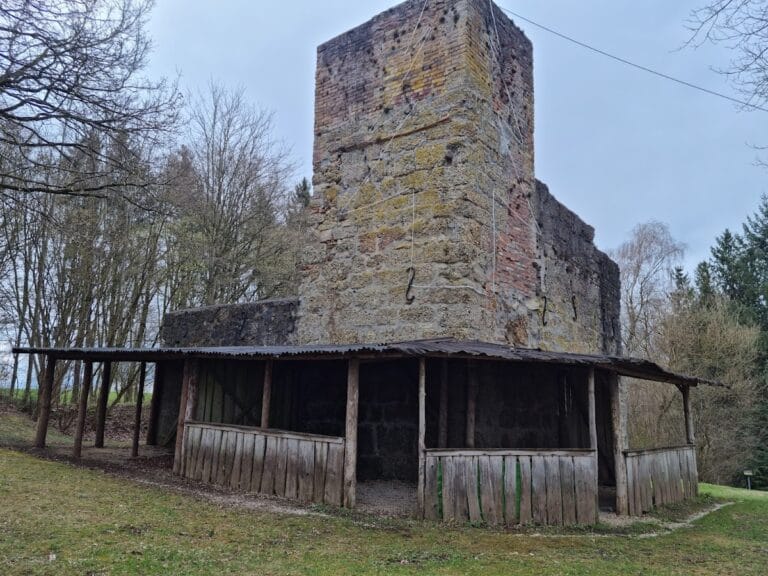
Two probable tower locations have been identified, projecting north and west from the main defensive walls. The southern area of the outer bailey extends irregularly following the terrain’s contours, indicating adaptation to the natural landscape. These features attest to the castle’s design as a fortified complex structured for defense and control.
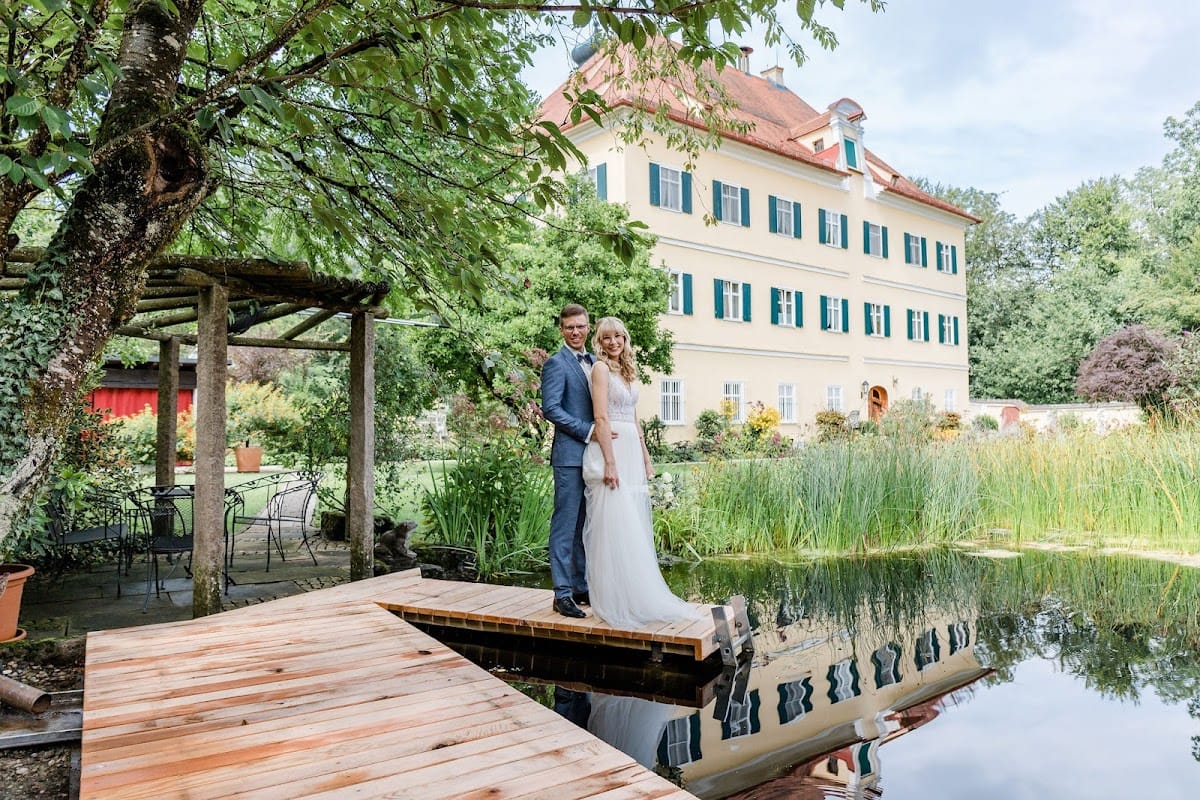
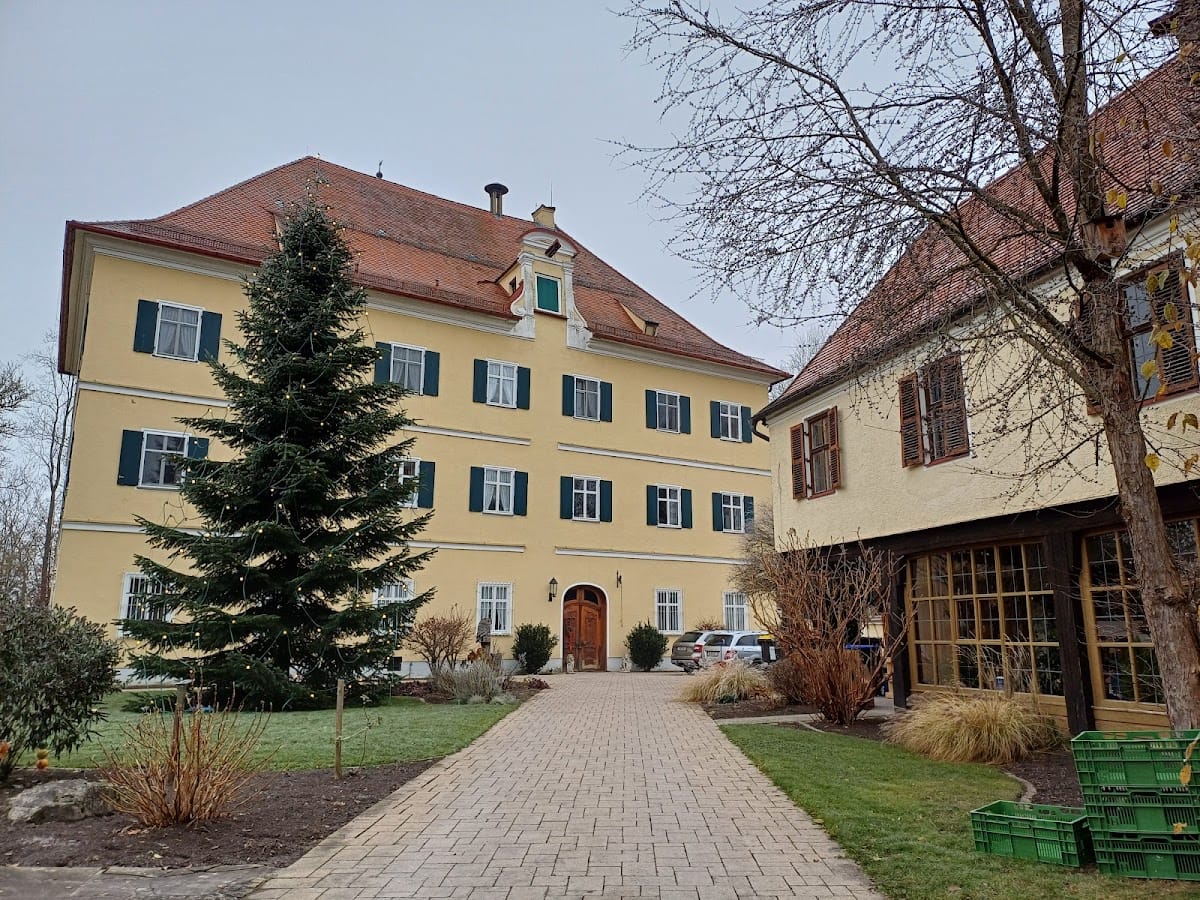
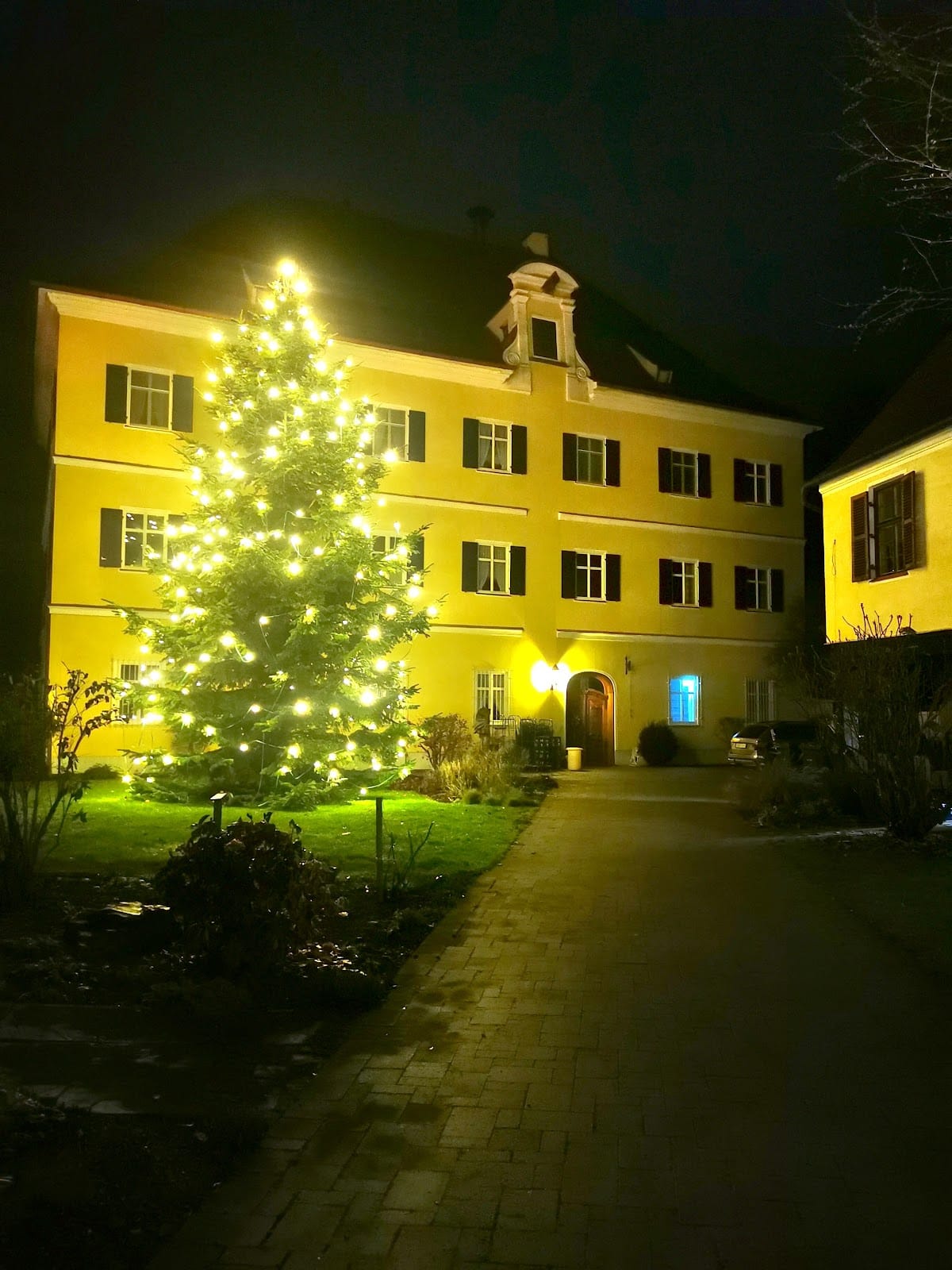
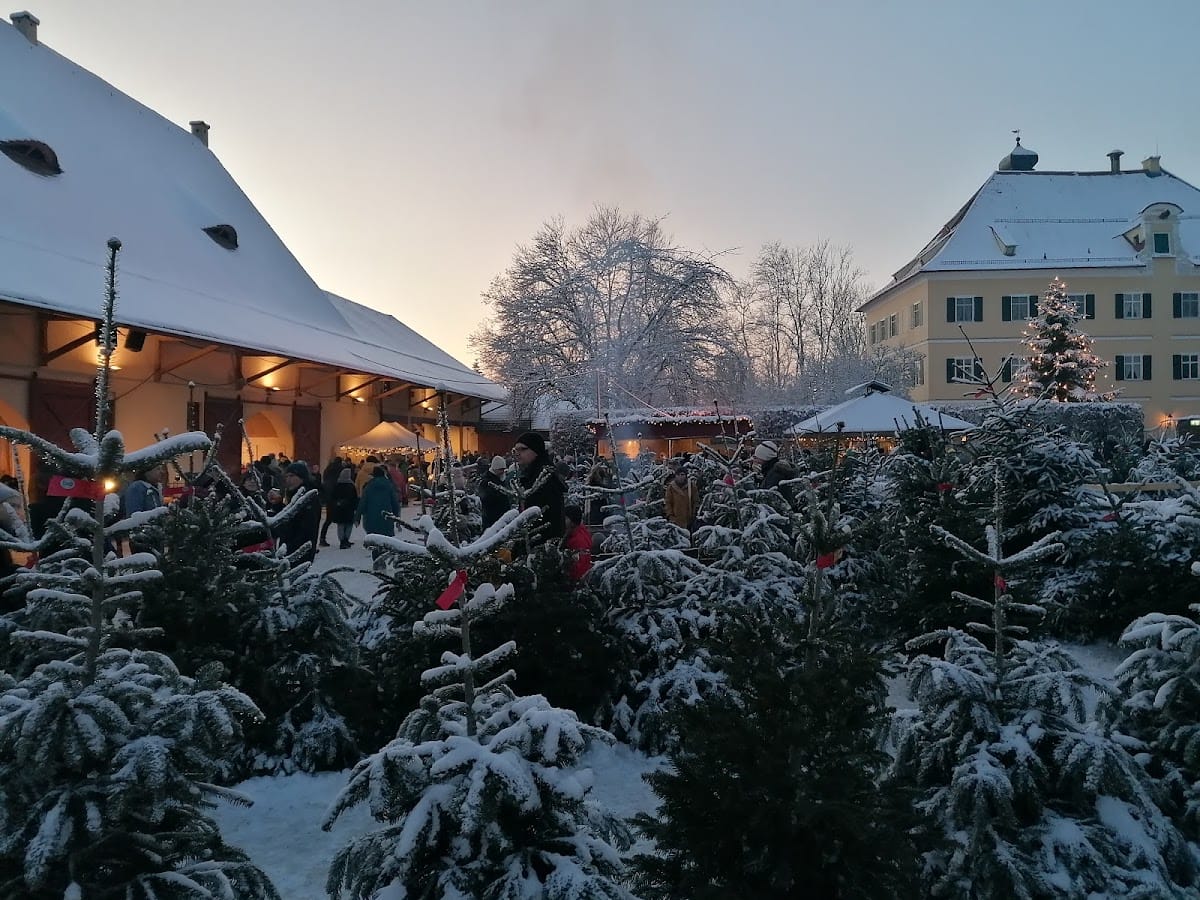
The current Baroque manor house occupies the northeast corner of the original medieval castle grounds. It is a three-story residence with a hipped roof that has undergone renovation. The building likely rests upon medieval foundations, illustrating continuity in the use of the site. On its west side, a risalit (a slightly projecting section of the facade) once boasted a decorative volute gable and a small turret capped with an onion dome. The main entrance, positioned asymmetrically on the east facade, preserves a carved wooden door dating from about 1770. Above this entrance, a dormer decorated with volutes once functioned as a hoist, perhaps for lifting goods or supplies.
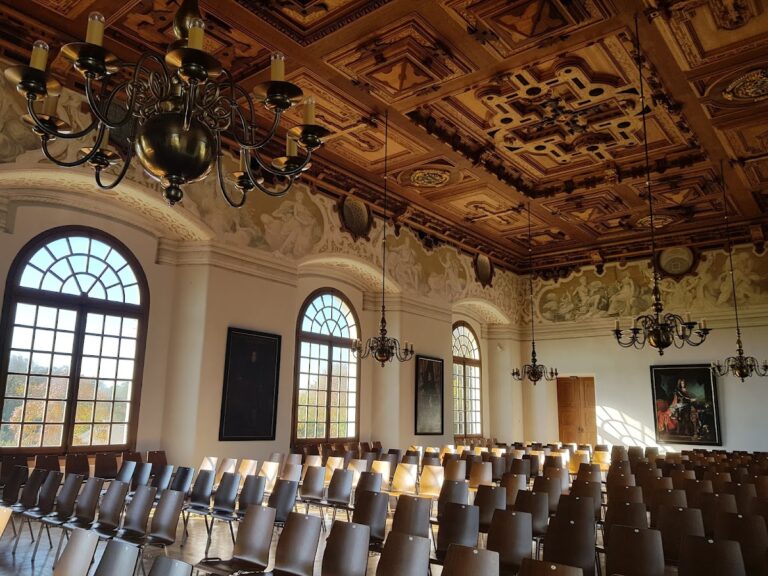
Inside, the manor retains original stucco decorations in the former chapel, executed in 1714 by Matthias Lotter. The delicate stuccowork includes plant motifs, angels, and heads of cherubs. The chapel ceiling features a fresco from 1769 by Vitus Felix Rigl depicting Saint Wendelin praying before the Sacred Hearts of Jesus and Mary, with recognizable local landmarks appearing in the background. Another remarkable fresco by Rigl adorns the main hall on the second floor, illustrating Christ in the house of the rich, showcasing the artist’s refined technique and decorative skill.
Surrounding the castle’s core, the outbuildings nearly form a continuous enclosure, with access through a gate on the southeast side. The outer bailey remains in agricultural use, with small livestock pens occupying the southern part of the area.
Adjoining the grounds lies the “Wichtelenloch,” a branching underground tunnel system known in German as an Erdstall, carved into the firm sandy soil of the slope. Discovered around 1800, this subterranean network features narrow passages between 0.6 and 1.1 meters in height, which widen approximately 15 meters from the entrance. Side passages terminate in small chambers and contain light niches—recesses designed to hold lamps. Due to safety concerns, the tunnel was closed after World War II, although it was carefully studied during the 19th century.
The estate’s original Baroque furnishings were thoroughly documented and included paintings, prints, and a chapel outfitted with three altars. Servants’ quarters were also decorated with painted works and copper engravings and contained a separate kitchen area, with simple straw sack beds. Among the notable artworks once housed here was a large Marian painting measuring over two meters tall by one and a half meters wide, attributed to Augsburg master Hans Burgkmaier around 1500. This piece remained onsite until 1865 and was sold in 1906, while a 19th-century copy now stands in its place.
Nearby sites