Roman Museum, Augsburg: A Collection of Roman Provincial Archaeology


Site at a Glance
- Rating
- 4.3
- Popularity
- Low
- Country
- Germany
- Primary era
- Classical
- External website
- Open
- Eras represented
- Stone Age, Bronze Age, Iron Age, Classical, Medieval
- Civilizations
- Roman
- Site type
- Museum
On this page16 sections
History
Roman Museum, Augsburg is a museum in Germany devoted chiefly to the archaeology of Roman Augsburg and its surrounding area. Its collections range from the Stone Age through the Bronze Age, Iron Age, Roman antiquity, Late Antiquity, and the early Middle Ages, with particular emphasis on Augusta Vindelicum, the Roman name for Augsburg and the administrative centre of the province of Raetia.
From Peutinger’s collection to Roman Augsburg
The museum originated in the Antiquarium Romanum, a collection of Roman stone monuments founded by Konrad Peutinger, a German Renaissance humanist and scholar associated with the study of Roman antiquities. The collection later grew into a broad archaeological institution whose Roman section became its central focus.
Roman occupation in the Augsburg area began around 15 BCE and continued until the fifth century CE. Augusta Vindelicum was probably established as the provincial capital under Emperor Trajan toward the end of the first century CE. The museum’s Roman material reflects this long period of occupation through military equipment, religious objects, inscriptions, funerary monuments, household goods, and evidence of urban life.
Augsburg possesses Germany’s third-largest collection of Roman provincial artifacts. Roman provincial archaeology examines the material remains of Roman rule and daily life outside Italy, including towns, military installations, sanctuaries, tombs, houses, coins, inscriptions, and domestic objects. Only a small part of Augsburg’s collection was displayed, while much remained in storage.
St. Magdalena and the museum’s former home
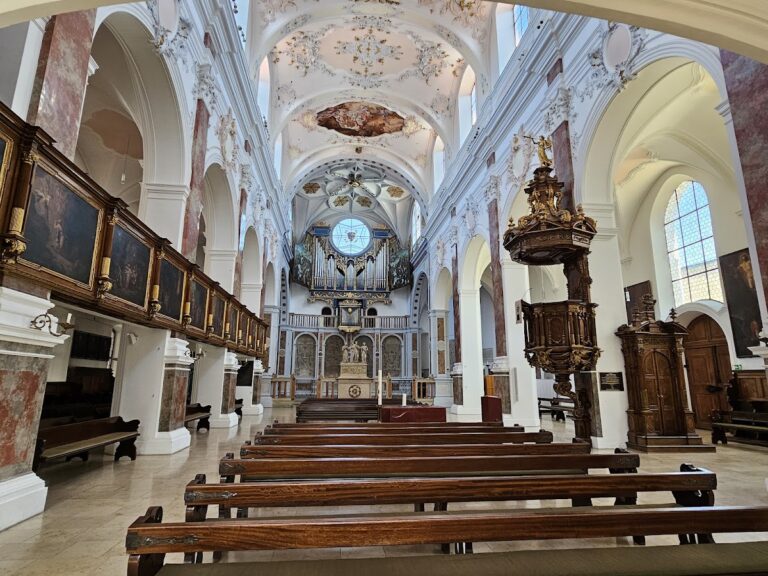
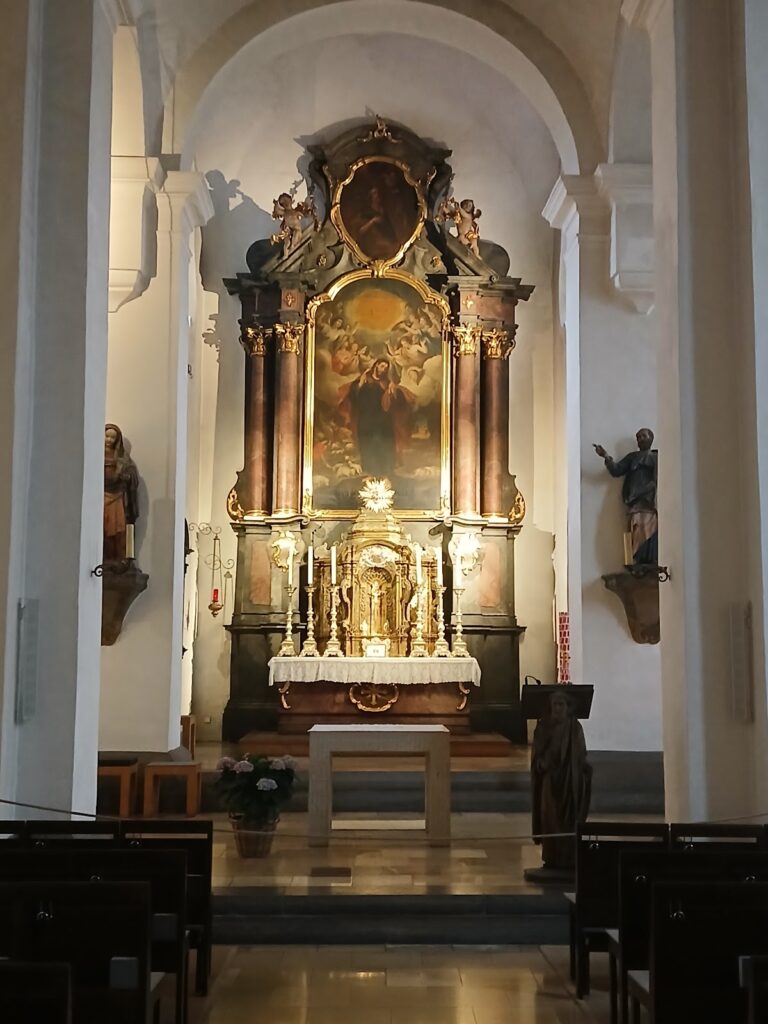
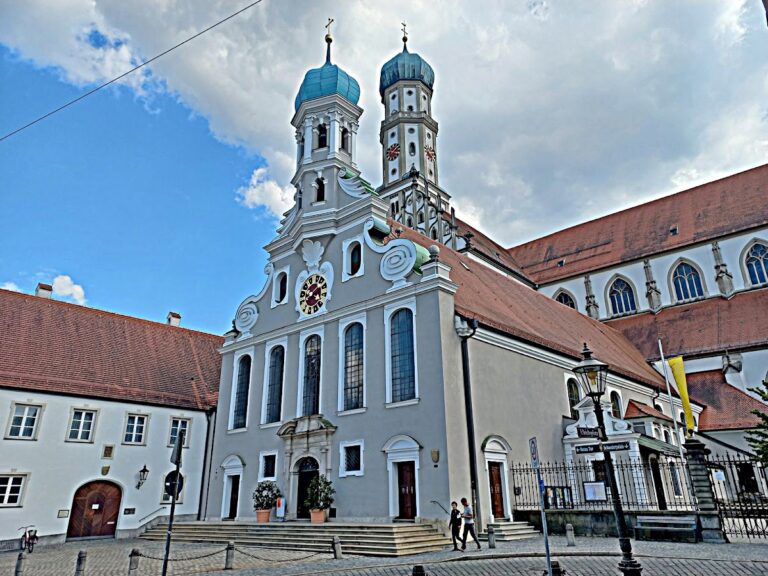
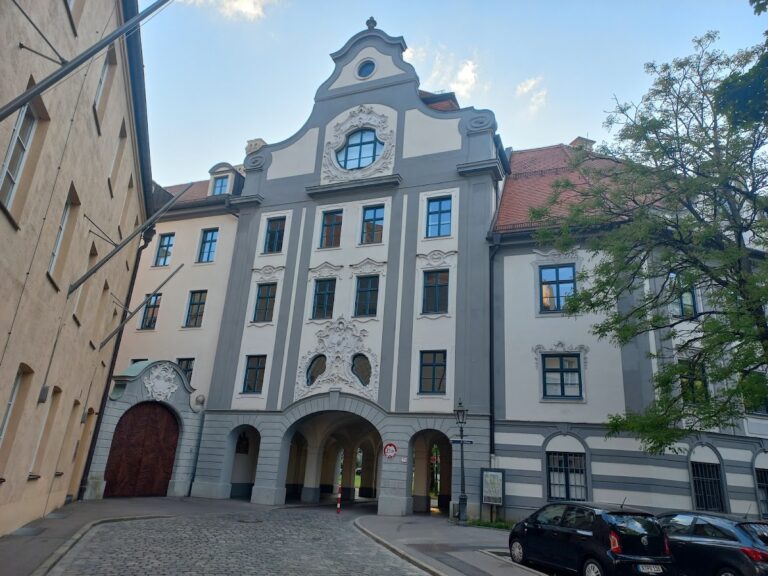
From 1966 until 2012, the museum was housed in the former Dominican church of St. Magdalena in Augsburg’s historic centre. The church had been built between 1513 and 1515 for a Dominican monastery, and several important Augsburg families had funerary chapels there. Between 1716 and 1724, the building was redesigned in the Baroque style, using the dramatic forms and rich ornament associated with European architecture of the seventeenth and eighteenth centuries. Most of its elaborate decoration was removed during German secularisation in 1806 and 1807.
The church survived the Second World War without damage, but its continuing character as a church affected its use as a museum. Strong acoustics created practical difficulties for larger school groups, while the building was poorly suited to modern display equipment and museum requirements. A major statue of Mary Magdalene, a prominent follower of Jesus in Christian tradition, survives outside the building and is now held by the Louvre, where it is known as the “Beautiful German Lady.”
Structural problems and the search for a new museum
By 2012, instability in the floor had led first to partial restrictions and then to closure. Long cracks had also appeared in the walls of the eastern apse, the rounded or semi-circular end of the church. The exhibits were removed while the building was examined and possible renovation or replacement was considered. Approximately 1,800 display objects and stone monuments were moved into storage, and relocating the large Roman stones was considered potentially hazardous to the building’s structural integrity.
Removing the floor covering approximately 1,000 square metres revealed crypts probably arranged on two levels beneath the church. By 2022, plans for a new museum or an expanded redevelopment remained unresolved, and a possible new building near Predigerberg was disputed. Since 26 June 2015, a temporary exhibition in the Tuscan Column Hall of Augsburg’s Zeughaus, a historic arsenal or military storage building, has presented museum objects under the title Roman Camp: Roman Augsburg in Boxes. The exhibition also introduced finds that had not previously been shown in St. Magdalena. A planned exhibition for 2028, developed with the Bavarian State Archaeological Collection, was intended to form the basis for a possible permanent solution for a Roman museum in Augsburg.
Remains
The former church and archaeological displays
St. Magdalena
The former museum premises occupy St. Magdalena, a church built between 1513 and 1515 and later altered in the Baroque style between 1716 and 1724. The building retains the physical consequences of its long religious history, including its association with Dominican use and the funerary chapels of Augsburg families. Structural problems affected the eastern apse and the floor, beneath which the removal of approximately 1,000 square metres of flooring exposed crypts probably laid out on two levels.
Prehistoric and Iron Age material
The former exhibition began with objects from the Stone Age and the Urnfield Culture, a later Bronze Age tradition associated with cremation burials in urns. A side chapel contained finds from the Hallstatt period and the La Tène Culture, successive Iron Age traditions in central Europe, including a reconstruction of a cart-burial chamber. These displays placed the Roman collections within a longer archaeological history of the Augsburg area.
Roman military and civic collections
Augsburg-Oberhausen finds
The Roman collections include more than 10,000 mainly military objects from the Augsburg-Oberhausen finds. They also contain military equipment associated with a Thracian cavalry unit stationed in Augsburg during the 70s CE. A gilded Roman genius from the Early Principate is another important object. In Roman belief, a genius was a protective or generative spirit connected with a person, group, place, or institution.
Monuments and inscriptions
Among the principal Roman objects is a bronze horse head dating from the second century CE. The collection also includes Roman tombstones from military and civilian contexts, some retaining their original colour. An inscription names Claudius Paternus Clementianus, a former governor of Noricum, the Roman province in the eastern Alpine and Danube region.
Roman stone monuments preserve scenes connected with daily and commercial activity, including the tying of wool bales, the sale of wine, and the movement of goods by porters and ox carts. Together with the tombstones and inscription, they provide evidence for the people, occupations, and institutions associated with Roman Augsburg.
Sanctuary and domestic material
Religious material includes altars from a sanctuary of Mercury, the Roman god especially associated with commerce, communication, and travel. The collection also contains several coin hoards dating from the third century and the Augsburg Victory Altar of 260 CE. Architectural fragments from Roman houses include mosaics, wall paintings, floor tiles, and roof tiles. Glass vessels, ceramics, bronze objects, amphorae, and jewellery represent domestic and material life in the Roman town and its surrounding area.
Late antique and early medieval objects
Christian objects
The collection contains evidence for early Christianity, including a gilded Late Roman helmet and an engraved glass plate showing Adam and Eve, the first human figures in the biblical creation narrative. The plate dates to approximately 340 CE. Gold-sheet crosses and an engraved glass vessel depicting Adam and Eve add religious material to the Roman and late antique displays.
Alamannic and early medieval finds
Later material includes Alamannic weapons and jewellery. The Alamanni were a confederation of Germanic groups active around the upper Rhine and Danube during Late Antiquity. Grave inventories from the tombs of clerics date from the sixth and seventh centuries, extending the collection’s historical range into the early Middle Ages.
Maps and objects in the temporary exhibition
The former exhibition included a complete facsimile of the Tabula Peutingeriana, a medieval copy of an ancient Roman route map showing roads and settlements across much of the Roman world. The temporary presentation in the Zeughaus added a wooden landing structure recovered from Lech gravel and engraved gemstones bearing miniature images, bringing further archaeological material into view while the museum’s permanent future remained under consideration.