Schauenberg Castle: A Medieval and Prehistoric Fortification in Switzerland
Visitor Information
Google Rating: 4.7
Popularity: Low
Country: Switzerland
Civilization: Medieval European
Site type: Military
Remains: Castle
History
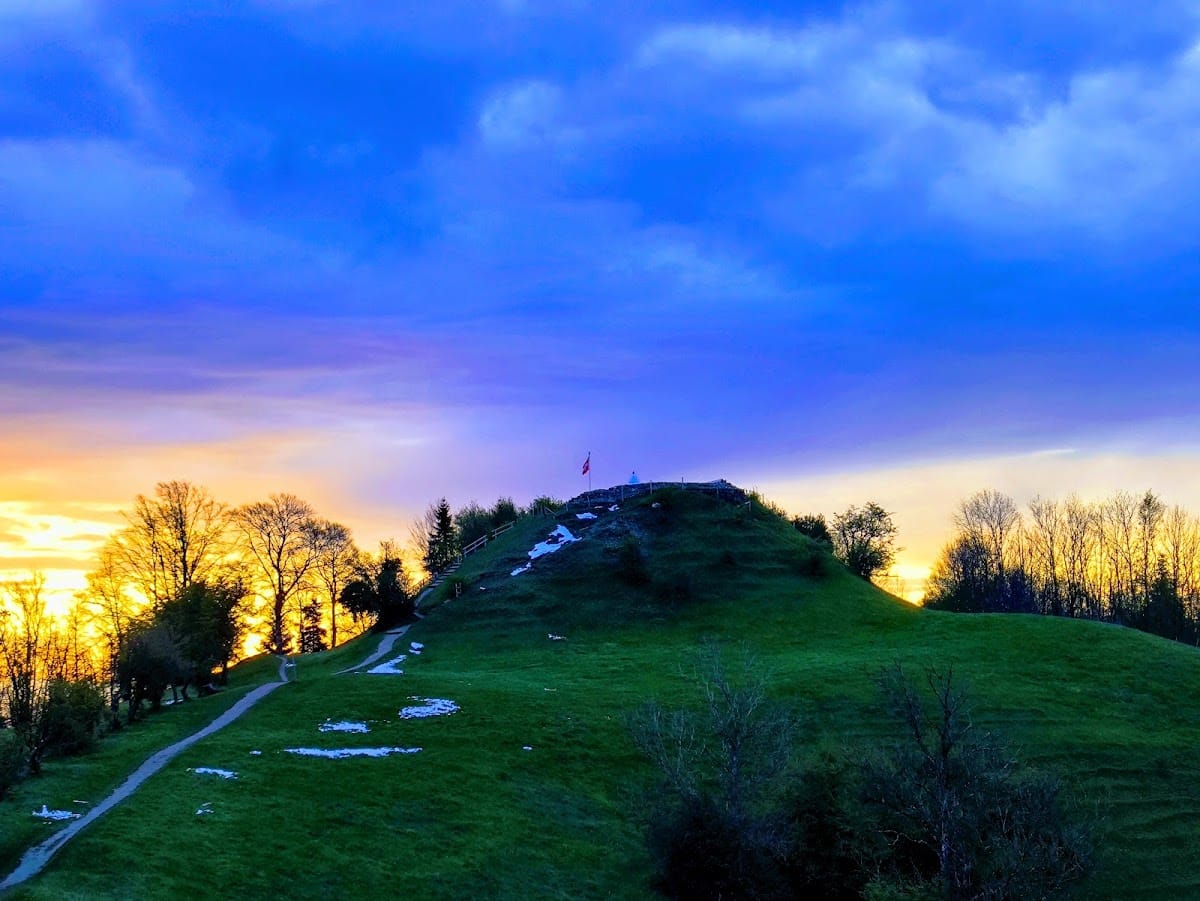
Schauenberg Castle is located near the municipality of Hofstetten in Switzerland. It stands on a hill known as Schauenberg and was constructed during the medieval period by local noble families. However, the site’s history of human activity extends far earlier, encompassing prehistoric and Roman times.
Archaeological research has shown that the Schauenberg hilltop was fortified in the Bronze or Iron Age, sometime between 2200 and 15 BCE. During this era, inhabitants surrounded the summit with a system of wooden palisades and ditches, creating a defensive enclosure protecting the settlement or refuge area. While this early fortification did not constitute a castle in the medieval sense, it represents a significant phase of occupation that shaped the strategic use of the hill.
The presence of a Roman-era artifact, specifically a key discovered within the medieval fortification area, suggests some degree of activity during Roman times, between approximately 15 BCE and 400 CE. Though no large-scale Roman construction is documented at the site, this find indicates the location remained known and possibly utilized during that period.
Around the year 1200 CE, a wooden castle was built on the western side of the hilltop. This early fortification incorporated a cellar carved directly into the rock, over which the wooden structure stood. Additional simpler wooden buildings appeared on other parts of the summit. This initial castle served as the residence of local nobles and was protected by walls and ditches that enhanced its defendability.
About 50 years later, circa 1250, the wooden structures were replaced by a stone residential tower, commonly called a keep. This replacement represented a significant upgrade in both defense and stature. A neck ditch, cut through the rock of the hilltop, and a western wall likely formed an outer defensive enclosure known as a zwinger. This arrangement helped protect the main tower from attackers.
The castle was first mentioned in documented sources in 1260 under the name “castro Schowenberc.” It is also connected to Rudolf von Schauenberg, a noble mentioned in records from 1242. In 1302 the Abbey of St. Gallen granted the castle’s fief to Walter von Kastell. Approximately three decades later, the castle came under the control of Beringer von Hohenlandenberg, who was noted in contemporary chronicles for engaging in robbery and counterfeiting.
In 1344, following Beringer von Hohenlandenberg’s breach of peace agreements, authorities from Austria, alongside citizens from nearby Winterthur and Zürich, attacked and destroyed the castle. The limited amount of movable objects and pottery found suggests the site was largely abandoned before its destruction. The castle was not rebuilt after this event.
During the seventeenth century, in the time of the Thirty Years’ War, the strategic value of Schauenberg hill was renewed when Zürich’s authorities established a high watchtower (known in German as a Hochwacht) on the summit. This tower formed part of a wider system of signal towers used to warn of approaching military threats. The signals from Schauenberg’s tower were visible to similar towers in the surrounding region, integrating it into a network of early warning outposts.
Today, the upper part of Schauenberg hill, including the castle ruins and a triangulation point near 894 meters elevation, is owned by the canton of Zürich. The surrounding alpine pasture land is managed under lease agreements.
Remains
The archaeological remains at Schauenberg Castle occupy the summit of a hill rising to about 892 meters above sea level. The site reveals a complex layout that reflects several phases of construction, from prehistoric fortifications to medieval stone architecture. The early defensive works, dating back to the Bronze or Iron Age, consist of a system of wooden palisades and ditches encircling the hilltop. These earthworks provided a base for later use and indicate the long-term importance of the location.
The medieval castle initially consisted of wooden buildings erected around 1200 CE. The most notable feature from this phase is a cellar hewn directly into the rock on the west side of the hill, under which the wooden castle was constructed. Additional, simpler wooden structures occupied other parts of the hilltop, suggesting a small but functional noble residence secured by surrounding ditches and walls.
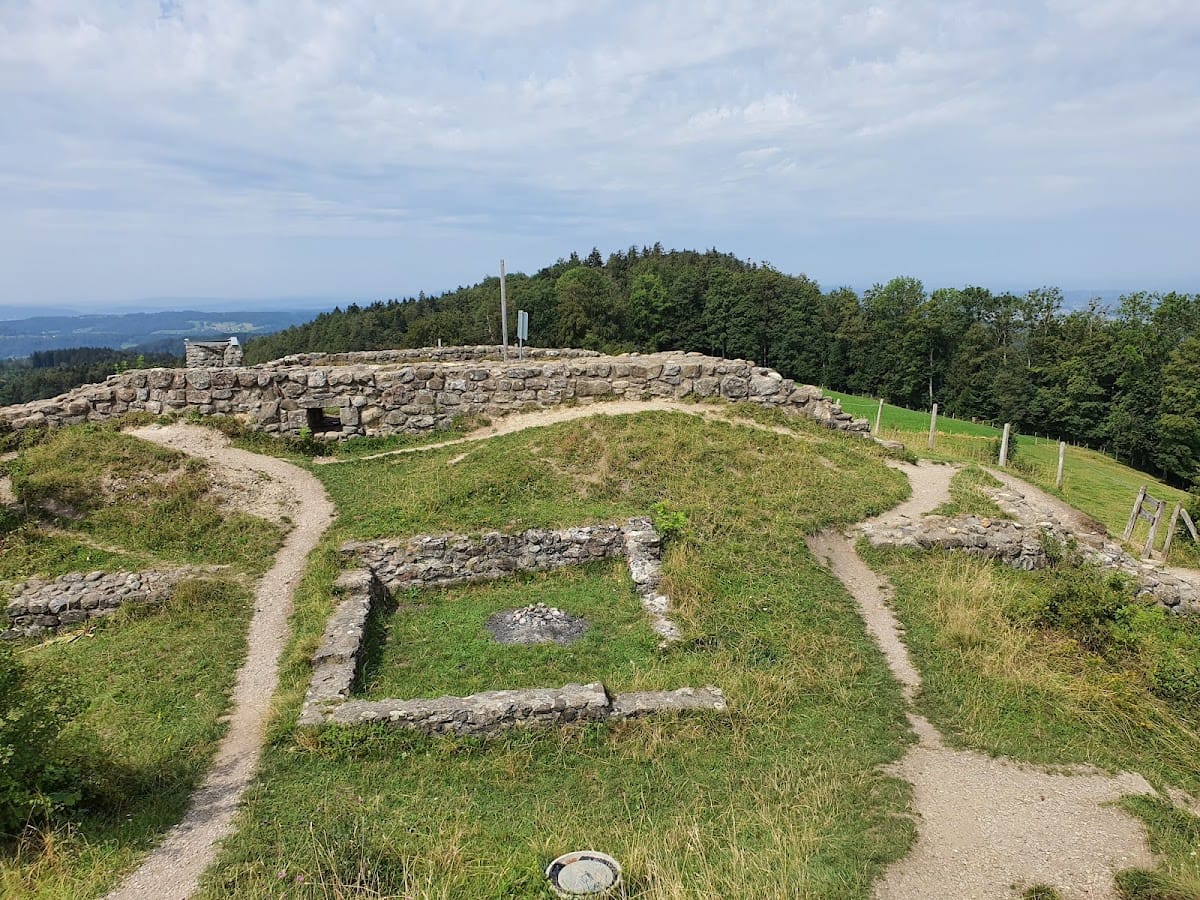
Around the middle of the 13th century, the wooden castle was replaced by a large stone residential tower. This keep formed the central defensive and living structure of the castle. To enhance protection, a neck ditch was dug through the rock of the hilltop, narrowing access to the tower. A stone wall on the west side may have enclosed an outer courtyard or zwinger, a defensive space designed to trap attackers between walls, making the castle harder to capture.
Excavations conducted in the late twentieth century unearthed only small quantities of pottery shards and limited movable finds, reinforcing the conclusion that the castle was abandoned before its destruction in the mid-14th century. Among the discoveries was a Roman key found within the medieval castle area, hinting at earlier activity or reoccupation of the site.
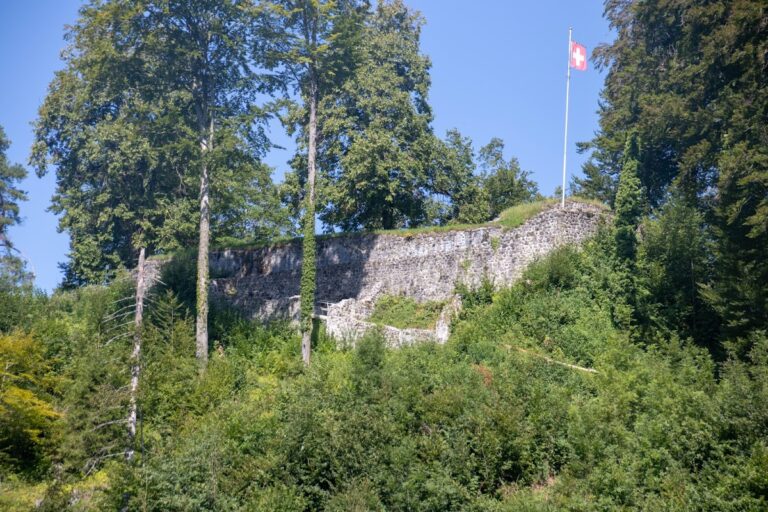
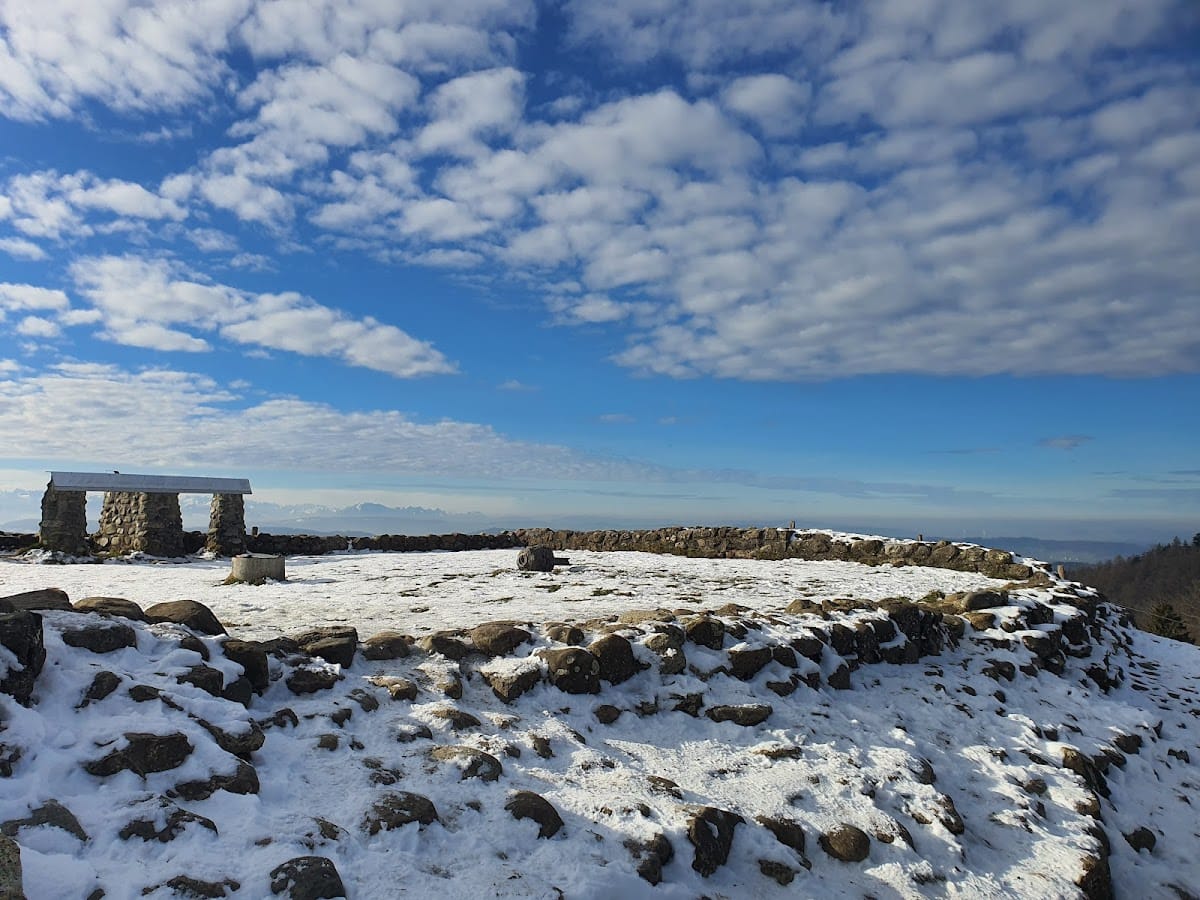
Currently, the remains are preserved in the form of ruins, retaining the layout of the stone tower, parts of the defensive rock-cut neck ditch, and sections of the adjacent walls. These fragments were conserved following systematic archaeological work carried out between 1976 and 1979.
Beyond its function as a castle, in the 17th century the hilltop served a new military purpose. The hill hosted a high watchtower used for signaling across the region, linking Schauenberg to a network of similar towers. Although the watchtower itself was not part of the medieval castle, its location took advantage of the strategic vantage point afforded by the hill’s elevation.
The castle site sits within a natural area characterized by rolling hills, with the nearest higher peak being Schnebelhorn, about 17 kilometers to the southeast. This setting helped define the castle’s role as a lookout and defensive position across centuries. Today, the ruins remain a testimony to the multiple layers of history embedded in the Schauenberg hilltop.
Nearby sites