Ringgenberg Castle: A Medieval Stronghold in Switzerland
Visitor Information
Google Rating: 4.8
Popularity: Low
Official Website: www.ringgenberg.ch
Country: Switzerland
Civilization: Early Modern, Medieval European
Site type: Military
Remains: Castle
History
Ringgenberg Castle is situated in the municipality of Ringgenberg, Switzerland. It was established during the early 13th century by local medieval builders associated with the Holy Roman Empire, serving as a stronghold in the Brienz Lake region.
The castle’s origins tie closely to Baron Cuno von Brienz, who, upon his appointment as imperial bailiff overseeing the area around Lake Brienz, either constructed the fortress anew or expanded an earlier structure. By around 1240, habitation at Ringgenberg had begun, marking the site as a seat of local power. The castle became the home of the Ringgenberg family, descendants of Cuno von Brienz, who managed and governed nearby lands. Among its notable residents was Johann von Ringgenberg, a poet who died in 1350 and whose works were included in the famous medieval manuscript, the Codex Manesse.
The mid-14th century saw the beginning of the estate’s decline. Philipp von Ringgenberg, who ruled from 1351 to 1374, faced significant debts and was compelled to pawn parts of his land to the nearby Interlaken Monastery. Conflict further destabilized the region when, in 1380 or 1381, forces from Uri—an insurgent Swiss canton—attacked. They plundered and set fire to the castle, capturing Count Petermann von Ringgenberg during the assault.
By 1386, Ringgenberg Castle and its lands passed to the city of Bern. However, Bern did not have sufficient funds to rebuild the damaged fortress. Over the following decades, sections of the estate were sold to Interlaken Monastery, notably in 1411 and again in 1439. Control over the property shifted back and forth between Bern and the monastery through the mid-15th century.
The Protestant Reformation in 1528 brought a significant transformation. Bern, having adopted the new faith, secularized the lands previously held by monasteries, including Ringgenberg. The castle remained in ruins and became part of the Bernese bailiwick of Interlaken under secular administration.
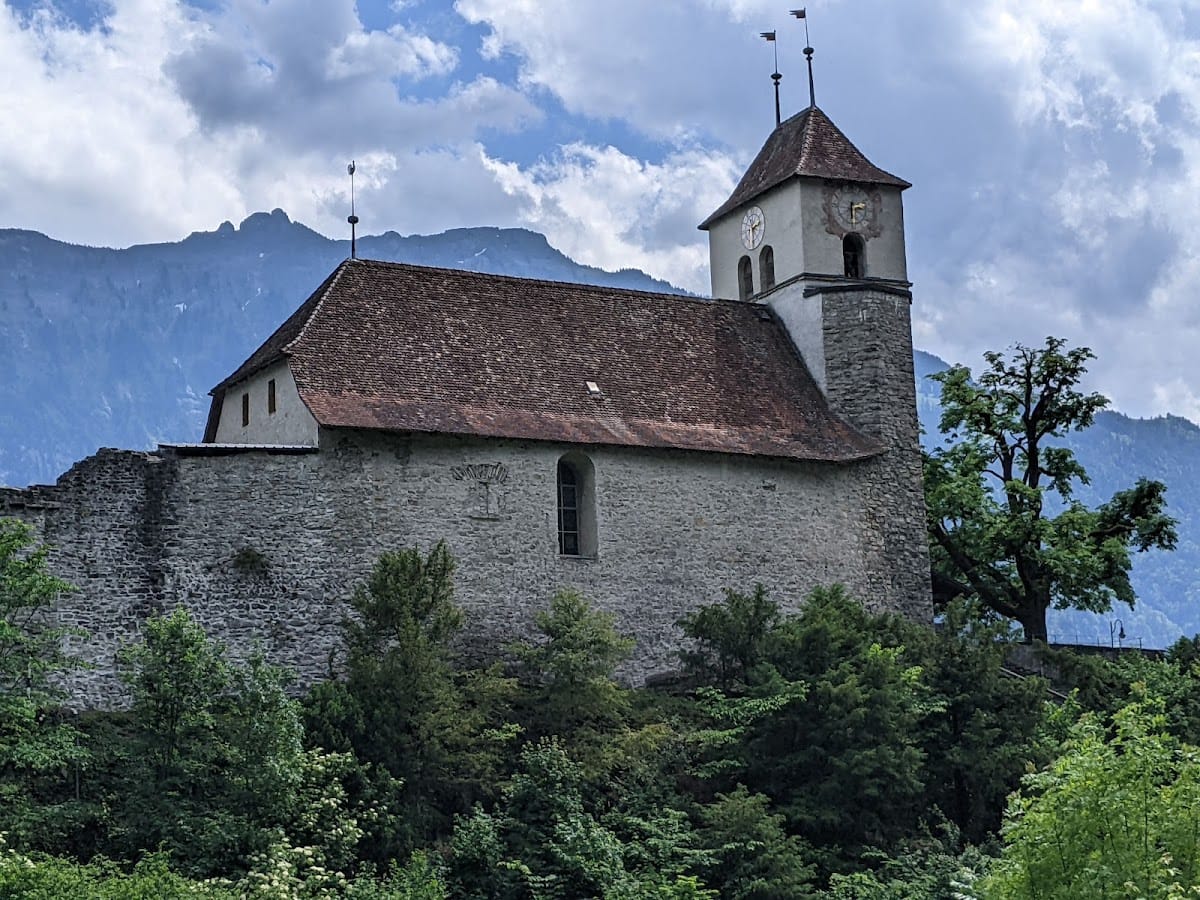
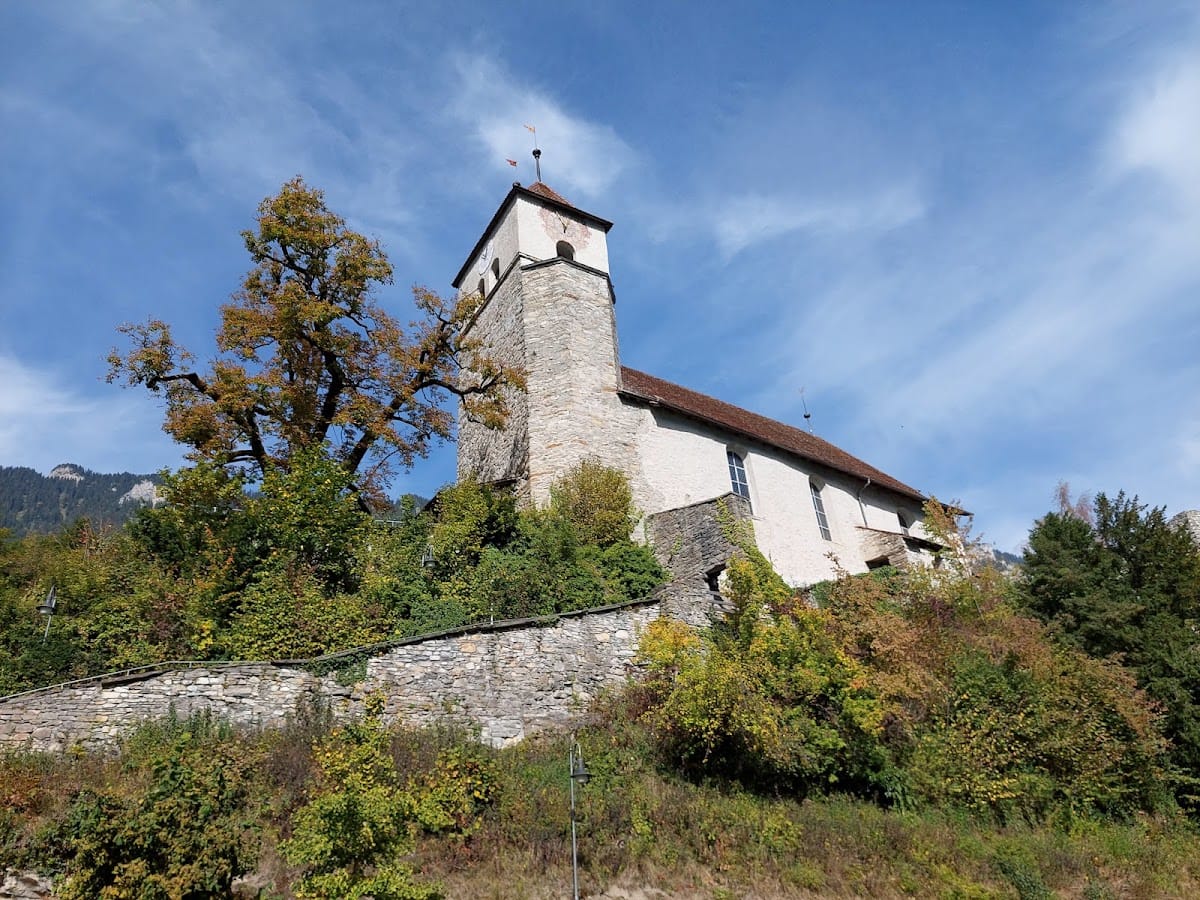
A new chapter for the site began in 1670 and 1671 when Abraham Dünz, a local architect, constructed a church on the castle grounds. This building incorporated surviving sections of the fortress, such as parts of the castle walls and the Romanesque residential tower. Since then, the estate has belonged to the Evangelical Reformed Church community of Ringgenberg. The ruin itself has been preserved and restored several times during the 20th and early 21st centuries, maintaining its historical presence in the landscape.
Remains
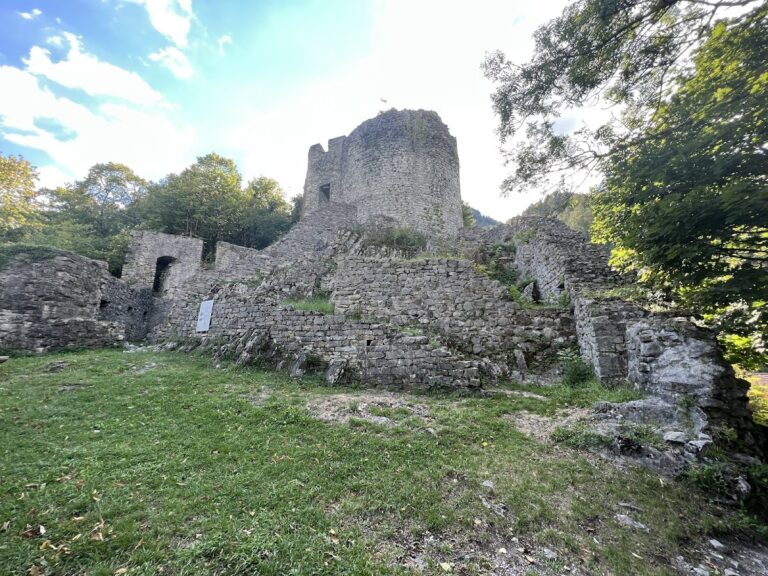
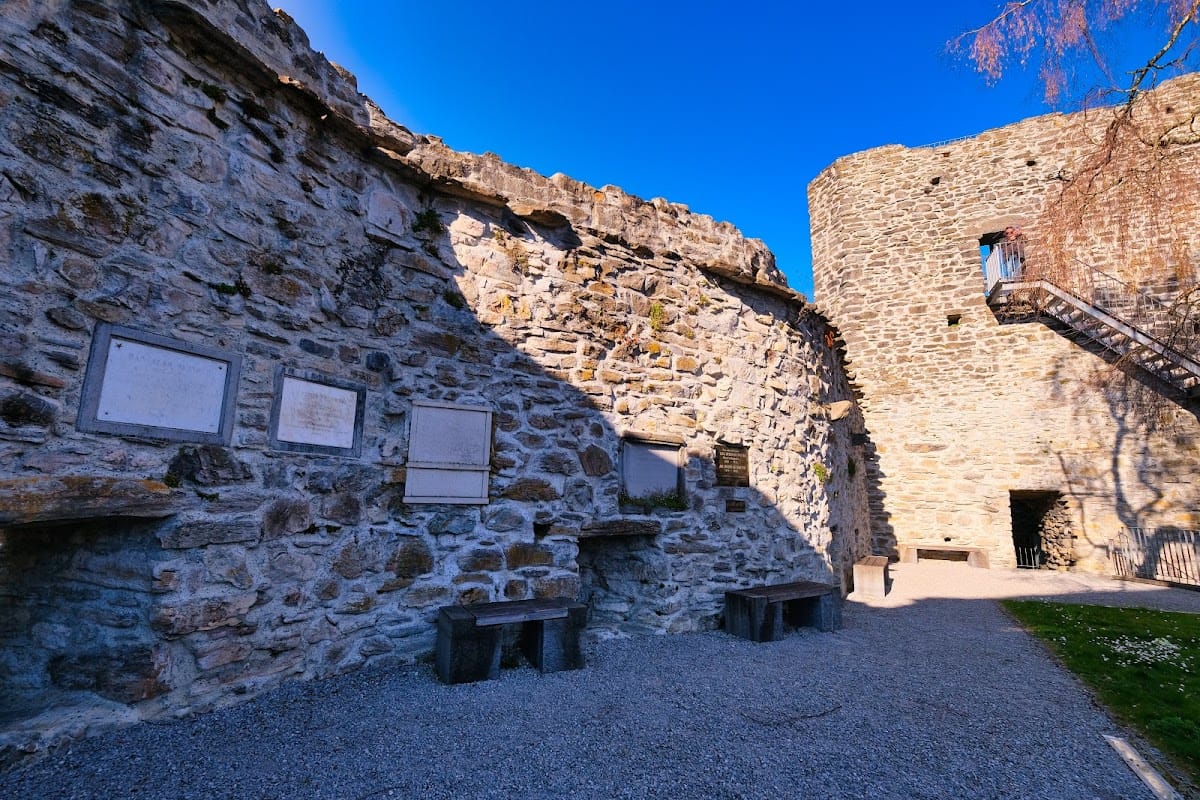
Ringgenberg Castle originally stood as a hilltop fortress with a design typical of medieval strongholds. The complex included a bergfried, which is a large main tower used for defense; a palas, the residential building; and both inner and outer courtyards. These elements were enclosed by tall, thick curtain walls that defined the castle’s perimeter. Surrounding the outer courtyard was a roughly three-meter-high wall, creating an additional layer of protection around the site.
The northern walls of the inner courtyard and the palas were constructed with remarkable thickness—measuring about 2.5 meters—which suggests they were specifically intended to withstand attacks by projectiles. The bergfried tower was notably robust, serving not only as a lookout and refuge but also acting as a shield wall due to its massive structure.
Access to the bergfried was strategically designed with an entrance likely located on the northern courtyard wall. A wooden staircase would have provided entry to this elevated doorway, a defensive measure common in castles to hinder invaders.
During the castle’s early expansion, the palas underwent significant enlargement. This process involved removing the outer courtyard by erecting an inner wall approximately two meters thick along the former northern boundary. Other outer walls were also raised in height and outfitted with battlements. These battlements were reachable directly from the first floor of the palas, enhancing defensive capabilities.
The main residential tower began as a single-story structure with a nearly square layout, but it was later expanded vertically to three stories. Each level consisted of one room, connected internally by wooden staircases. The second floor housed the knights’ hall, the only room with windows. These windows were set within tall recesses featuring built-in seating accessible by small wooden stairs, allowing occupants to rest while observing outside. The hall was unique in that it had no fireplace, indicating it was used mainly during milder seasons or for occasional gatherings. After battlements and walkways were added, the tower’s principal entrance shifted to the third floor, accessible from the southern side via the battlement.
The church constructed in the 17th century reused portions of the castle ruins, notably parts of the residential tower and surrounding walls. To accommodate its new function, the tower was modified with an additional entrance at ground level. This adaptation preserved the Romanesque elements while integrating them into the church’s architecture.
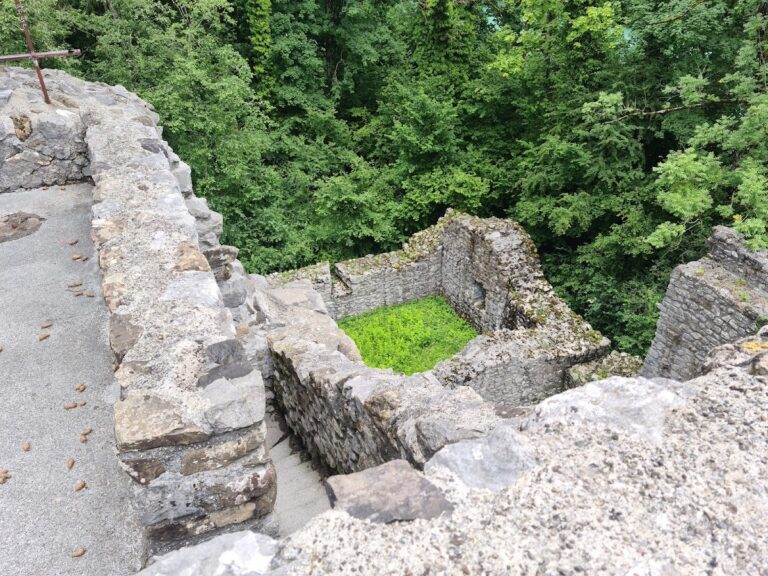
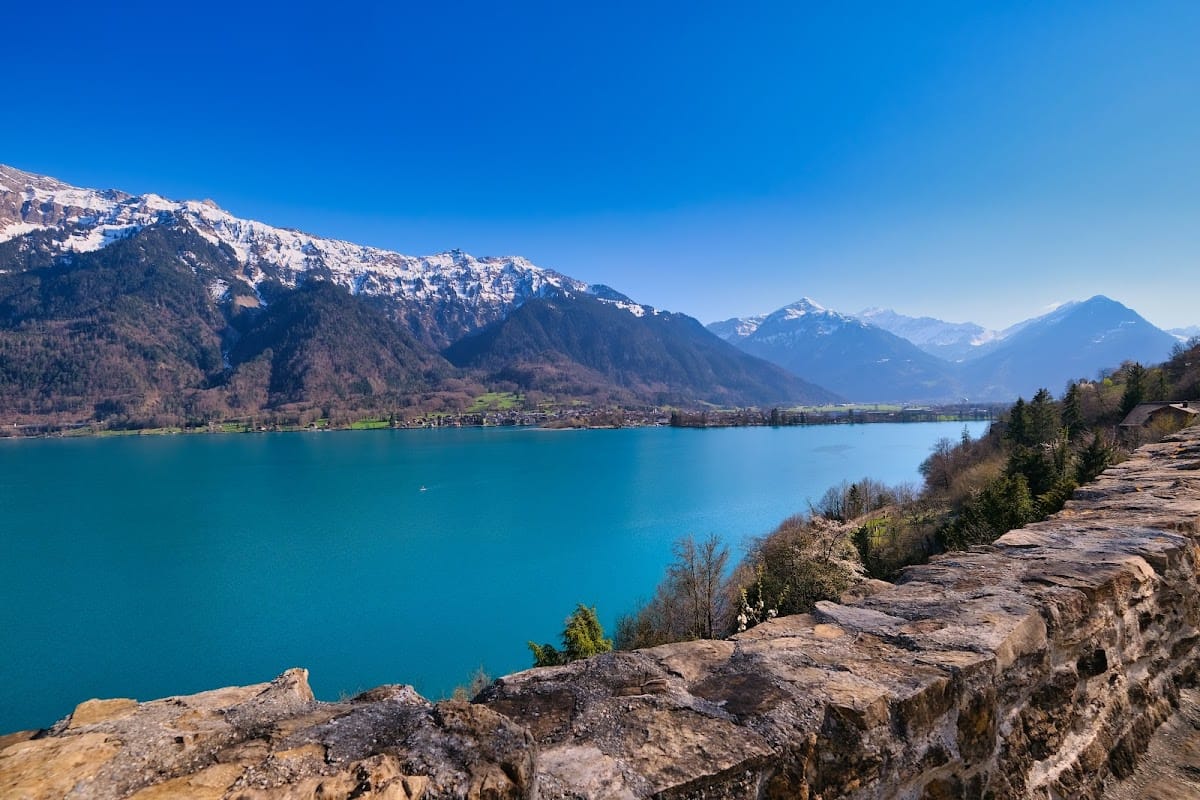
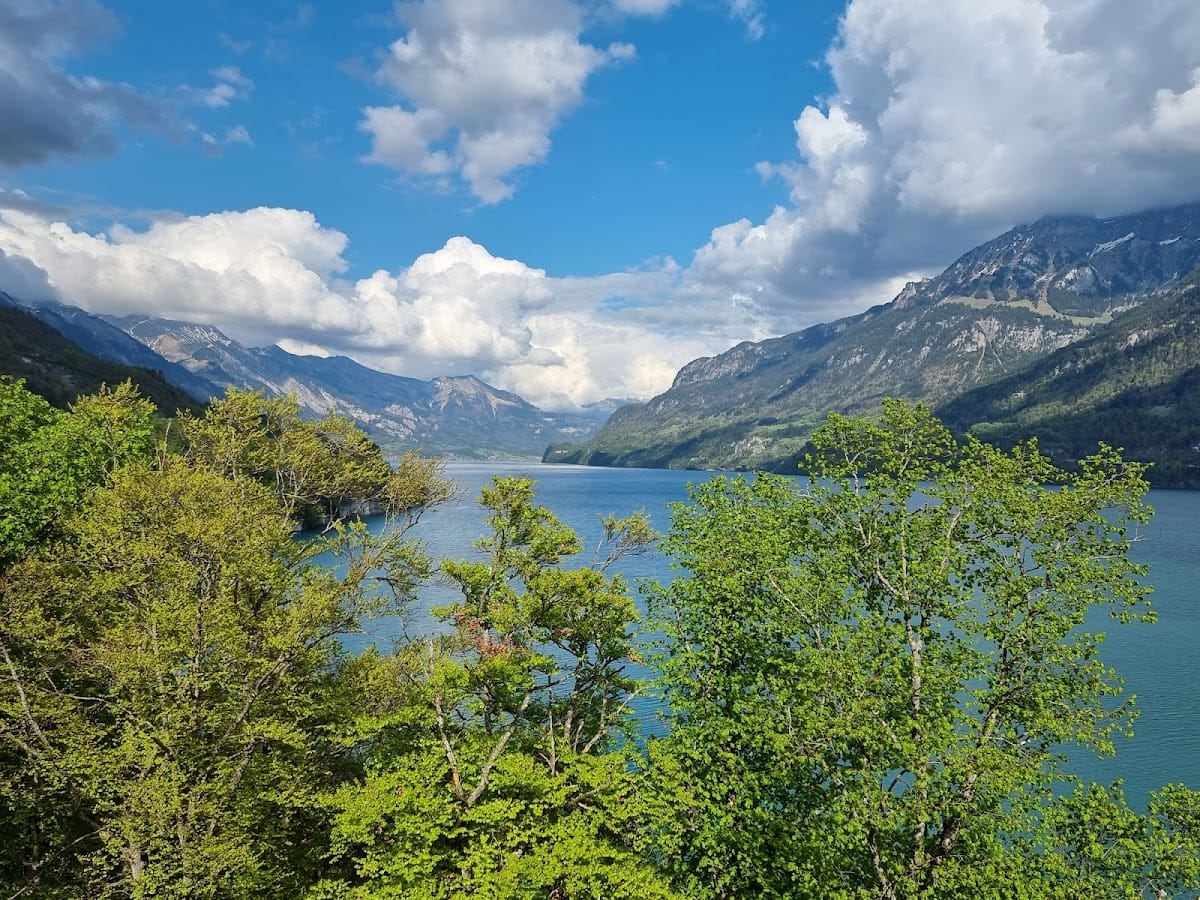
Today, visitors can also see a 12-meter-high observation platform within the ruins, reached by climbing 52 steps. This platform offers views not only of Ringgenberg village but also of Lake Brienz and nearby mountain peaks such as Roteflue and Loucherhorn, connecting the site’s defensive origins with the surrounding landscape it once protected.
Nearby sites