Unspunnen Castle: A Medieval Baronial Stronghold in Switzerland


Site at a Glance
- Rating
- 4.3
- Popularity
- Very Low
- Country
- Switzerland
- Primary era
- Medieval
- External website
- Open
- Eras represented
- Medieval
- Civilizations
- Holy Roman Empire
- Site type
- Military
- Remains
- Castle
On this page9 sections
History
Unspunnen Castle is a medieval ruin in Switzerland, above Wilderswil in the Bernese Highlands. Built in the early twelfth century, it became the center of a baronial fief during the thirteenth and fourteenth centuries. Its builder and first ruling family are not known. The castle is first mentioned in 1232 and, together with the cave fortress of Rotenfluh, helped guard the Lütschinen Bridge at Gsteig near Interlaken.
Baronial lordship
During the thirteenth century, Unspunnen belonged to the lordship of Burkart of Thun, who acquired it through his marriage in 1224 into the baronial family of Wädenswil. An inheritance settlement around 1280 probably divided the lordship. The Baron of Eschenbach received Unspunnen and its surrounding villages, while the Baron of Weissenburg inherited Rotenfluh and its associated villages.
After King Albert I was assassinated by his nephew John Parricida in 1308, the Austrian Habsburgs, a major European ruling dynasty whose Austrian branch pursued territorial claims in the region, claimed the Eschenbach lands. In 1318, they pledged those lands as collateral to the Baron of Weissenburg. Such a pledge temporarily transferred control of land to secure a debt or political obligation.
Conflict and Bernese control
In 1332, peasants from the villages around Unspunnen rebelled against Johann of Weissenburg. The revolt failed, and its leaders were imprisoned in the castle. Two years later, Bern invaded the Oberhasli region and besieged Unspunnen. After taking the castle, Bern released the prisoners, although the barons continued to hold the property.
Bern’s victory at the Battle of Laupen in 1339, a major medieval conflict through which Bern expanded its regional power, led to Unspunnen and Rotenfluh being pledged to Bern in the peace settlement. In 1342, the Habsburgs redeemed the pledge and transferred it onward to allied lords, including the lords of Interlaken and Hallwyl and the House of Kyburg.
Bern occupied the area during the Battle of Sempach in 1386, another major medieval conflict connected with Bern’s regional defense, and redeemed the mortgage in 1397. In 1398, it sold the castle and its lands to the von Seftigen and von Scharnachtal families, both Bernese citizen families. Bern bought the lands back from their heirs in 1418 and again in 1515. In 1529, it placed the Unspunnen lands directly under its authority.
Decline and renewed recognition
Administration of the Unspunnen lands passed to Interlaken in 1762. After that transfer, the castle was no longer maintained and fell into disrepair. Its ruins became widely known through the Unspunnenfest of 1805, a Swiss traditional-sports festival held in the fields below the castle. The festival later became associated with regular cleaning and repairs of the ruins.
Remains
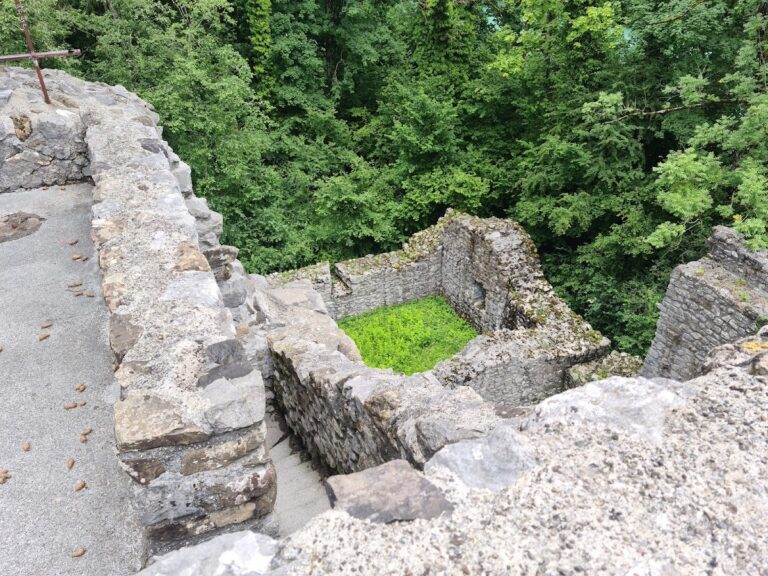
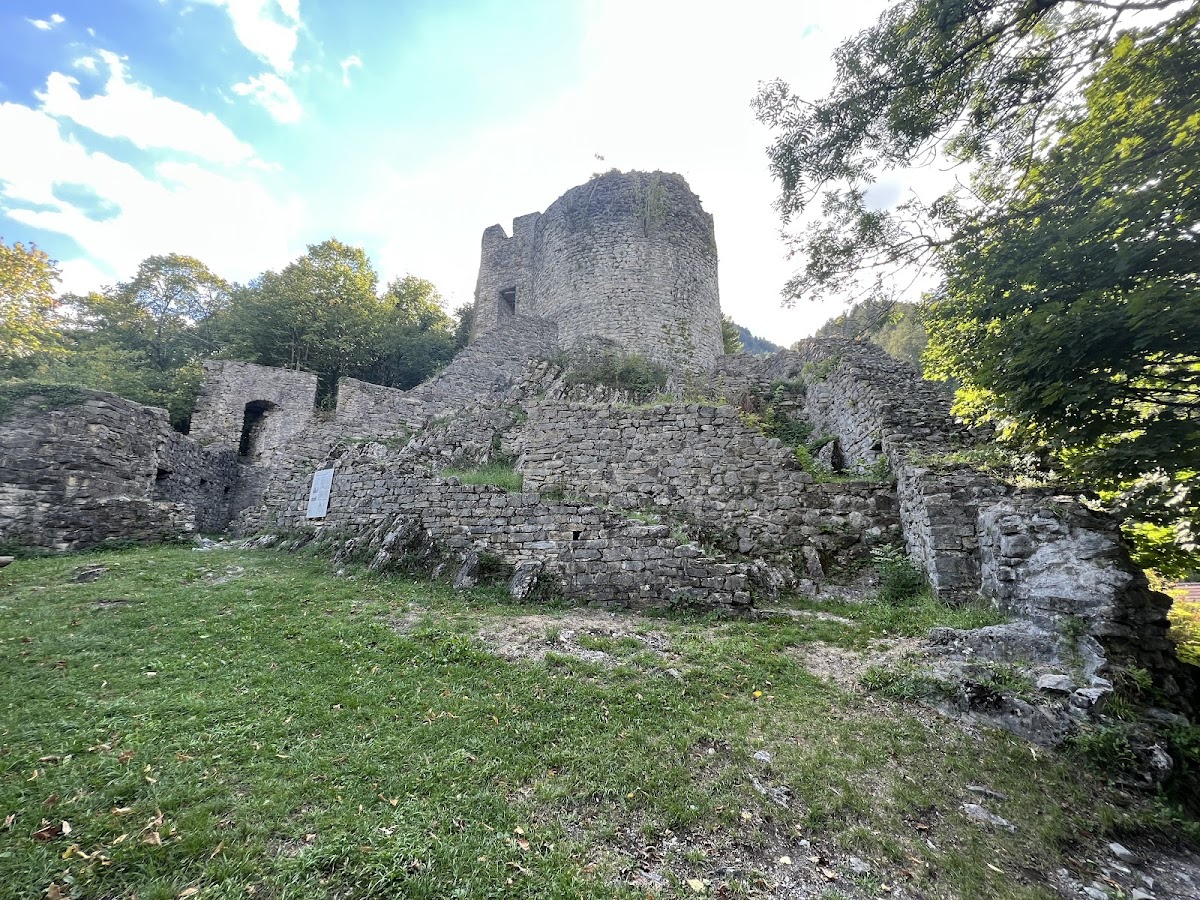
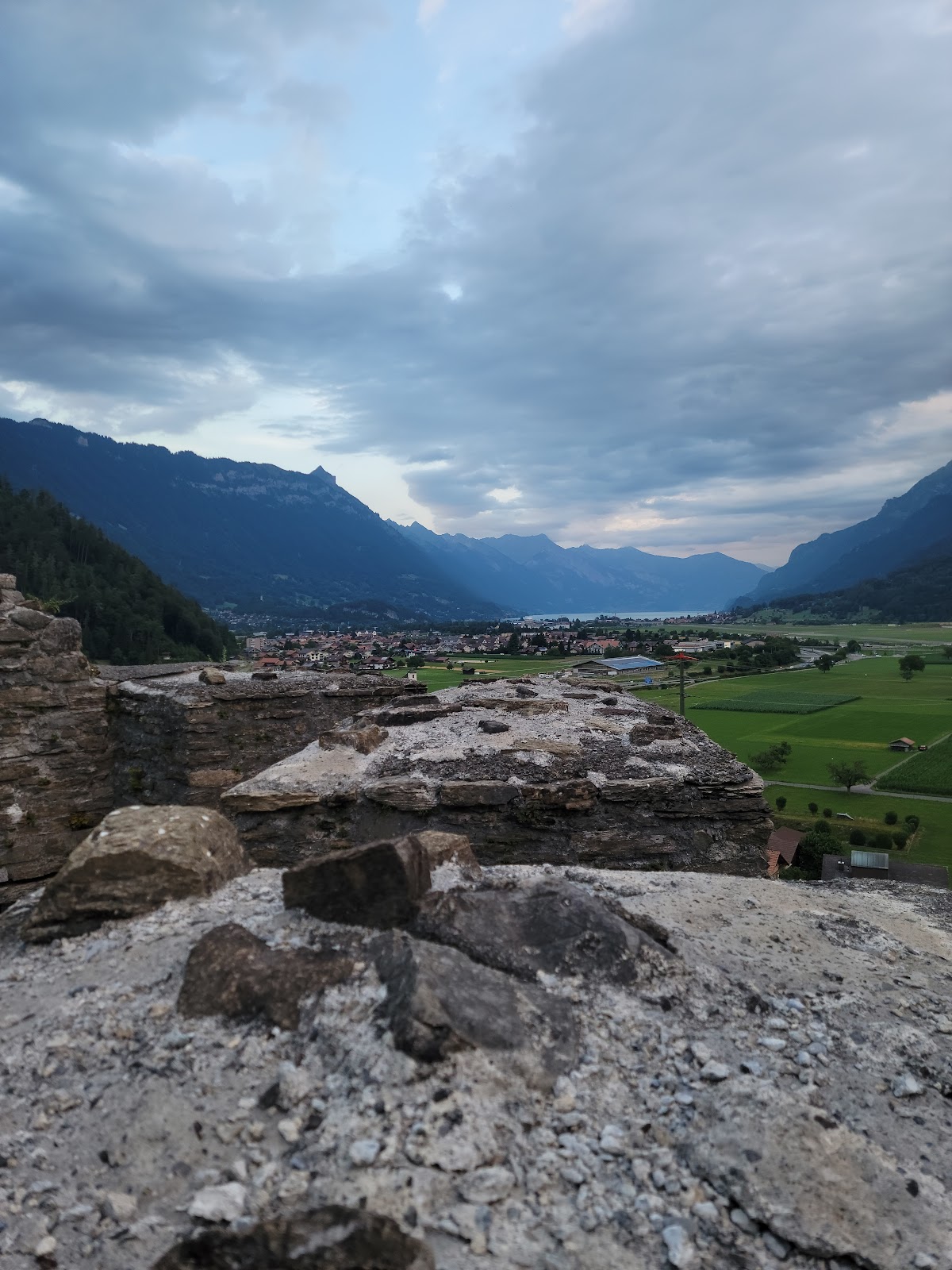
Unspunnen Castle survives as ruins on a site overlooking Interlaken in the municipality of Wilderswil. The remains formed part of a defensive arrangement with Rotenfluh, a cave-based fortification at Tschingelsatz. Together, the two strongholds guarded the Lütschinen Bridge at nearby Gsteig.
Fortified sites
Unspunnen Castle
The surviving castle ruins occupy the elevated site above Wilderswil. Their position formed part of the medieval defense of the bridge and the surrounding baronial lands. The remains have been affected by centuries of decline since the eighteenth century, while later cleaning and repairs helped preserve the ruin after the Unspunnenfest brought it wider recognition.
Rotenfluh
Rotenfluh was the associated cave fortress at Tschingelsatz. First recorded in 1298, it belonged to the same defensive complex as Unspunnen Castle and helped protect the Lütschinen Bridge. Its cave-based construction distinguishes it from the castle ruin on the overlooking site.
Festival setting
The fields below the castle ruins are the setting for the Unspunnenfest. The festival is associated with Swiss competitions including wrestling and stone throwing, as well as alphorn-related cultural performances. Its first celebration in 1805 contributed to the continuing cleaning and repair of the castle remains.