Kunžvart Castle: A Medieval Bohemian Fortress in the Czech Republic
Visitor Information
Google Rating: 4.4
Popularity: Low
Official Website: www.sumavanet.cz
Country: Czechia
Civilization: Medieval European
Site type: Military
Remains: Castle
History
Kunžvart is a castle ruin situated near the town of Strážný in the Czech Republic, built by medieval Bohemian builders. Archaeological findings suggest that the location has been used since at least the 13th century, with ceramic fragments and horseshoes dating from that era, indicating early settlement or activity around the site. Even older artifacts from the nearby area show traces of human presence during the Hallstatt period, around the 6th century BCE.
The castle itself was probably established in the early 14th century, possibly under the direction of John of Luxembourg, the King of Bohemia at the time. Its primary purpose was to guard the Golden Trail (Zlatá stezka), a significant medieval trade route connecting the Bohemian town of Vimperk with Passau in Bavaria. The earliest surviving written document mentioning the castle dates from 1359. In that year, Emperor Charles IV confirmed that the estate of Vimperk, which included Kunžvart (referred to then as Kungenslen), belonged to Pešek of Janovice and the heirs of his brother Herbart.
The castle’s role grew in importance during the reign of King Wenceslaus IV, who permitted the local lords of Vimperk to reopen a branch of the Golden Trail leading to Vimperk. They were granted the right to collect tolls, enhancing the economic and strategic value of the area. During this period, Kunžvart served as the residence of a burgrave—an official in charge of the castle—and accommodated a modest military garrison to enforce control over the trade route.
By the mid-16th century, Kunžvart’s use as a residence ceased. Records from 1547 indicate the castle was already abandoned. A fire in 1578 destroyed two aging chambers within the structure. Over time, the fortress fell into decay, and from about 1575 onward, its stones were quarried and repurposed for local building projects. Despite its decline, the site attracted archaeological interest in the early 21st century, with investigations revealing medieval artifacts. Kunžvart has been officially recognized as a cultural monument of the Czech Republic since 1958.
Remains
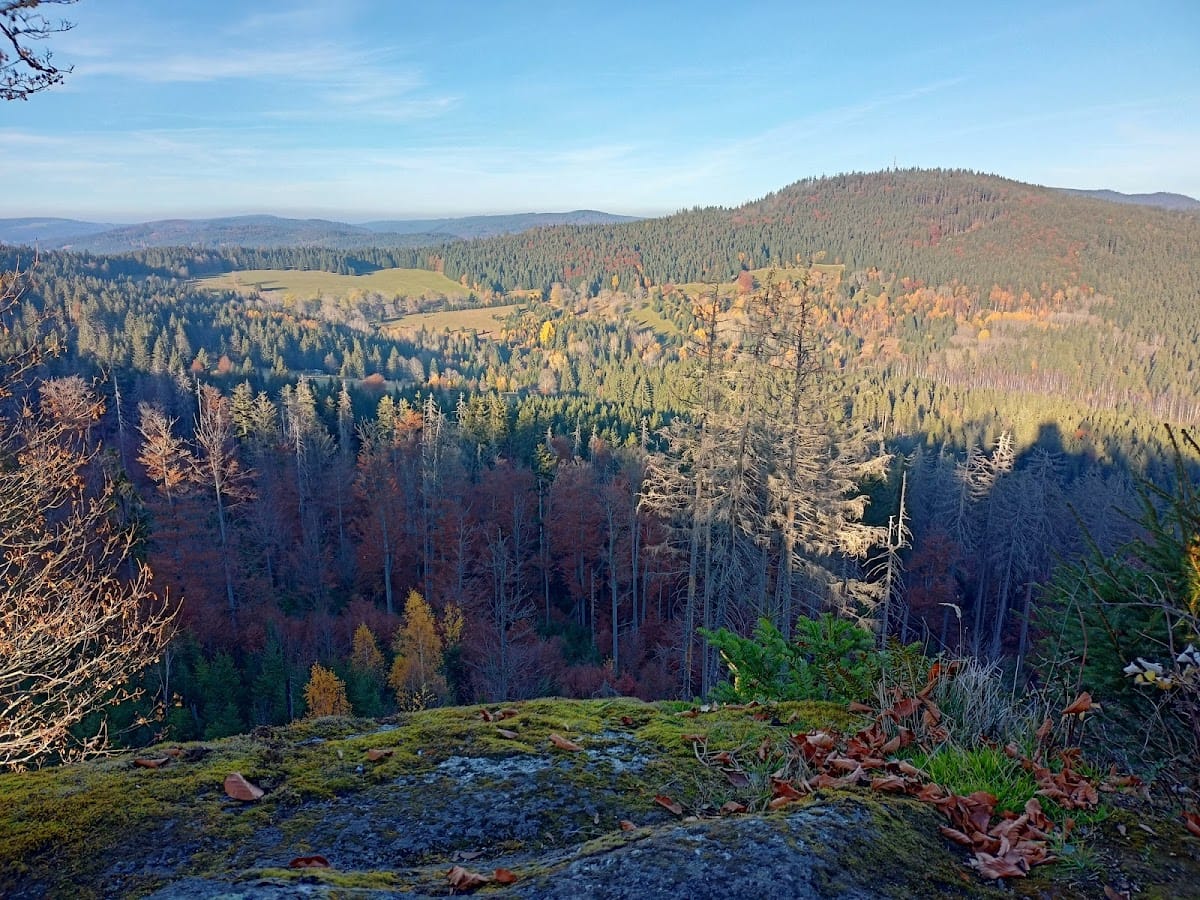
Kunžvart occupies a strategic position atop a granite outcrop on a ridge close to the Strážný mountain, one of the highest locations for a castle in the country. Access to the site was primarily from the west, where natural rock formations were exploited and enhanced by deepening a fissure to create a defensive ditch. This feature served to protect the castle from that side, effectively blending natural topography with human construction.
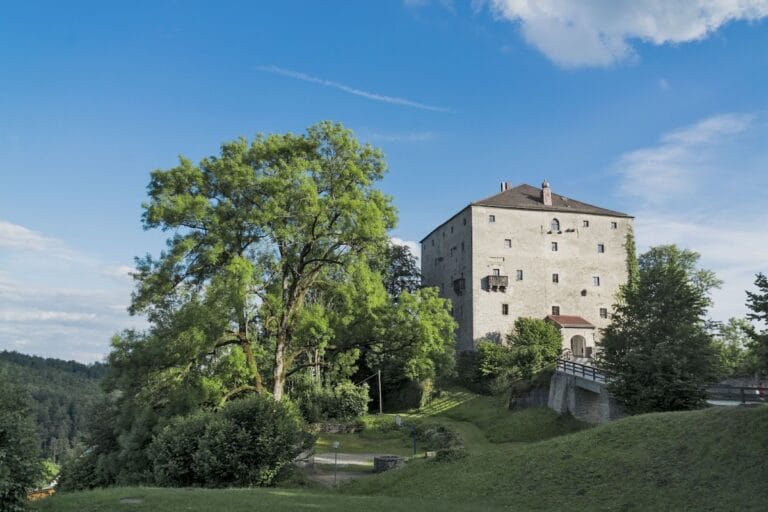
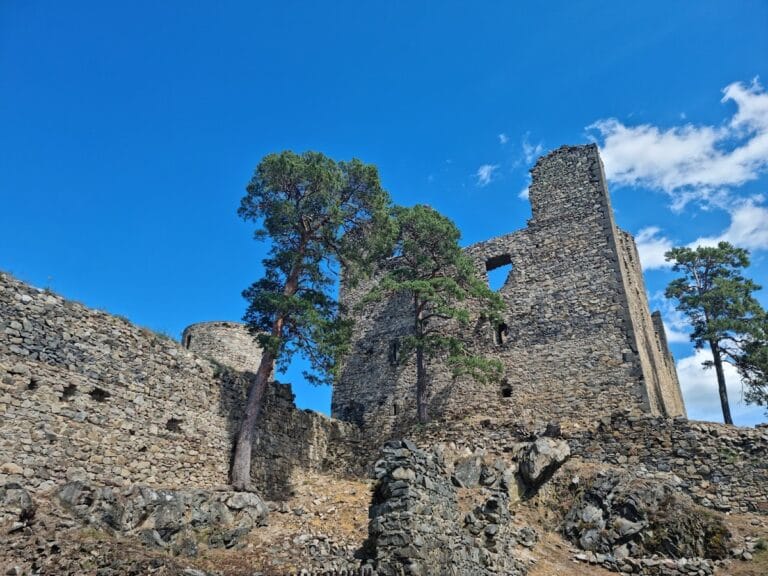
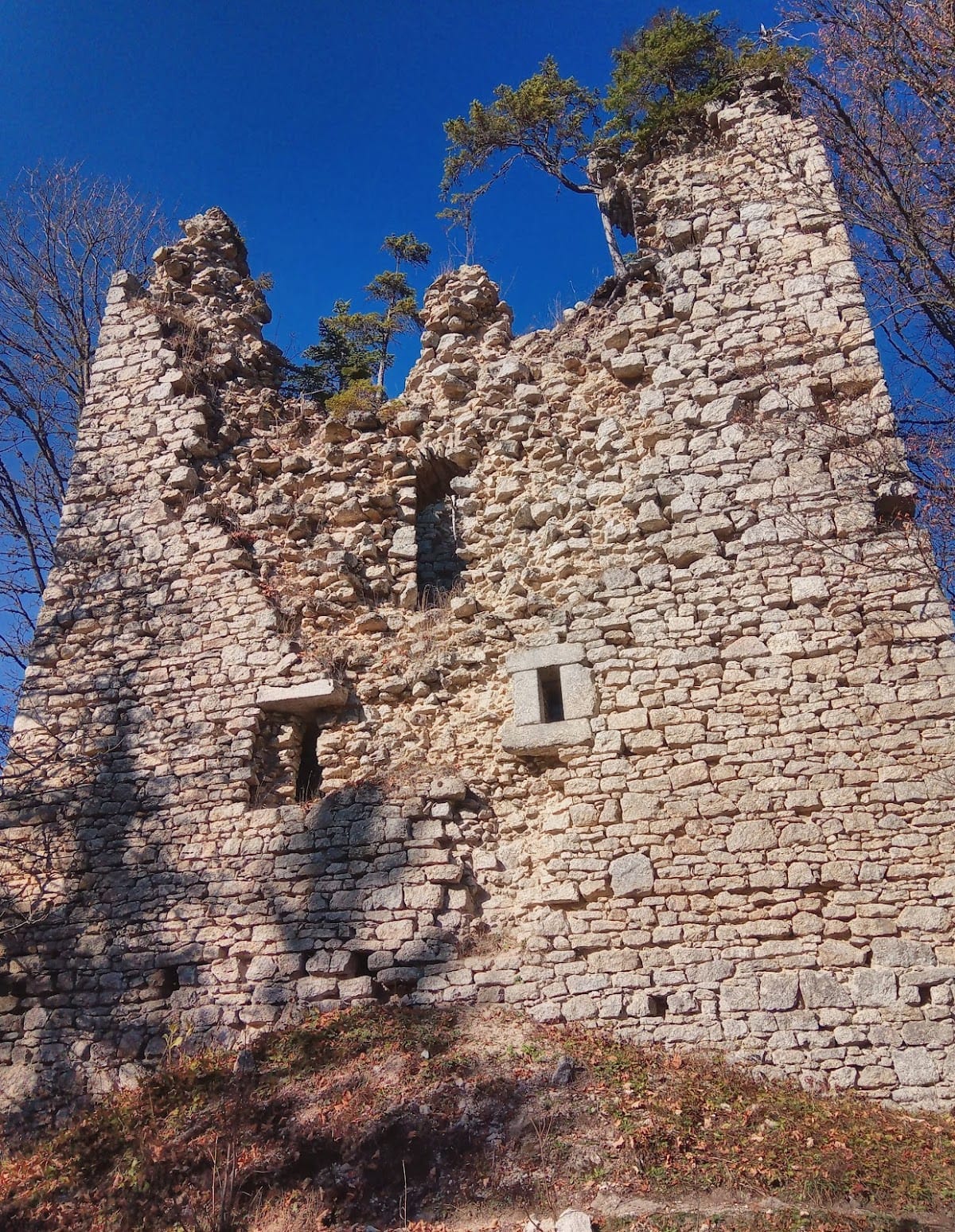
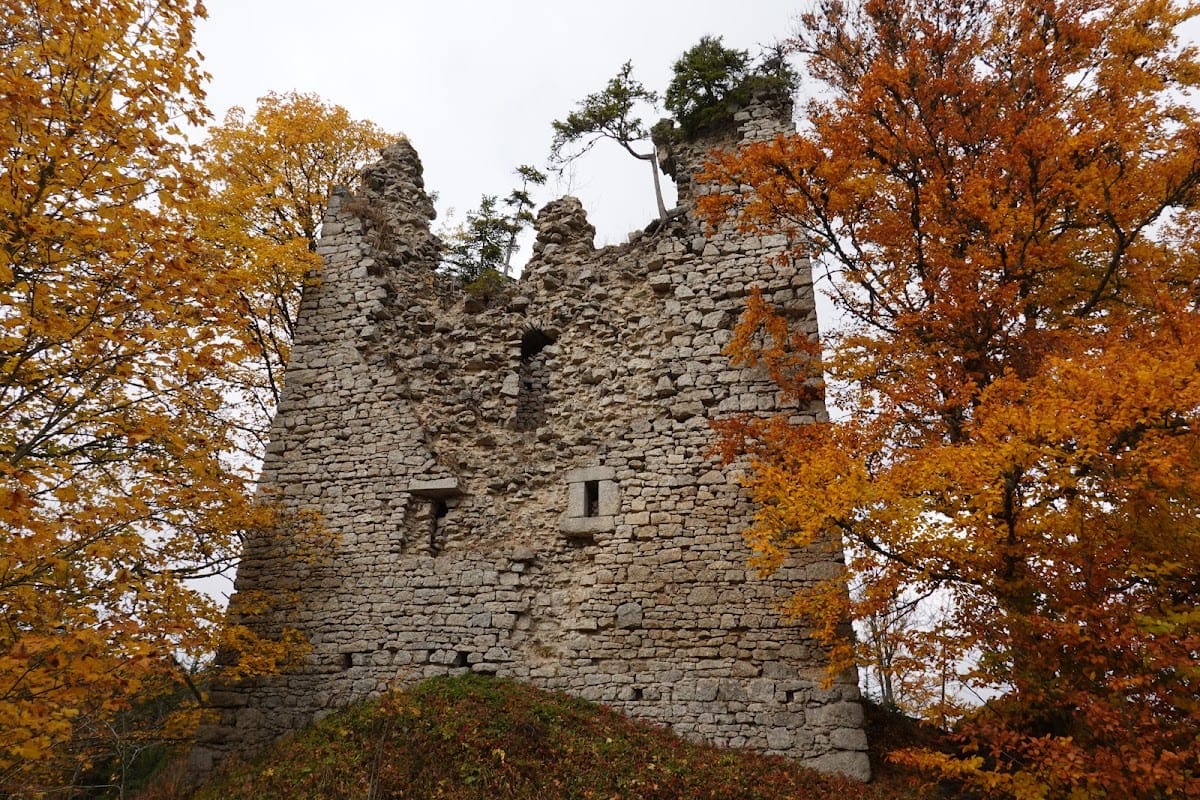
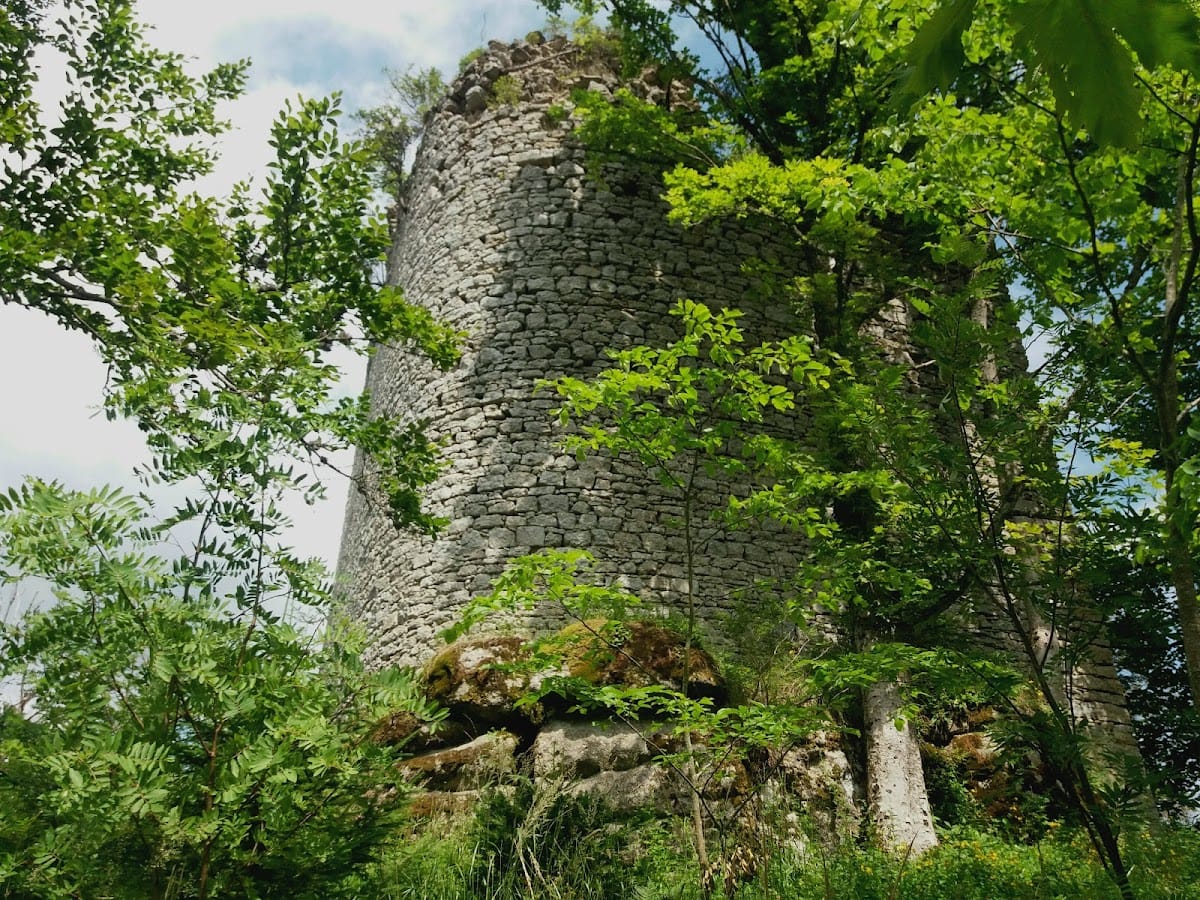
The most prominent surviving part of the castle is a well-preserved residential stone tower, known as a donjon. This nearly square tower measures about 10.5 by 10.6 meters at its base, with thick walls ranging from 1.74 to 2.8 meters wide. Rising approximately 15 meters tall across three stone floors, the tower includes a rounded corner on its western side and flat ceilings within. The design separated its functions: the lower two floors likely supported operational activities, while the uppermost floor provided living quarters.
Defensive features remain in parts of the tower’s walls, particularly on the southeastern side where three narrow arrow slits are visible—two at ground level and one on the floor above. Another slit is positioned above the entrance on the northeastern face, allowing archers to defend this vulnerable point. The second floor contained large square windows, two of which have partially collapsed over time, indicating more light and perhaps greater comfort in the living area.
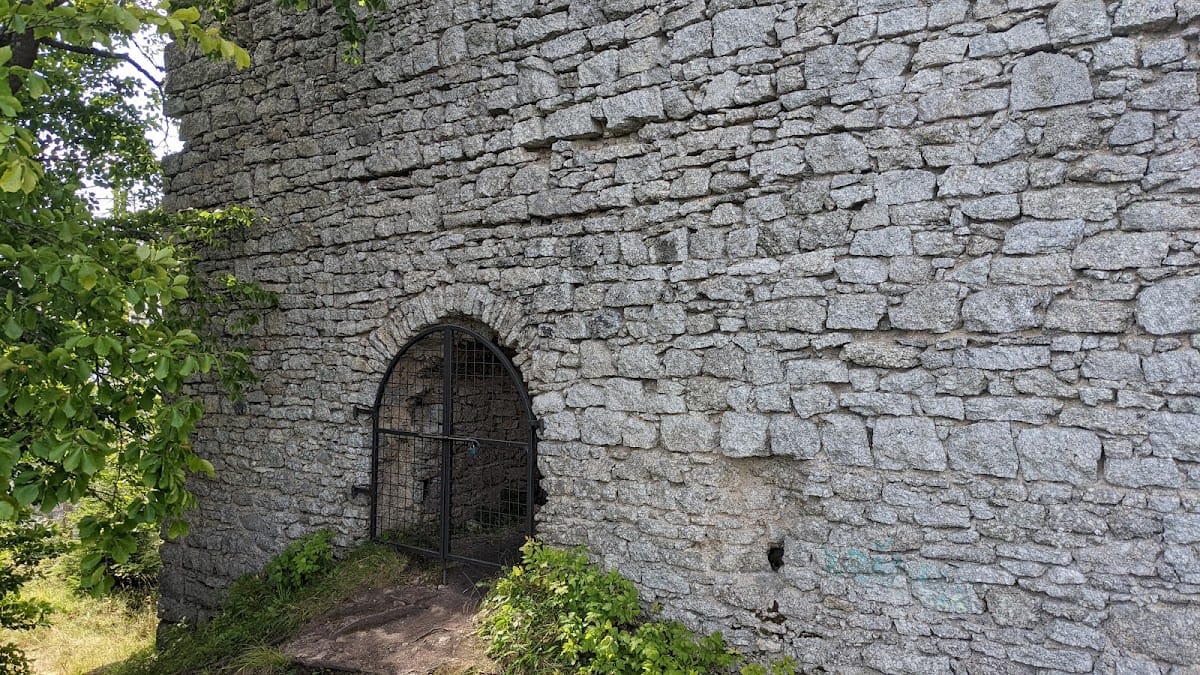
Entry to the tower’s ground floor was arranged through a passage with two portals, one on each end. The outer entrance could be secured using a heavy wooden bar, adding an extra layer of defense against attackers. Apart from the tower itself, two niches carved directly into the rock remain, hinting at the castle’s use of natural features within the defensive layout.
Originally, the rest of the castle’s perimeter was enclosed by wooden palisades, a common method for fortifying medieval sites. While these wooden defenses no longer stand, their former presence shaped the castle’s protection strategy. Stones from the ruin were later recycled for local purposes; notably, some were incorporated into the entrance of a farmhouse in the nearby village of Kořenný, illustrating a long history of reuse.
Today, Kunžvart’s ruin is preserved as a cultural monument, reflecting its layered history and architectural ingenuity within a challenging mountainous environment.
Nearby sites