Derg Castle: A Historic Gaelic and Plantation Stronghold in Northern Ireland
Visitor Information
Google Rating: 4.1
Popularity: Very Low
Official Website: discovernorthernireland.com
Country: United Kingdom
Civilization: Early Modern
Site type: Military
Remains: Castle
History
Derg Castle is situated in the town of Castlederg in Northern Ireland and was originally established by the Gaelic O’Donnell clan. The earliest records date back to 1497, when the stronghold, initially built as a defensive tower house near a crossing on the River Derg, was captured by the rival O’Neill clan. This change of control illustrates the intense struggles between the O’Donnell and O’Neill families during the late 15th and early 16th centuries. In 1505, the O’Donnells managed to retake the castle, highlighting the continued contest for power in this border region.
In the early 17th century, the castle underwent significant transformation during the Plantation of Ulster, a period when English authority sought to colonize and reorganize the area under King James I. The land, including the castle site, was granted to Sir John Davies in 1610. Davies rebuilt the estate, replacing the earlier tower house with a fortified enclosure known as a bawn, made of stone and lime, and designed to secure the nearby river ford. He also constructed a causeway extending seven miles to Kirlish Castle, demonstrating efforts to connect and strengthen plantation holdings.
A detailed survey conducted in 1619 by Captain Nicholas Pynnar noted the existence of two stone and lime castles on Davies’s estate but recorded that the bawns were incomplete at that time. By 1622, reports described the bawn as still unfinished but measuring roughly 100 feet by 80 feet, with three open flankers of similar height serving as defensive projections along its walls.
During the Irish Rebellion of 1641, Derg Castle played a defensive role, providing refuge for Scottish settlers. The site endured a siege led by the rebel Sir Phelim O’Neill; despite withstanding the attack for some time, those inside eventually surrendered when their ammunition ran out. Later, in 1689 amid the Williamite War in Ireland, the castle once again housed settler forces. It surrendered to the supporters of James II under negotiated terms that ensured the defenders’ safety. Following this, the castle was abandoned and gradually deteriorated.
Remains
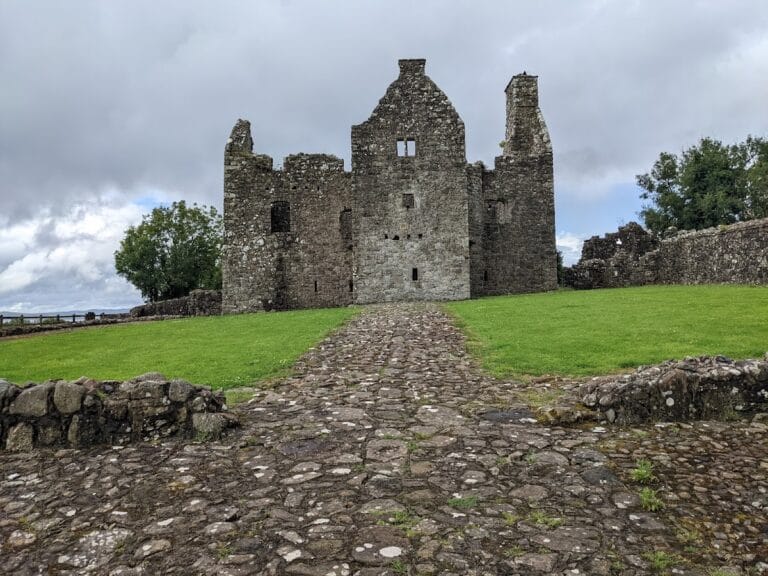
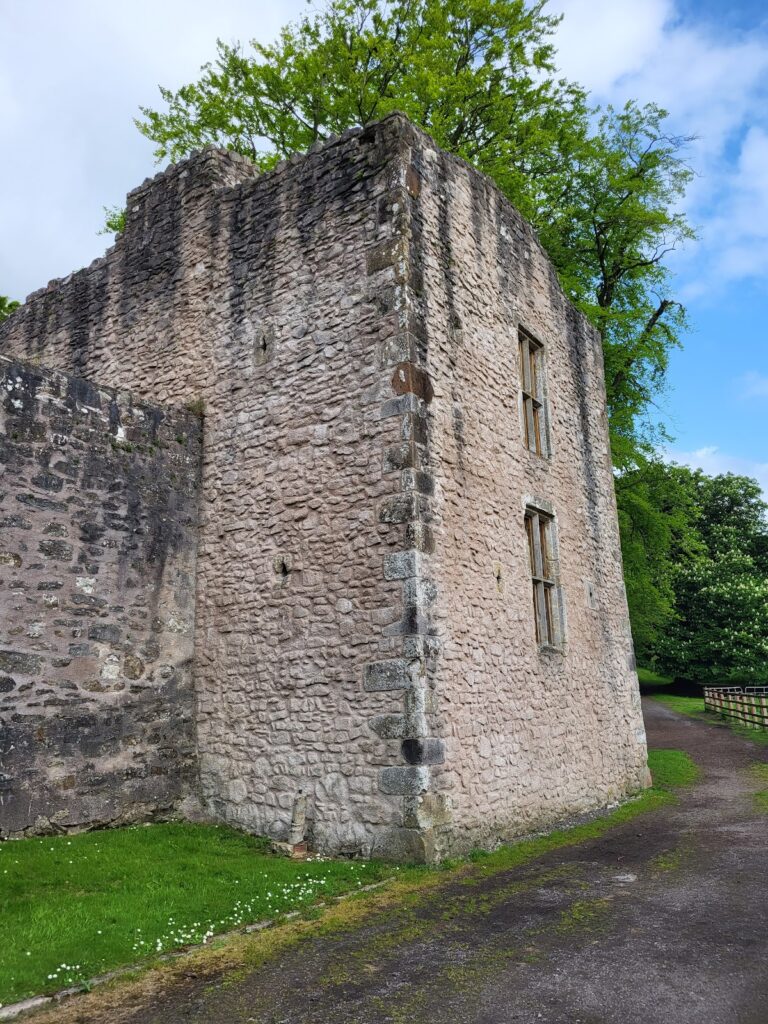
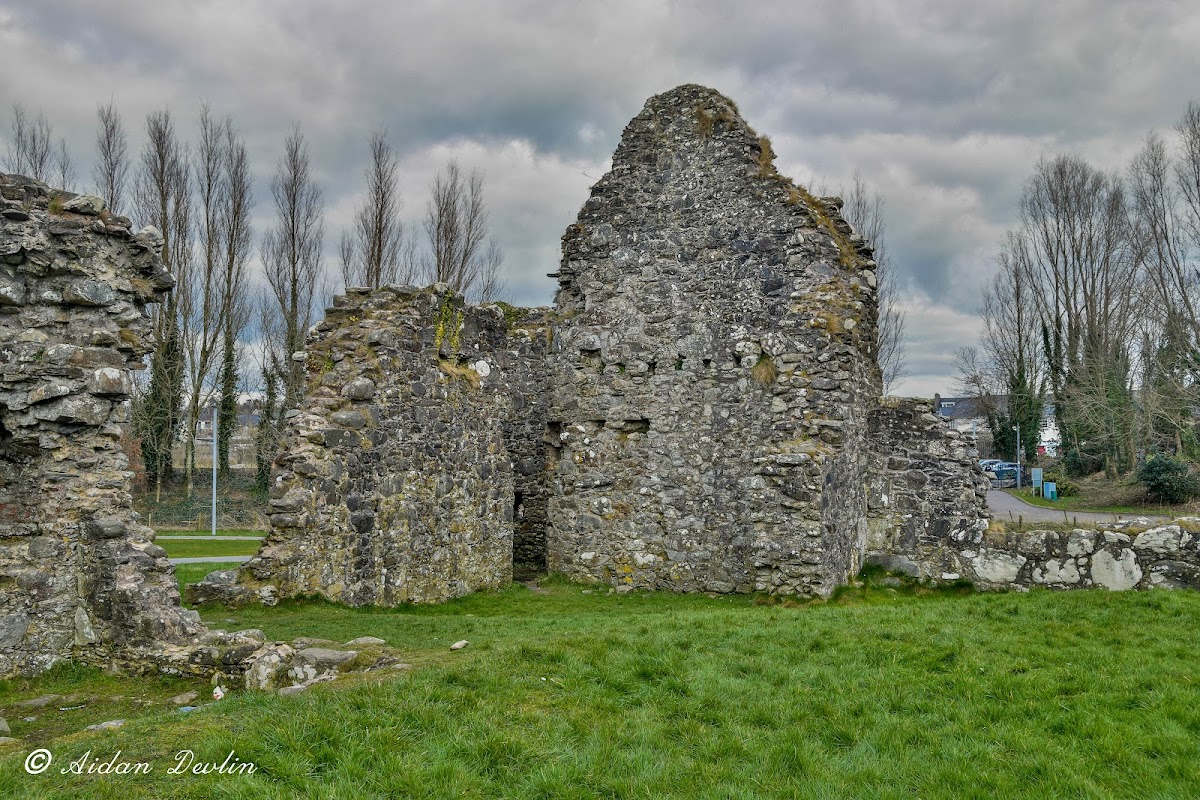
The current remains of Derg Castle are primarily the vestiges of the 17th-century bawn constructed from stone and lime mortar. This enclosure, which was about 100 feet long and 80 feet wide, was originally designed to guard the nearby river crossing and the outlying territory. Its defensive layout included three open flankers—raised angles of the wall used for improved surveillance and protection—each matching the height of the surrounding walls, which stood approximately five feet tall.
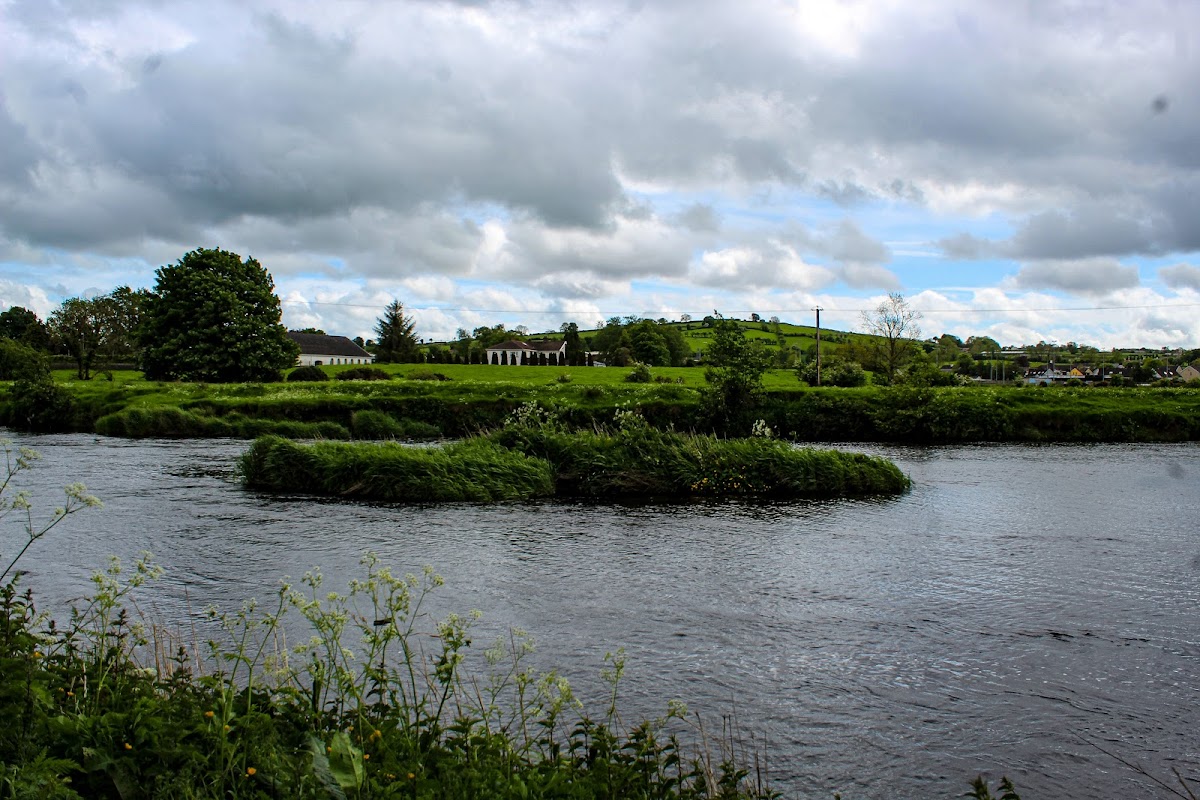
Today, the most substantial remnants are found on the northern side of the enclosure, where the bawn walls and flankers have survived in a fragmentary state. The southern walls, located adjacent to the River Derg, have largely disappeared due to erosion caused by the river’s flow over time. The construction techniques employed stone carefully bonded with lime mortar, characteristic of early 17th-century building practices in the Ulster Plantation.
These ruins no longer feature the original tower house, which no longer exists above ground. The defensive causeway that once linked Derg Castle to Kirlish Castle has not survived in the present landscape. Recognizing its historical significance, the ruin is protected as a Scheduled Historic Monument. The site is managed by the Northern Ireland Department for Communities, ensuring its conservation and record for future study. Its precise location is identified by the grid reference NV 39666 49068.
Nearby sites