Citadel of Damascus: A Medieval Fortress in Syria
Visitor Information
Google Rating: 4.6
Popularity: Low
Official Website: www.dgam.gov.sy
Country: Syria
Civilization: Medieval Islamic
Site type: Military
Remains: Citadel
History
The Citadel of Damascus, located in the municipality of Damascus, Syria, is a fortified complex originally established by Turkman builders during the medieval period. Its origins trace back to 1076 when Atsiz ibn Uwak, a Turkman warlord who claimed rule over Damascus, initiated the construction of this defensive structure. Following his assassination in 1078, the Seljuq ruler Tutush I took over and completed the citadel, setting the foundation for its strategic significance in the region.
Throughout the 12th century, the citadel saw important upgrades and strengthening under the Burid and Zengid dynasties. These rulers enhanced its fortifications to withstand frequent military pressure from both Crusader forces and rival Muslim factions during this turbulent era. A major transformation occurred in 1174 when Saladin, founder of the Ayyubid dynasty and sultan of Egypt, captured Damascus and made the citadel his residence. He not only fortified the complex further but also added residential quarters and a new tower to bolster its defenses.
Between 1203 and 1216, Saladin’s brother Al-Adil undertook a comprehensive rebuilding of the citadel, motivated by new military threats such as the counterweight trebuchet, a powerful siege engine that had transformed medieval warfare. This reconstruction aimed to adapt the fortifications to better resist such technology. After Al-Adil’s death in 1218, the citadel became a focal point in disputes among Ayyubid princes. It endured several sieges and remained a contested stronghold, falling by direct assault only once in 1239 due to an undermanned defense.
In 1260, the Mongols, led by their general Kitbuqa, captured Damascus and the citadel, bringing an end to Ayyubid rule in Syria. A revolt inside the citadel failed, leading the Mongols to dismantle much of its defensive works. However, later that same year, the Mamluks defeated the Mongols and regained control. They restored the citadel’s fortifications, moving the northern wall outward by about 10 meters and adding the Blue Dome, notable as the first Syrian structure decorated with colored tiles.
The citadel’s history in the late 14th century was marked by further sieges and repair efforts during internal conflicts within the Mamluk Sultanate. It suffered significant damage during the siege by Timur (Tamerlane) in 1401, including destruction of parts of the citadel and adjoining religious buildings such as the Umayyad Mosque. Ottoman forces then peacefully took control of Damascus and the citadel in 1516. From the 17th century onward, the citadel served as barracks for Janissary infantry troops under Ottoman administration.
The fortress endured damage caused by earthquakes, notably in 1759, and remained central in various 18th and 19th-century sieges and uprisings during Ottoman rule. Its final military role occurred in 1925 when French colonial forces used it to shell Damascus during the Great Syrian Revolt. Afterwards, it continued functioning as a prison and military barracks until 1986. Since then, extensive archaeological research and restoration projects by Syrian, French, and Italian teams have transformed the citadel into a site dedicated to cultural and social activities. It remains part of the Ancient City of Damascus, listed as a UNESCO World Heritage Site since 1979.
Remains
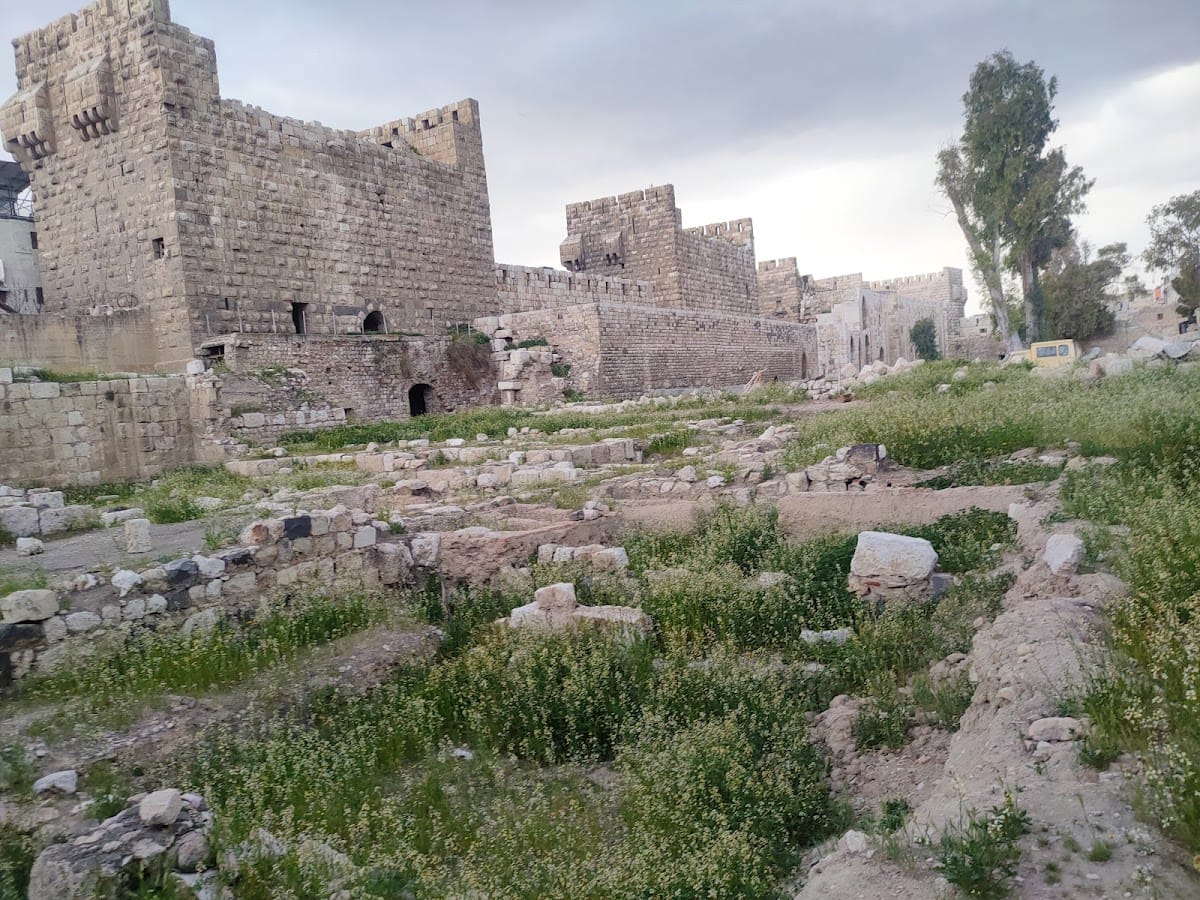
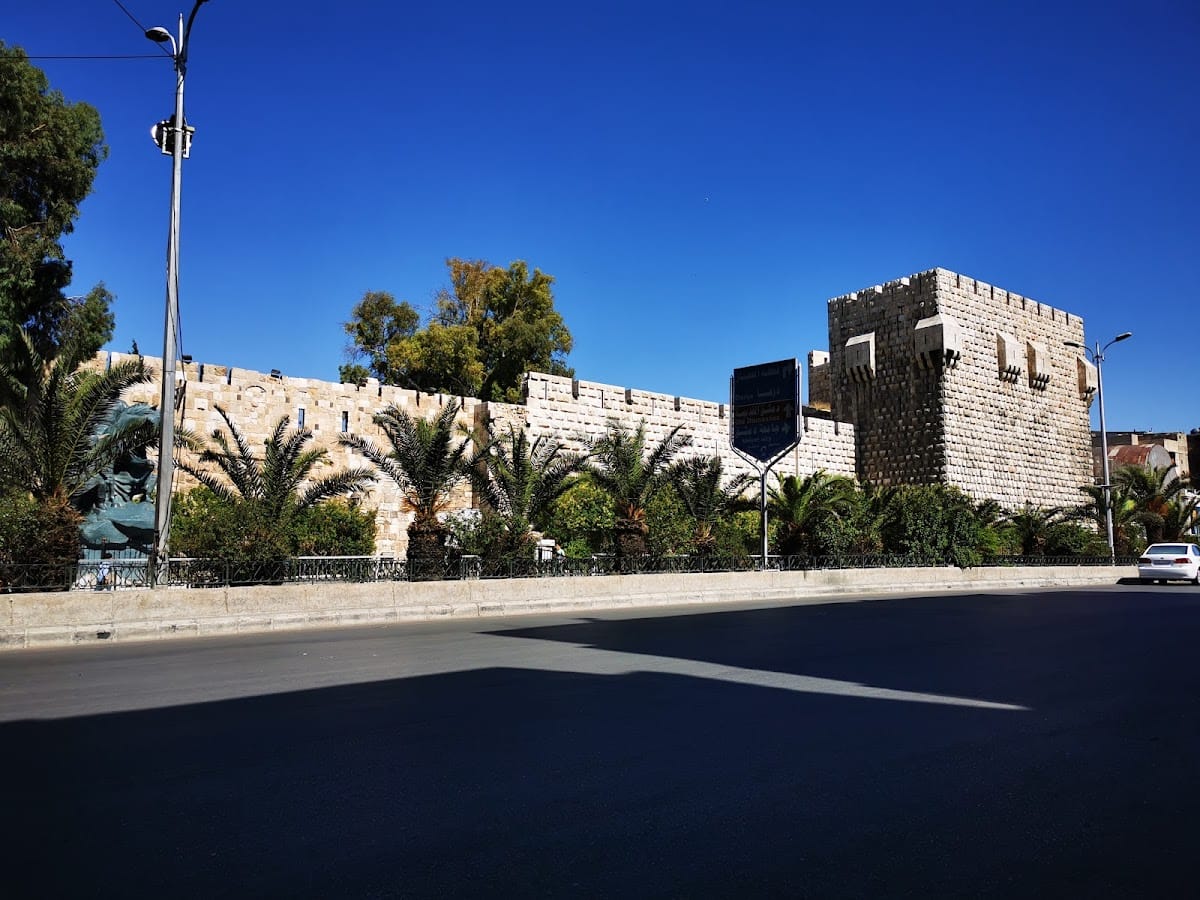
The Citadel of Damascus occupies an irregular rectangular area measuring roughly 230 meters in length and 150 meters in width. It is situated on flat terrain at the northwest corner of the old city’s walls, nestled between two historic gates known as Bab al-Faradis and Bab al-Jabiyah. A moat about 20 meters wide surrounds the citadel, supplied by channels branching from the nearby Barada River. These waterworks are believed to have been engineered during Al-Adil’s reign to regulate water flow into Damascus, enhancing both defense and urban utility.
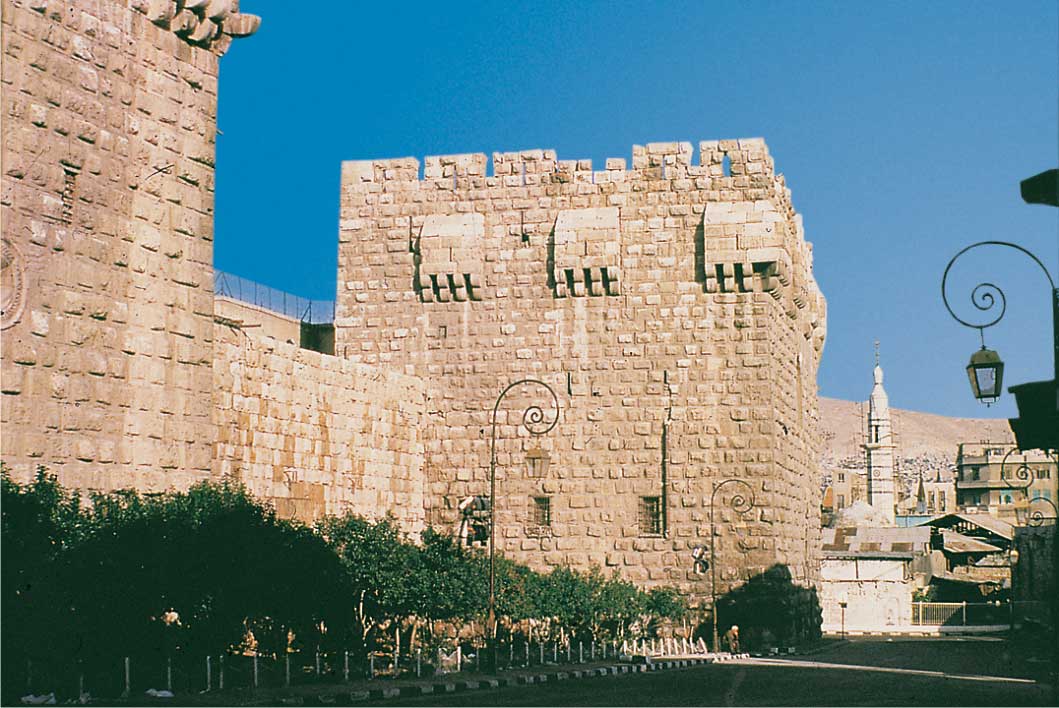
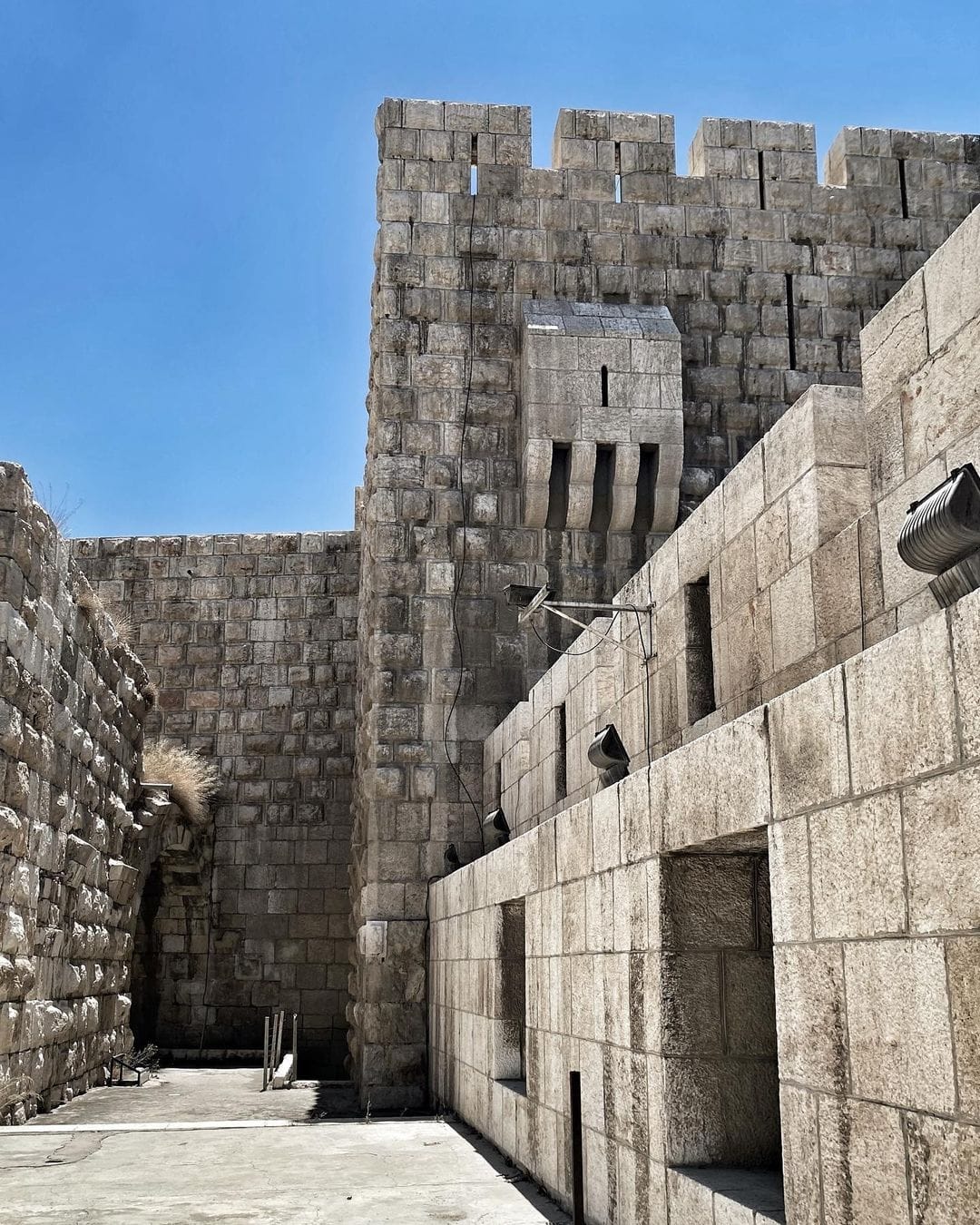
The outer defenses primarily date to the Ayyubid period but were extensively restored by the Mamluks. Originally, fourteen large towers punctuated the walls, with twelve still standing today. Towers are arranged with one at each corner, three along the northern and southern walls, and two on the eastern side. Tower designs vary: northern corner towers are square, southern ones are shaped like the letter L, and others are rectangular with their broad faces aligned parallel to the curtain walls. Each tower features double parapets equipped with machicolations—openings through which defenders could drop objects or shoot—and numerous arrow slits for archers. These towers also include large platforms that accommodated trebuchets, siege weapons that could bombard attackers from above.
Connecting these towers are relatively short curtain walls ranging from 10 to 43 meters in length, impressively thick—between 3.65 and 4.9 meters—and rising up to 11.5 meters in height where they remain intact. Behind the walls lie vaulted galleries with arrow slits, allowing soldiers to move quickly while staying protected and enabling defensive fire. The fortification’s design shows careful adaptation to evolving military technology, prioritizing resisting siege engines like trebuchets.
The citadel contains three gates, each with distinctive features and dates. The northern gate, known as Bab al-Hadid or the Iron Gate, and the eastern gate date from the early 13th century, during Al-Adil’s rule. The northern gate was mainly a military entrance, consisting of arched openings and vaulted passages. Though much of the gate’s outer tower is lost, the vaulted corridor inside is preserved today as a mosque, demonstrating adaptive reuse over time. The eastern gate is the only one opening into the city itself. Located within a square tower, it is secured by an adjacent tower and a barbican—a fortified outwork. This gate includes a bent, or angled, passageway with vaulted corridors leading into a courtyard and a square hall topped by a rare central dome supported on four columns. This hall is more ornate than the northern gate, once featuring a muqarnas canopy, a decorative stalactite-like plasterwork that is now concealed.
The western gate originally featured two square towers, likely dating to the reign of Mamluk sultan Baibars in the 13th century. It suffered damage during the earthquake of 1759 and was not rebuilt afterward. Its passageway is straight rather than bent, differing from the eastern gate’s design.
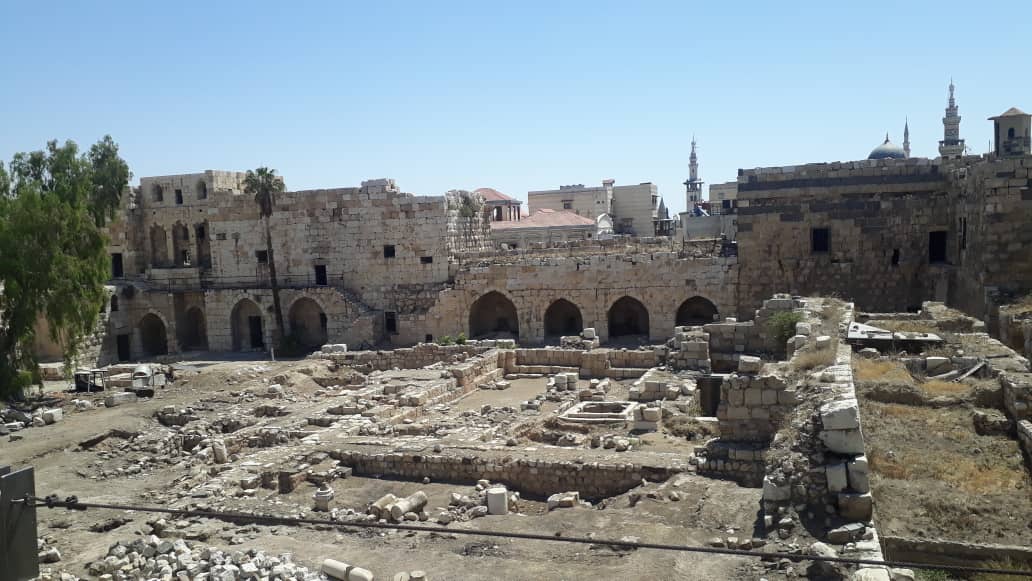
One notable structure within the citadel is a sizable two-story building located in the southwestern corner of the courtyard. Measuring approximately 90 meters long by 10 meters wide and standing around 16 meters tall, it runs parallel to the southern wall. Archaeological study indicates this building predates Al-Adil’s major reconstruction and was later incorporated into the renewed fortifications, consequently losing much of its original defensive purpose. The specific function of this building remains uncertain.
Locally sourced carbonate rocks and basalt formed the primary building materials for the citadel’s walls and towers, reflecting the geology around Damascus. Over centuries, urban development crept close to the fortifications, with shops and houses constructed along some sections, especially on the southern façade and near the eastern defenses. In the 1980s, certain buildings adjoining the western and northern walls were cleared to better reveal and preserve the ancient structures.
The citadel’s overall design, featuring thick, high walls, massive towers with specialized platforms, and a water-filled moat, reflects deliberate architectural responses to advances in siege tactics. This fortress was constructed to withstand powerful artillery such as trebuchets and to provide defenders with superior vantage points for counterattack. Today, these surviving features present a striking record of Damascus’s medieval military architecture and its long history as a fortified city.
Nearby sites