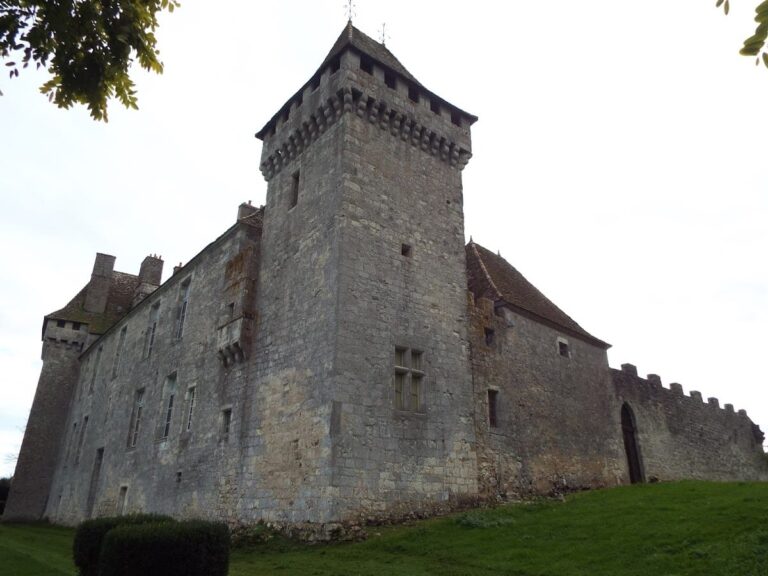
Château de Tiregand: A Historic Estate in Creysse, France


Visitor Information
Google Rating: 4.7
Popularity: Low
Official Website: www.chateaudetiregand.com
Country: France
Civilization: Early Modern, Medieval European, Modern
Site type: Domestic
Remains: Palace
History
Château de Tiregand is located in the municipality of Creysse, France. Its origins trace back to the medieval period, specifically the 13th century, when it was founded by Edward Tyrgan, who is recorded as an illegitimate son of King Henry III of England. This early establishment laid the groundwork for the château’s long-standing presence in the region.
During the turbulent religious conflicts of the 16th century, in 1575, the château played a noteworthy, if brief, role when relics of Saint Front were kept there temporarily. These relics had been taken by Huguenots from Périgueux and were later disposed of in the Dordogne River, marking a dramatic episode in the château’s history linked to the unrest of the Reformation era.
In the 18th century, significant changes transformed the estate. Jean Charles d’Augeard, an important official in the Bordeaux parliament, undertook the reconstruction of the château. This era saw the older section, known as the Vieux Castel, repurposed into wine cellars, reflecting a shift in function alongside the architectural renewal.
The early 19th century introduced the La Panouse family to the site when Count Alexandre César de La Panouse, a Paris deputy between 1822 and 1827, acquired the property in 1826. He lived there until his death in 1836. His son, César Armand Anatole de La Panouse, expanded the château by adding a new eastern residential wing, prominently featuring the family’s heraldic symbols, including the intertwined LP monograms, symbolizing their lasting connection to the estate.
The 20th century saw the ownership of the château pass to the Saint-Exupéry family, maintaining the property’s residential and historical continuity. More recently, in 2022, the Guyot family purchased the château along with its outbuildings and around 40 hectares of land, while the Saint-Exupéry family retained ownership of the adjacent 42 hectares of vineyard land dedicated to Pécharmant wine production. Plans were set for the château to be accessible to the public starting from July 2022.
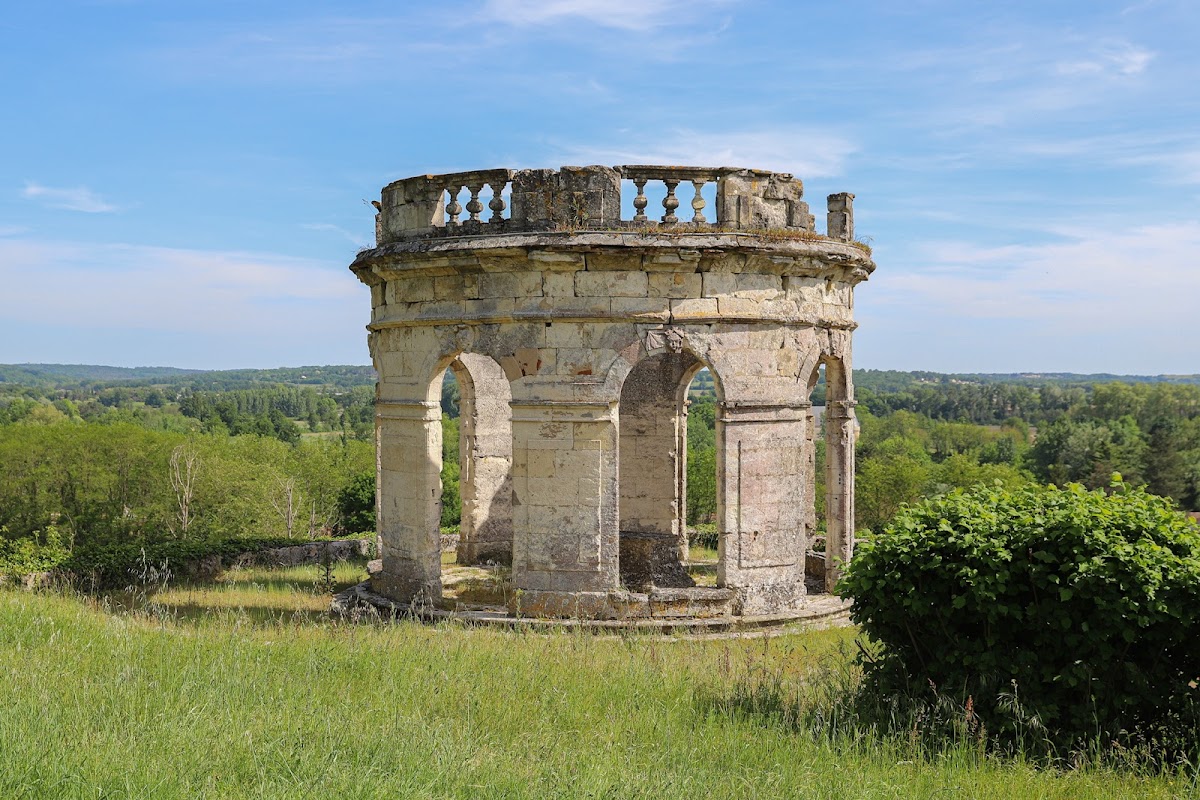
Recognition of the château’s historic and cultural importance came in the early 21st century. On December 20, 2002, the château itself, along with its outbuildings, park, terraces, dry moats, and rotunda, was officially listed as a historic monument, cementing its status as a site of heritage value in France.
Remains
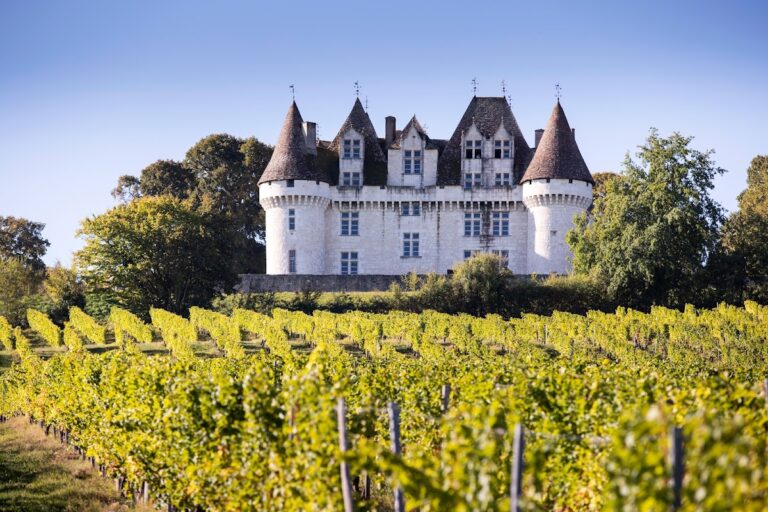
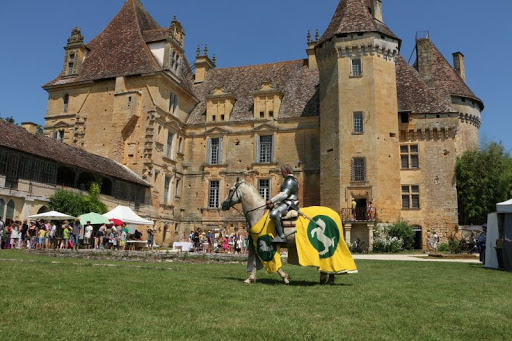
The Château de Tiregand presents a complex architectural layout composed of two main residential wings set side by side along a longitudinal axis. The western wing dates back to the 18th century and represents the older part of the main living quarters, while the eastern wing, larger in scale and built in the 19th century, extends the residential space. Flanking this eastern section are two substantial pavilions, adding symmetry and prominence to the later construction phase.
The eastern wing prominently displays the heraldic decoration associated with the La Panouse family. Decorative medallions bearing the intertwined initials “LP,” a reference to the family’s name, adorn the façade, highlighting the personal imprint of César Armand Anatole de La Panouse on this portion of the château. Moreover, family coat of arms accompany these features, underscoring the property’s lineage.
Attached to the north and northeast corners of the eastern wing are the stables and various service buildings, which historically supported the day-to-day functions of the estate. These connections illustrate the integrated nature of residential and working areas within the château complex.
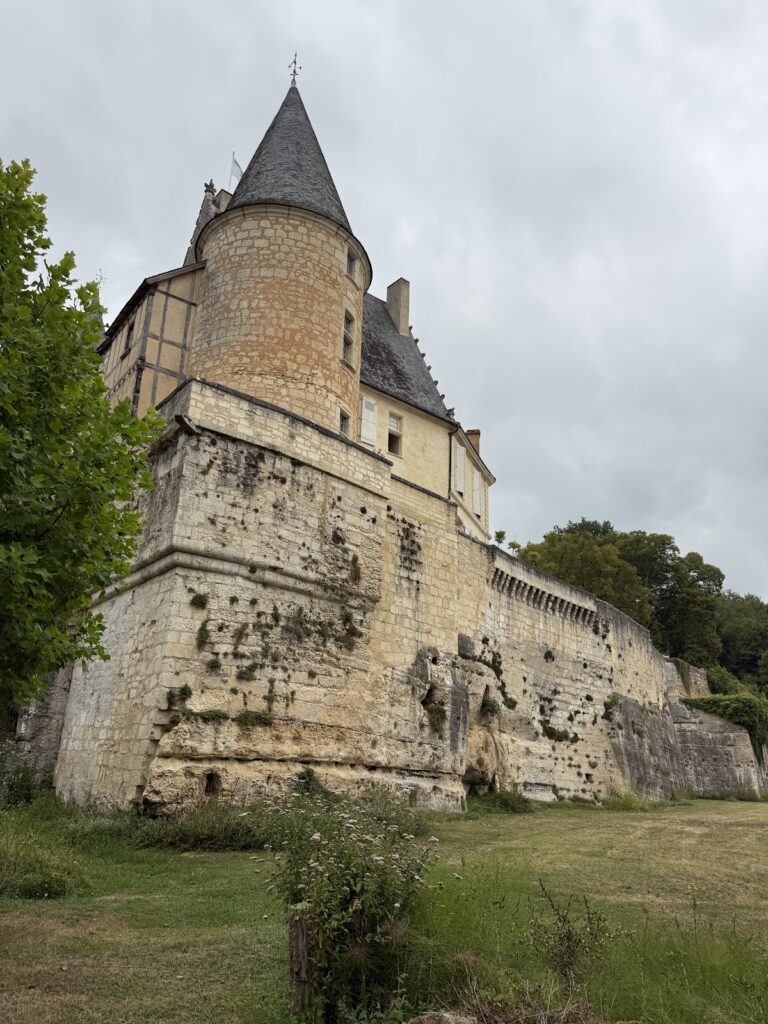
Among the château’s defensive and ornamental features, portions of the original moats remain, though they are currently dry. These dry moats are part of the historic ensemble, evidencing the château’s medieval roots and later transformations. Surrounding the main structures are terraces and a rotunda—an architectural feature typically involving a circular building or room with a dome—which contribute to the estate’s formal landscaping and have been preserved as elements of the historic monument designation.
The château stands within a park that elevates approximately 40 meters above the Dordogne valley, offering a notable geographic setting. This park is part of a vast domain extending over 406 hectares, which includes a 43-hectare vineyard dedicated to the production of Pécharmant wine. The integration of viticulture with the estate further enriches its historical function and ties to the regional agricultural tradition.
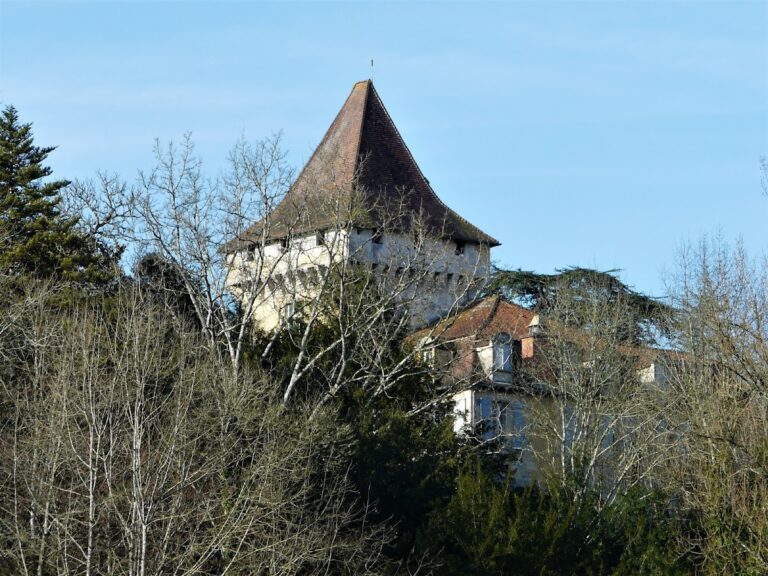
One unique aspect of the estate is the Vieux Castel, the older château structure incorporated into the complex. Rather than serving as a primary residence, this building was converted into wine cellars, or chais, during the 18th-century redevelopment. This reuse highlights the evolving nature of the château’s architecture and its longstanding association with wine production.
Nearby sites