Château de Bayac: A Fourteenth-Century Château in France

Site at a Glance
- Rating
- 4.8
- Popularity
- Very Low
- Country
- France
- Primary era
- Medieval
- Eras represented
- Medieval, Early Modern, Modern
- Civilizations
- Duchy of Aquitaine, French
- Site type
- Domestic
- Remains
- Castle
On this page10 sections
History
Château de Bayac is a fourteenth-century French château in Bayac, Dordogne, built on the left bank of the Couze east of the village. Bayac then formed a châtellenie, a territorial lordship administered from a castle or under a castellan, belonging to the archbishops of Bordeaux. The castle’s history reflects the changing ownership of the estate, the violence of the Wars of Religion, and its later transformation into a public holiday-camp centre.
Medieval lordship and changing ownership
At an uncertain date, a woman from the Turenne family transferred the land to the House of Grailly, apparently in response to the wishes of the reigning monarch. The estate later passed to the lords of Serval, associated with Château de Couze. A member of the Bosredon family from Auvergne then married a Serval heiress at Bayac, linking the Bosredon family to the property.
The Wars of Religion
The Bosredon family became involved in the Wars of Religion, the sixteenth-century conflicts between Catholics and Protestants in France. The English, Huguenots, and the lord of Bannes successively caused extensive destruction at the château. On 27 January 1580, the Protestant captain Chaus de Monsac seized Bayac by surprise, killed its owner Pierre de Bosredon, and plundered the château. He then captured and fortified himself at Couze. Huguenots were French Protestants, principally associated with the Reformed tradition.
Losse family and the French Revolution
In 1635, a member of the Losse family married a Bosredon and established a second Losse branch. This branch remained at Bayac during the French Revolution, which began in 1789 and overthrew the French monarchy. Its members included Colonel de Losse, his elder brother, who was a religious at a Trappist monastery, and Jean-Albert, a cavalry captain who died unmarried. Trappists belong to a strictly observant branch of the Cistercian monastic order.
Colonel de Losse was repeatedly elected mayor of Bayac and served as the commune’s municipal agent for its representation at the canton-level municipality of Lalinde. On 31 January 1795, he swore at Lalinde an oath expressing hatred of royalty and inviolable attachment to the Republic. His descendant Henri de Losse remained mayor of Bayac until 1904. After the Losse period, the Armant, Hulin, and Ossul families successively occupied the château.
Political refuge and public ownership
Around 1925, Abel Gaboriaud, a Parisian radical-socialist, Freemason, and director of the newspaper L’Ère nouvelle, became the château’s châtelain, or lord and administrator of the estate. During the Third Republic, the republican regime that governed France from 1870 to 1940, and the Fourth Republic, which lasted from 1946 to 1958, Bayac hosted political figures including Council Presidents and ministerial chiefs of staff such as Daladier, Painlevé, and Reynaud. Gaboriaud usually spent three or four months there each year and maintained an elaborate household, including during the German Occupation of France in the Second World War.
In 1942, Gaboriaud used his political connections to have the agricultural worker Arbaudie interned after Arbaudie insulted him while drunk. Two of the investigating gendarmes belonged to the Secret Army, a French Resistance organization formed from clandestine military networks. They concluded that accusations involving anti-national statements, singing the Internationale, and insulting the gendarmerie served as a pretext for personal revenge. Arbaudie was released and later joined the Resistance.
During the final months of the Second World War, General Maurice Gamelin, a senior French military commander, took refuge at Bayac for several months. The Mobile Guard, a French state security force used for public-order and internal-security operations, besieged the château, arrested him there, and took him to Riom prison.
Gaboriaud died shortly after the war. His widow sold the château to Monsieur Dubois, who had been attracted by its approximately 80 hectares but could not meet the cost of maintaining the property. In 1957, Dubois sold the château and most of its land to the City of Paris. The Association for the Management of Social Services for Paris Administrative Staff then converted the property into a holiday-camp centre operated by the city. An order dated 5 November 1970 listed the façades, roofs, and circular tower as historic monuments.
Remains
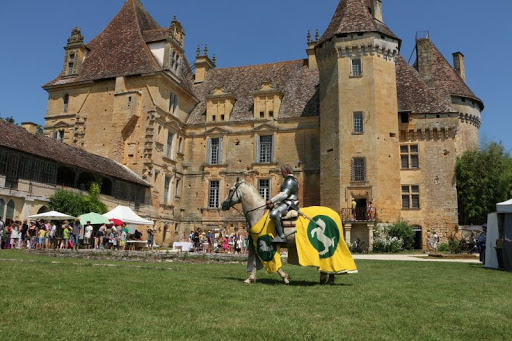
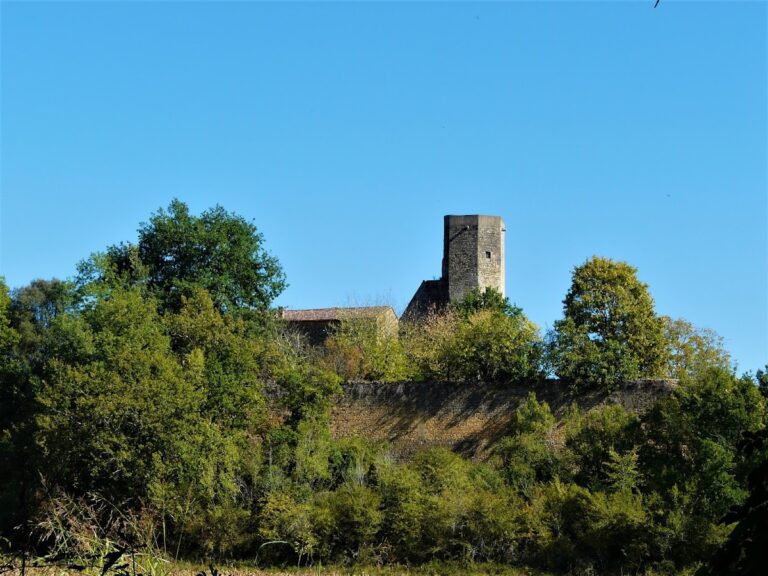
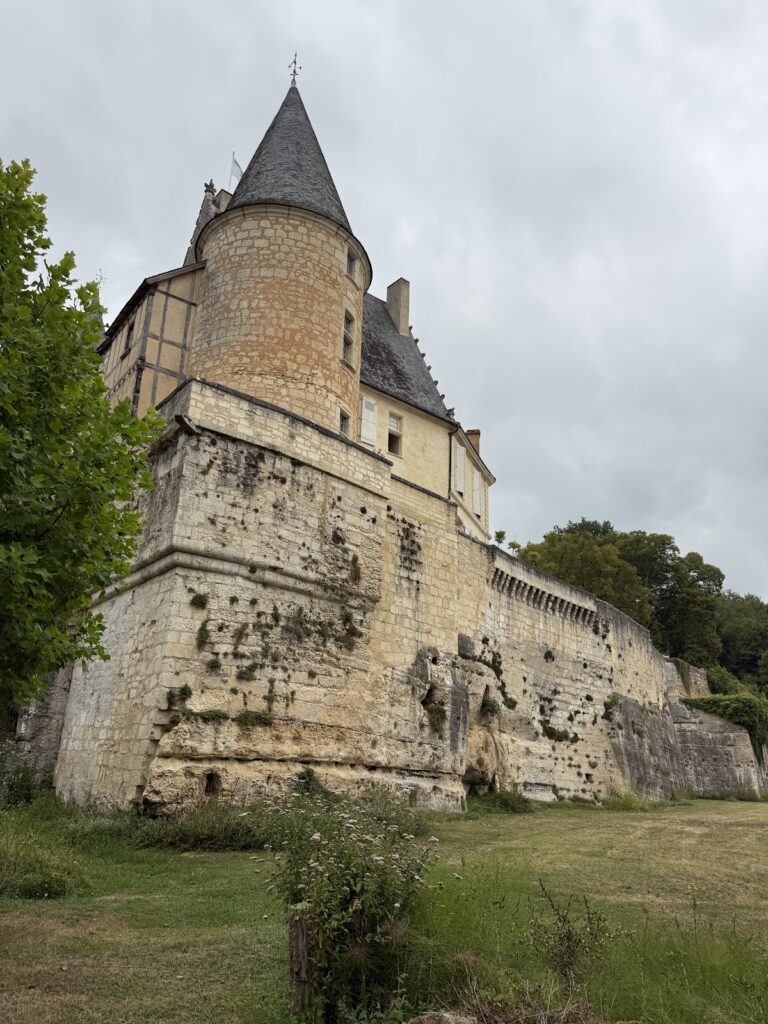
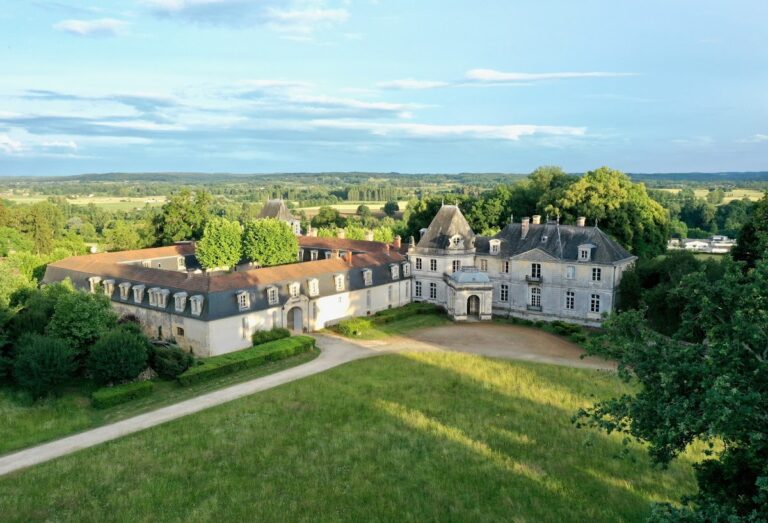
Château de Bayac stands halfway up the slope on the left bank of the Couze, east of Bayac village, in a position overlooking the valley. Its surviving fabric combines elements of the fourteenth-century fortified complex with a sixteenth-century circular tower and residential buildings added in the eighteenth and nineteenth centuries. The later construction altered the château’s original defensive character.
Fourteenth-century towers
Crenellated tower and Queen’s Chamber
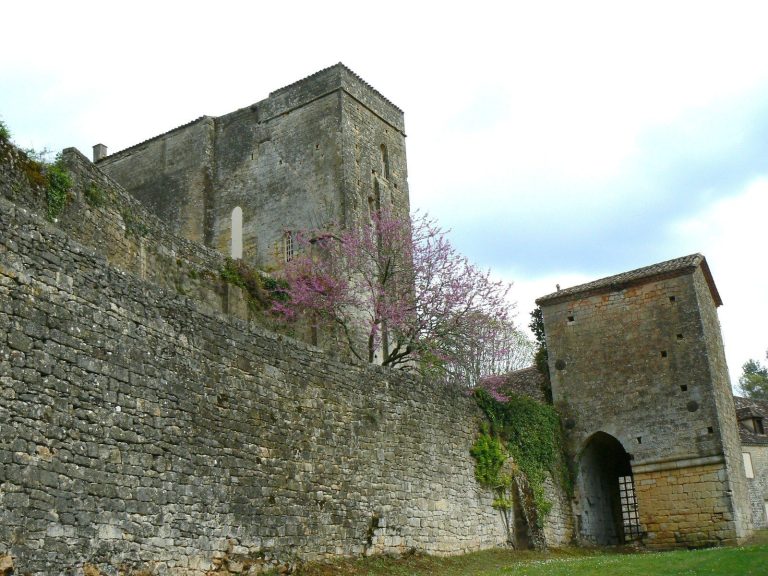
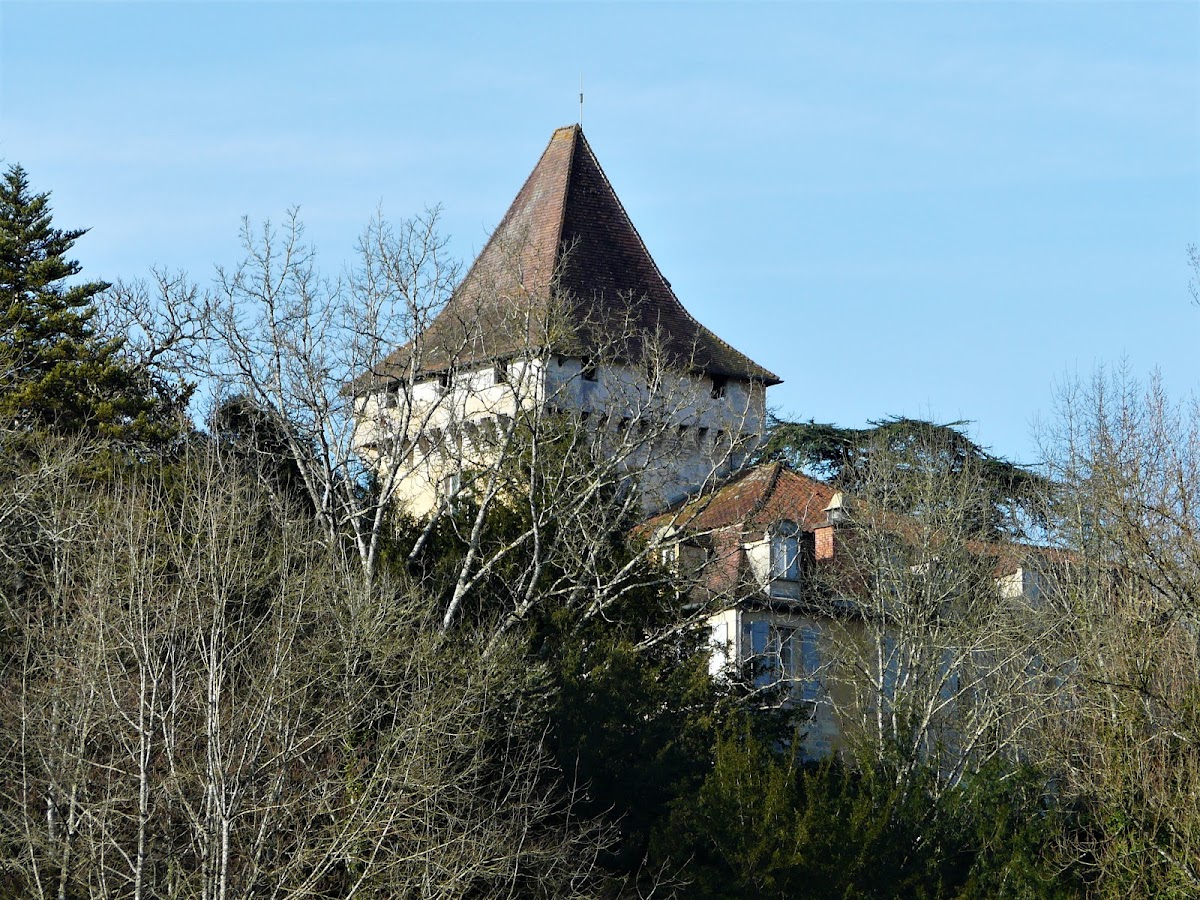
One surviving medieval tower is crenellated and resembles a keep. It contains the room known as the Queen’s Chamber, associated with Eleanor of Aquitaine, the twelfth-century duchess who became queen consort of both France and England. A monumental stone spiral staircase leads to the chamber.
Machicolated tower
Another medieval tower has machicolations, projecting openings or galleries through which defenders could observe or attack enemies below. It is flanked by a covered échauguette, a small projecting sentry turret embedded in the wall.
Later additions and protected fabric
A circular tower was added in the sixteenth century. The main residential building was constructed during the eighteenth century and extended or rebuilt in the nineteenth century, creating the later domestic form of the complex. The historic fabric protected by the 1970 listing comprises the façades, roofs, and circular tower.