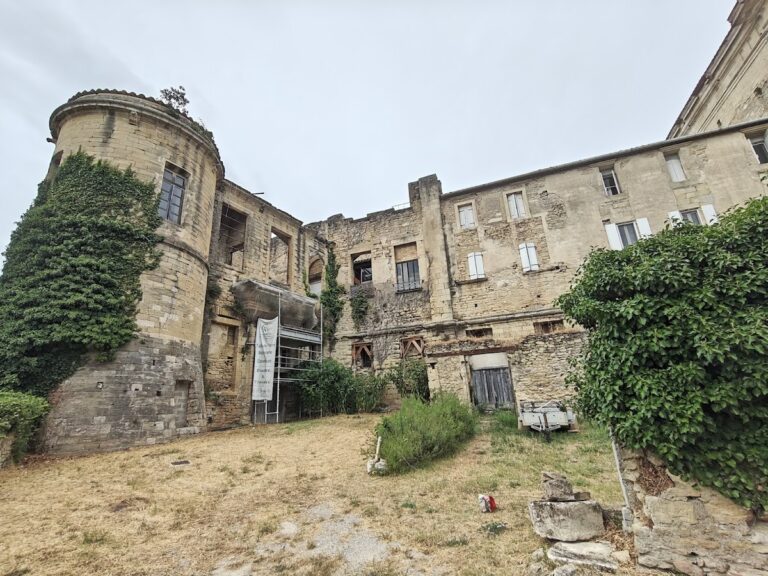
Château de Montoulieu: A Medieval Fortress in France
Visitor Information
Google Rating: 4.7
Popularity: Very Low
Country: France
Civilization: Medieval European
Site type: Military
Remains: Castle
History
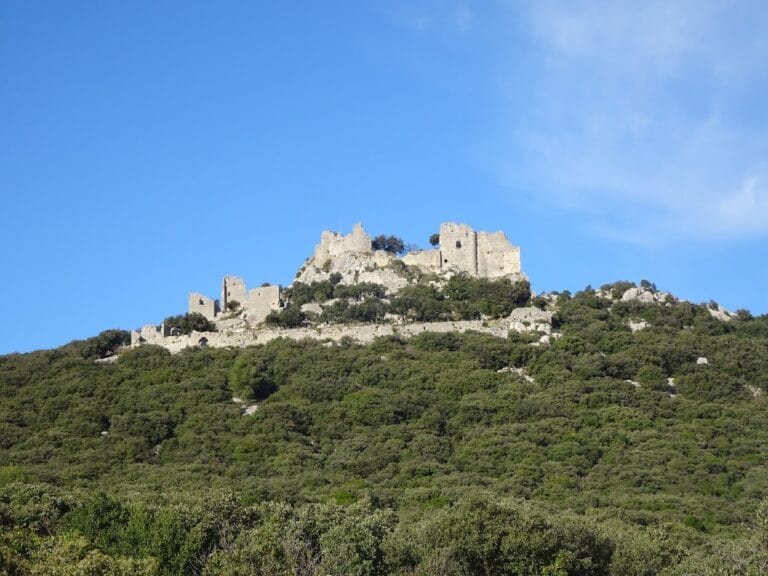
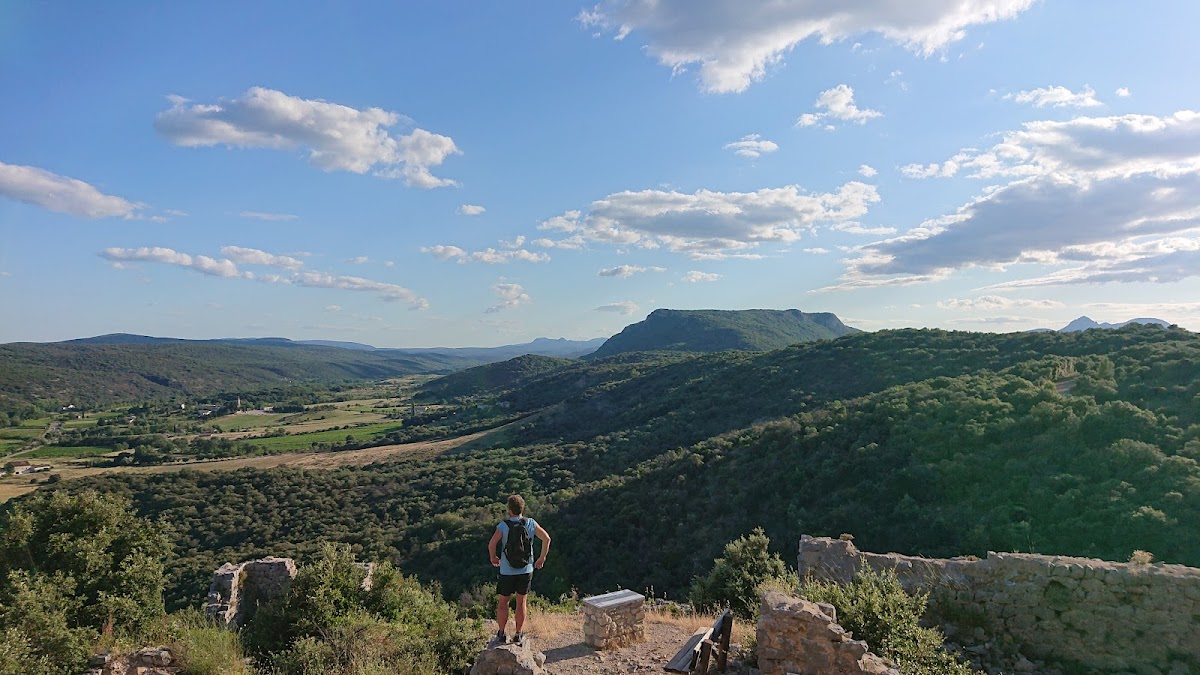
The Château de Montoulieu is situated on a hill within the commune of Montoulieu in modern-day France. Constructed during the medieval period by local lords, this fortress formed part of a typical Mediterranean castral village dating from the 12th to 13th centuries.
The castle itself is first recorded in 1178, marking its emergence as a notable stronghold in the region. Around this time and extending into the 13th century, the de Montoulieu family held authority over the site. Their influence was shared with neighboring noble families from Laroque and Ganges, who together managed the local power structure. Additionally, aristocratic youths administered agricultural estates called manses within the nearby Alzon valley, reflecting a social organization based on landed holdings and agricultural management.
Between roughly 1150 and 1250, the fortress and its associated buildings were established to serve both defensive and residential purposes. By the late 13th century, the village surrounding the castle became recognized, with records dating it to 1292. After this period of active use, the complex gradually ceased serving as a stronghold and was repurposed for storage, indicating a decline in its military importance.
In February 2025, recognizing its historical value, the Castellas de Montoulieu was officially designated as a historic monument, preserving its heritage within the communal landscape.
Remains
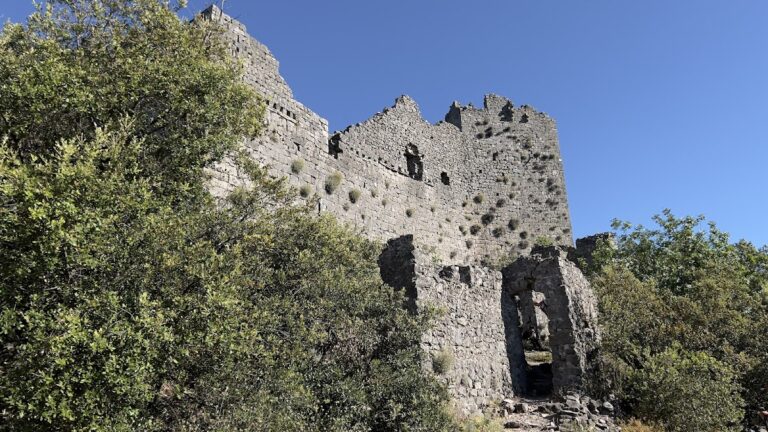
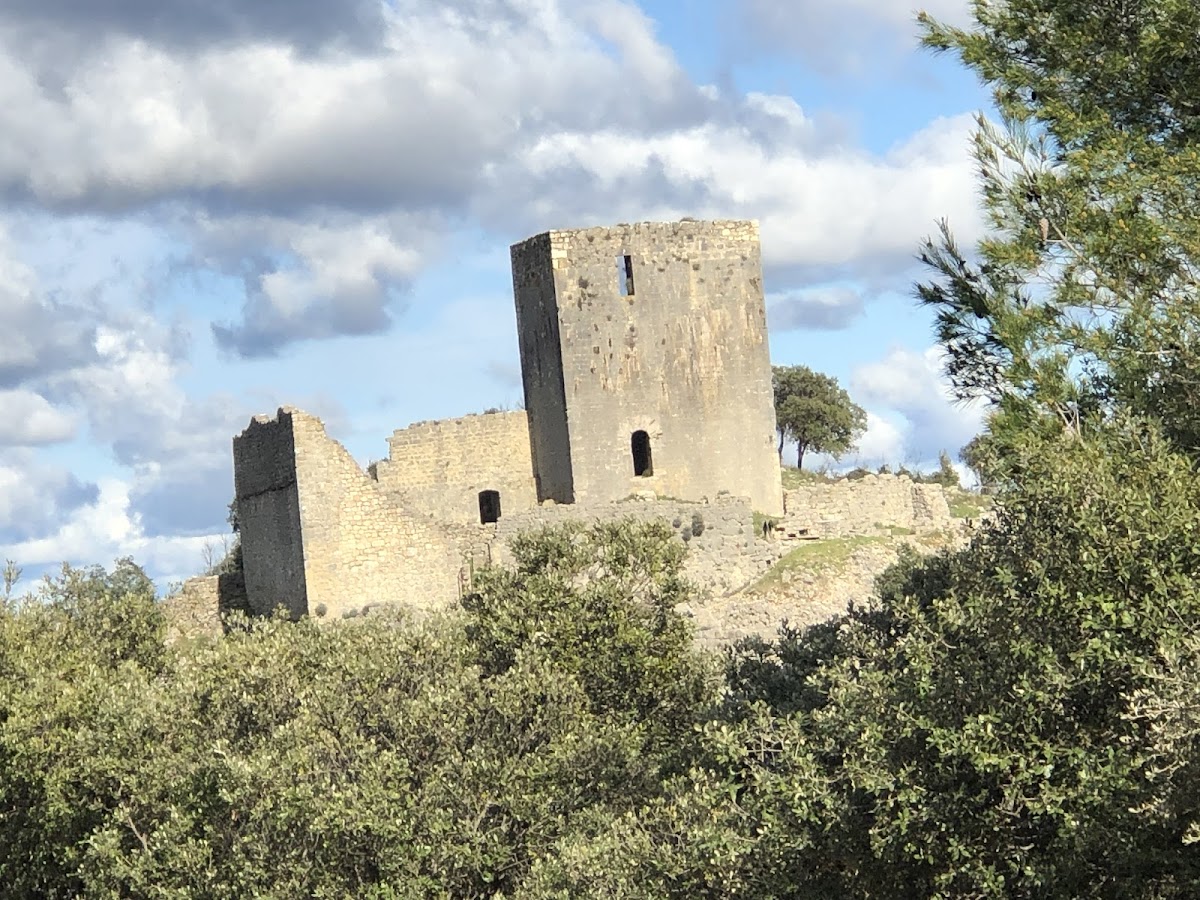
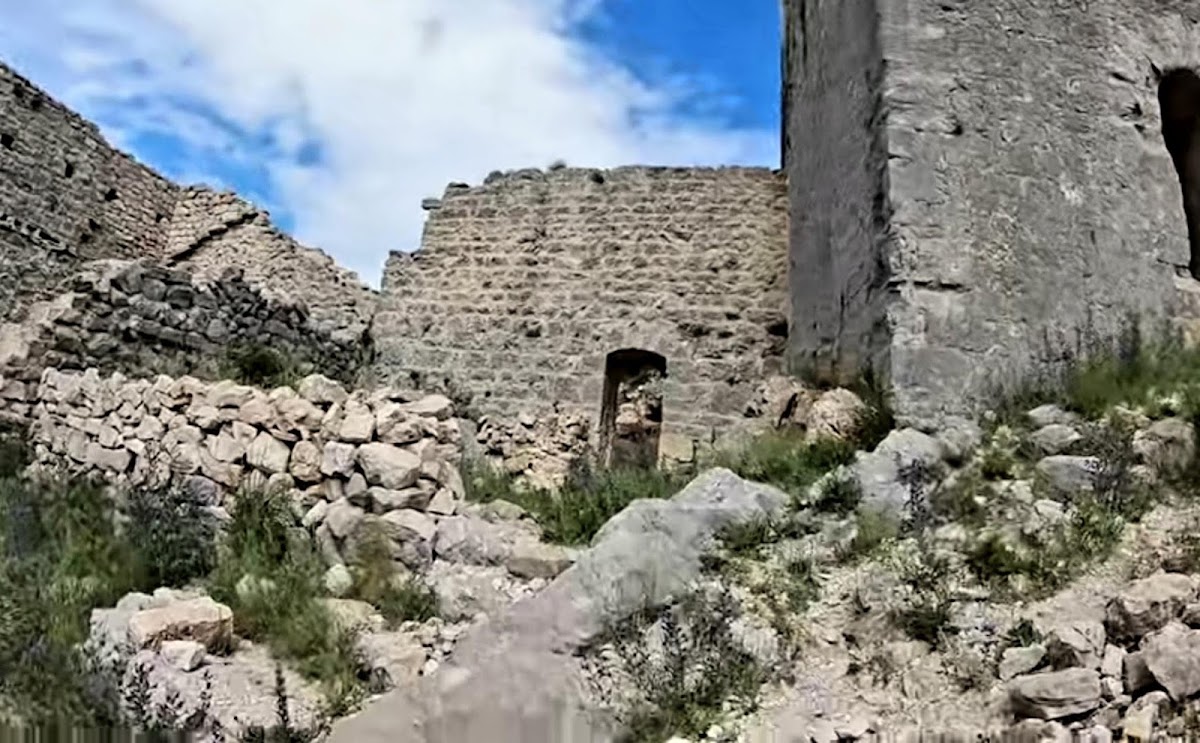
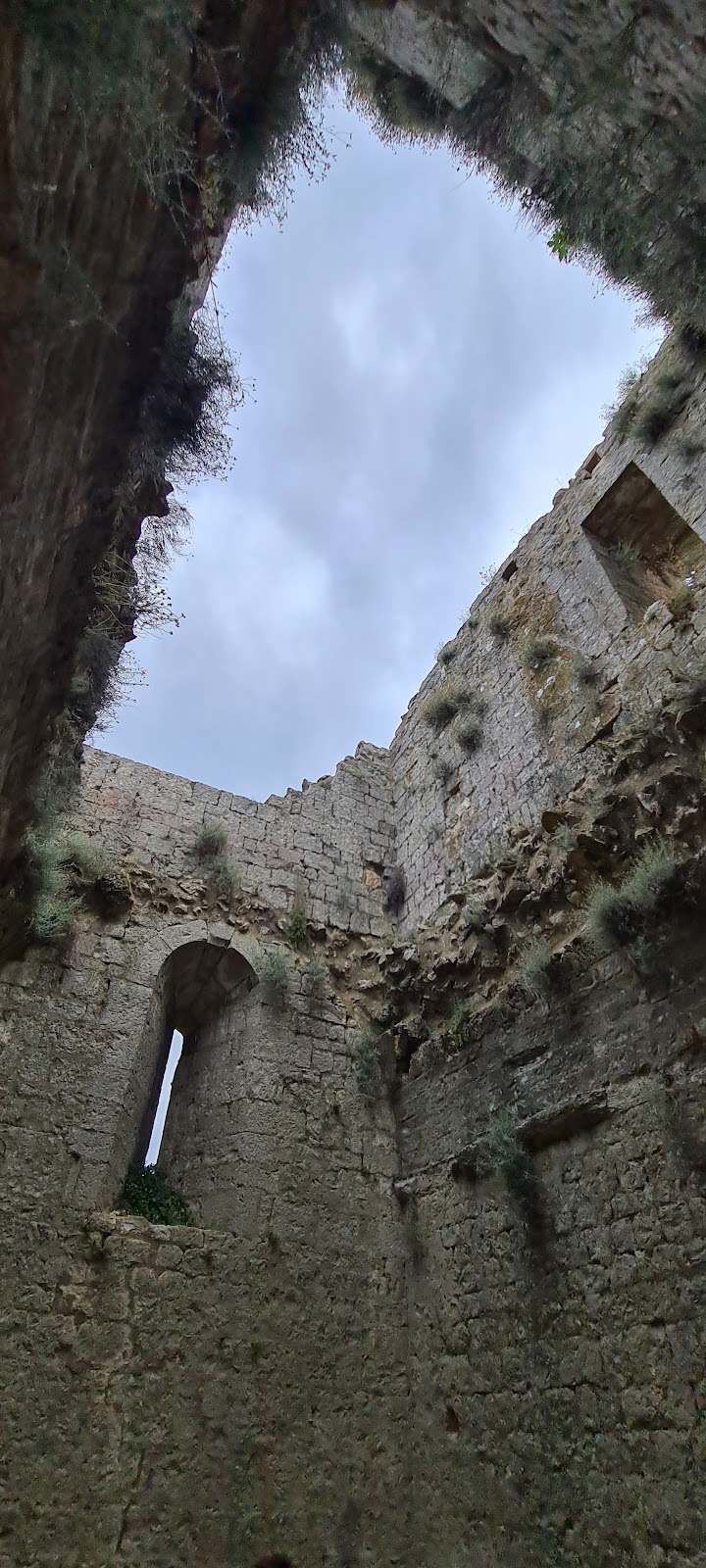
The site of the Château de Montoulieu is organized around a central castral complex positioned at the summit of its hilltop location. This core includes a fortified tower and an aula, or hall, which would have functioned as a main gathering or receiving space during its active use. Surrounding these structures are curtain walls that once provided defensive protection. Smaller annex buildings complete the main enclosed area, together forming the heart of the medieval fortress.
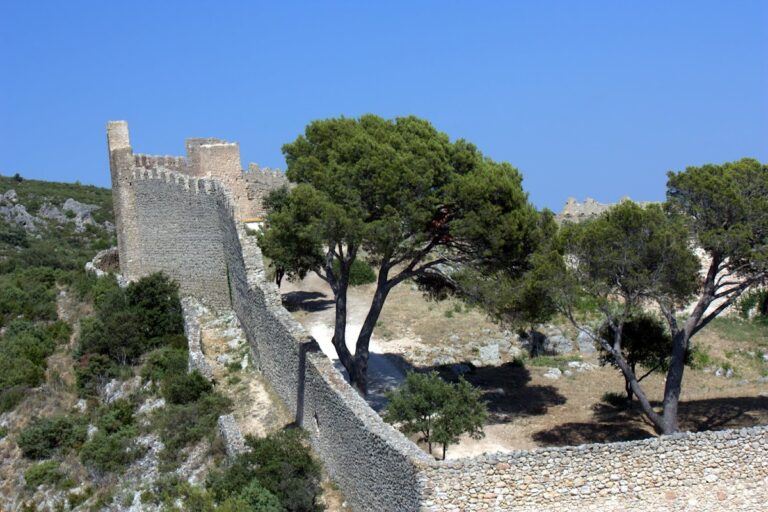
Directly adjoining the core complex is a tightly arranged village extension. This settlement area is encircled by an intact fortification wall that rises above the natural terrain, marking the boundary of the inhabited space and reflecting defensive concerns extending beyond the immediate castle precinct. Within this protected zone, internal gates and interconnected streets linked the castle to a chapel, facilitating movement and access between religious and secular spaces.
Outside the main fortified wall lies a faubourg, or suburb, which expanded the settlement beyond the original defensive perimeter. This outer area indicates a degree of growth and development in the village’s layout, accommodating inhabitants and activities outside the strict protection of the castral walls.
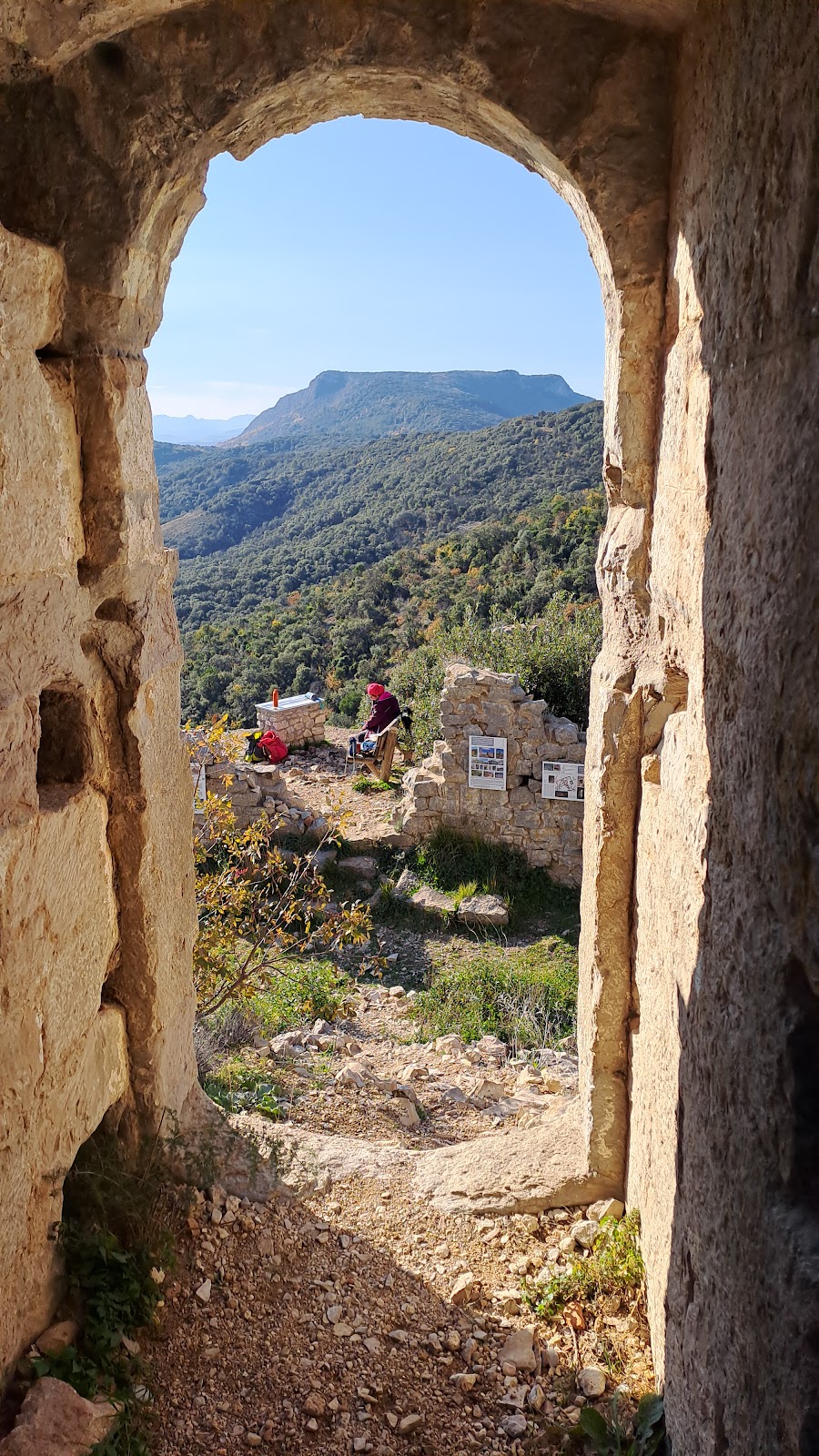
Today, the remaining structures stand in situ, allowing a clear understanding of the site’s original configuration. The combination of core fortifications, enclosed village, and outer suburb reflects the multi-layered nature of medieval Mediterranean settlement organization preserved at Montoulieu.
Nearby sites