Château de Montferrand: A Medieval Fortress in France

Site at a Glance
- Rating
- 4.6
- Popularity
- Low
- Country
- France
- Primary era
- Medieval
- External website
- Open
- Eras represented
- Medieval, Early Modern
- Civilizations
- Crusader, French
- Site type
- Military
- Remains
- Fort
On this page9 sections
History
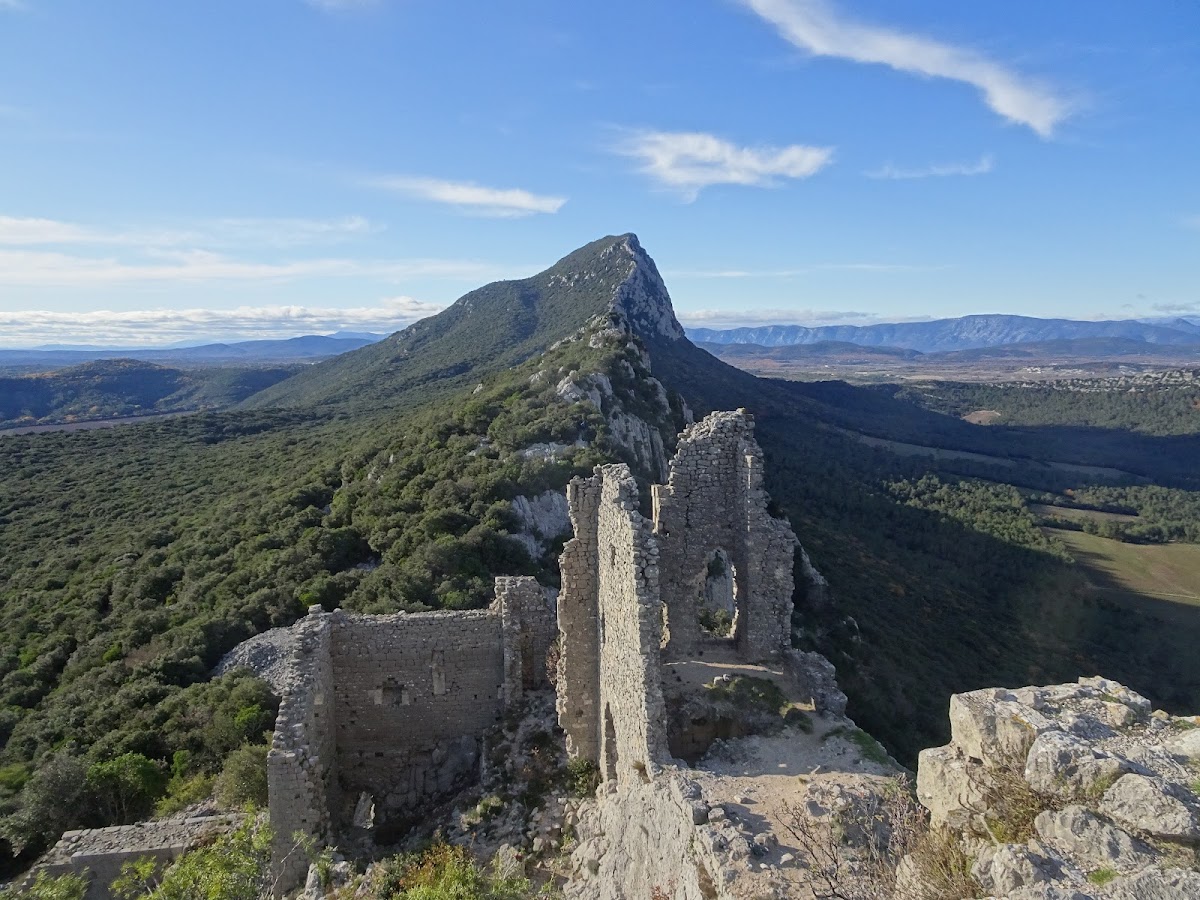
Château de Montferrand is a medieval fortress in France, overlooking Saint-Mathieu-de-Tréviers from the limestone ridge of Pic Saint-Loup. Construction began in the twelfth century, on a site associated with an earlier Roman stronghold. The fortress formed part of the defensive system of successive rulers and was used as a military position rather than as a residential castle.
The Counts of Melgueil and Toulouse
Montferrand appears in historical records at the beginning of the twelfth century. By 1132, it belonged to the Counts of Melgueil, whose territories were divided into the districts of Melgueil, later known as Mauguio, and Montferrand. Alphonse Jourdain, Count of Toulouse, asserted rights over Montferrand and part of the County of Melgueil, bringing the fortress into the political disputes surrounding control of the region.
During the Albigensian Crusade, a thirteenth-century campaign against Cathar communities and their political supporters in southern France, Montferrand was confiscated from Raymond VI, Count of Toulouse, in 1215. The pope entrusted it to the Bishop of Maguelone, who thereby became Count of Melgueil and Montferrand. The fortress became a pontifical allod, property held directly under papal authority and exempt from ordinary feudal dues. The bishop exercised both spiritual and temporal authority there and held the right to mint the melgorien denier, a medieval coin associated with Melgueil. In 1245, command of the fortress passed to a castellan-captain.
Religious conflict and Renaissance changes
After the seat of the Diocese of Maguelone moved to Montpellier in 1536, Montferrand became involved in the Wars of Religion, the sixteenth-century conflicts between Catholics and Protestants in France. Protestant forces captured the fortress in 1574. Antoine de Cambous retook it in 1584 and restored it to Catholic control. The site was then entrusted to him, and he altered it under Renaissance influence. His daughter later married Jean de Ratte at Montferrand.
In 1611, Bishop Pierre de Fenouillet ordered a major strengthening of the defenses to meet the threat of artillery. The campaign included cutting a ditch into the rock and adding a first enclosure. Protestant forces under the Duke of Rohan later besieged the fortress, but withdrew after coming under artillery fire.
The sieges of the seventeenth century
During the Huguenot uprisings, a series of seventeenth-century Protestant rebellions against royal and Catholic authority, Catholic troops led by Henry de Montmorency besieged Montferrand in 1622. The attempt failed and took place before the siege of Montpellier. After Montpellier was captured for the Catholic cause in 1623, Bishop Pierre de Fenouillet appointed the military captain Jacques Valat castellan of Montferrand for life.
Valat died in 1659. After his death, the fortress ceased to be maintained and began to decay. During the reign of Louis XIV, Colbert de Croissy authorized its demolition. The stones were offered as compensation to people prepared to dismantle the buildings, but the difficult transport across the rugged terrain restricted the work. By 1709, the fortress had been largely demolished.
Conservation and heritage protection
The Community of Communes of Grand Pic Saint-Loup has owned the site since 2009. A preservation and enhancement project begun in 2017 focuses on conserving the ruins and securing the dangerous site rather than reconstructing the castle as a whole. The work is carried out in partnership with the Regional Directorate of Cultural Affairs. Because of falling-stone risks and the cliffs beside the fortress, the site was fenced and closed to the public by 2018.
The project includes stabilizing endangered wall sections, securing access, and potentially rehabilitating selected remains, including the chapel. It also proposes contemporary spaces for exhibitions and cultural events. Château de Montferrand was listed as a historic monument by decree on 15 June 2022 and classified as a historic monument by a new decree on 25 March 2024, which replaced the earlier status.
Remains
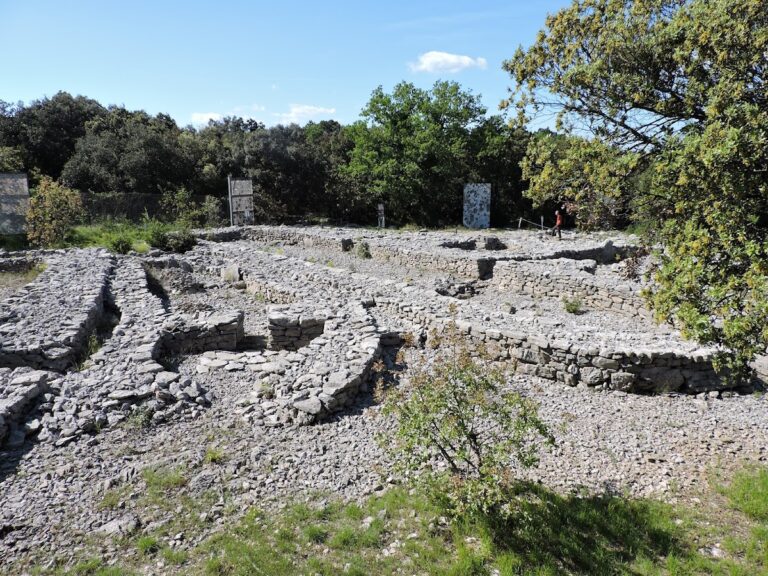
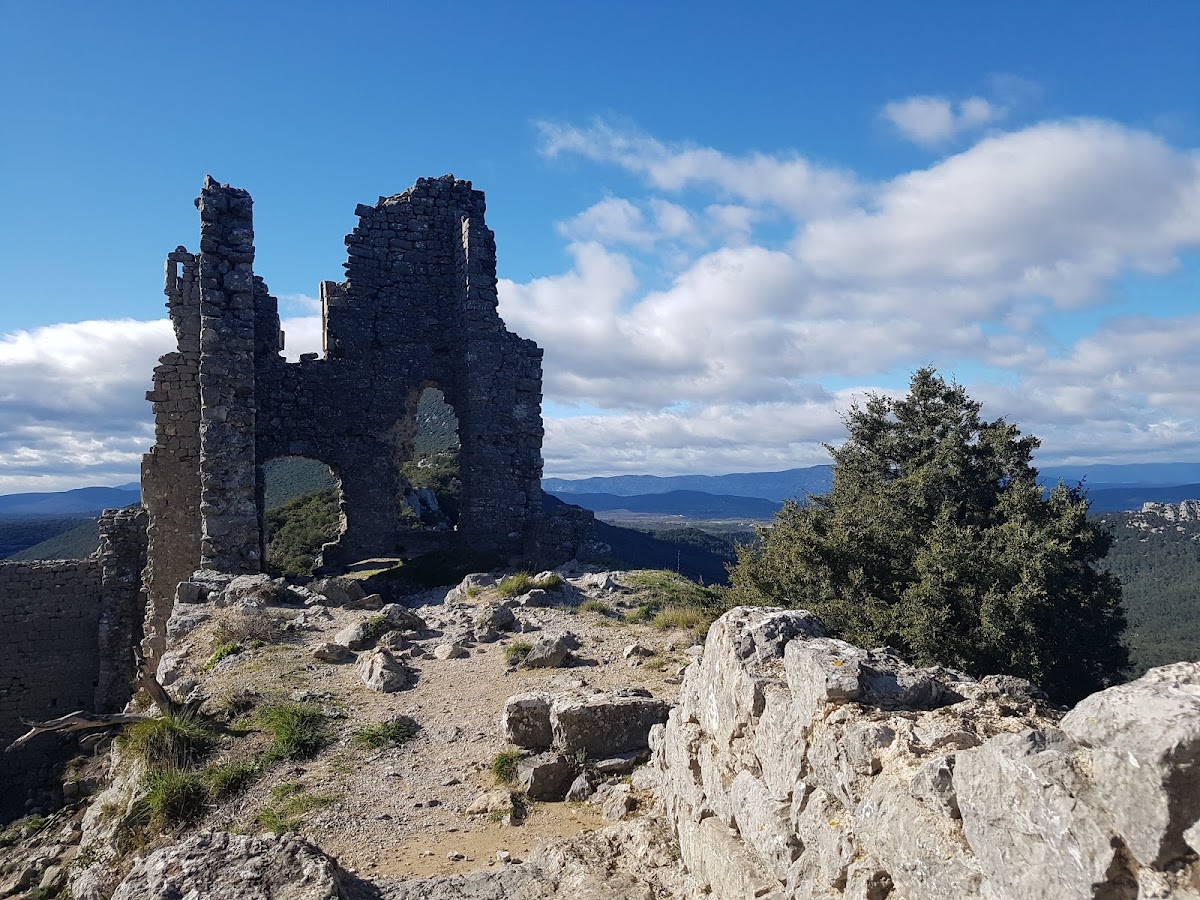
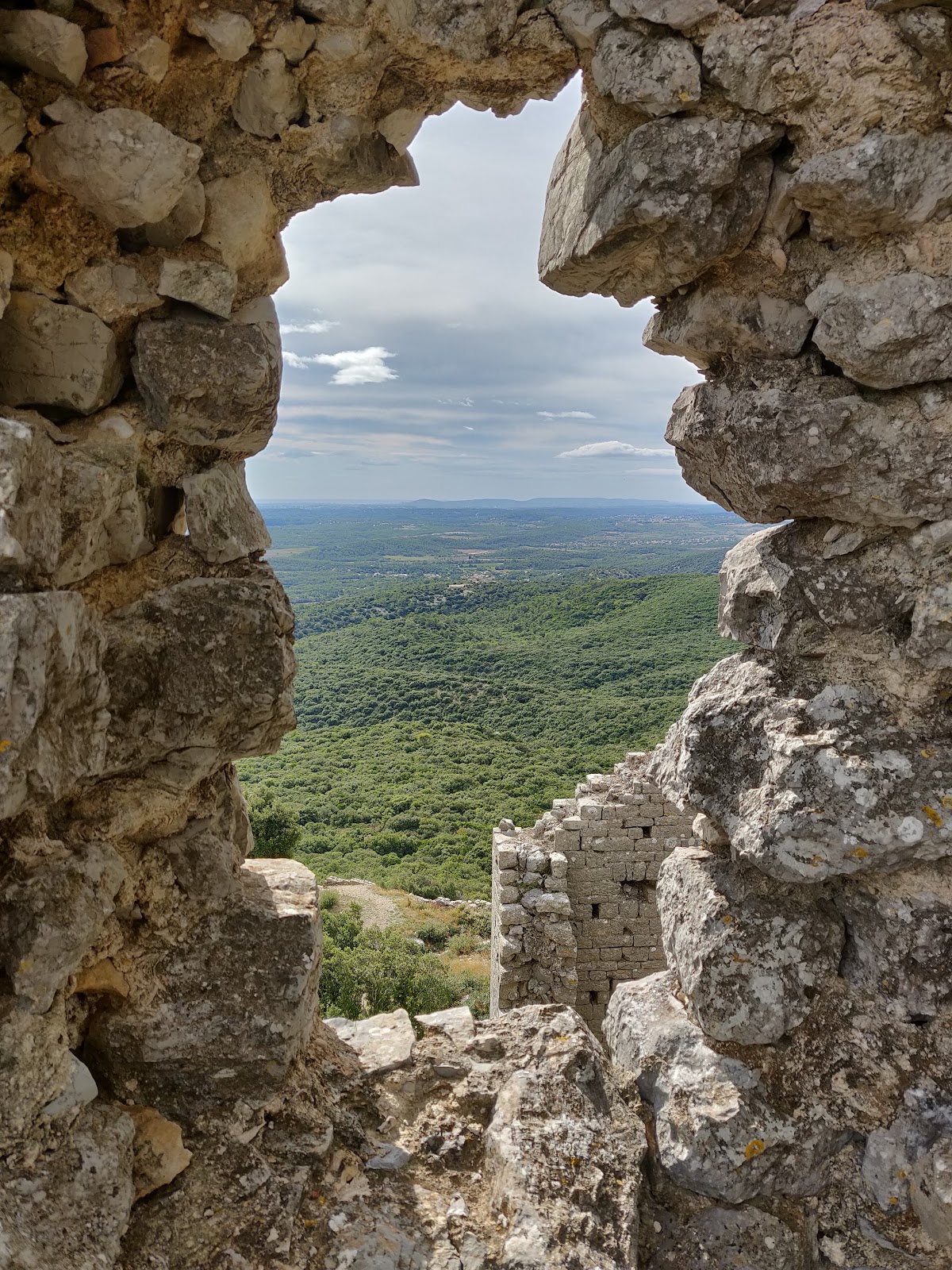
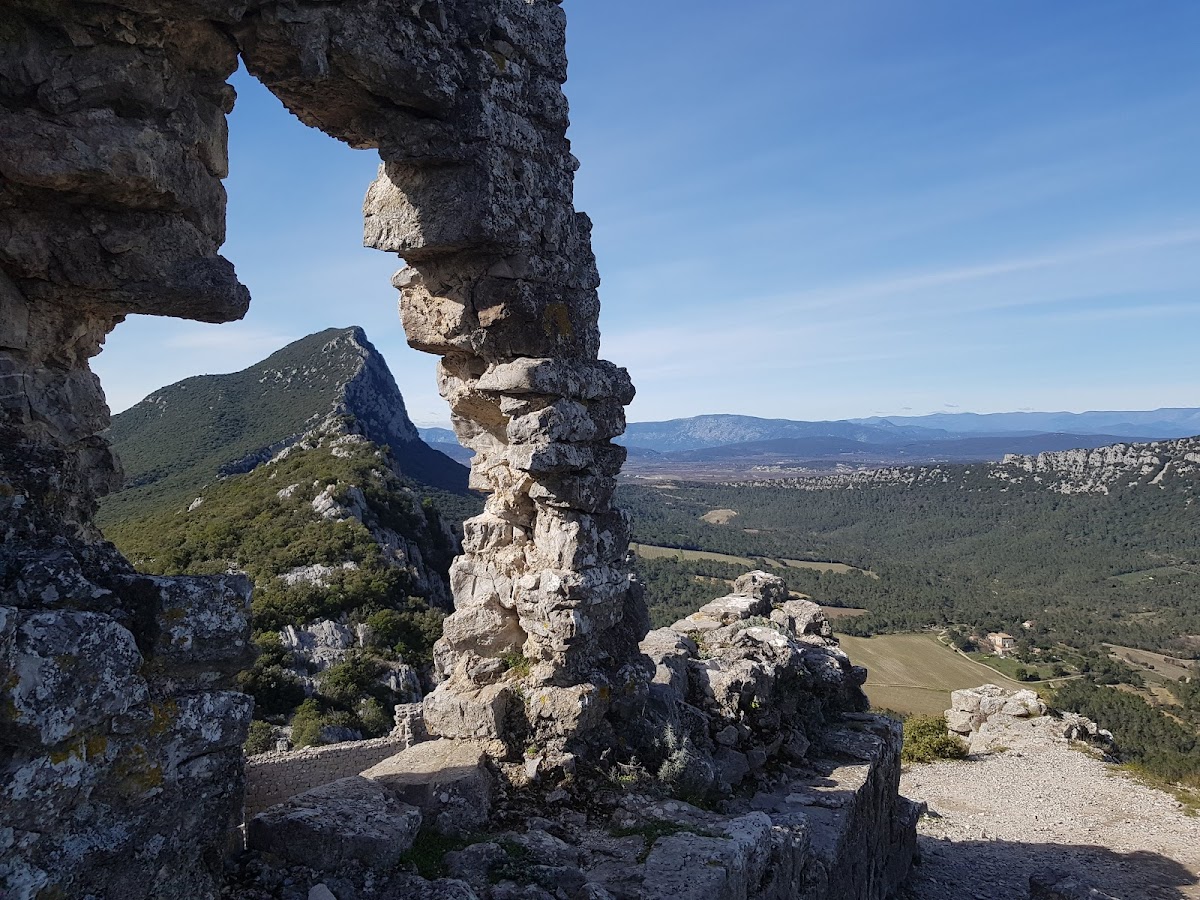
The ruins occupy a rocky limestone spur at approximately 400 metres above sea level on Pic Saint-Loup. They stand in a difficult-to-reach Mediterranean garrigue landscape, a scrub-covered terrain associated with limestone, among holm oaks and steep cliffs above Saint-Mathieu-de-Tréviers. The position provides views towards Pic Saint-Loup, Hortus, and the Valflaunès valley. The fortress was reached on foot by the long-distance hiking route GR 60, while the approach and surviving remains are now fenced because of falling masonry and the nearby cliffs.
Defensive remains
Rock-cut ditch and first enclosure
The defensive layout includes a ditch cut directly into the rock during Pierre de Fenouillet’s reinforcement campaign of 1611. A first enclosure was added in the same period as part of the effort to strengthen Montferrand against artillery. These works formed part of the fortress’s military role within the defensive system of the territories controlled by its successive owners.
Walls and vaulted space
Surviving remains include sections of wall, western and northern elevations, and at least one vaulted space. The masonry belongs to a ruinous fortress whose later form was shaped by medieval construction, Renaissance alterations under Antoine de Cambous, seventeenth-century defensive work, and subsequent demolition. The proposed conservation measures include consolidating or partly rebuilding major walls and reconstructing the castle chapel, but these are proposed interventions rather than completed works.
The enhancement project also proposes a contemporary structure containing exhibition areas and spaces for cultural events. Its purpose is to support the conservation and interpretation of the surviving fortress while allowing selected remains, including the chapel, to be rehabilitated without reconstructing Château de Montferrand in its entirety.