Château de Montarnal: A Medieval Fortress in Sénergues, France
Visitor Information
Google Rating: 4.9
Popularity: Very Low
Country: France
Civilization: Medieval European
Site type: Military
Remains: Castle
History
The Château de Montarnal is located in the commune of Sénergues, France. It was constructed during the medieval period, with roots extending back to at least the late 11th century under the civilization of medieval Europe.
The name “Montarnal” means “mount of Arnaud” and has been recorded since the late 11th century, highlighting the site’s early identification and association with regional nobility. The first lords of Montarnal are thought to have been descendants of the Austrin family from Conques. This family held important rights over navigation and river crossing on the Lot River during the early 11th century, suggesting the château’s origins are tied to controlling movement along this vital waterway.
In 1287, the château became entangled in feudal politics when Guy VI de Sévérac exchanged his rights over Montarnal and other estates with Eustache de Beaumarchais. This transfer reflects the shifting alliances and territorial negotiations typical of the era. Over time, ownership passed from the original Montarnal family line to the Moret family, originating from Mouret, who held the fief until the 18th century. At the end of the Ancien Régime, François Figeagol de Lagrange was the last lord to possess the château before the societal transformations brought by the French Revolution.
Restoration efforts to preserve the château began in 1977 under Gérard Revel. Recognition of its historical importance was formalized in 1997 when parts of the château were designated as historic monuments by official decree, ensuring protection for its remaining medieval structures.
Remains
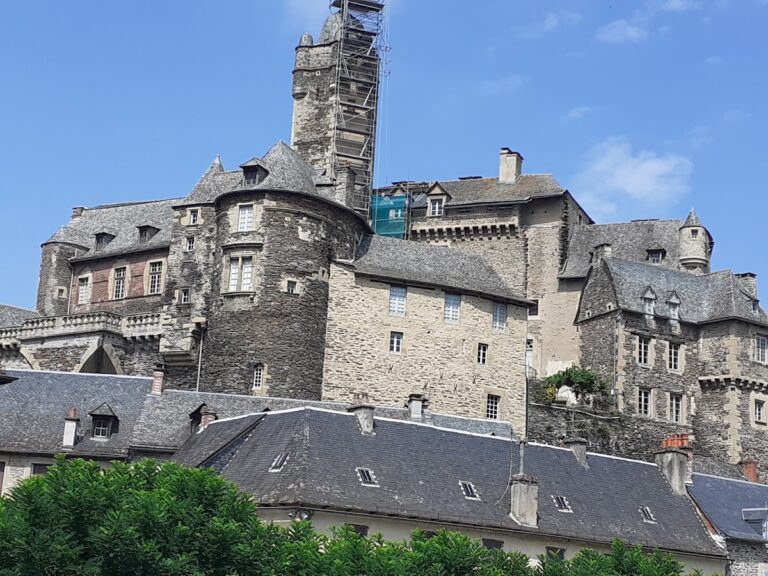
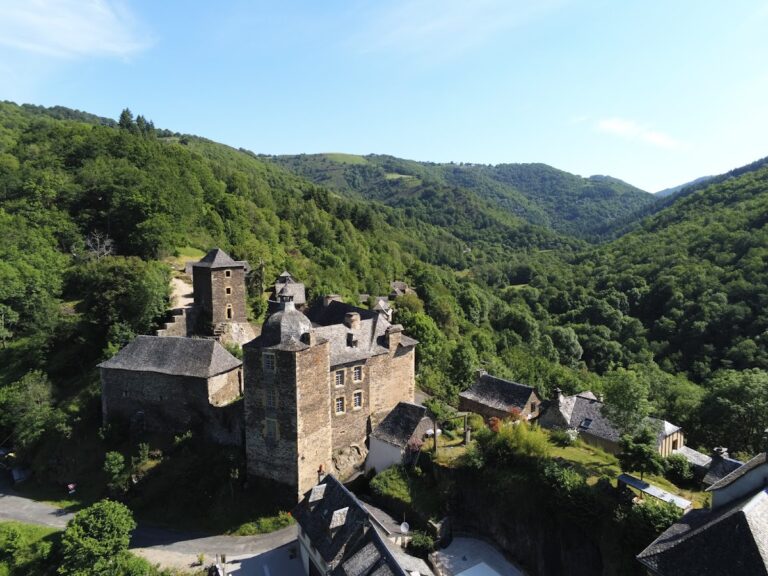
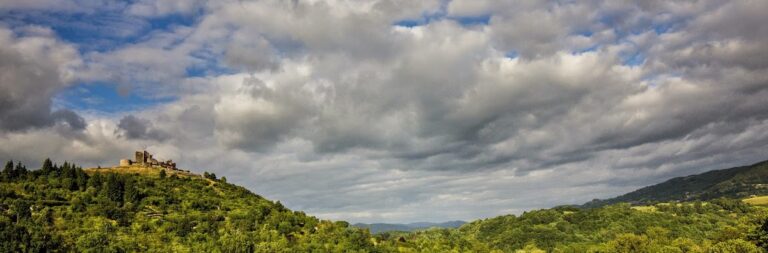
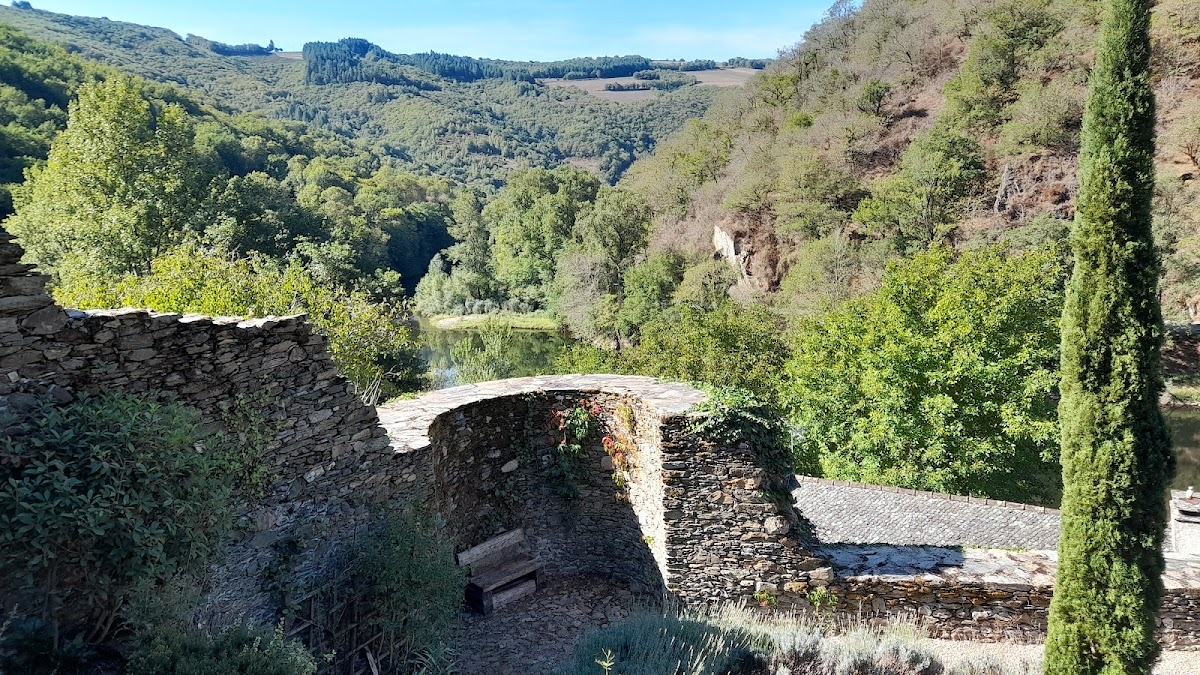
The Château de Montarnal occupies a strategic rocky promontory above the Lot River, emphasizing its role in overseeing and controlling the river boundary between the Aveyron and Cantal departments. The layout includes medieval defensive and residential elements that have partially survived.
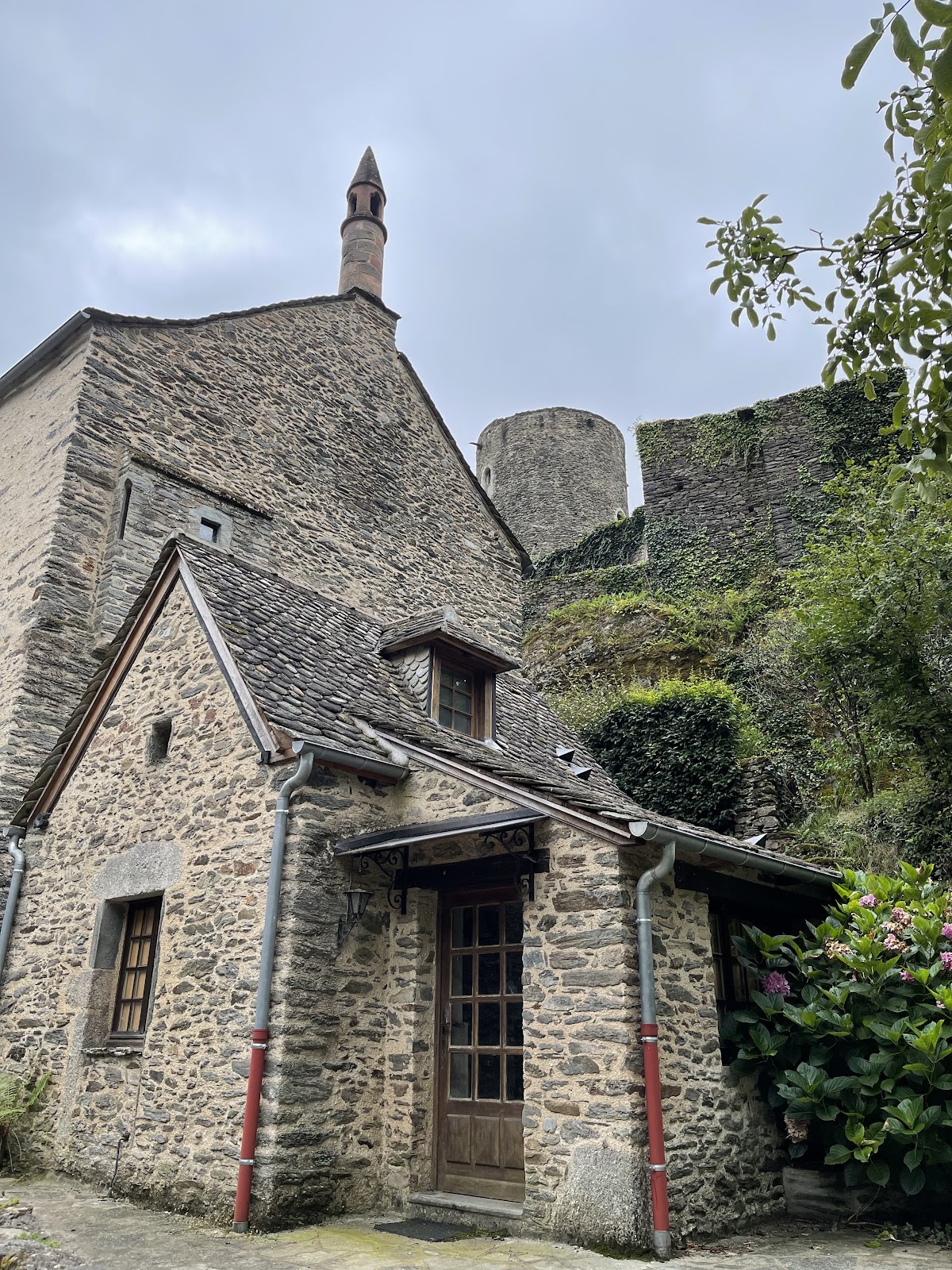
Among the most prominent features is a round tower, which provided both lookout and defensive functions typical of fortifications from the medieval period. This tower, constructed using traditional masonry techniques appropriate to the time, stands in ruins but remains a central element of the preserved fabric.
Adjacent to the tower lies the lordly hall (salle seigneuriale). This hall functioned as the main residential and administrative space of the castle’s lord, serving as a venue for gatherings and local governance. The remains of the hall convey the site’s role beyond military defense, offering insight into the daily operations of a medieval seigneurial estate.
Surrounding these key structures is a defensive enclosure, forming part of the castle’s fortifications that secured the site against potential attackers. The enclosure demarcated the castle’s perimeter, reinforcing its strategic position atop the promontory.
Beneath the château, a cellar has been carved directly into the rock. This subterranean space would have likely been used for storage, preserving foodstuffs and goods. The rock-cut cellar remains intact, providing a rare example of medieval utility spaces integrated into the natural landscape.
Together, these elements—the tower, hall, defensive walls, and rock-cut cellar—illustrate the château’s multifaceted function as a fortified noble residence controlling river passage during the Middle Ages. Their current state offers a tangible connection to the site’s historic role in regional lordship and defense.
Nearby sites