Calmont d’Olt Castle: A Medieval Fortress in France


Site at a Glance
- Rating
- 4.5
- Popularity
- Medium
- Country
- France
- Primary era
- Medieval
- External website
- Open
- Eras represented
- Medieval
- Civilizations
- Unclassified
- Site type
- Military
- Remains
- Castle
On this page14 sections
History
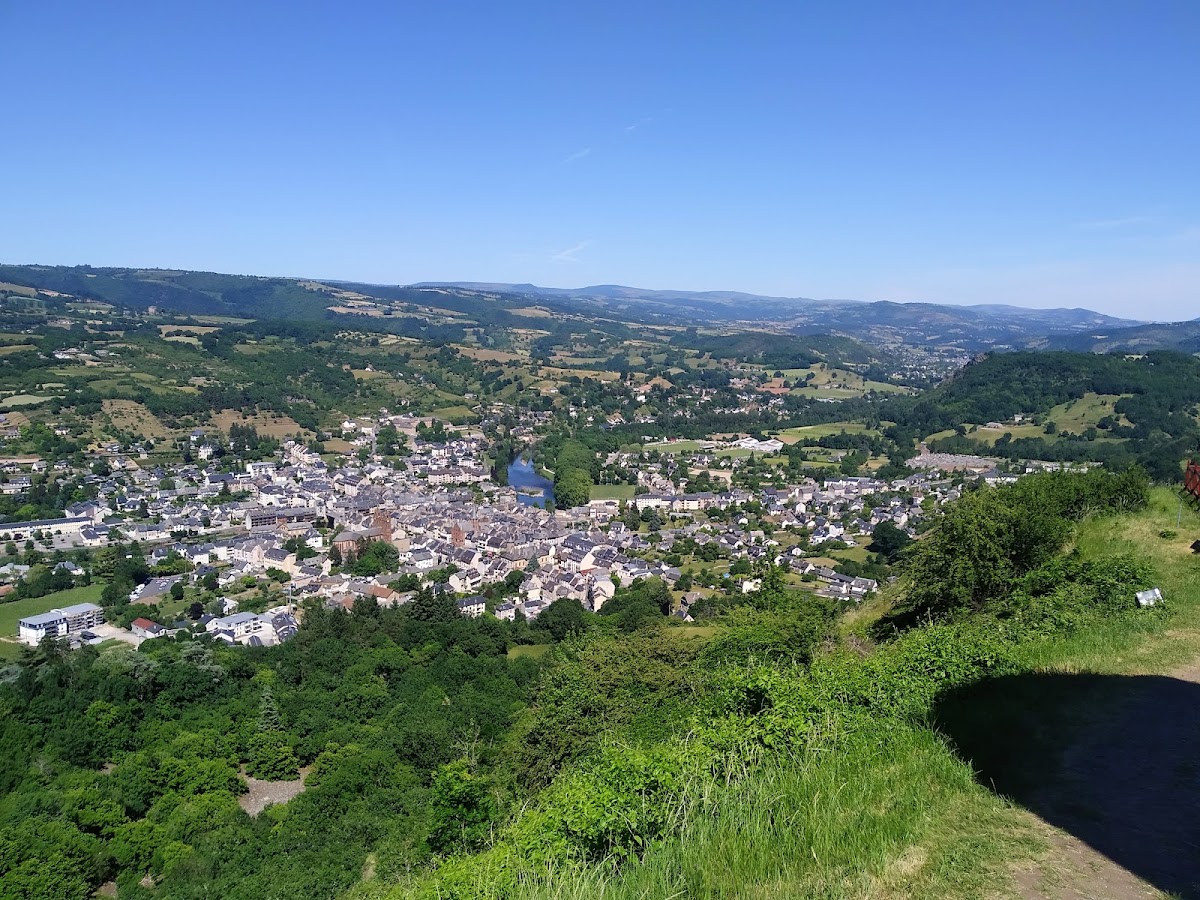
Calmont d’Olt Castle is a medieval fortress in France, above Espalion and the Lot valley. Built by the lords of Calmont d’Olt, it was established mainly in the eleventh century and formed part of the medieval development of fortified sites in Rouergue. Its position enabled it to command the road from Rodez toward Aubrac and the crossing of the Lot on the commercial route linking Toulouse, Rodez, and Lyon.
Early occupation and foundation
Human occupation of the site extends back more than 5,000 years, as indicated by flint fragments and a polished stone axe. The place was first recorded in 883 as a ministerium, an early medieval territorial jurisdiction, and as the defensive center of a Carolingian viguerie, an administrative and judicial district. The castle itself is explicitly mentioned from 1161.
Construction is generally placed in the eleventh century, although a date around 883 to 899 has also been proposed. Archaeological discoveries made in 2006 show that at least part of the structure was built in the eleventh or twelfth century. The successive changes made between the eleventh and fifteenth centuries transformed the site as military requirements developed.
The lords of Calmont d’Olt
The lords of Calmont d’Olt held authority over important resources and routes around Espalion. In 1060, Hugues de Calmont d’Olt granted the abbey of Conques the freehold estate of Perse and half of the salt toll collected at Espalion bridge. In the same year, his vassals at Perse received their lands freely in return for a customary rent, or cens. Around 1100, the lords collected a toll at the bridge and took part in founding the Aubrac hospital.
The family also supported religious foundations. In 1144, Guillaume de Calmont d’Olt, bishop of Cahors, donated land for the establishment of Bonneval Abbey by the Cistercians, a reforming monastic order within Western Christianity. Bégon III de Calmont d’Olt joined Hugues, count of Rodez, in paying homage to Simon de Montfort in 1214. In 1226, King Louis VIII received Guillaume de Calmont’s liege homage at Espalion while returning from his campaign against the Albigensians. A communal charter issued in 1266 regulated relations between Espalion and the lord of Calmont d’Olt.
Raimond de Calmont d’Olt, bishop of Rodez and lord of Calmont, laid the first stone of Rodez Cathedral in 1278. The original Calmont lineage ended with his death at the close of the thirteenth century, and the barony then passed through the Pelet, Castelnau-Bretenoux, Castelnau-Caylus, Clermont-Lodève, and Luynes families.
Dynastic succession and local privileges
Pierre I Pelet inherited the barony in 1298, and his son Raimond Pelet followed him around 1309 to 1315. Hugues III de Castelnau-Bretenoux became baron in 1315, followed by Jean I de Castelnau in 1350. A loyal supporter of the French king, Jean I later served as governor in Guyenne and captain general in Languedoc, and designated his nephew Pons de Caylus as his heir.
Pons I de Castelnau-Caylus inherited the barony in 1395. Antoine followed in 1419, Jean II in 1465, Jacques in 1505, and Jean III in 1514. Pierre Guilhem de Castelnau-Clermont-Lodève inherited it in 1530, followed by Gui I in 1537, Gui II in 1544, Alexandre de Castelnau-Clermont-Lodève in 1580, and Gabriel-Aldonce de Castelnau-Clermont in 1621.
The barons repeatedly confirmed Espalion’s consular privileges. These confirmations were issued by Antoine in 1455, Jacques in 1512, Jean III in 1528, and Alexandre in 1591. Jean II served Louis XI as counsellor and chamberlain. Gui I was chamberlain to Francis I and seneschal of Carcassonne, while Gui II became seneschal of Toulouse in 1566.
War, occupation, and decline
The Hundred Years’ War, the long conflict between the English and French crowns from 1337 to 1453, reinforced the castle’s military importance. Espalion supplied men for the Gascon war in 1341, and Hugues III de Castelnau-Bretenoux was captured by Henry of Lancaster at the siege of Bergerac in 1345. English forces invested Espalion in 1356, and the Treaty of Brétigny transferred Rouergue to the English in 1360. On 7 March 1362, the English lieutenant John Chandos received the homage of the town’s consuls at the castle.
Troops commanded by Arnaud de Cervole sacked Espalion in 1364. Louis I of Anjou recovered Rouergue from the English in 1369. In 1374, Charles V transferred the barony of Saint-Geniez-de-Rive-d’Olt, on which Calmont d’Olt depended, to Jean II of Armagnac. Charles VII passed through Espalion in 1437, and Francis I did so in 1533.
Espalion’s inhabitants sacked the castle in 1595, when it was held by its captain, Goffre, and a garrison of about eight men. Two inhabitants were held there in 1597. Alexandre de Castelnau-Clermont, baron of Calmont d’Olt, was assassinated at Espalion in 1621. The count of Apcher seized the castle in 1624, and the vicomte d’Arpajon took it without combat in 1649. It may also have been temporarily occupied by counterfeiters during the eighteenth century.
By the seventeenth century, the owners had left the fortress for more comfortable residences in the Lot valley. Calmont d’Olt then fell into ruin. An engraving made by Bichelois in 1833 shows the remains being used within an agro-pastoral landscape.
Protection and restoration
The site was listed on 24 December 1943. Thierry Plume bought the largely ruined castle in 1987 and began its gradual renovation. It was listed as a historic monument on 28 May 1990, while the castle, its second enclosure, and the remaining chapel ruins were classified on 10 February 1992. Work undertaken with the French heritage authorities, the regional archaeological service, and volunteers has progressively revived the site.
Remains
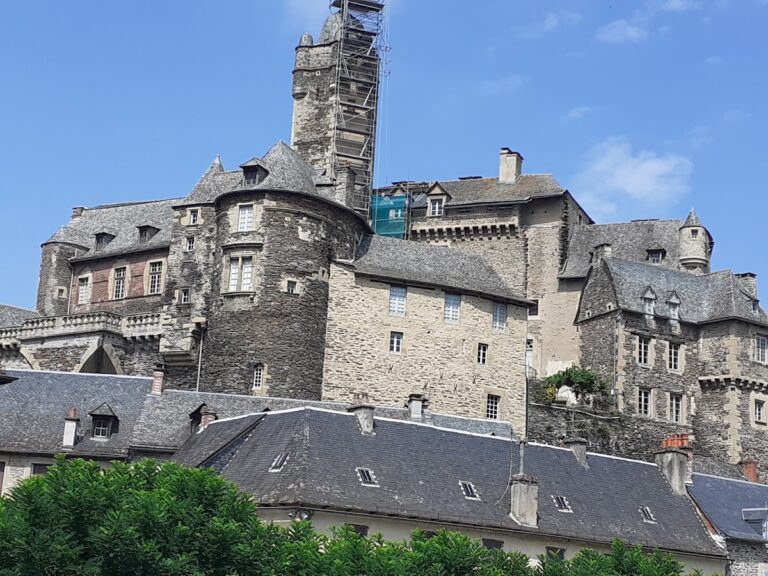
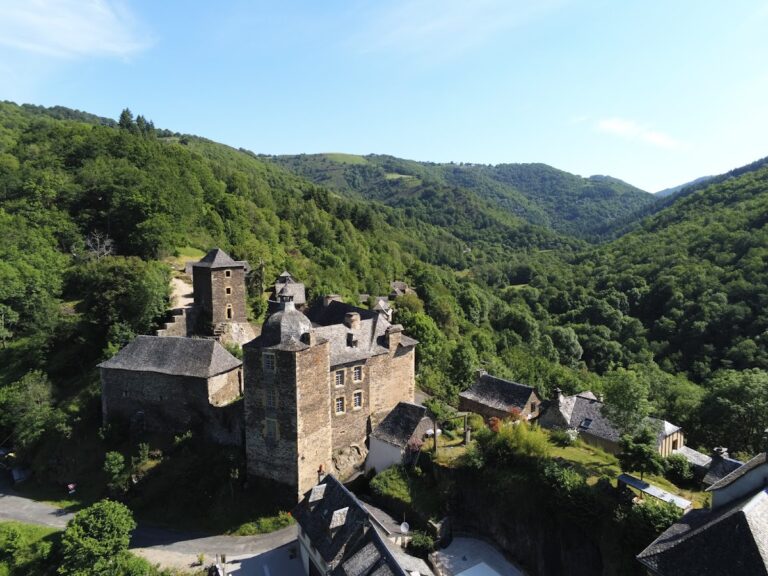
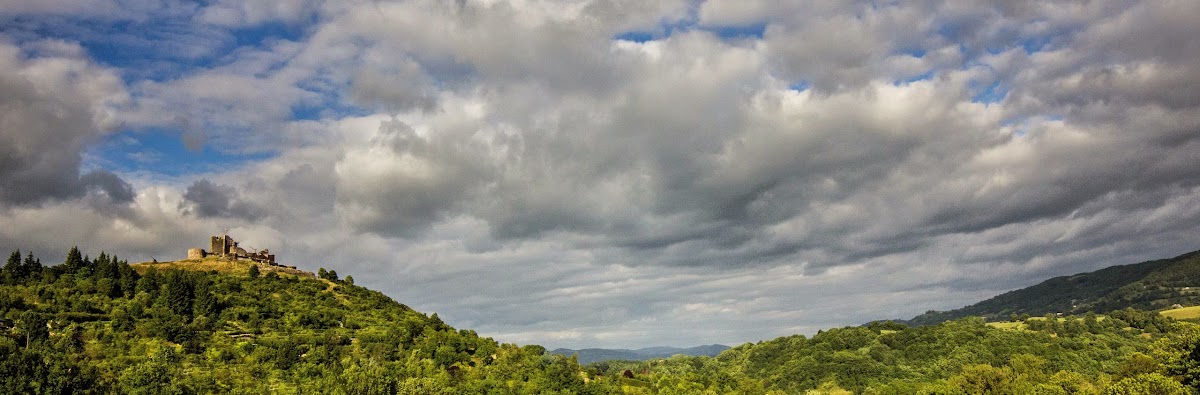
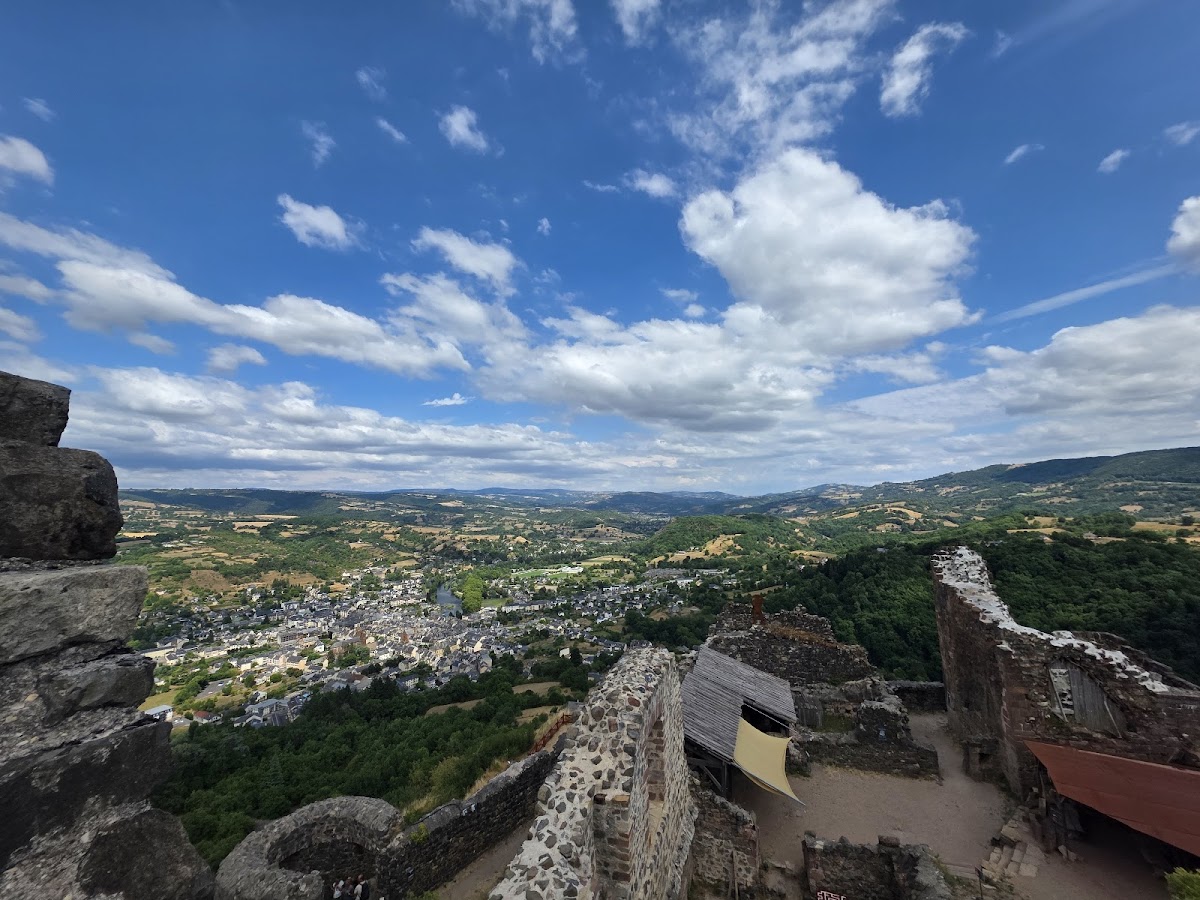
Calmont d’Olt stands on a basaltic dyke, a resistant mass of volcanic rock formed in a geological fracture, at an altitude of 535 metres. The fortress rises about 200 metres above Espalion and the Lot valley and overlooks the valley toward the Aubrac highlands. Its surviving layout consists of an upper enclosure and a later lower enclosure, with the outer chapel beyond the lower defenses.
Upper fortress
Keep and residential buildings
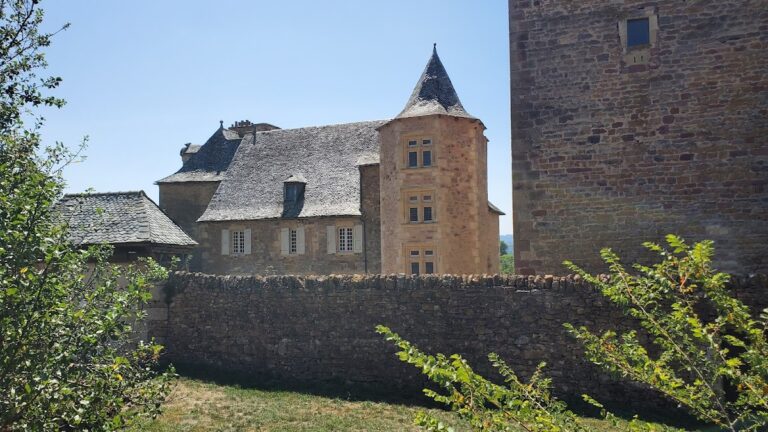
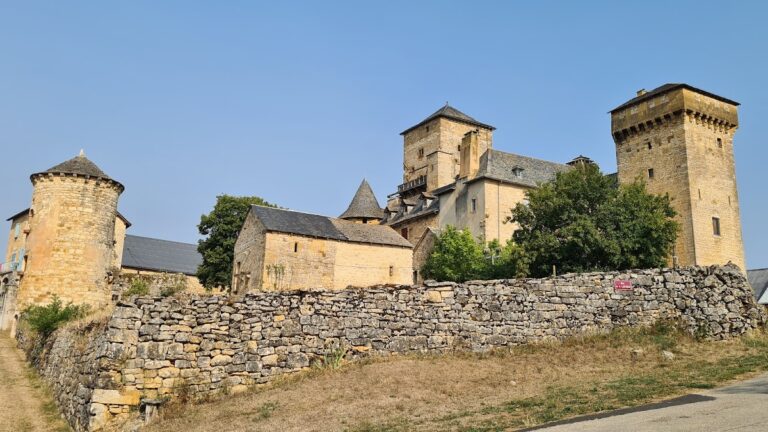
The upper enclosure contains a keep dating approximately to the year 1000, a residential building, and two towers. These structures form the older core of the fortress and preserve the relationship between its military and domestic functions. The castle underwent little further alteration after the fifteenth-century defensive works, so the surviving complex retains the general appearance of a medieval stronghold, although it is now largely ruined.
Long tower
Clearing rubble from the long tower in 2006 exposed a keystone and a triple Romanesque arcade, a rounded-arch opening used here to admit light. These elements place this part of the castle in the eleventh or twelfth century and indicate that it served both civil and military purposes.
Great western tower
The great western tower was largely ruined. In 1627, Gabriel-Aldonce de Castelnau contracted Jean Sabatier, a mason from Saint-Côme-d’Olt, to rebuild it. A condition survey from 1692 recorded two gabions, earth-and-stone-filled defensive structures, that required complete rebuilding, together with a drawbridge needing reconstruction and a collapsed tower.
Lower defenses and chapel
Second enclosure
The lower enclosure was constructed in the fifteenth century, in connection with the defensive adaptations made around 1400. It is flanked by eight towers open at the gorge, meaning that their outer sides were enclosed while their sides toward the interior remained open. This arrangement allowed defenders to use the towers while limiting their value to an attacker who captured them.
Outer chapel
An outer chapel stood beyond the lower enclosure. Only a small section of its wall survives, forming the remaining physical evidence of this part of the castle complex.
Nearby sites