Château de Kériolet: A Neo-Gothic Castle near Concarneau, France
Visitor Information
Google Rating: 4.5
Popularity: Medium
Official Website: www.chateaudekeriolet.com
Country: France
Civilization: Modern
Site type: Domestic
Remains: Palace
History
The Château de Kériolet is situated near the town of Concarneau in modern-day France. Its origins trace back to at least the late 15th century, when it first appeared in historical records in 1481 as a manor house owned by several local families, including the Kériollet, Trédern, and Kersalaun. This early phase represents the site as a modest estate within the Breton countryside.
In the mid-19th century, during the era of the Second French Empire, the château entered a new chapter through the involvement of Charles (or Henri) Chauveau, a military officer specialized in territorial artillery and also a diplomatic courier. Following his marriage to Zénaïde Youssoupoff, a wealthy Russian princess born Narychkine, the château was purchased by Zénaïde in 1861. This acquisition served a political purpose, as Charles sought to build a local presence that would support his ambitions for election in the region.
Over the following two decades, significant transformation took place. The original 16th-century manor was extensively rebuilt into a grand neo-Gothic castle, guided by architect Joseph Bigot. The reconstruction demanded substantial resources, nearing 1.5 million francs-or, a lavish investment reflecting both the family’s wealth and an intention to honor regional history. The design consciously referenced prominent French and Breton monuments, linking the château’s identity to historical heritage.
After Charles de Chauveau’s death, recorded either in 1882 or possibly 1889, ownership passed briefly to his sister, Madame Prieur. However, Zénaïde Youssoupoff reclaimed the château and ultimately donated it, along with its surrounding lands and collections, to the Finistère department. This donation came with specific conditions to ensure the preservation of the property.
The mid-20th century saw legal challenges regarding this donation. In 1956, Félix Youssoupoff, a great-grandson of Zénaïde and a Russian émigré, successfully sued to regain ownership of the château, citing failures by the local authorities to honor preservation terms. The château was then sold to the municipality of Concarneau in 1971. Later, in 1988, Christophe Lévèque acquired the property and undertook efforts to restore and maintain the château’s historic character.
Recognized for its cultural and architectural importance, the Château de Kériolet has been officially listed as a French historic monument since December 21, 1984. Among its former structures was a chapel constructed in 1879, noteworthy for its external sculptures and the altar it housed, originally from the church of Névez. The chapel was dismantled in 1971, though the altar was returned to its original location in 1954.
Remains
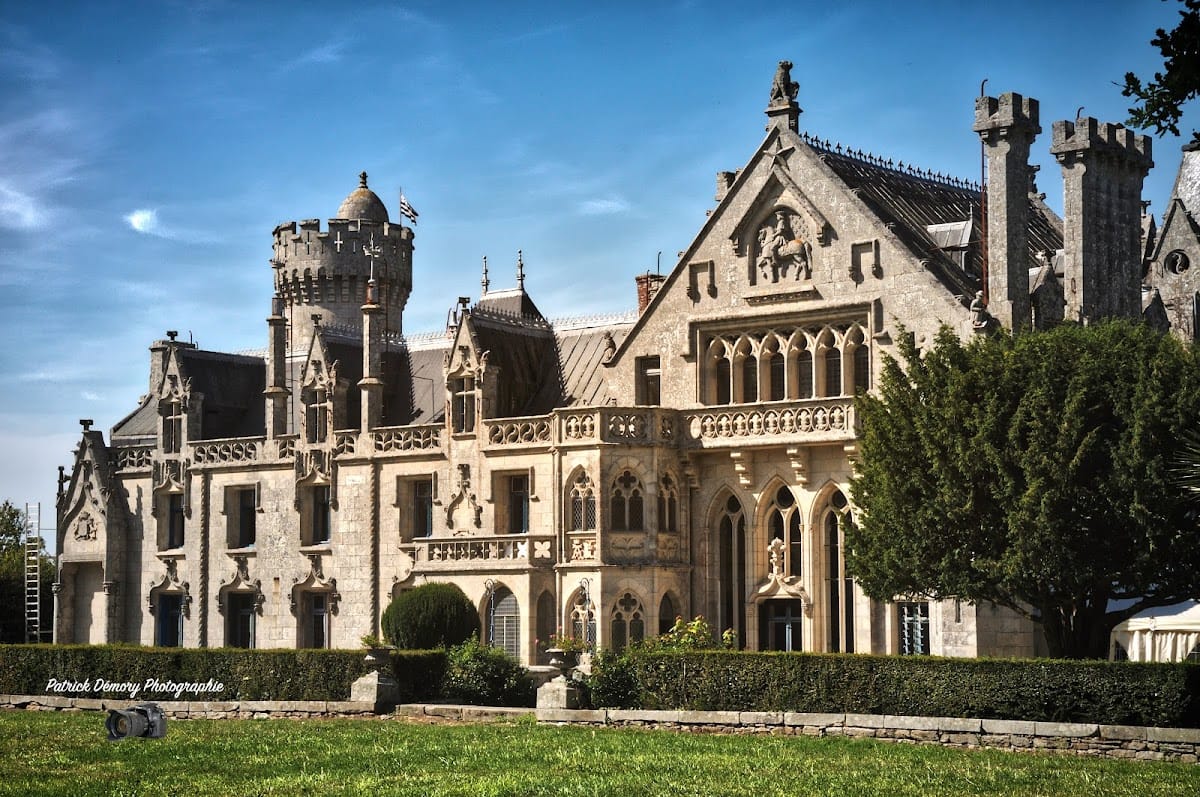
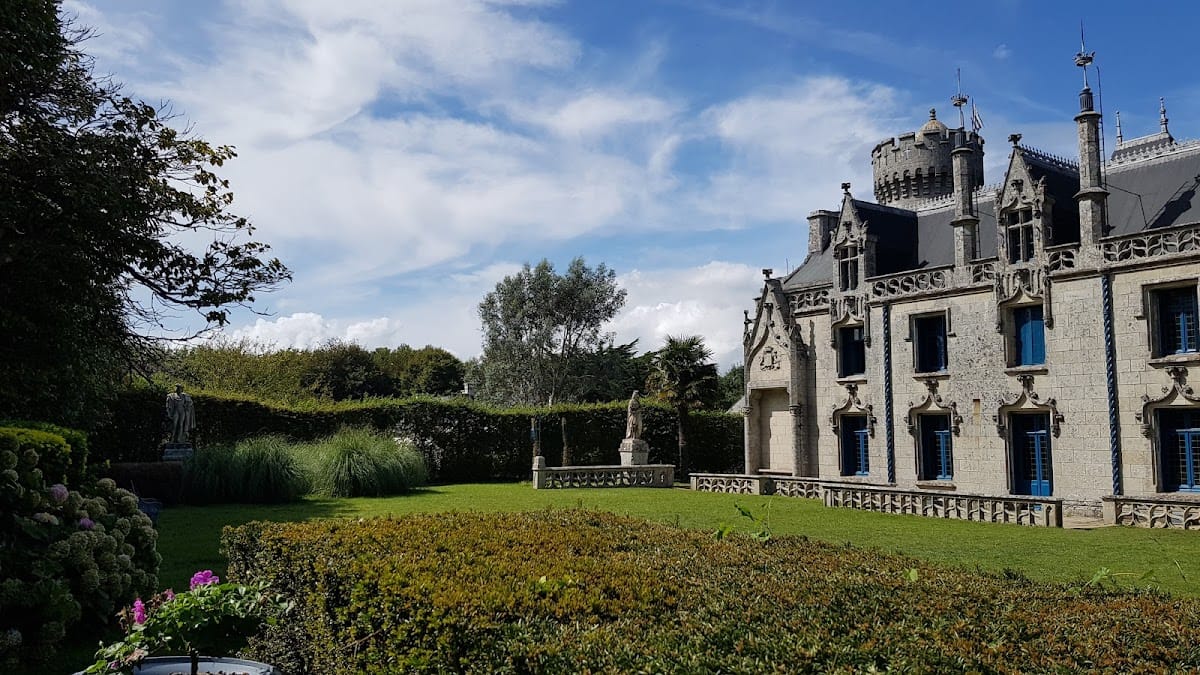
The Château de Kériolet presents as a neo-Gothic castle whose design evokes several notable French and Breton landmarks. The château’s layout integrates symbolic sculptural elements and a setting within a park that displays statues of several historic personalities important to French and Breton history. The park features representations of figures such as Velléda, a druid priestess of the Gauls, rendered in a copy of a sculpture by Hippolyte Maindron originally housed in the Louvre, alongside statues of Vercingetorix, Charles VIII, Anne of Brittany, Joan of Arc, and Bertrand Du Guesclin.
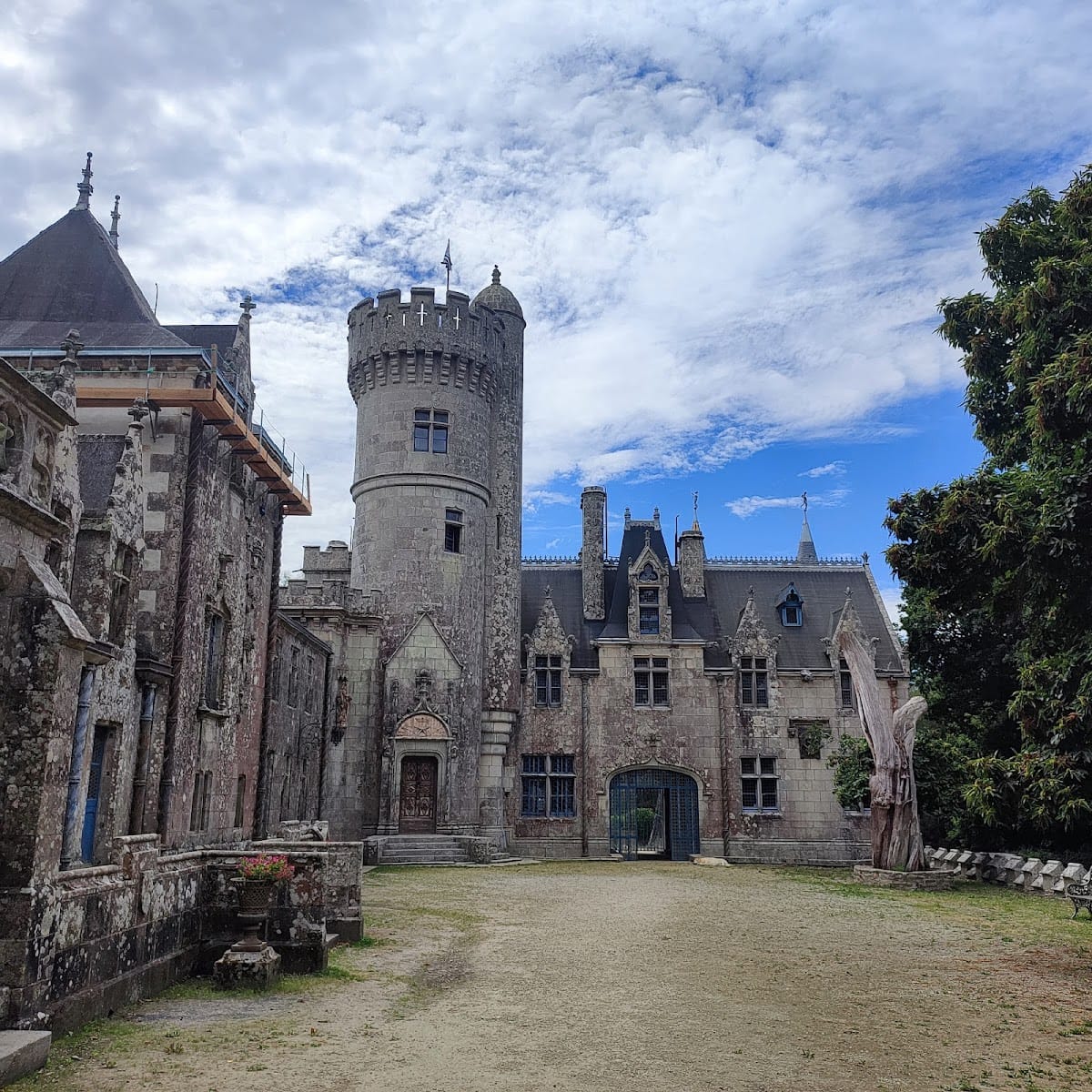
Two prominent towers rise within the grounds: a guard tower and the Tour Marie-Jeanne. The latter is named after the count’s cook and adds a personal dimension to the architecture. The guard tower is positioned on the courtyard side and historically accommodated the château’s staff; today, it serves a public function as the ticket office.
The south-facing façade of the château stands out for its rich decorative program. Symbols are carved into the stone, including crowns representing ranks such as count and marquis, fleurs-de-lys linked to French royalty, and the heraldic ermine pattern associated with Brittany. Russian-inspired stars reflect the Youssoupoff family heritage, while scallop shells, a traditional pilgrimage emblem, also appear. Intertwined letters A and L honour Anne of Brittany and King Louis XII, connecting the château’s identity to prominent historical figures of the region.
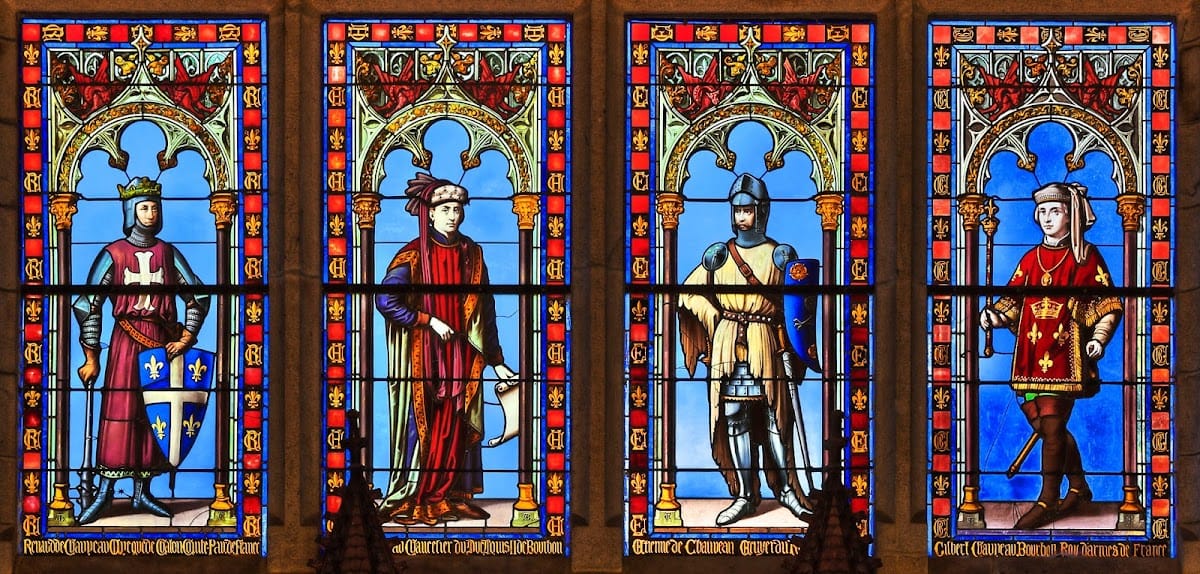
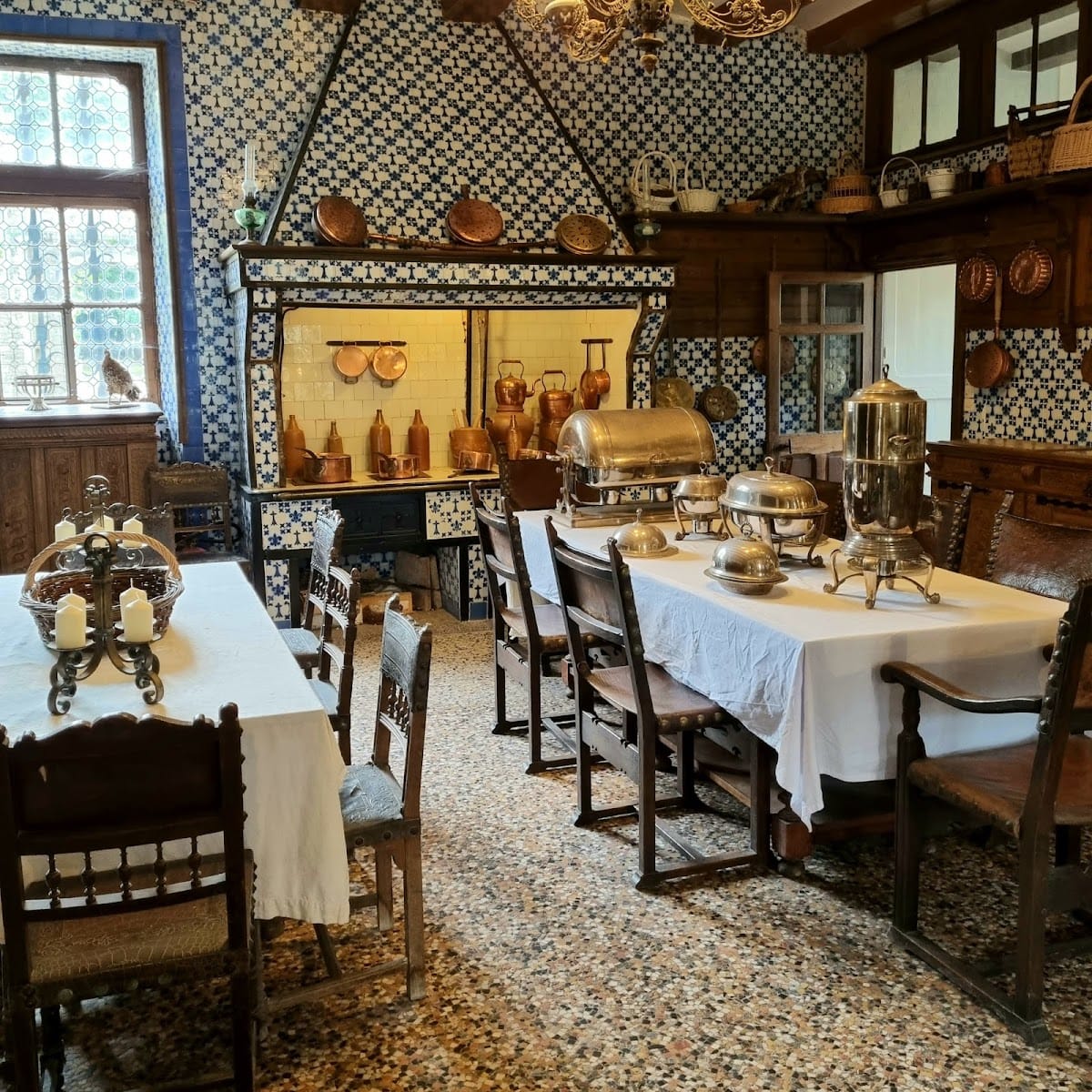
Inside, the château contains a two-story ballroom with an upper balcony. This elevated area was used by Zénaïde Youssoupoff to observe social events. Adjacent to the main halls is a guard room, which features an original fireplace and stained glass windows, elements that are protected as part of the historic monument classification. The lounge faces south toward the park and was favored by the princess, whose portrait remains within. The kitchen is lined with hand-painted faience tiles, demonstrating decorative care, though it was supplied by a well rather than modern plumbing—a well that has since been moved to the nearby Ville Close in Concarneau.
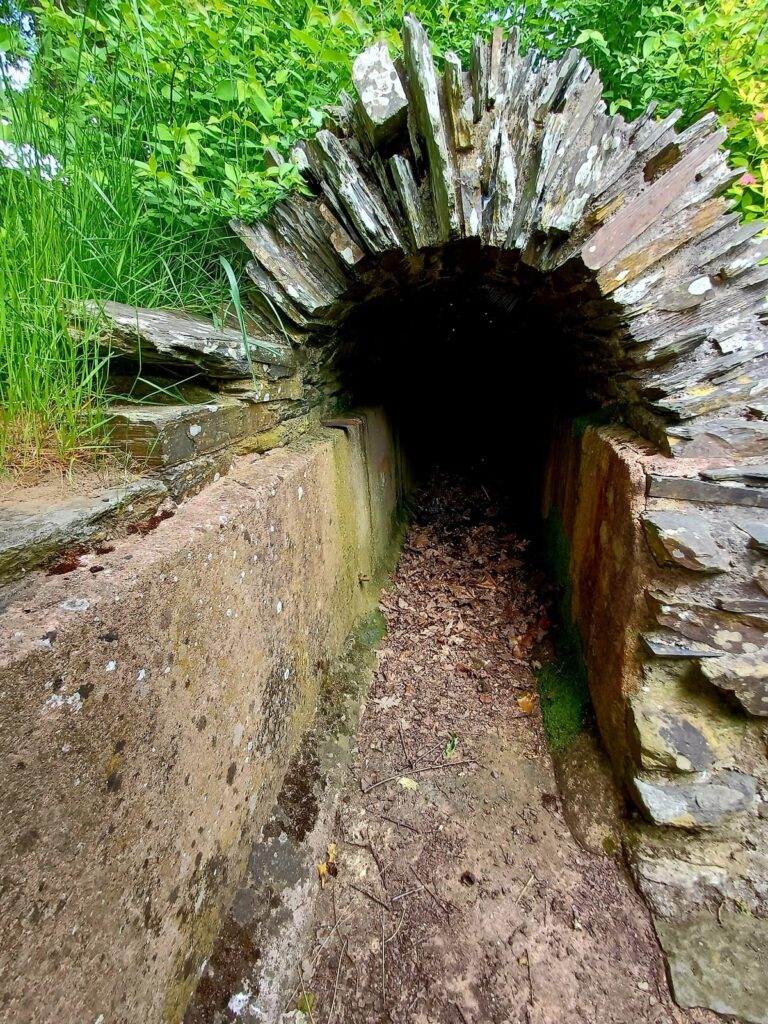
Beneath the château lies a crypt that once served a practical purpose as a hypocaust system, a form of underfloor heating dating back to Roman times but adapted here to warm the building’s interior.
The now-dismantled chapel, originally built in 1879, was notable for its external sculptures depicting angels blowing trumpets and crowned by a statue of the Archangel Michael slaying a dragon. Near the entrance stood a 16th-century wooden crucifixion group featuring Christ on the cross and an angel collecting his blood in chalices, an artwork of remarkable religious significance.
The château’s façades and roofs, along with the guard room’s chimney and stained-glass elements, enjoy legal protection as historic monuments, ensuring the conservation of these significant features for the future.
Nearby sites