Château de Droupt-Saint-Basle: A Historic French Château in Aube
Visitor Information
Google Rating: 4.7
Popularity: Very Low
Official Website: www.chateaudedrouptsaintbasle.com
Country: France
Civilization: Early Modern, Modern
Site type: Military
Remains: Castle
History
The Château de Droupt-Saint-Basle is located in the commune of Droupt-Saint-Basle in modern France. Its origins date back to the medieval period, when it was part of the feudal landscape of the region.
The earliest known record of the estate dates from 1206, showing it belonged to Girard, lord of Droupt, who held it under the castellany of Méry. During this time, the site would have functioned as a fortified seigneurial residence typical of the Middle Ages, reflecting the local lordship structures and defensive needs.
In 1580, the property came under the ownership of Louis Le Mairat, a prosperous draper and then mayor of Troyes. Under royal permission granted by King Henri III in 1586, Le Mairat fortified the residence considerably. He added defensive walls, moats filled with water, and drawbridges, transforming it into a strongly defended château. This phase marks the foundation of the current main structure.
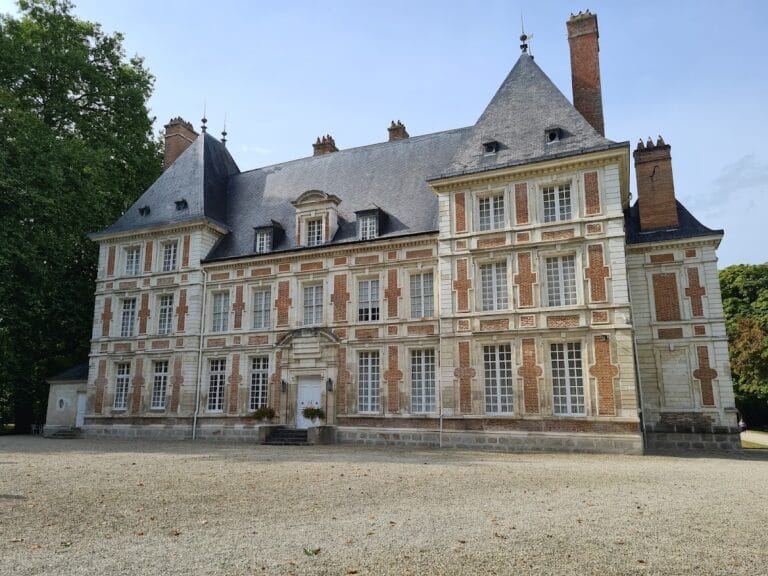
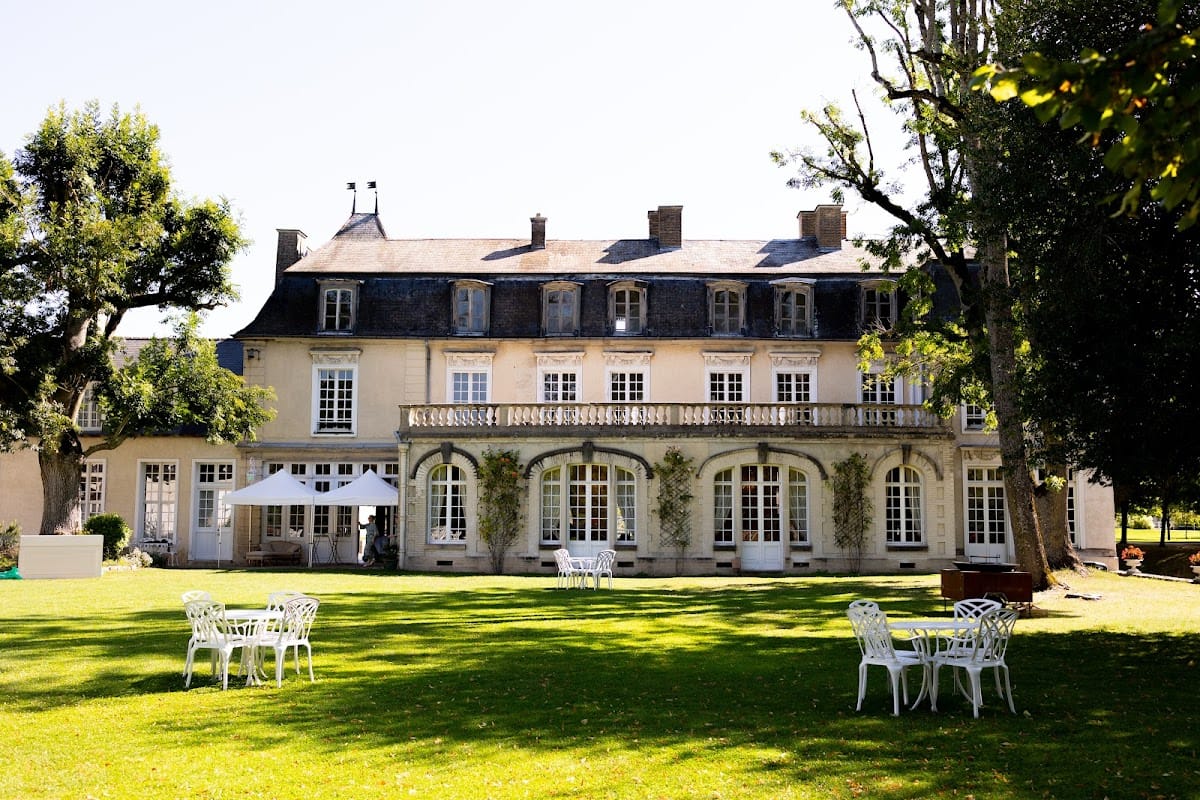
The Le Mairat family retained control of the château until 1712. After this, Jean Moreau briefly held it before it passed in 1714 to the Chavaudon family. Under the Chavaudons, the château underwent substantial alterations in the 18th century. Their work shifted the building’s character from a purely defensive stronghold to a refined pleasure residence built in the classical style favored at that time. The main living areas were enhanced with elegant interiors and a new façade.
During the Second World War, the château was occupied by German troops. Rather than serving as a military post, it functioned as a convalescence home, which spared it from being targeted by Allied bombing. In the decades following the war, the building fell into neglect until it was acquired in 1983 by Jean-Pierre Paupe. He initiated a comprehensive restoration program that revived much of the château’s historical fabric.
Since 1987, the château has received official protection as a monument historique, with additional elements added to this listing in 1993 and 2011. Today, it also serves as a private museum dedicated to popular arts, preserving and showcasing its rich heritage.
Remains
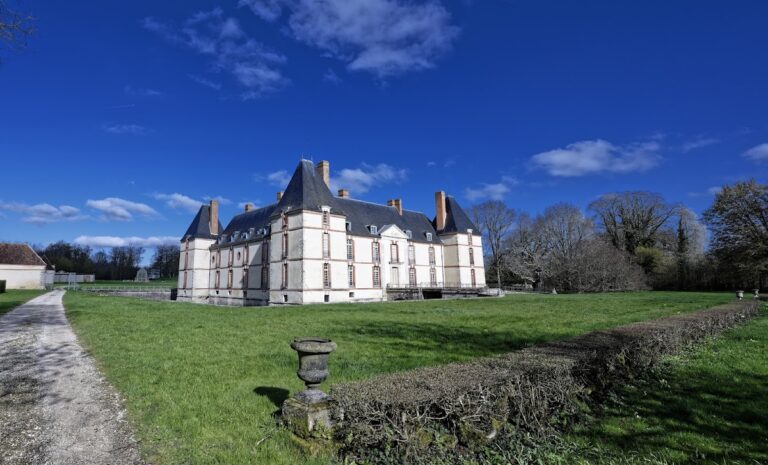
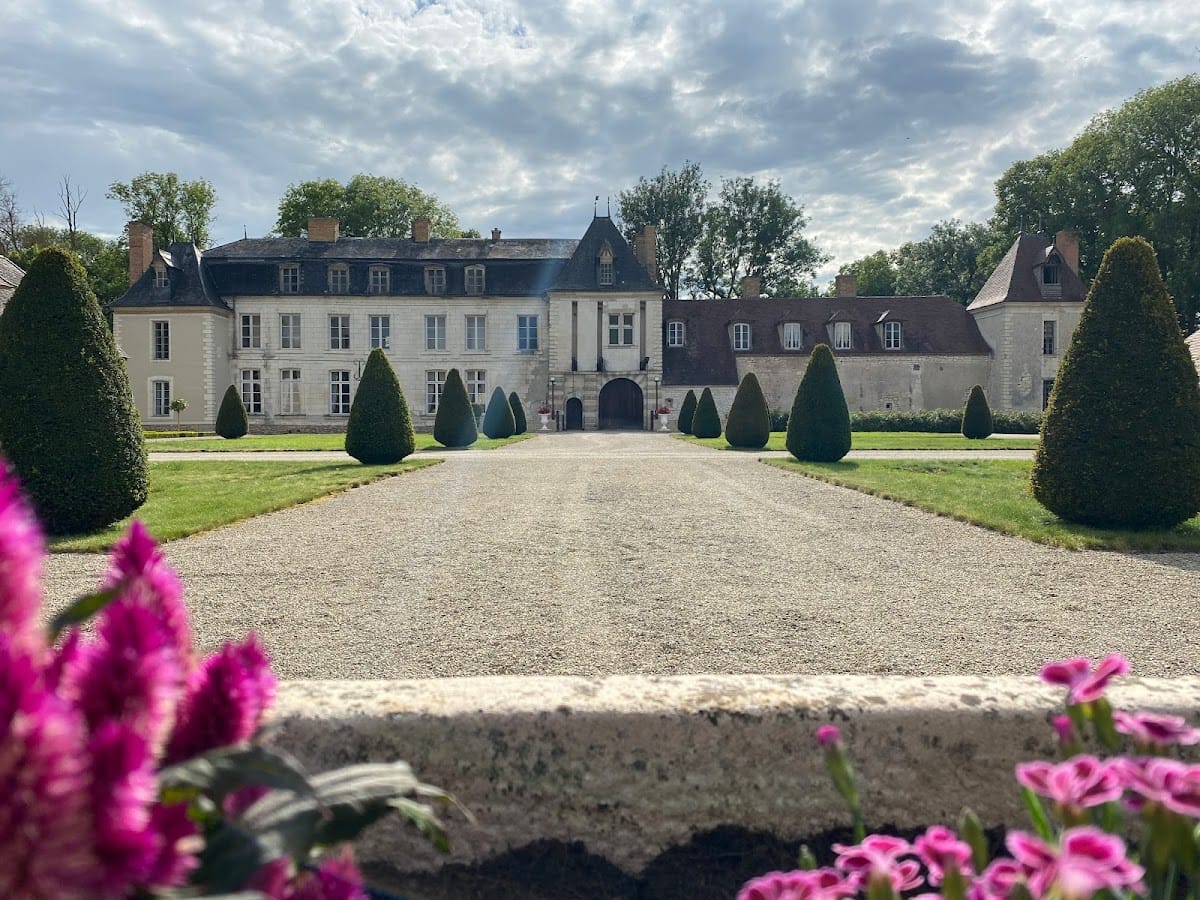
The château presents an L-shaped configuration approached from a linden-lined avenue that leads away from the village church. To the right of the main building stretches an orchard, while an external dovecote stands adjacent to the outer enclosing wall. These elements contribute to the overall estate’s layout, characteristic of its evolution from medieval fortification to 18th-century country residence.
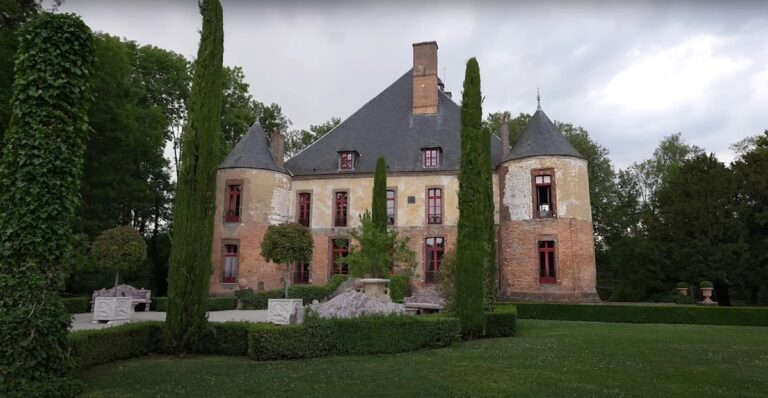
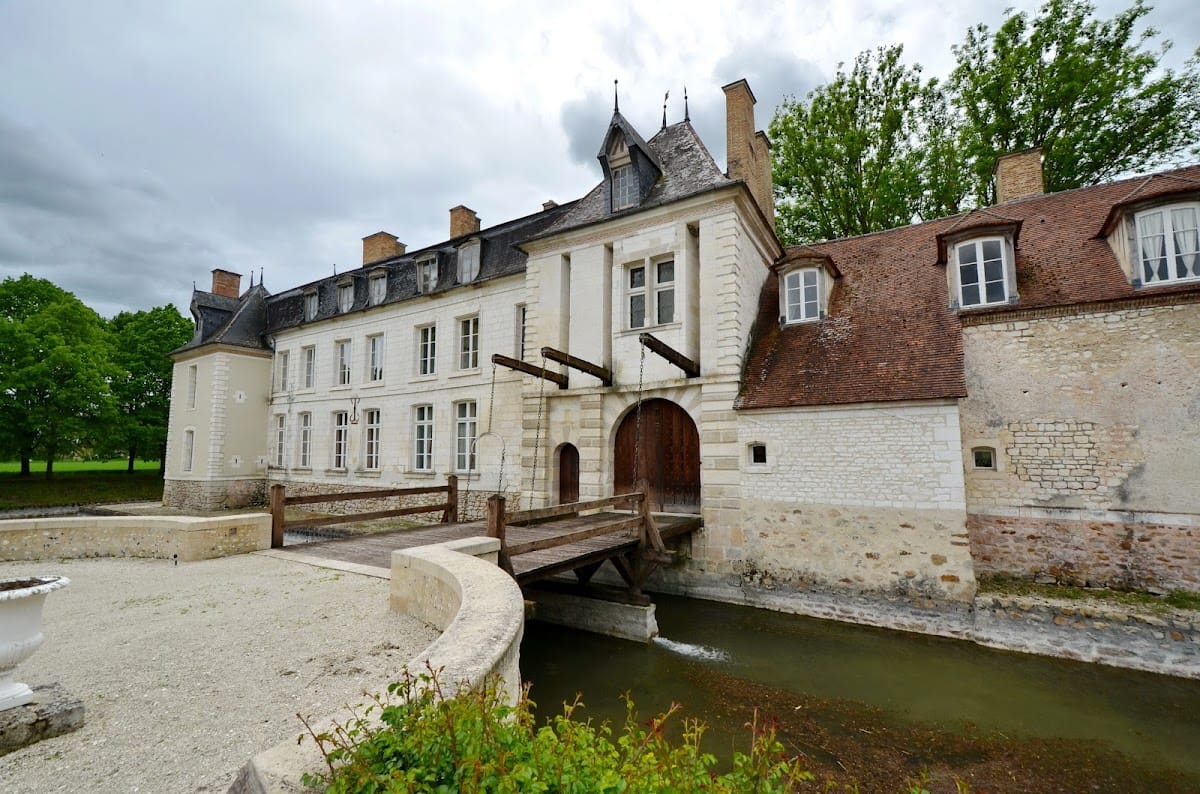
Key defensive components of the château date to the late 16th century. These include three square towers positioned at the corners of the structure, each featuring openings designed to allow the use of cannon. Originally a fourth corner tower existed, but it was partially dismantled and replaced by a terrace in later renovations. Surrounding the château are two concentric moats that are continuously filled with water, emphasizing its defensive origins. Access across the moats is provided by two drawbridges—one designed for foot traffic and a larger one for carts—both operated manually from the main entrance gate.
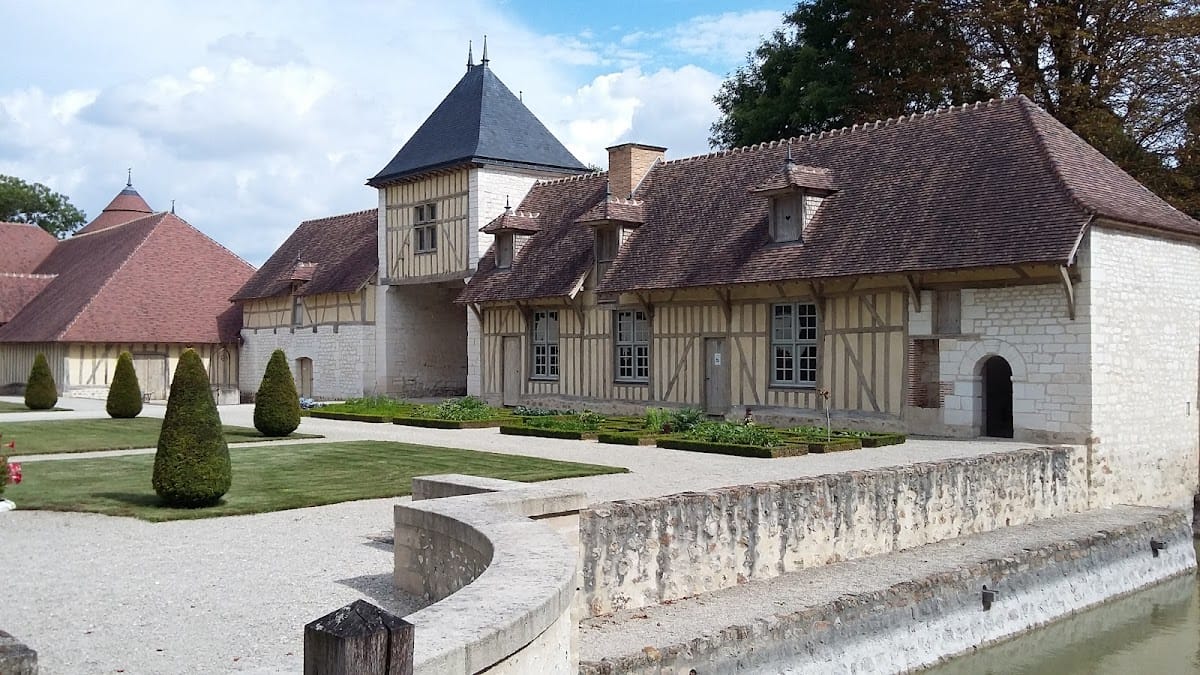
The entrance itself is marked by a grand doorway topped with a stone mullioned window fitted with stained glass. Flanking this window are narrow vertical slits known as arrow slits, specially constructed to accommodate the mechanisms of the drawbridges. Inside, the château is arranged around an inner courtyard, with a lower courtyard, or basse cour, containing several original outbuildings. These timber-framed and wattle-and-daub structures date from the 16th century and originally served various utilitarian purposes, including a guardroom and a powder magazine. Notably, one building initially used as a chartrier (a store for charters and important documents) was later converted into a dairy in the 17th century.
The main residential block, or corps de logis, shows the influence of 18th-century classical architecture, especially following redesign work commissioned by Pierre-Nicolas Guillaume de Chavaudon. Inside are several richly decorated rooms: a dining room featuring restored painted wooden paneling and a stove made of Dutch faience (glazed earthenware), a salon with intricate woodwork and a white marble fireplace crowned by a mirror, and a billiard room that includes a cherrywood fireplace and built-in bookcases.
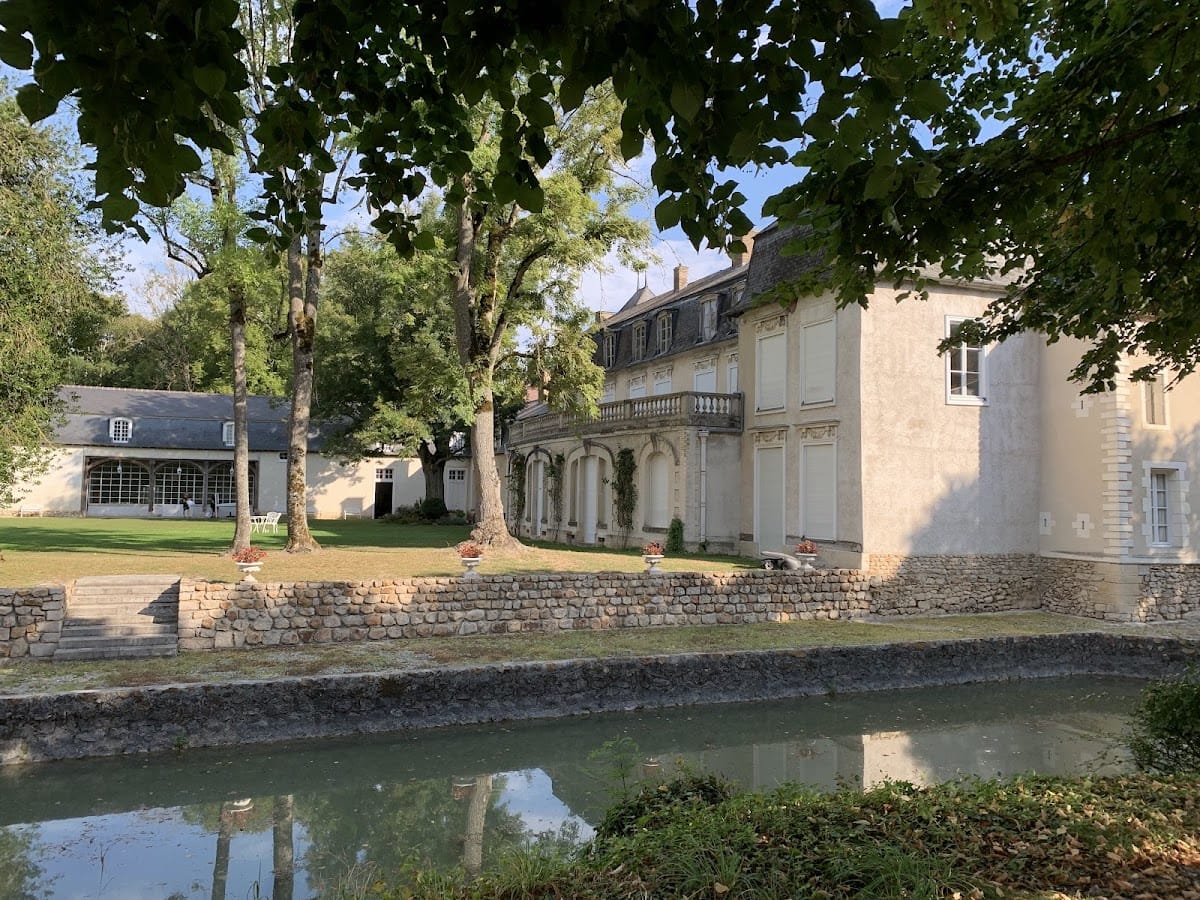
Additional interior spaces include a large late-19th-century winter garden, adapted as an expansive salon, and bedrooms located on the upper floors. The estate’s outbuildings surround the main house and encompass former kitchens, living quarters for staff, stables, and a carriage garage that now functions as a games room. A pavilion constructed early in the 20th century to accommodate the dowager marquise has been repurposed as a guesthouse.
The grounds reflect careful landscaping with a classic French formal garden and a decorative vegetable garden positioned within the lower courtyard. Beyond these lies a wooden bridge leading to an extensive park featuring ancient trees and a large meadow. Approximately 200 meters from the main château is a glacière, an icehouse used for storing ice before refrigeration was available.
Elements of the château including the façades and roofs, interiors of five key 18th-century rooms with wood paneling and fireplaces, the twin moated enclosures, and several outbuildings such as the dovecote, glacière, barn, and stables have all received legal protection due to their historical and architectural significance. These preserved features together illustrate the château’s layered history and enduring presence in the Aube region.
Nearby sites