Castle of Rivoli: A Historic Fortress and Contemporary Art Museum in Italy
Visitor Information
Google Rating: 4.4
Popularity: Medium
Official Website: www.castellodirivoli.org
Country: Italy
Civilization: Early Modern
Site type: Military
Remains: Castle
History
The Castle of Rivoli is situated in the municipality of Rivoli in modern Italy. Its origins trace back to the early medieval period, likely emerging during the 9th or 10th century, built under the influence of early medieval European civilizations shaping the region. Its first recorded mention dates from 1159 when Emperor Frederick I Barbarossa granted control of the Rivoli territories to the bishops of Turin, marking its importance within the political and ecclesiastical frameworks of the time.
In the 11th century, the castle became a possession of the House of Savoy. During 1247, Amadeus IV of Savoy constructed a strategically fortified building on the site to oversee the critical passage between Turin and the Susa Valley. This period saw the castle function as a regional stronghold within the expanding Savoy domain. In 1350, it was the venue for the wedding of Bianca of Savoy to Galeazzo Visconti, a notable event indicating the castle’s role in noble alliances. During the 15th century, it gained religious significance as the first public display site for the Shroud of Turin in Piedmont, illustrating its involvement in regional devotional practices.
By the mid-16th century, Duke Emmanuel Philibert of Savoy took residence at Rivoli, largely due to restrictions on living within Turin imposed by political circumstances. His son, Charles Emmanuel I, was born there in 1559, reflecting the castle’s status as a ducal home. Between 1606 and 1670, the castle underwent extensive expansions led by architects Carlo and Amedeo di Castellamonte, including the creation of the Manica Lunga, a long wing envisioned to serve as an art gallery, highlighting a growing appreciation for cultural patronage.
The late 17th century brought hardship when French forces damaged the castle during the War of the Spanish Succession in 1690 and again in 1693. Victor Amadeus II ordered repairs and expansion in the early 18th century, commissioning architects Michelangelo Garove, Antonio Bertola, and Filippo Juvarra for restoration works. Juvarra’s ambitious architectural plans, however, were never fully realized. In 1731, the castle gained notoriety as a place of confinement for Victor Amadeus II, imprisoned there by his son Charles Emmanuel III. During this period, modifications such as barred windows and closure of the Manica Lunga’s access were implemented to prevent escape.
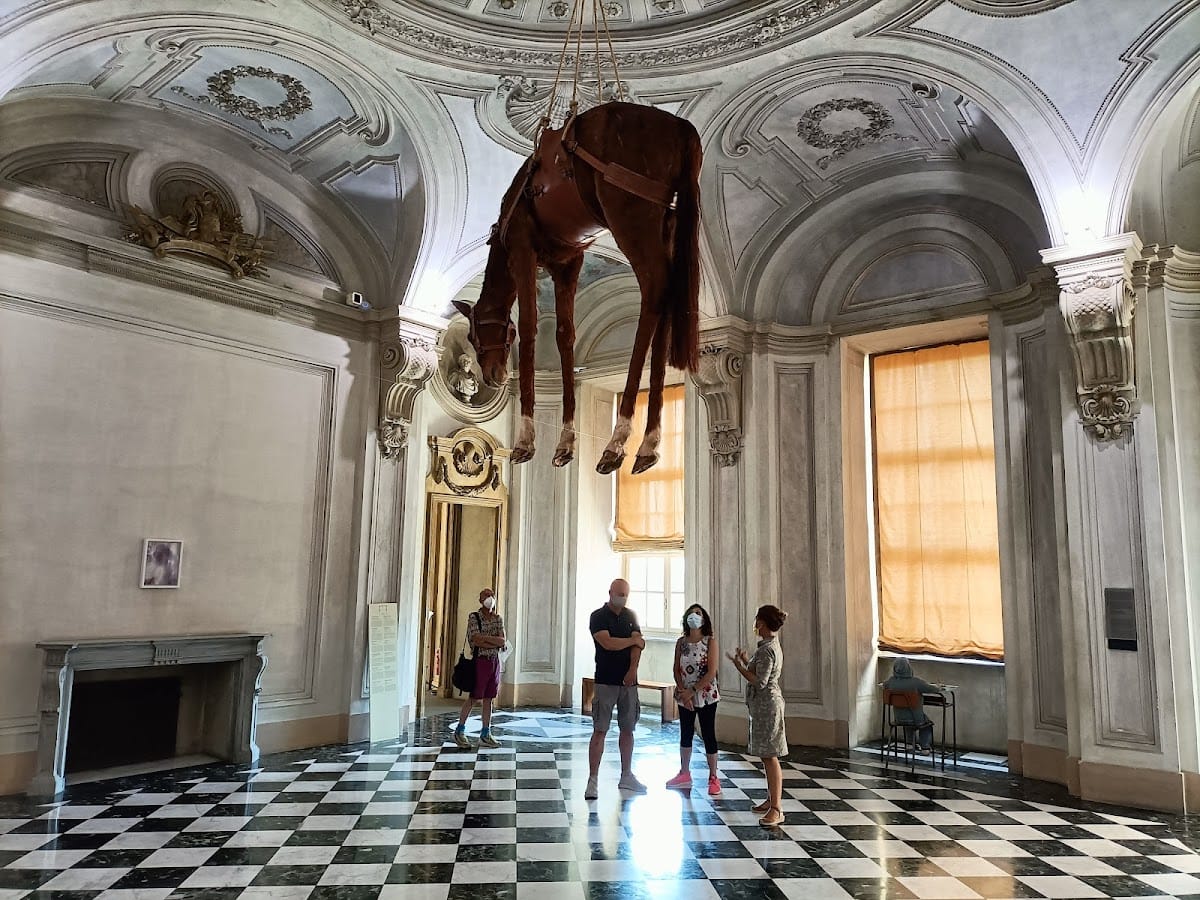
The 19th century marked a decline in the castle’s prominence as it was repurposed for military use. In 1863, the local municipality transformed it into barracks, and from 1883 parts of the building began serving as a library. The site suffered serious damage during World War II aerial bombings, after which it remained largely abandoned until restoration began in 1979. In 1984, the castle reopened to the public as Italy’s first museum dedicated to contemporary art, signaling a new cultural chapter.
Since its reopening, the Castle of Rivoli has become a hub for exhibitions, research, and educational programs, with continual preservation and modernization efforts. The Manica Lunga was restored and made accessible again in 2000. Recognized for its historical and cultural value, the castle was included in the UNESCO World Heritage listing in 1997 along with other Savoy residences. It also houses significant art collections including works from the Arte Povera movement and the Cherutti Collection, which features pieces ranging from the medieval period to modern times. The castle’s library, inaugurated in 1999, specializes in modern and contemporary art literature, containing an extensive collection of books and videos. Additionally, the castle has served as the backdrop for cultural works, such as the play “King Victor and King Charles” by Robert Browning.
Remains
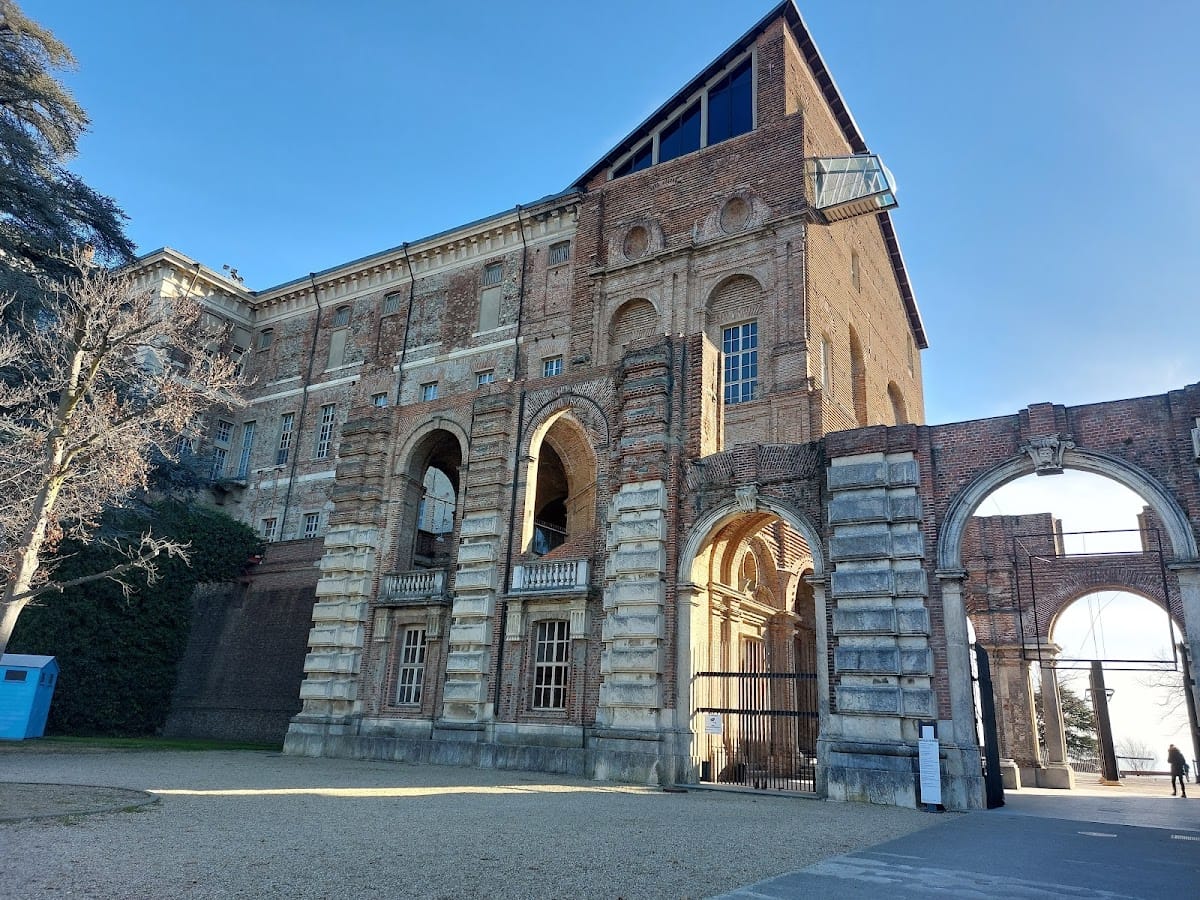
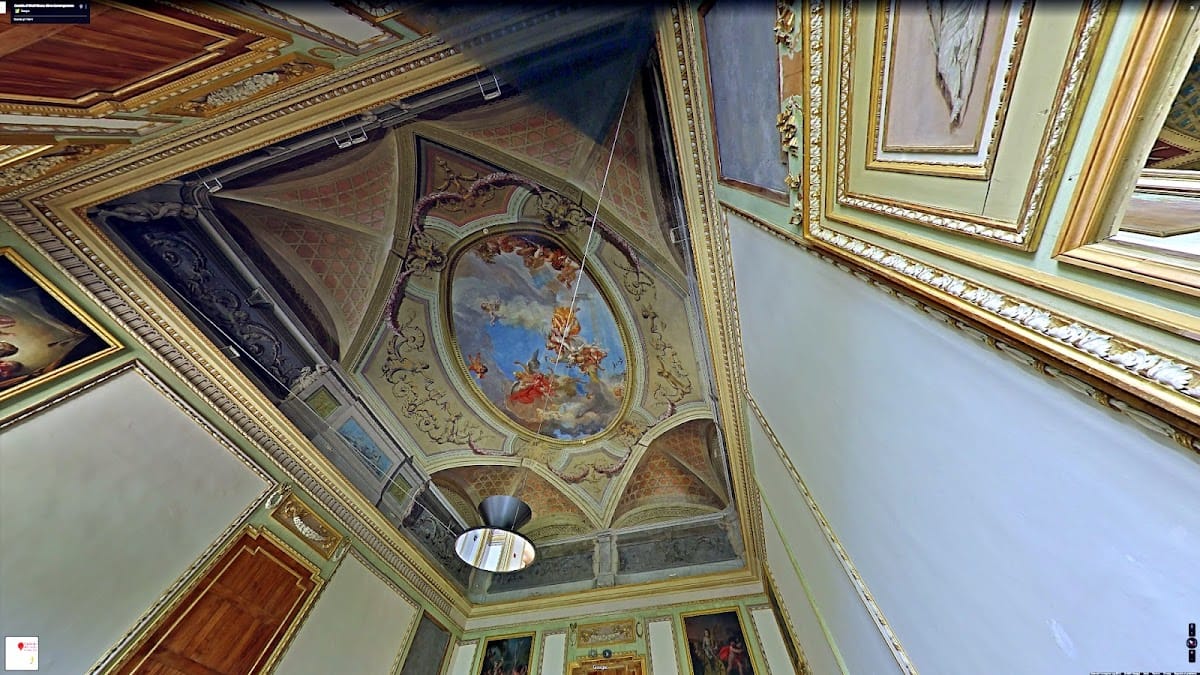
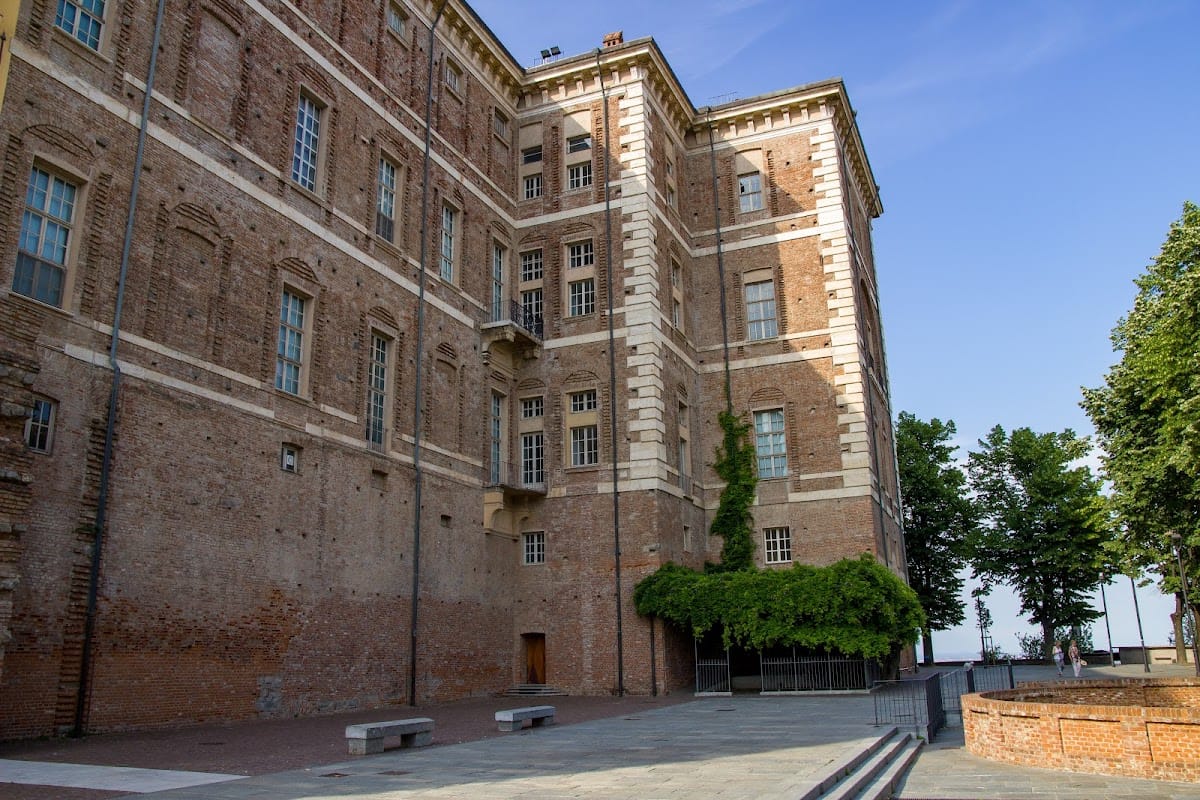
The Castle of Rivoli is built on a rectangular plan, which originally featured four tall towers. Although these towers were damaged and demolished following military attacks in the late 17th century, the overall layout remains recognizable. An intended church dedicated to Saint Charles Borromeo was planned but never constructed. The castle’s vertical development includes a raised ground floor with two further upper levels; among the interior spaces, the second-floor Hall of Amadeus VIII is the only room preserved from the 17th century.
A distinct feature of the complex is the Manica Lunga, or Long Wing, a separate, lower building connected to the main castle by a narrow pedestrian corridor roughly 120 meters long oriented to the southwest-west. Built in the 17th century as a gallery for the duke’s art collection, this wing is the sole surviving structure from that time and was restored and reopened to the public in 2000. Its present incarnation combines historical masonry with modern additions such as a steel roof shaped like an inverted boat hull and staircases made of steel and glass that complement the original construction.
Following the destruction inflicted by French troops during the War of the Spanish Succession, damaged towers were removed and replaced with a double staircase system. This design, inspired by the ideas of Leonardo da Vinci, provides vertical passage from the ground floor directly to the uppermost level without entering the main halls. Expansion works in the early 18th century added two symmetrical eastern wings, although the castle’s principal facade remained incomplete.
The castle’s 18th-century modifications during Victor Amadeus II’s confinement included adding metal grilles to windows and blocking off access to the Manica Lunga, emphasizing its use as a place of imprisonment. The structure sustained severe damage during World War II bombings; emergency repairs carried out in 1948 aimed to prevent structural collapse. Later restorations led by architect Andrea Bruno addressed water damage affecting the stuccoes and paintings, restored external windows that had been lost over time, and repaired the collapse of the large vault over the second-floor hall, which had fallen in 1978.
Modern improvements have introduced an elevator, a large suspended staircase, and a pedestrian walkway over an 18th-century ribbed vault, allowing panoramic views from the third floor. The castle grounds also preserve remnants of a 16th-century nymphaeum, an artificial grotto lined with bricks and supplied via an underground reservoir system. This feature has been restored and is accessible to visitors, reflecting the palace’s historical gardens and waterworks.
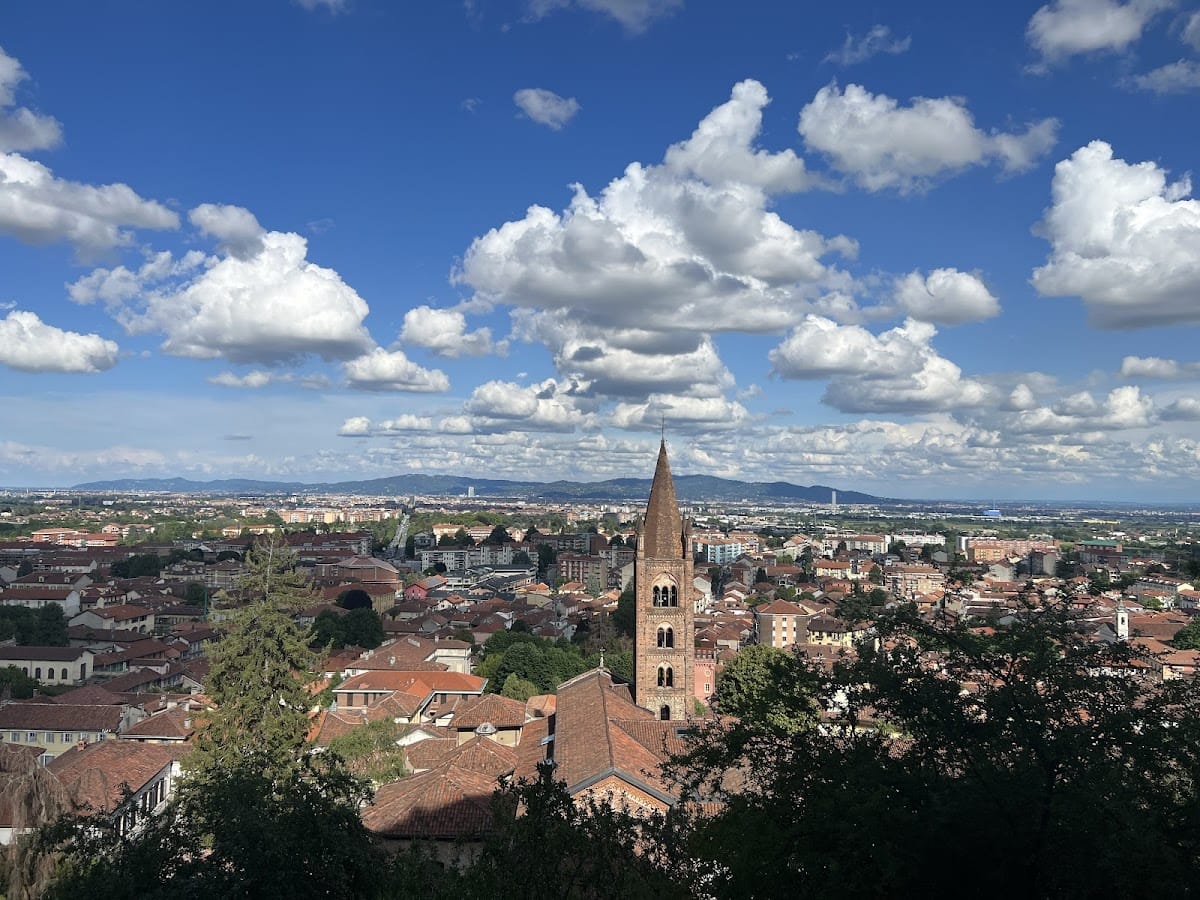
Within the estate is the Cherutti Villa, which forms part of the castle complex. Its gardens include areas designated for monastic meditation and agricultural use, alongside a bowling alley and panoramic vistas extending to the Alps. A dog cemetery is located on the grounds as well. The castle’s interior galleries have been adapted to host contemporary art exhibitions, incorporating spaces such as a café brightened by large upper windows and a restaurant housed in the Smaller Wing (Piccola Manica), a venue conceived through modern architectural interventions while respecting the historical fabric of the building.
Nearby sites