Castle of Maqueda: A Historic Fortress in Spain
Visitor Information
Google Rating: 3.9
Popularity: Low
Official Website: www.maqueda.es
Country: Spain
Civilization: Medieval European
Site type: Military
Remains: Castle
History
The Castle of Maqueda stands in the town of Maqueda in Spain and has origins that trace back to ancient times, with early fortifications likely established by the Romans. Its strategic hilltop location made it a notable military site long before the current medieval castle came into existence.
In 981 AD, following directives from the military leader Almanzor, the architect Fatho ben Ibrahim al-Omeya significantly strengthened an existing fortress on this hill, marking a period of Islamic control and architectural development. The castle later shifted into Christian hands when Alfonso VI of León captured it in 1083. In 1153, it was granted to Fernando Yáñez, and by 1177, it was donated to the Order of Calatrava, a military-religious order that further fortified the structure and used it as a commandery headquarters.
Between 1196 and 1198, the castle proved its resilience by withstanding repeated sieges from the Almoravids, a Berber Muslim dynasty. Throughout the 14th and 15th centuries, the castle was a focal point in regional power struggles, including seizure by King Pedro the Cruel. Ownership passed among prominent noble families, such as the influential Álvaro de Luna, King Juan II, and later the Mendoza lineage.
During the 15th century, Gutierre de Cárdenas ordered the demolition of the earlier fortress to construct the castle largely visible today. However, work inside the castle was never fully completed. Over time, as the castle’s owners preferred to reside in nearby Torrijos, it gradually fell into disuse. It remained in the possession of the Cárdenas family until the 19th century, when feudal lordships were abolished. Subsequently, the Spanish government acquired the castle and repurposed it as barracks for the Civil Guard. In 1931, the castle received official recognition as a Historic-Artistic Monument and remains under the ownership of Spain’s Ministry of the Interior. Since 2013, efforts to find a buyer for the property have been ongoing, with various asking prices considered.
Remains
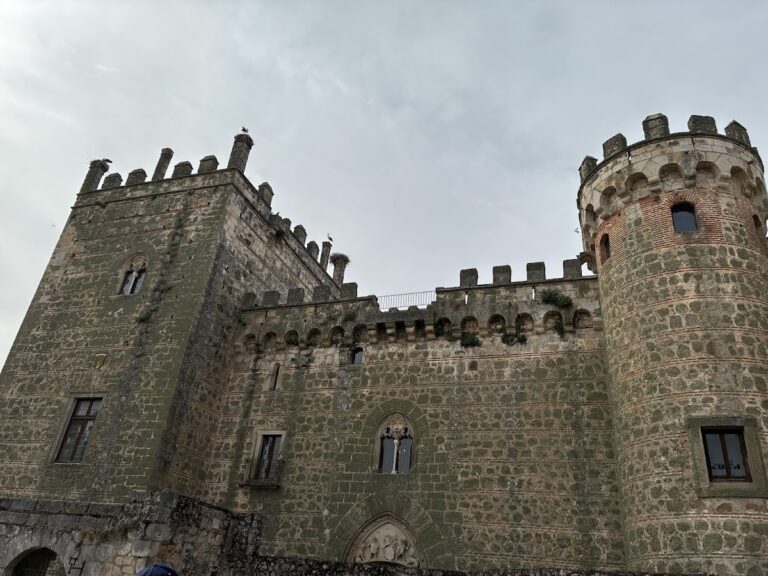
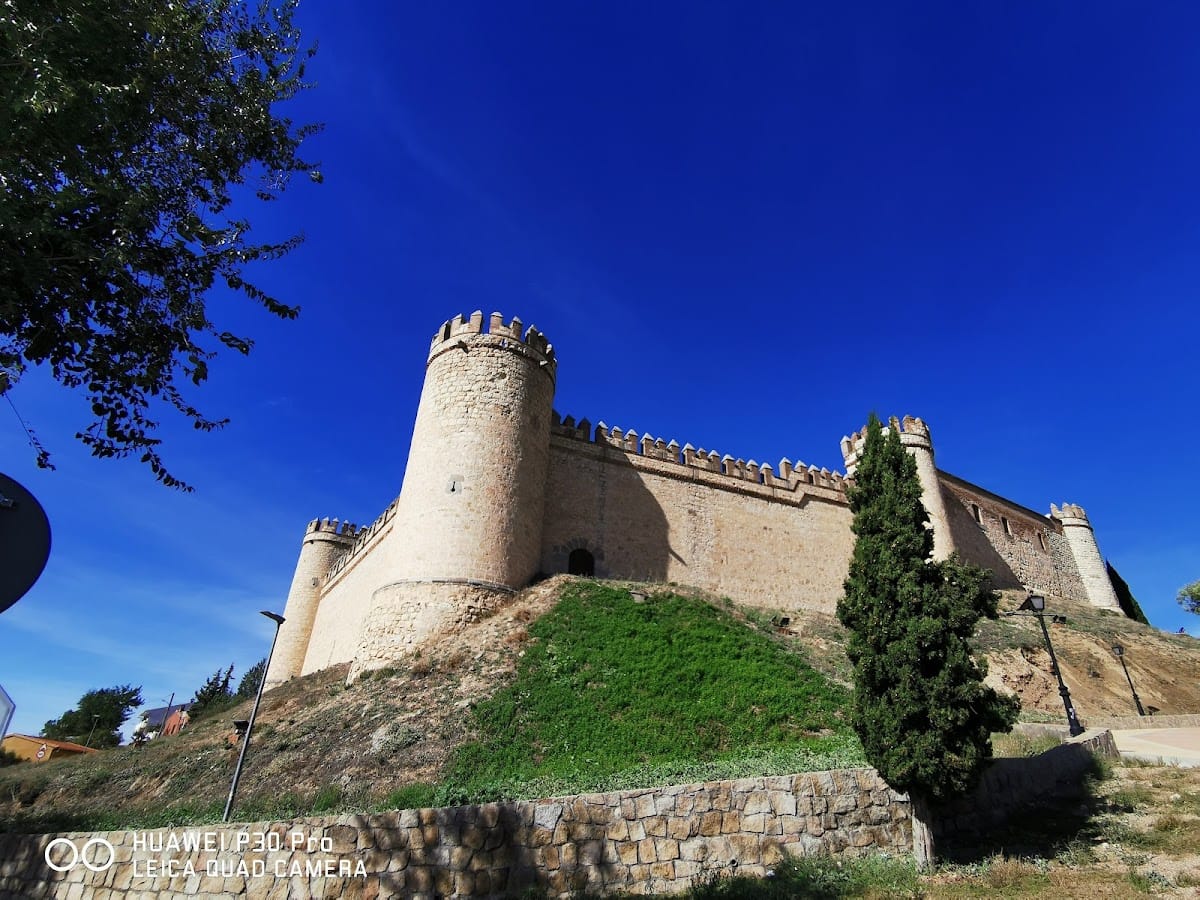
The Castle of Maqueda presents a rectangular layout situated on a hilltop with steep slopes resulting in two distinct ground levels, creating a multi-tiered structure. Its defensive walls were built robustly, reaching a thickness of approximately 3.5 meters, and are protected on two sides by moats, enhancing its security.
Originally, three round towers stood at the southern corners and the center of the eastern wall, providing key vantage points for defense. A fourth tower was later added, although the exact timing of this addition remains undetermined. The castle’s battlements, or crenellations, are designed following the style of those at the nearby castle of San Silvestre in the town of Novés, which also belonged to the Cárdenas family.
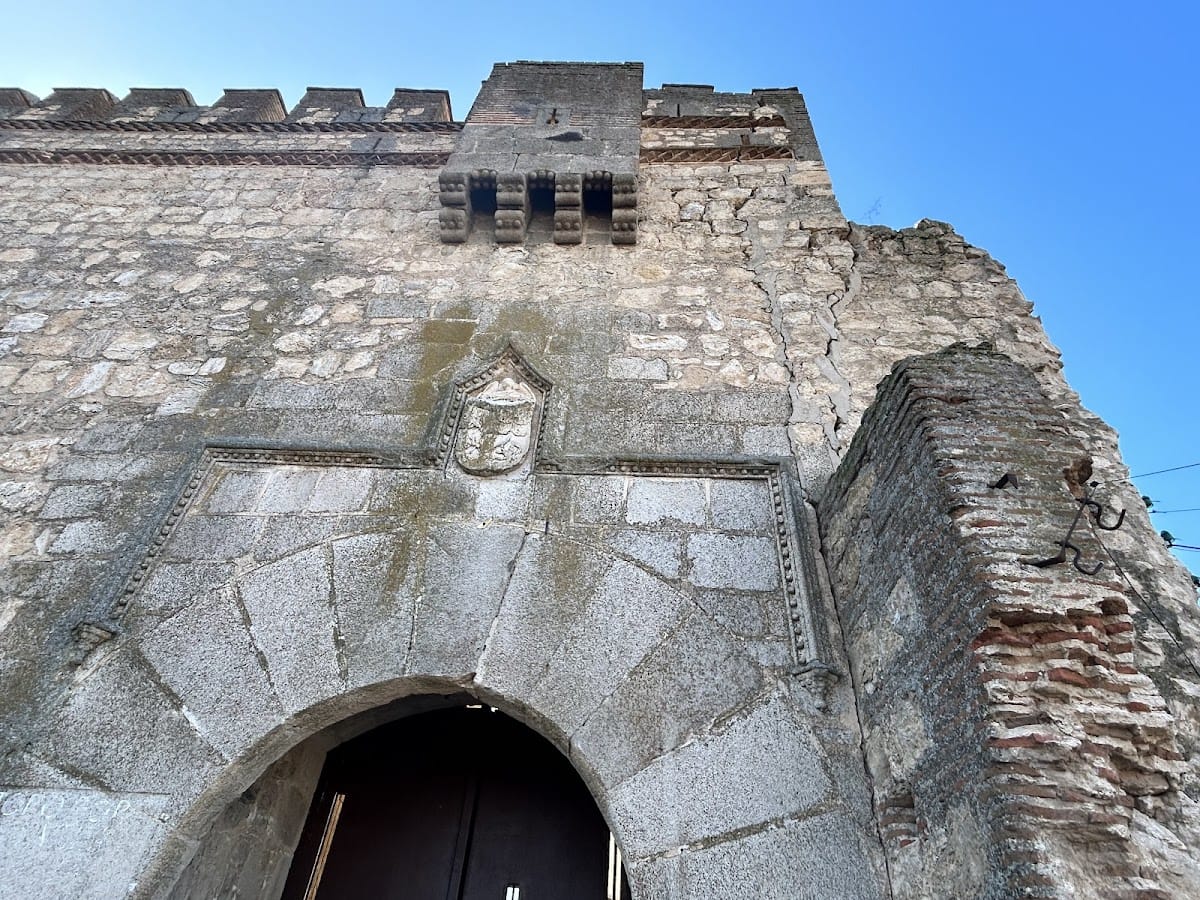
Facing north, the main entrance stands out with a decorative coat of arms that combines the heraldry of the Cárdenas and Enríquez families. Above the doorway, a machicolation—an overhanging gallery with openings for dropping defensive materials—made from finely cut stone and brick provides protection. The gate incorporates an iron grille forged for defense, standing just behind it. Beyond this is a fortified passage approximately 2.5 meters high, designed to trap and slow attackers.
The parapet of the castle, along with the adarve—a narrow walkway along the wall’s edge—is well-preserved and reaches about 2.5 meters in height. Arrow slits, narrow vertical openings used by archers, are arranged in pairs between the solid merlons, which are the upright sections on the battlements.
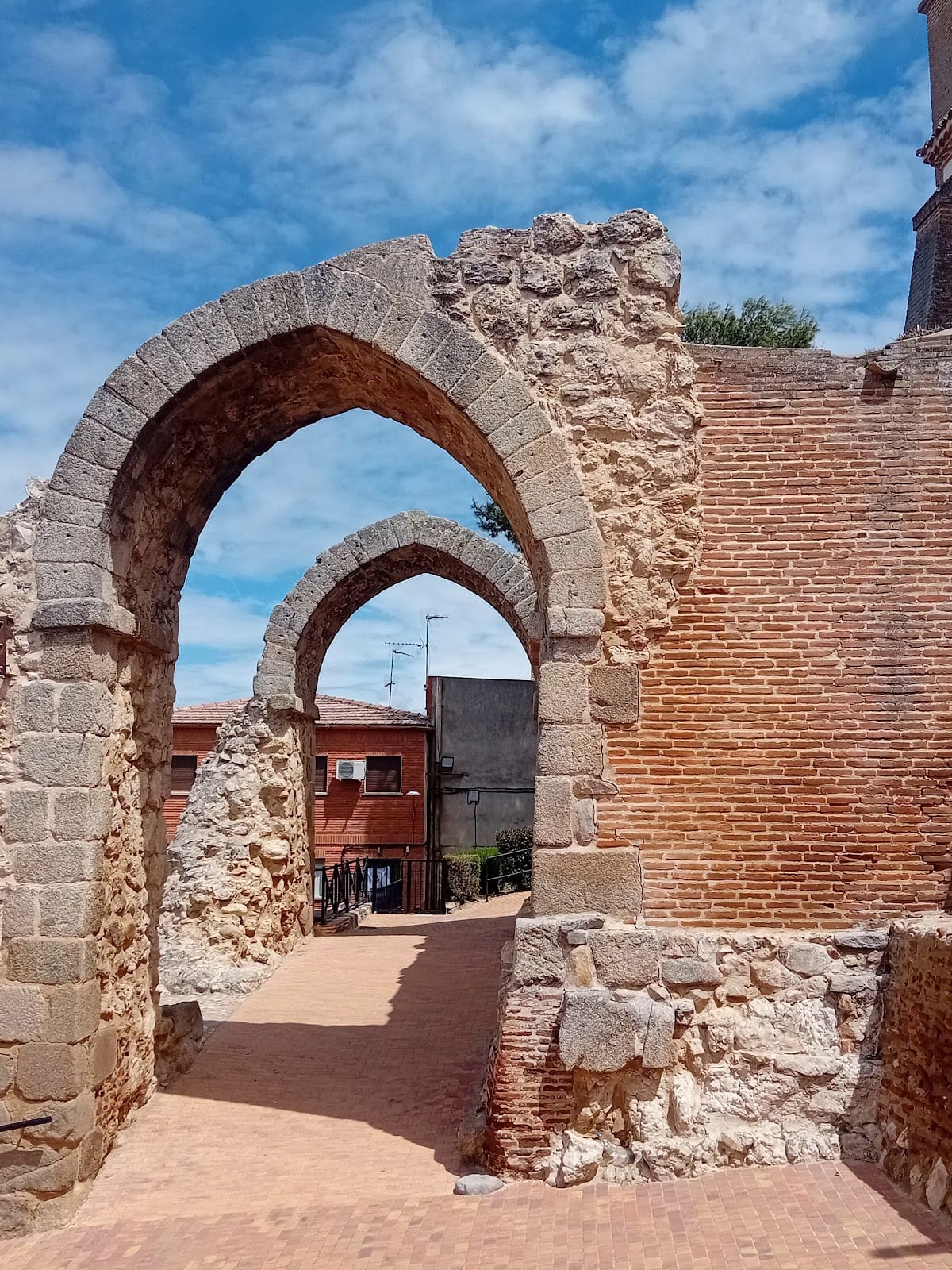
The castle was once part of a broader fortification system dating to the 12th century, which enclosed the entire settlement. Remnants of this defensive wall survive today in the form of the towers known as Vela and Las Infantas. Inside the castle, work on decoration and finishing touches was never completed, and this lack of interior development contributed to its gradual abandonment in later centuries.
Nearby sites