Castle of Faicchio: A Historic Fortress and Noble Residence in Italy
Visitor Information
Google Rating: 4.6
Popularity: Low
Official Website: www.castellodifaicchio.it
Country: Italy
Civilization: Early Modern, Medieval European
Site type: Military
Remains: Castle
History
The Castle of Faicchio stands within the municipality of Faicchio in Italy. It was originally established in the 12th century by the Sanframondo counts, a medieval noble family of the region, who chose its site for strategic advantage atop the ridge between Monte Acero and Monte Gioia overlooking the Titerno River.
During the late 15th and early 16th centuries, between 1479 and 1520, ownership passed to the Monsorio family. They undertook major reconstruction efforts, drawing architectural inspiration from the renowned Castel Nuovo in Naples. These renovations significantly altered the castle’s overall design, affecting its floorplan, main façade, and the arrangement of its courtyard, reflecting contemporary influences from one of southern Italy’s most important fortresses.
In 1612, control of the castle transferred to Gabriele de Martino, a Neapolitan nobleman titled Duke of Faicchio. He restored and adapted the structure to serve as a more comfortable noble residence, while still preserving several defensive elements. The castle subsequently became known as the “ducal” castle, reflecting de Martino’s influence and status.
Despite the earthquake that struck on June 5, 1688, the castle sustained only minor damage. Its continued habitability is attested by the temporary residence of Bishop Giovanni Battista de Bellis, who used the castle as a refuge during times of local feudal unrest. In the 18th century, the palace chapel underwent restoration, and its bell tower was raised, enhancing its religious and architectural presence.
The last duke to inhabit the castle was Salvatore de Martino late in the 18th century. Without male heirs, he allowed the ducal title to pass to the Zona-Sanniti family of Pietramelara, although they did not reside in the building. The abolition of feudalism in 1806 under the Napoleonic regime led to the castle’s abandonment, initiating a period of gradual decline.
Efforts to revive the castle in the 20th century met with mixed success. During the 1930s, the local mayor, Orazio Rapuano, attempted to acquire part of the castle for municipal offices and proposed restoration or demolition to address its dilapidation. However, financial constraints prevented these plans from advancing, and unauthorized constructions, including a bar, appeared on the grounds.
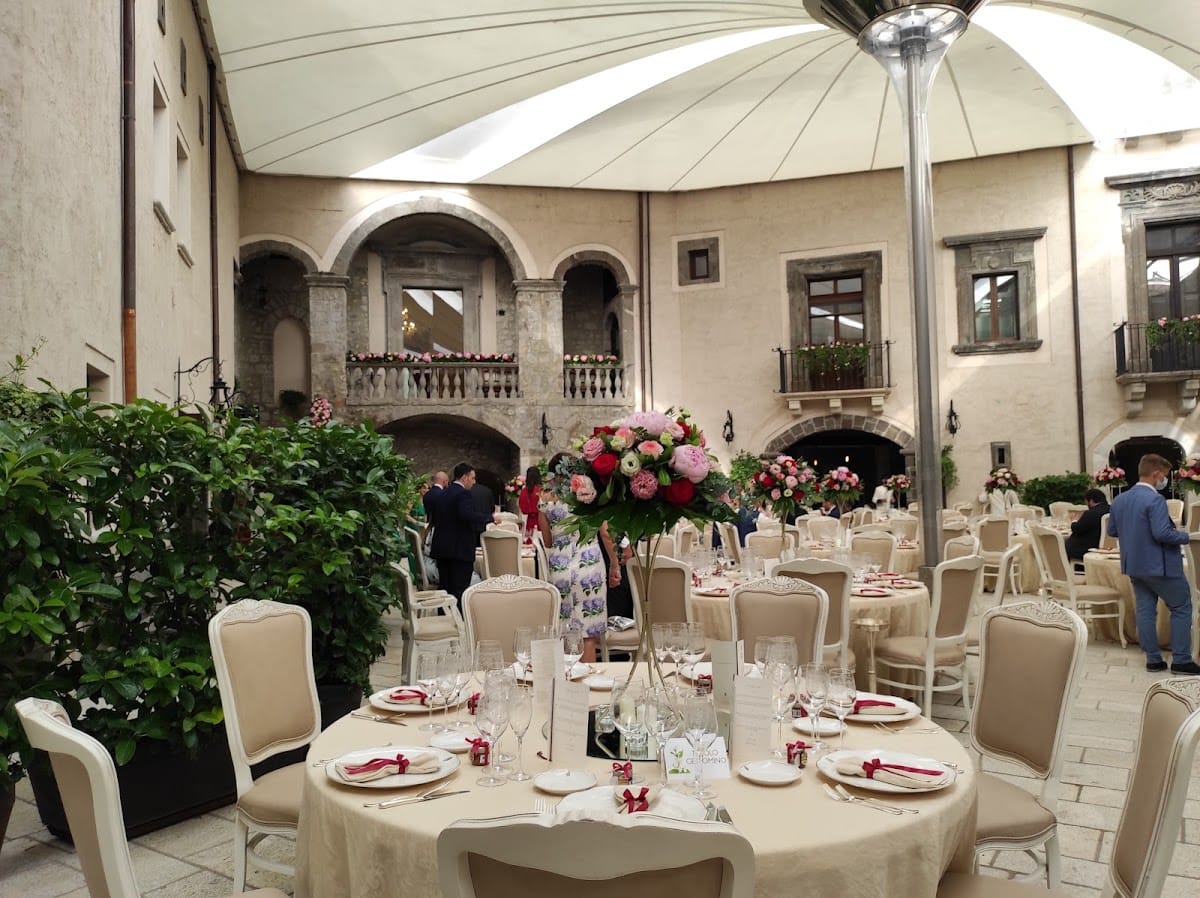
The decisive restoration came in the 1960s when the Fragola family undertook rescuing the castle, undertaking significant repairs and reopening it to the public in 1966. In the following years, from 1973 to 1977, the castle served an educational role by housing the Free University of Tourist Studies. Entering the 21st century, local entrepreneurs purchased the property, adapting it to operate as a hotel and restaurant while preserving its historical character.
Remains
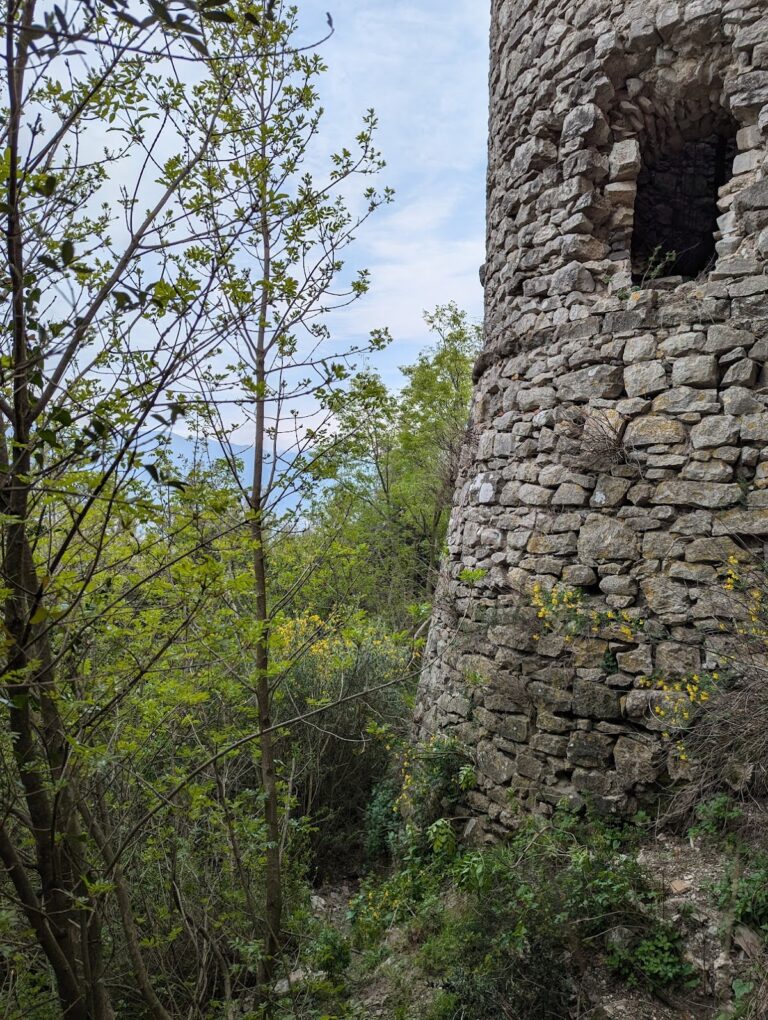
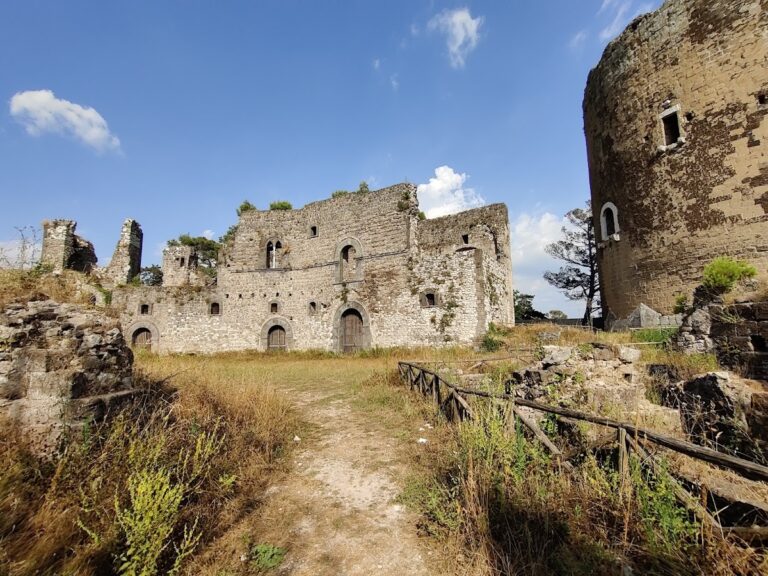
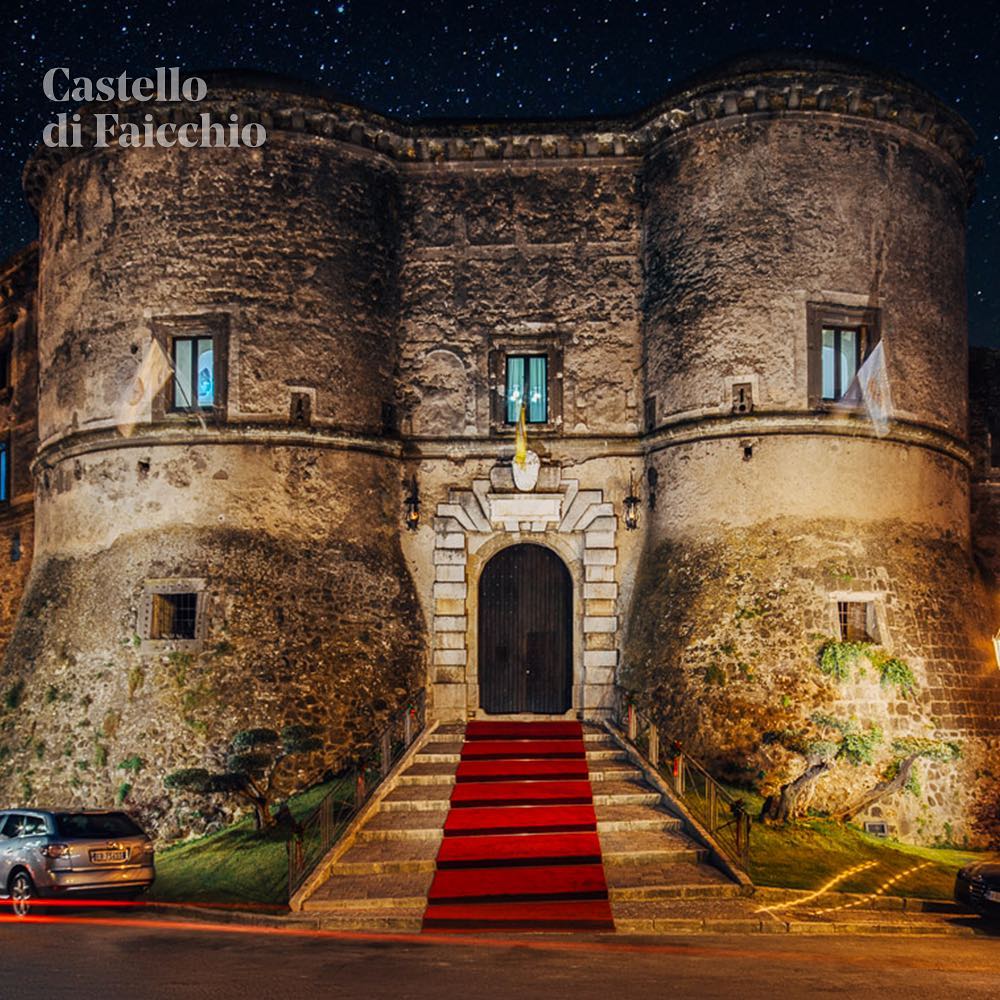
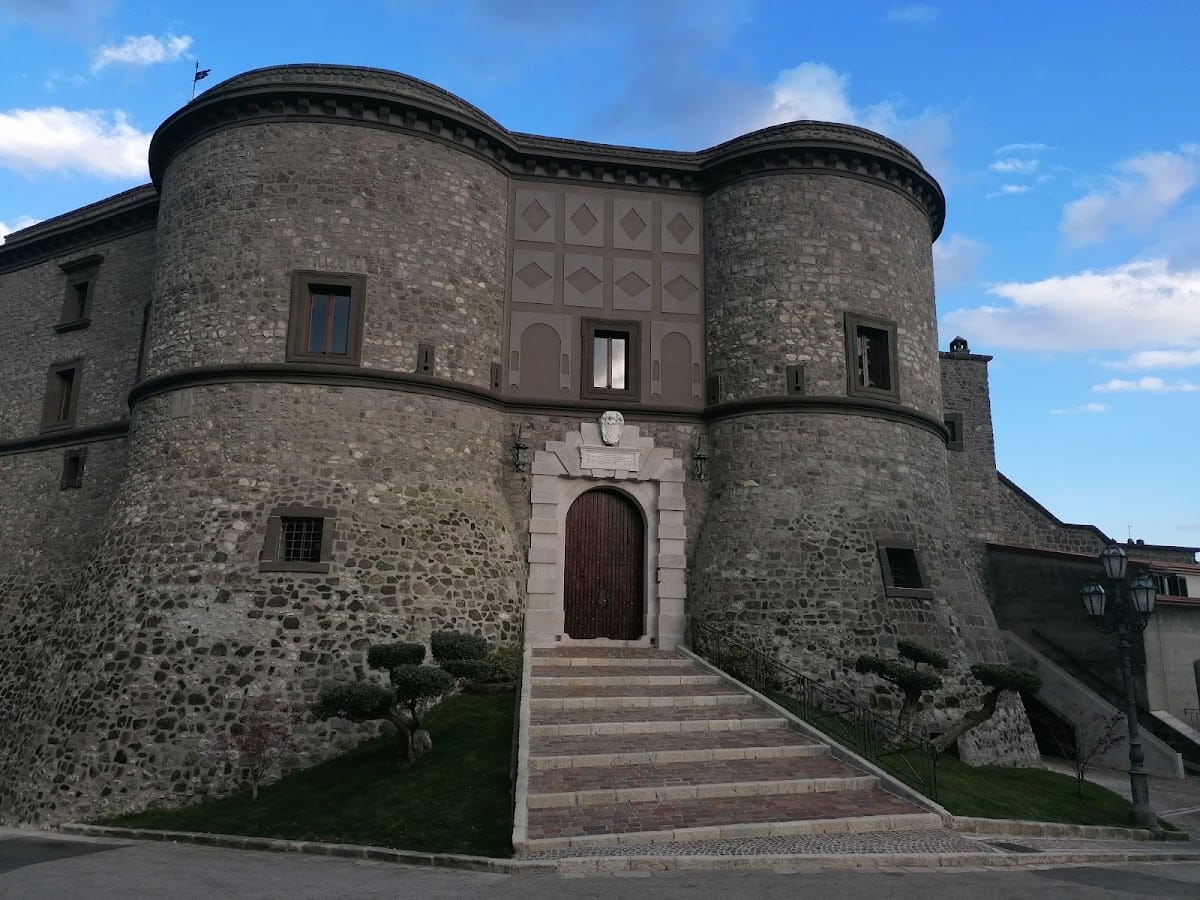
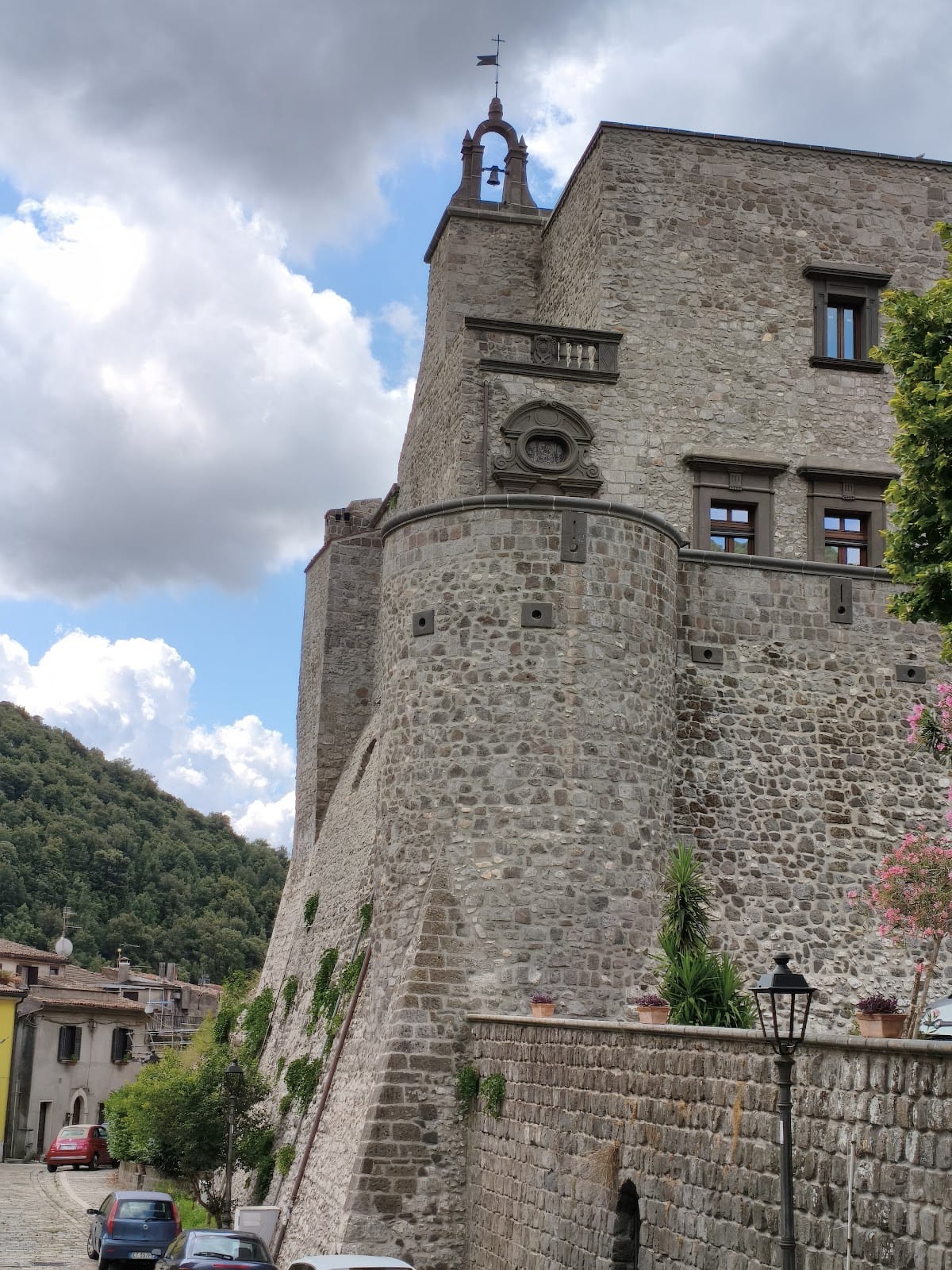
The Castle of Faicchio features a trapezoidal layout originally reinforced by four cylindrical towers positioned at each corner. Today, three towers remain standing; the fourth, facing the nearby Collegiate Church of Santa Maria Assunta, collapsed centuries ago, likely the result of earthquake damage. Constructed primarily from gray tuff, a volcanic stone prevalent in the region, the surviving towers underscore the castle’s medieval military origins.
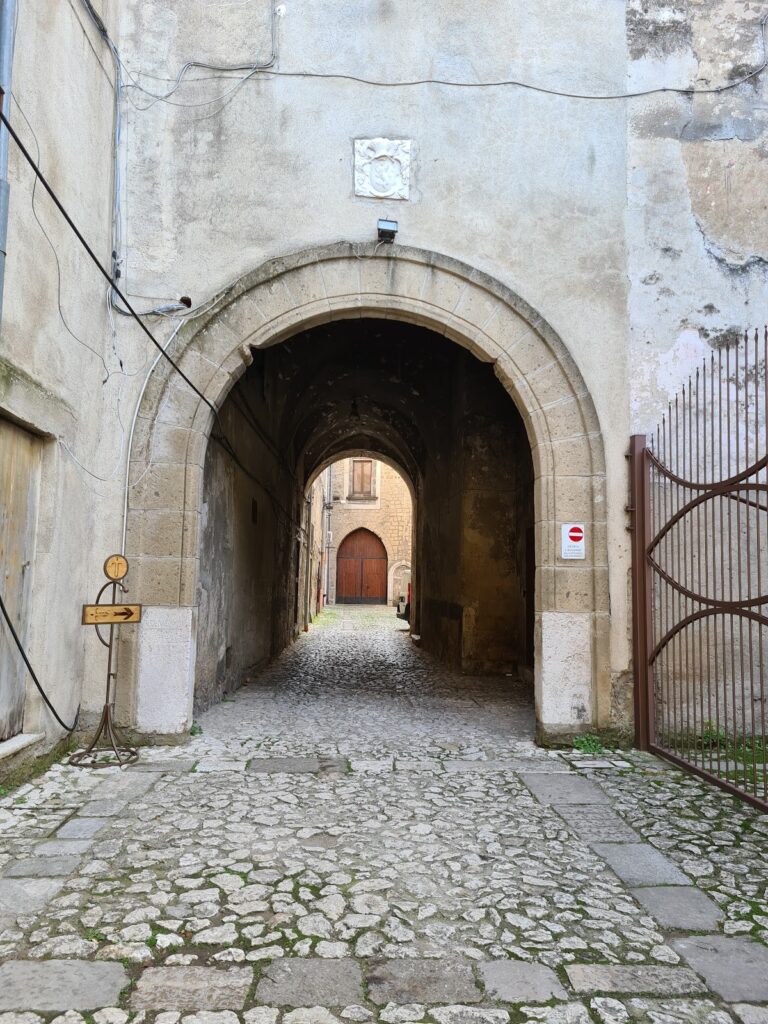
The main entrance is flanked by two of the remaining towers. It is defined by a large portal dating from the 17th century, bearing the coat of arms of the De Martino family, who were instrumental in the castle’s 1612 restoration. Above this portal, traces of a former loggia with three windows persist within the plaster, evoking the castle’s Renaissance-era architectural enhancements.
Access to the castle was once guarded by a drawbridge spanning a now dried moat. Evidence of this defensive feature survives in two small openings above the entrance portal, which supported the iron chains used to raise and lower the bridge. This setup highlights the castle’s stronghold function during periods of conflict.
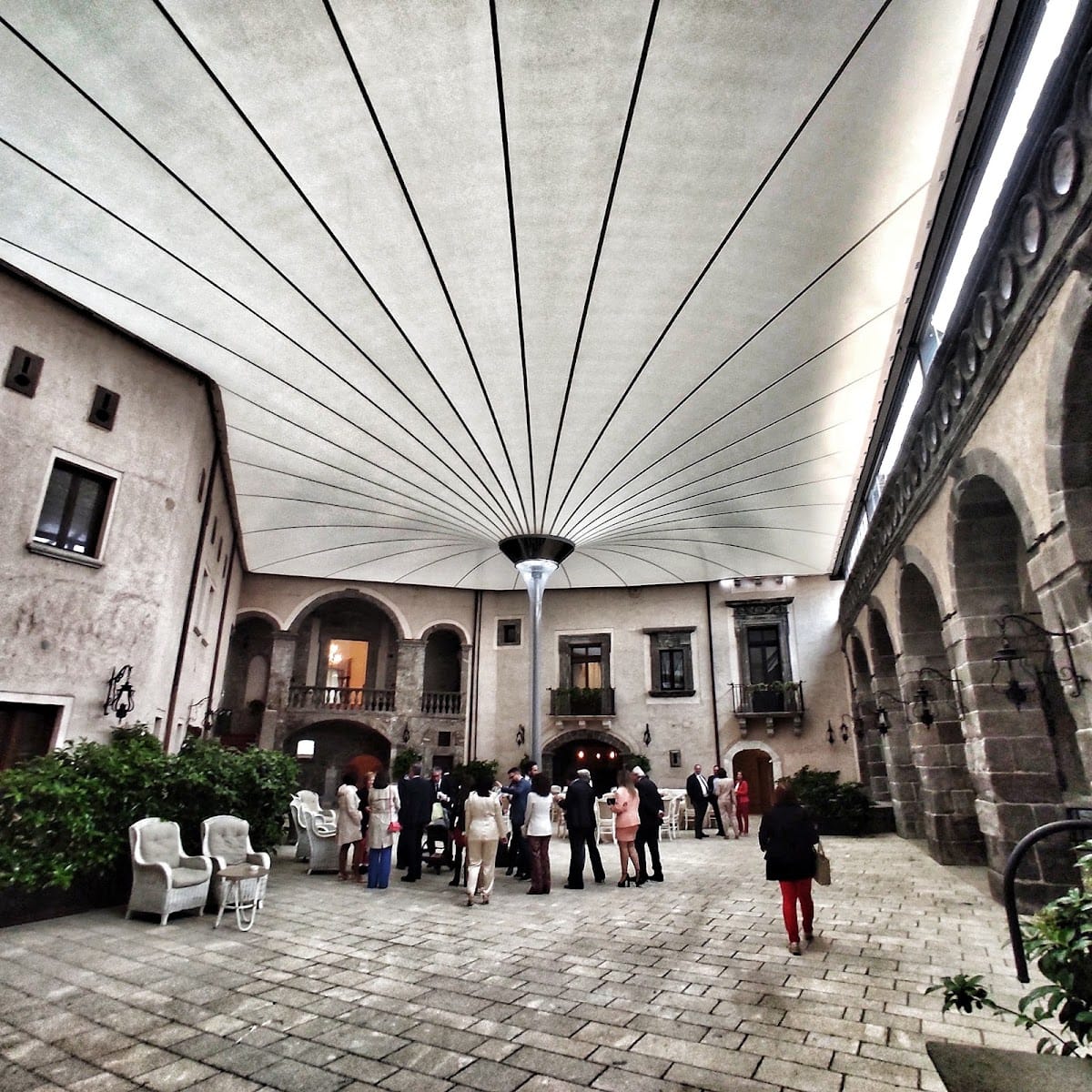
The interior courtyard and overall design are reminiscent of Castel Nuovo in Naples, featuring a long portico made of gray tuff along the right side and an external staircase on the left that provides access to the upper floor. These elements reflect the influence of Neapolitan architecture introduced during the Monsorio family’s renovations.
Beneath the castle lies an extensive network of underground chambers, most of which remain inaccessible today. On the ground floor is a prison room, where historical prisoner graffiti remains visible on the plaster walls, offering a rare glimpse into the castle’s role in law enforcement.
The façade overlooking Piazza Roma is distinguished by two terraces. The lower terrace aligns with formal reception rooms, while the upper terrace contains private apartments. The balustrade on the upper terrace prominently displays the De Martino coat of arms carved from the gray tuff used extensively in the early 17th-century refurbishment.
The third cylindrical tower is incorporated into the lower terrace and stands across from the entrance to the castle’s palace chapel, which is topped by an 18th-century bell tower. This chapel is enriched with elaborate Baroque stucco decorations that once framed a significant painting, now lost. Local tradition recounts a concealed trapdoor within the chapel’s floor, said to have been used for dropping condemned individuals directly into the dungeons below; this trapdoor remains intact today.
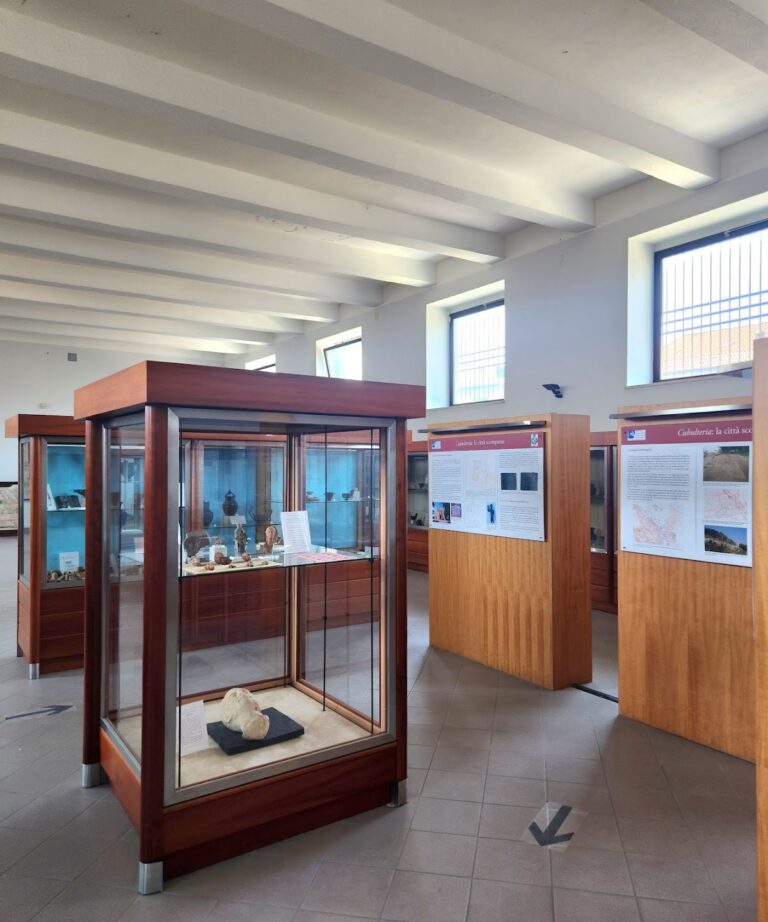
Inside, several rooms preserve period furnishings, including antiques such as paintings, old musical instruments, and an 18th-century nativity scene displayed in chambers above the main entrance portal. One room also retains fragments of wall frescoes, lending color and narrative to the interior spaces. Additionally, other rooms exhibit historical artillery, firearms, and armor, underscoring the castle’s martial heritage alongside its residential function.
Nearby sites