Castello di Miradolo: A Neo-Gothic Villa and Cultural Site in San Secondo di Pinerolo, Italy
Visitor Information
Google Rating: 4.4
Popularity: Medium
Country: Italy
Civilization: Modern
Site type: Domestic
Remains: Elite Residence
History
The Castello di Miradolo stands in the municipality of San Secondo di Pinerolo, Italy. Its origins trace back to the 15th century, when it was part of a rural estate owned by the noble family of the Massel di Caresana marquises. Initially constructed as a countryside property, the estate reflected the agricultural and residential functions common to noble holdings of that period.
In 1866, the property underwent significant expansion and redesign under Marquis Maurizio Massel di Caresana. This renovation transformed the estate into a neo-Gothic villa, marking a stylistic shift that aligned with contemporary tastes. Around this time, the castle passed into the hands of Teresa Massel di Caresana through marriage when she wed Count Luigi Cacherano di Bricherasio. Through this union, the estate became linked to the Cacherano di Bricherasio family, a lineage distinguished for military achievements and social philanthropy.
During the late 19th and early 20th centuries, the villa served as a country residence and a cultural gathering place for the Cacherano di Bricherasio family. Notable family members included Sofia Cacherano di Bricherasio, a painter and art patron who maintained connections with prominent artists such as Lorenzo Delleani and Leonardo Bistolfi, and her brother Emanuele, who was among the founding members of the automobile company FIAT. The founding document of FIAT was signed in the family’s Turin residence, underscoring the family’s involvement in industrial progress.
Following Emanuele’s unexpected death in 1904, the villa saw reduced use, becoming more intermittently occupied. Sofia later made it her permanent home during her final years. After her death in 1950, the property was bequeathed to the Piccola Opera della Divina Provvidenza, a religious organization founded by Don Orione. This group repurposed the villa, first establishing it as a convent and subsequently converting it into a retirement home.
Decades of neglect followed until 2007, when the Fondazione Cosso acquired the estate. They undertook careful restoration efforts, reopening the castle in 2008 as a venue dedicated to cultural activities, such as exhibitions, concerts, and social programs, thus beginning a new chapter in the site’s long history.
Remains
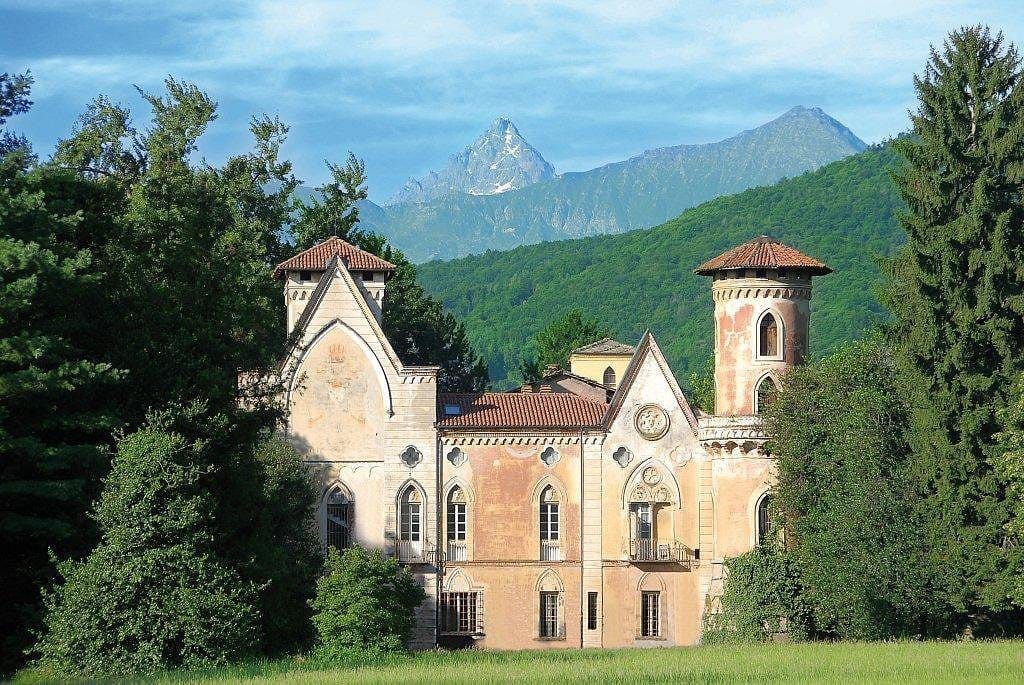
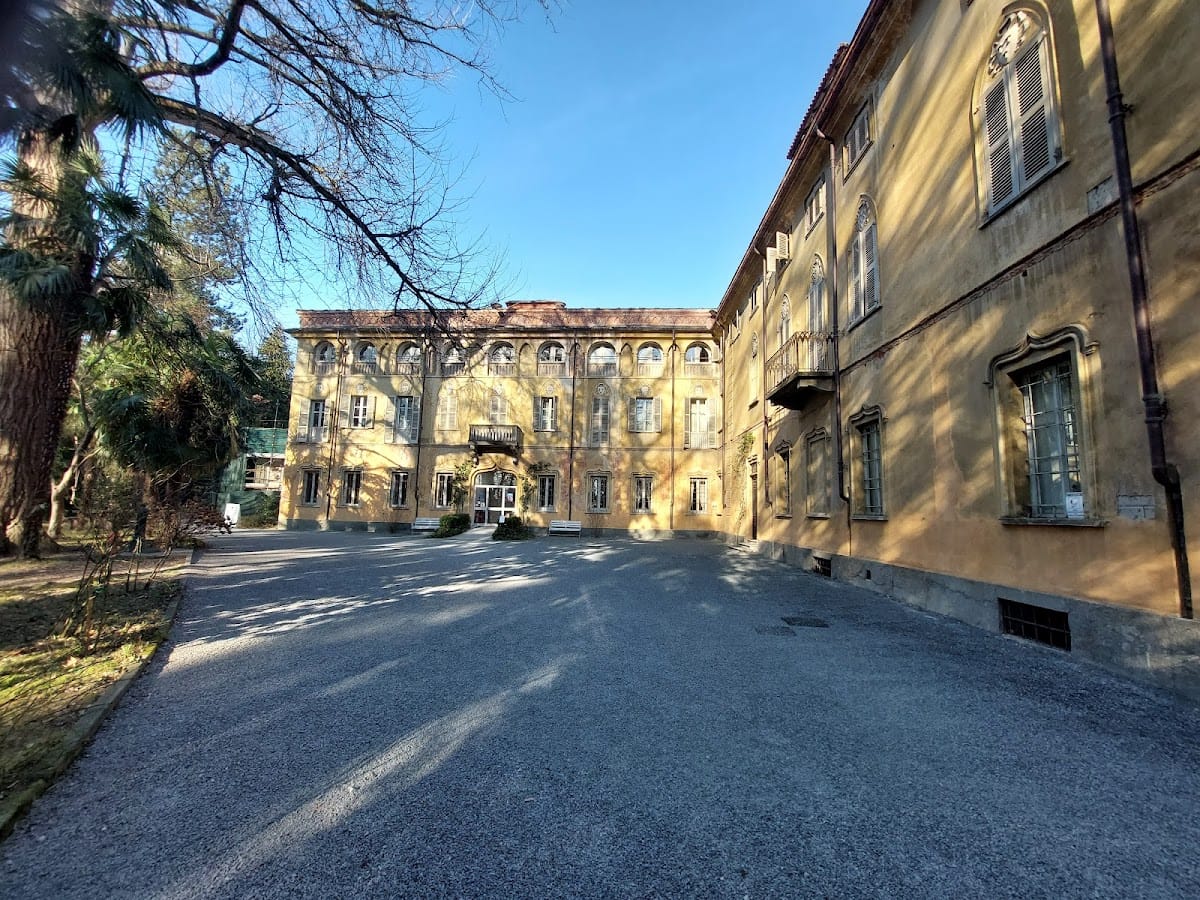
The Castello di Miradolo is characterized by a three-story structure built with a longitudinal plan that reflects its 1866 neo-Gothic renovation of an earlier rural building documented since at least the 17th century. The villa features two towers—a prominent square-based tower and a smaller cylindrical one—that contribute to its distinctive silhouette. Its façades are adorned with peaked pinnacles and pointed, or ogival, windows embellished with the heraldic emblems of the Cacherano di Bricherasio and Massel di Caresana families, emphasizing its noble associations.
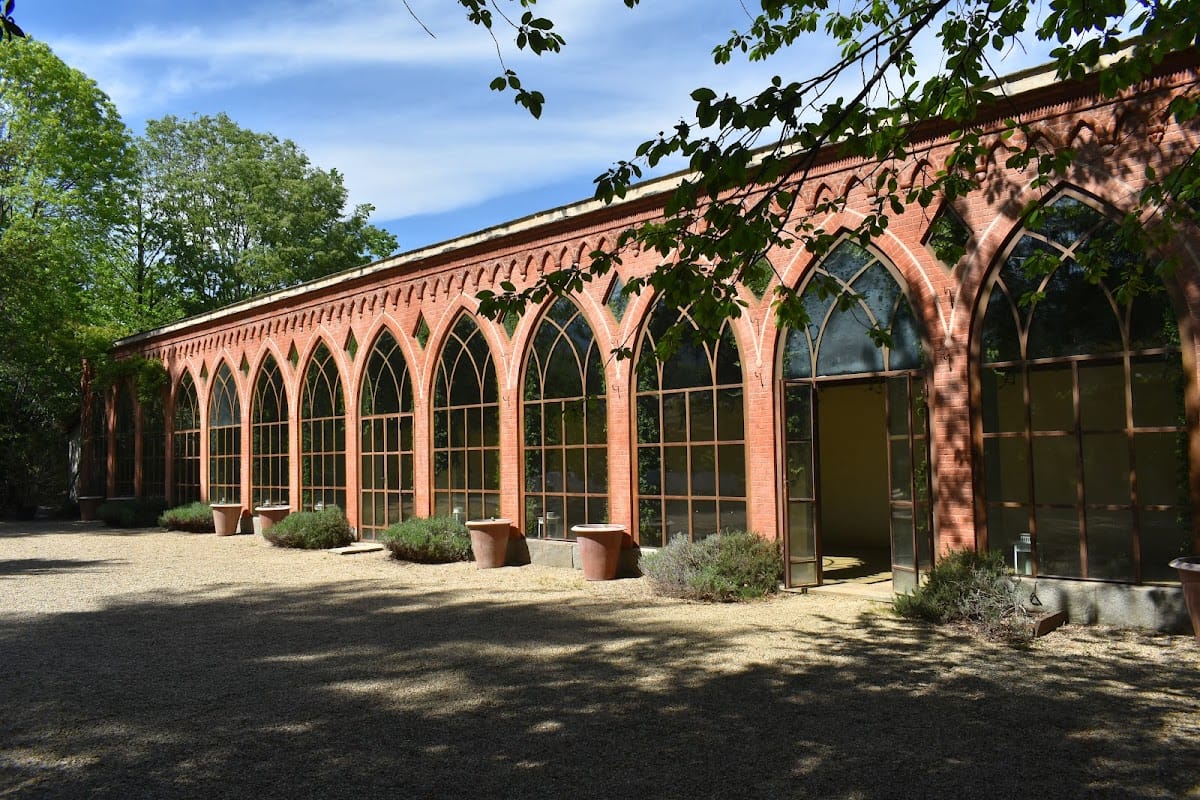
Along the southwest side, a greenhouse stands out with large pointed-arch windows topped by a terracotta cornice decorated with brick ogival arches that continue along the roofline, reflecting the ornamental style of the renovation. Inside, visitors find a spacious ground-floor hall centered around a grand carved wooden fireplace, which emphasizes the villa’s historical character. The vaulted ceilings contain significant frescoes featuring grotesque motifs—decorative paintings that incorporate intertwined vegetal and animal designs—adding artistic depth to the interior space.
On the first floor, a chapel is fully adorned with frescoes and contains a wooden altar and small presbytery, illustrating the religious dimension incorporated within the residence. Other rooms in the villa have been adapted for modern museum purposes, including spaces used as exhibition halls, a conference room, a ticket office, and a café, ensuring the building’s functionality for contemporary use.
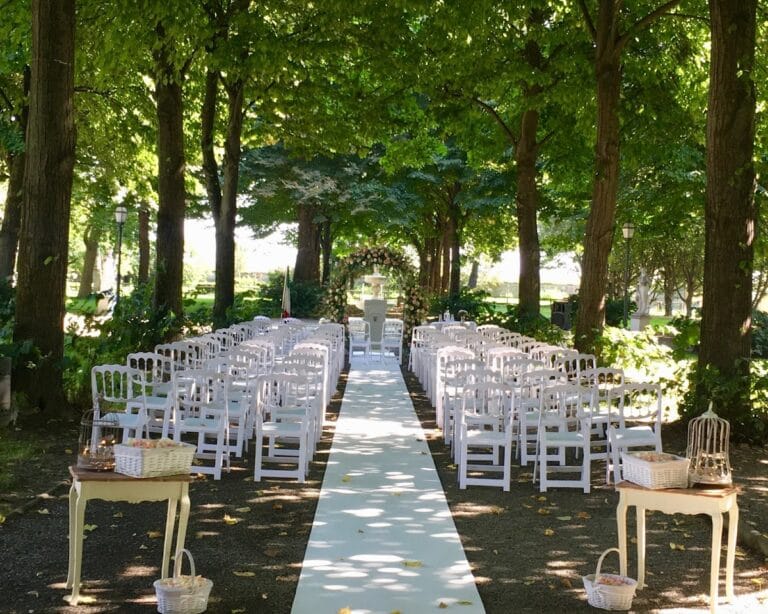
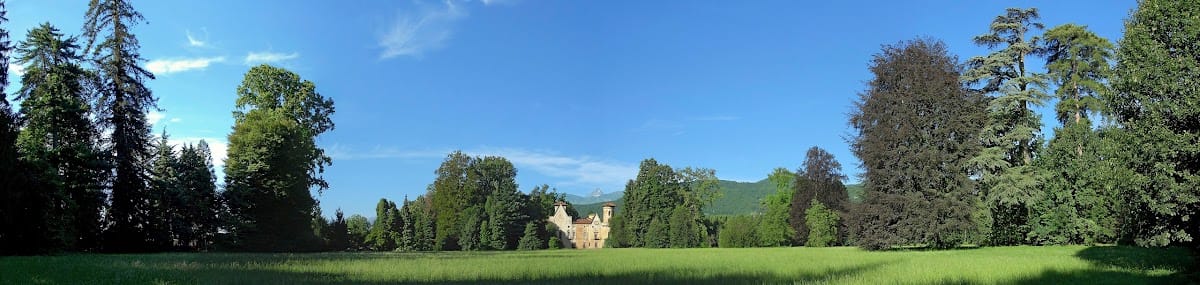
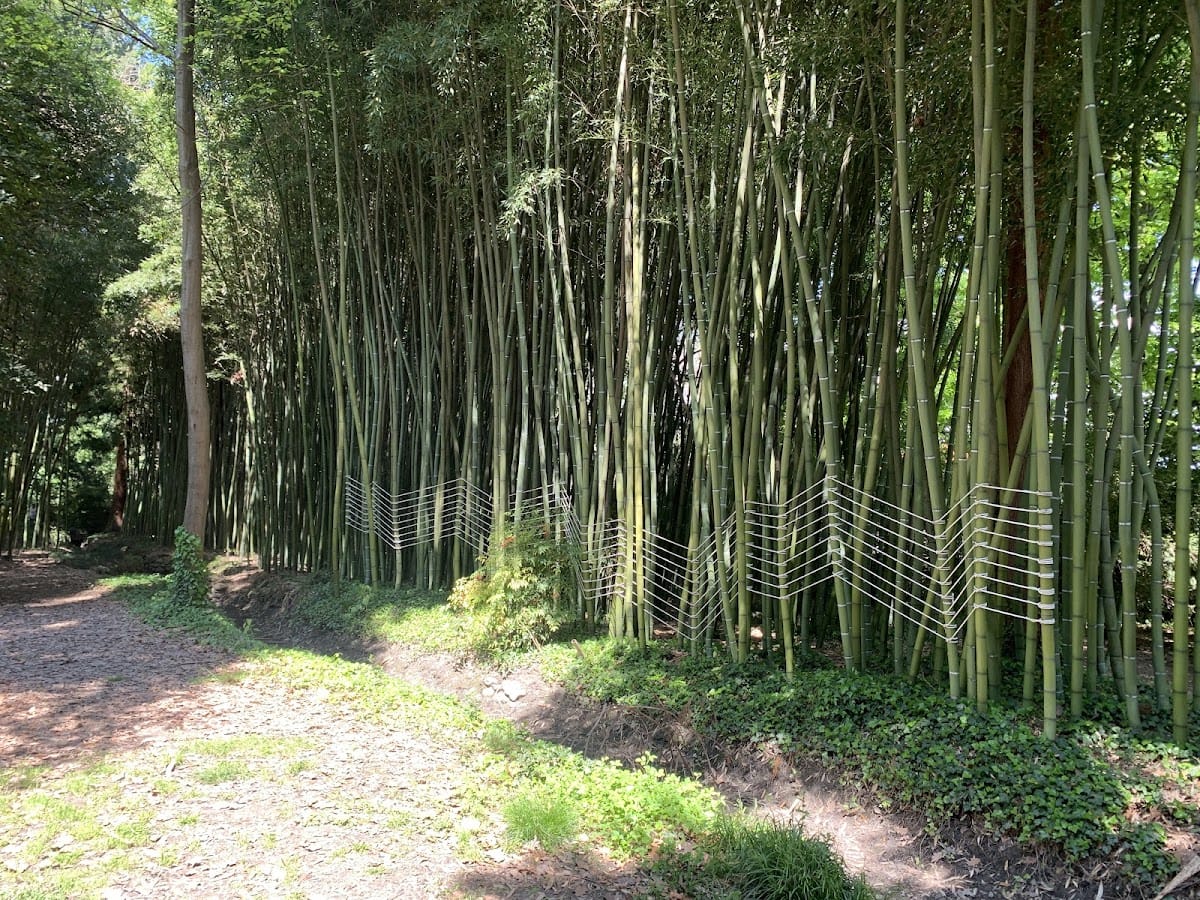
Surrounding the villa is a six-hectare park originally designed in a Renaissance style characterized by geometric watercourses and hedges, as seen in an 18th-century watercolor. In the early 19th century, the garden was redesigned in the Romantic style with an oval layout. This transformation introduced a new entrance avenue, a circular path through woodland, gently rolling lawns, a small lake, and irregular planting patterns featuring exotic plant species. The park contains approximately 1,740 trees representing about seventy different species. Notable specimens include a cedar of Lebanon, a sequoia, various beeches, a tulip tree, black pine, and ginkgo biloba. The park’s botanical and historical qualities have earned it a place among the officially recognized historic gardens of the Piedmont region.
Nearby sites