Castello di Casalmoro: A Medieval Fortress and Noble Residence in Italy
Visitor Information
Google Rating: 5
Popularity: Very Low
Country: Italy
Civilization: Medieval European, Venetian
Site type: Domestic
Remains: Palace
History
The Castello di Casalmoro is situated near Casalmoro in Italy and was constructed by the Italian ruling families of the medieval period. Its origins date back to the early 14th century when it was built as a defensive fortress, likely under the direction of Francesco I Gonzaga. This was during a time when the region was under the influence of the Visconti family, who occupied Casalmoro.
Soon after its construction, the fortress featured a protective moat supplied with water from the nearby Fossa Regia canal. In 1380, ownership of the castle changed hands, as it was sold to the Visconti family for a sum of 30,000 ducats. Less than a decade later, in 1389, the castle returned to the Gonzaga family within the jurisdiction known as the “Quadra di Asola.” Later, in 1405, the fortress was sold again, this time to the Malatesta family, marking a period of shifting control among regional powers.
In 1419, Casalmoro became part of the territories ruled by Duke Filippo Maria Visconti following its conquest by the condottiero Francesco Bussone, also called “il Carmagnola.” The local inhabitants swore allegiance to the Milanese rulers, marking a significant political shift. Around this period, Gianfrancesco Gonzaga, who would go on to become the first Marquis of Mantua, commissioned a new castle next to the original fortress. This new structure was intended both to protect his subjects and to serve as a residential hunting lodge.
The political landscape continued to evolve, and in 1429 Casalmoro was included within the administrative district known as the “Quadra bresciana” of Asola under the Venetian Doge Francesco Foscari. In that same century, a peace agreement signed in 1438 between the Visconti and the Gonzaga, then allied with Venice, confirmed that Casalmoro belonged to the Marquisate of Mantua. Records from that year also note that the castle was used by the Venetian captain Gattamelata and his troops. After several decades, Casalmoro officially returned to Gonzaga control on August 10, 1482.
By the mid-16th century, in 1541, Alfonso Gonzaga, who was the second Marquis of Castel Goffredo, owned the castle. The site held importance even earlier, as from the middle of the 11th century, the land where the castle stands was recorded as belonging to Benedictine monks from Serle. However, the current buildings are not remnants of the original medieval fortress but reflect various stages of construction and adaptation over the centuries. Recent restoration efforts, completed in 2018, have revealed the complex layers of ownership, architectural changes, and historical uses of the castle, shedding new light on its multifaceted past.
Remains
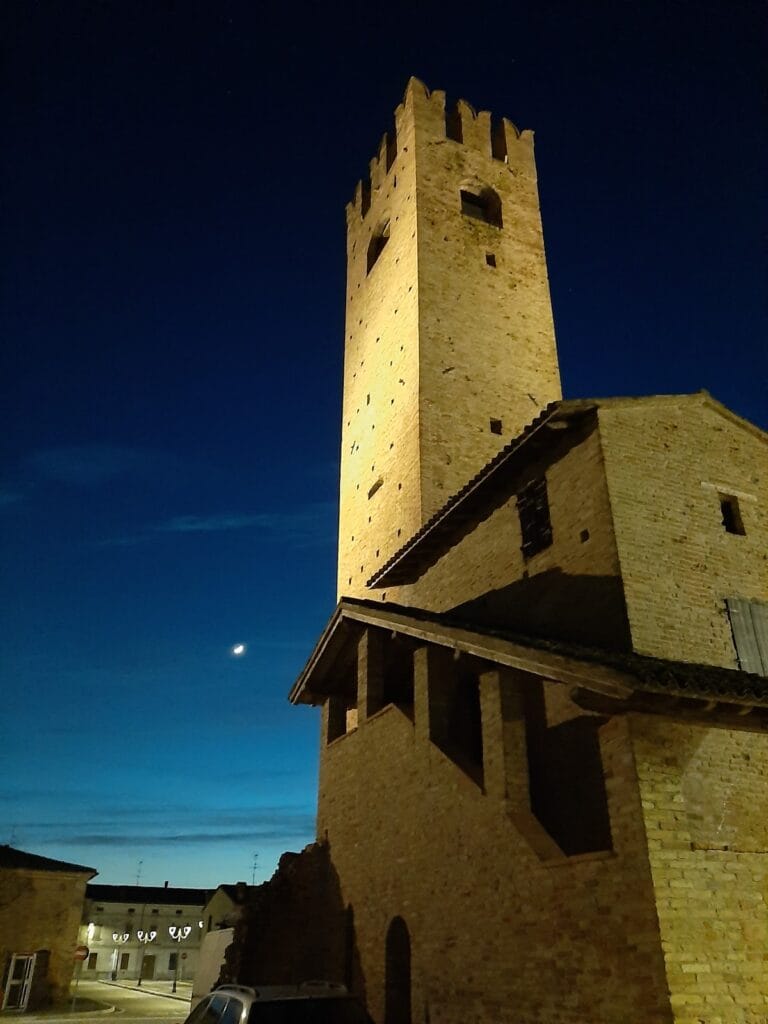
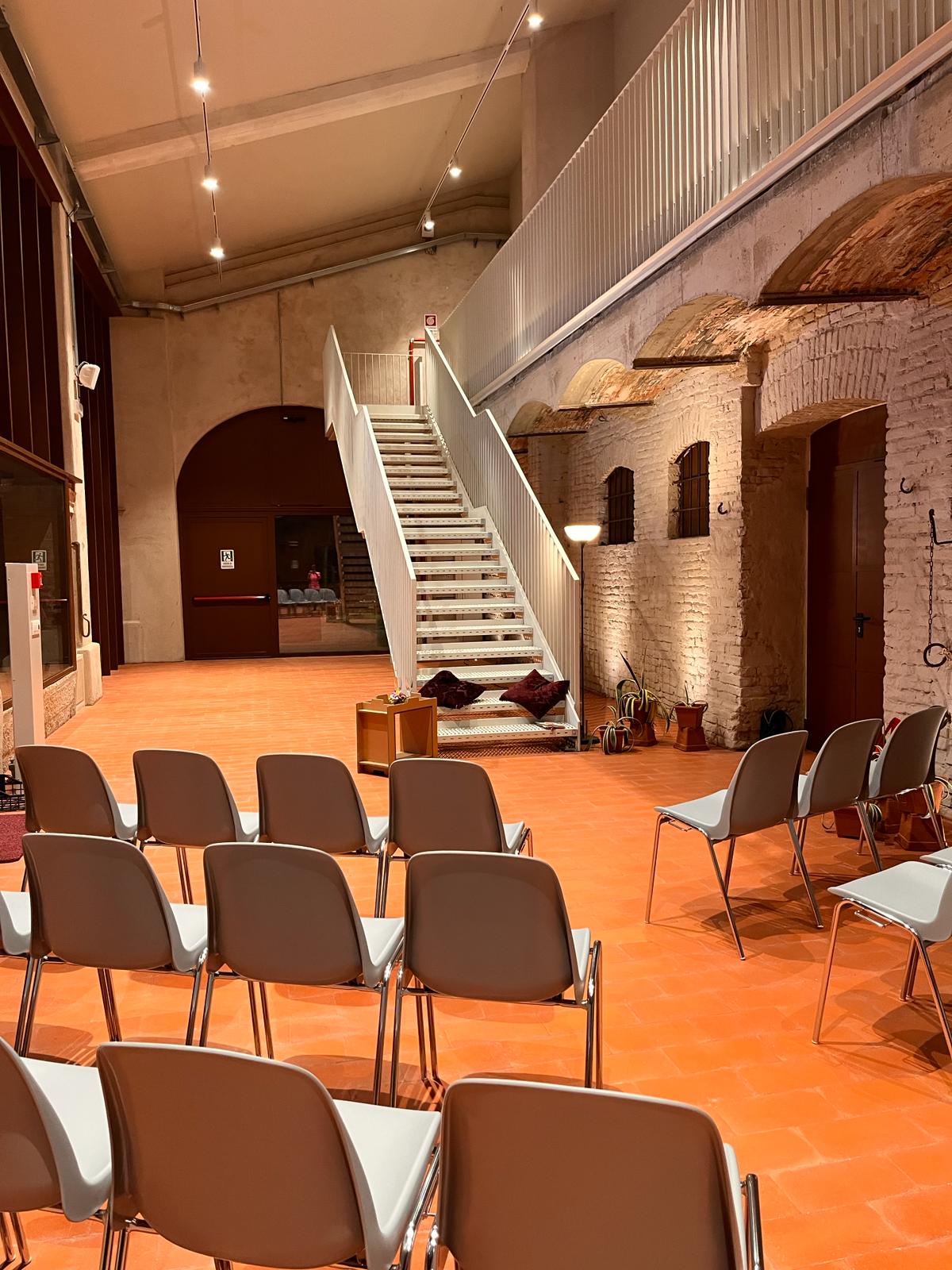
The Castello di Casalmoro stands as a complex of structures that blend its medieval origins with later modifications. Today, the main building known as “Corte Castello” occupies the southwestern portion of the original fortress area, which remains visible in historic maps dating back to the 17th century. The castle’s central core was constructed in the early 1300s, demonstrating typical defensive architecture of the period, including thick masonry walls designed for protection.
Surrounding the fortress was a moat fed by the Fossa Regia canal, a defensive feature intended to hinder attackers. While the moat itself has been altered over time, its original location and purpose are well documented in historical records. Over subsequent centuries, the castle was adapted for agricultural use with the addition of annexes built after the medieval period, reflecting changing functions and local needs.
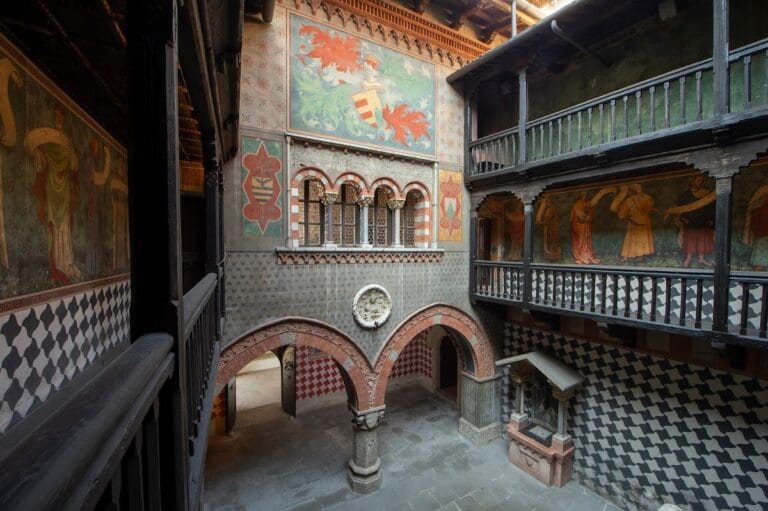
The façade of the main building, dating from the latter half of the 15th century, bears traces of frescoes that once adorned its surface. Although no documentary evidence exists to confirm the designer, stylistic analysis links this construction to Luca Fancelli, a Florentine architect who worked for Ludovico III Gonzaga. Inside, restoration work uncovered a remarkable series of 42 painted ornamental tablets set into the ceiling of the first floor. These tablets, dating from the early 16th century, display heraldic symbols associated with Niccolò Orsini, a prominent captain general of the Venetian Republic who lived between 1442 and 1510.
Historically, the castle complex had ties to the Orsini family of Pitigliano, notable landowners in the nearby areas of Asola and Ghedi. It is believed that this residence served members of Niccolò Orsini’s household, including his wife Guglielmina and their children, further reflecting the castle’s role as a noble seat beyond its military origins. Today’s structure encapsulates these successive layers of history, combining its early defensive purpose with residential and agricultural adaptations over many centuries.
Nearby sites