Mydlovar Castle: A Gothic Castle Ruin in Czechia
Site at a Glance
- Rating
- 4.6
- Popularity
- Very Low
- Country
- Czechia
- Primary era
- Medieval
- Eras represented
- Medieval
- Civilizations
- Holy Roman Empire, Kingdom of Bohemia
- Site type
- Military
- Remains
- Castle
On this page7 sections
History
Mydlovar Castle, also known as Kostomlaty, is a medieval Gothic castle ruin in Czechia, near the Elbe in the Nymburk District. It was probably built by a local nobleman during the second half of the thirteenth century and was first explicitly identified as Mydlovar Castle in 1356. A reference to Mydlovar from 1223 probably refers to a vanished village rather than to the castle.
The Kostomlaty estate and the Lords of Kunštát
By the middle of the fourteenth century, the castle and the Kostomlaty estate belonged to the Lords of Častolovice. In 1402, Jan Puška of Kunstadt acquired both. A Moravian nobleman, Jan Puška initially supported Jan Žižka, the leading military commander of the Hussite movement in fifteenth-century Bohemia. He later joined the moderate Prague faction, a Hussite political and religious group opposed to more radical factions, and became captain of Nymburk.
In 1425, Hynek Boček of Poděbrady captured Jan Puška and took him to Poděbrady Castle. After Puška’s death, Hynek Boček appropriated Mydlovar. When Hynek died in 1426, the castle passed to his brother Viktorin of Poděbrady, then to Viktorin’s son George of Poděbrady, and later to George’s son Henry the Younger. This succession was associated with the Lords of Kunštát. George of Poděbrady later became king of Bohemia.
Royal acquisition and abandonment
In 1493, King Vladislav Jagellonský, also known as Vladislaus II, acquired Mydlovar and pledged it to the Bohemian nobleman Jan of Šelmberk. Bedřich of Donín was the castle’s final noble owner. After his property was confiscated in 1547, the estate became part of the Lysá royal domain, land controlled directly by the crown. Mydlovar therefore ceased to function as an independent noble estate, and the castle was abandoned. It was explicitly described as deserted in 1561.
Legends and modern remembrance
Local traditions attribute the castle’s foundation to Princess Libuše and describe it as her summer residence. One legend says that a wooden footbridge over the Elbe enabled Libuše to attend church at Hradištko. Another connects the spread of squill in Mydlovarský luh with a garden that she supposedly kept beside the castle.
Other stories tell of a cowherd who entered an opening near a boulder in the ruins and never returned. Two further legends concern attempts to excavate cellars in search of old wine, during which collapsing earth supposedly killed the workers.
Mydlovar has been protected as a cultural monument of the Czech Republic since 1965, and the ruins lie within the Mydlovarský luh nature reserve. The castle also has a place in modern literature. It is a major setting in Karel Sellner’s 1934 book The Three Brothers of Mydlovar and appears in Martina Novotná’s historical crime novel The Curse of Mydlovar Castle, published in 2022.
Remains
Mydlovar is a Gothic castle ruin built on an artificially raised mound about 185 metres above sea level. The mound stood on the right bank of the Elbe among wetlands and former river channels. Double ditches and ramparts protected the northern and western sides, while an outer bailey occupied the eastern side. The castle was built mainly of brick, and its principal enclosure belonged to the group of castles protected by a mantle wall, a defensive shell surrounding the castle core rather than a separate line of individual towers and keeps.
Earthworks and outer defenses
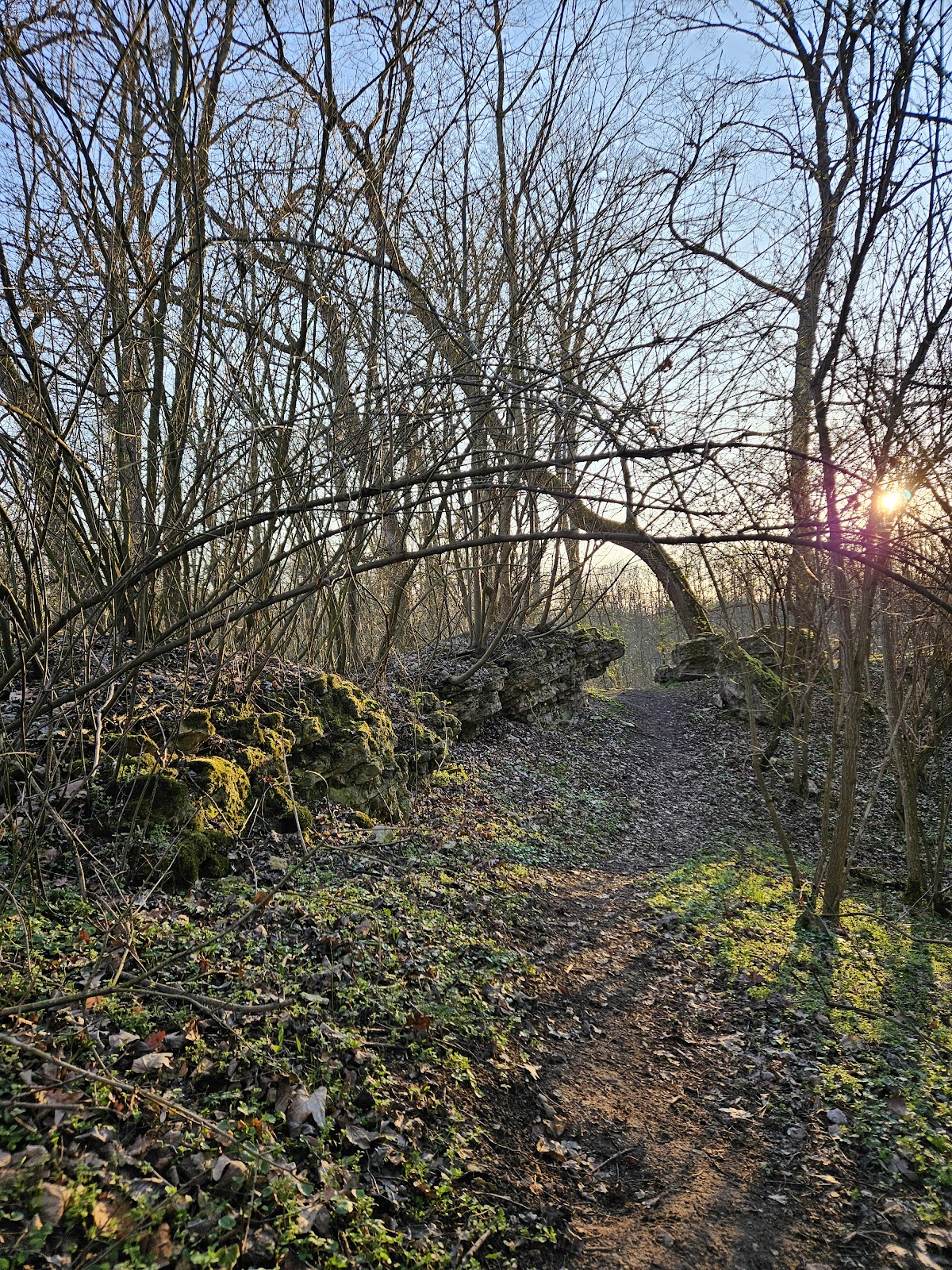
The raised mound formed the foundation of the castle site, with the surrounding wetlands and former river channels adding to its defensive setting. Double ditches and ramparts survive as part of the northern and western defenses. An outer bailey lay to the east, but its buildings have left no visible traces. Together, these earthworks defined the approach to the inner castle and separated the core from the surrounding landscape.
Mantle wall and castle core
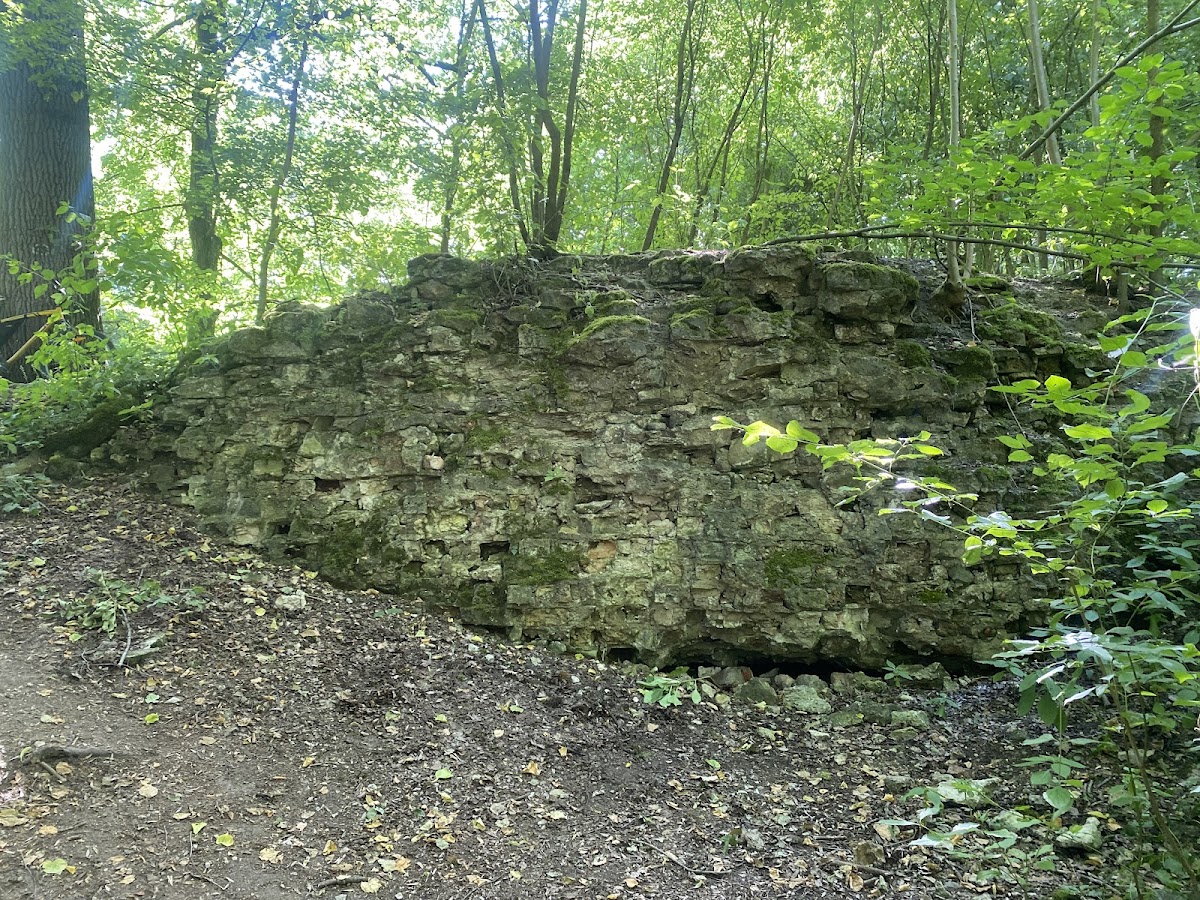
The castle core was entered from the north and was enclosed by a massive brick mantle wall. Sections of this defensive wall still project above ground. Mydlovar was built predominantly of brick and is described as probably the only castle in Bohemia constructed mainly from that material.
The perimeter walls and internal buildings collapsed into the courtyard. Their debris raised the present ground level substantially above the medieval surface, making it impossible to reconstruct the internal arrangement of the castle core closely. The surviving remains therefore consist chiefly of fragments of the walls and the raised castle mound.
Nearby sites